Year: 1996
Runtime: 88 mins
Language: Spanish
Director: Gustavo Mosquera R.
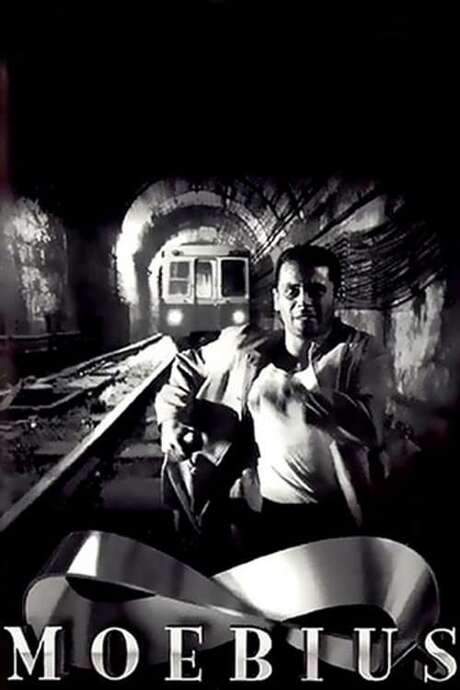
A disquieting metaphor of recent stories, fears and oblivion unfolds beneath Buenos Aires. When a subway train carrying thirty passengers vanishes in the sprawling, maze‑like tunnels, officials enlist topographer Daniel Pratt to locate it. The labyrinth’s size forces Pratt to seek his missing mentor, Hugo Mistein, whose own disappearance adds mystery.
Warning: spoilers below!
Haven’t seen Moebius yet? This summary contains major spoilers. Bookmark the page, watch the movie, and come back for the full breakdown. If you're ready, scroll on and relive the story!
Explore the full timeline and setting of Moebius (1996). Follow every major event in chronological order and see how the environment shapes the story, characters, and dramatic tension.
Last updated: October 04, 2025 at 18:13
Meet the key characters of Moebius (1996), with detailed profiles, motivations, and roles in the plot. Understand their emotional journeys and what they reveal about the film’s deeper themes.
Last updated: October 04, 2025 at 18:13
Explore the central themes of Moebius (1996), from psychological, social, and emotional dimensions to philosophical messages. Understand what the film is really saying beneath the surface.
Last updated: October 04, 2025 at 18:13
Browse frequently asked questions about Moebius (1996) focused on characters, relationships, themes, symbols, setting, and story context. This movie info FAQ gives spoiler-aware explanations for character arcs, world details, and thematic interpretation so readers can better understand what the film is really about.
The film takes place primarily in the Buenos Aires Underground, a vast network of subway tunnels beneath the city. The mystery unfolds through various stations and tunnels, with a key scene at Parque de la Ciudad above ground. A station named Borges serves as a pivotal waypoint, reinforcing the urban labyrinth theme.
Borges station acts as a pivotal waypoint in the investigation, named after Jorge Luis Borges, the famous Argentine writer known for his stories about labyrinths and infinite spaces. This reference underscores the film's central metaphor of the underground as an impossible, maze-like structure that defies conventional logic.
Topologist Daniel Pratt proposes that the Buenos Aires subway network can bend and fold like a Möbius strip, creating a loop that can carry objects, including the missing train, into another dimension. This theory becomes the framework for understanding the inexplicable disappearance of the UM-86 train and its thirty passengers.
The film uses the missing train as a gateway to question reality itself. The underground functions as a living maze where appearances hide deeper truths. The movie challenges whether scientific logic can fully explain inexplicable events, or if perception itself is malleable. As traces of the train blur, certainty collapses and speculation takes its place.
Time in Moebius is measured not just by schedules but by movements through the tunnels, where trains seem to slip between dimensions. Pratt's calculations turn daily rhythms into a predictive tapestry, suggesting hidden order in seemingly random events. The narrative culminates with a train appearing where and when theory predicts, bending conventional timelines.
Daniel Pratt is a topologist hired to investigate the UM-86 disappearance. He is highly analytical, persistent, and skeptical of official rationales. Driven by a need to prove his Möbius strip theory, he pursues the mystery through bureaucracy and public fear, pushing against institutional resistance to uncover the truth.
Hugo Mistein is a retired professor who guards the crucial original plans of the subway system. He is enigmatic and wary of engagement, presenting a barrier to Pratt's inquiry. His presence near the conductor's cabin reinforces the film's theme that past knowledge still resonates in the present and holds keys to understanding the mystery.
The Director of SBASE serves as the film's authority figure who seeks to keep the incident out of public eyes. He closes subway lines to facilitate the search but rebuts Pratt's radical theory, representing the friction between power and intellectual inquiry. His role highlights how leadership can shape, filter, or suppress the truth.
Pratt visits Parque de la Ciudad, a park above the subway system, where a roller coaster scene sparks a sequence of insights. This scene ties time to spatial loops and helps Pratt develop his theory about how the train could disappear. The park serves as a contrast to the underground darkness and offers a moment of clarity in the investigation.
The UM-86 train carrying thirty passengers vanishes entirely within the Buenos Aires Underground tunnels. Rather than a conventional resolution, the film suggests the train may have folded into another dimension through the Möbius strip-like topology of the subway network. The train eventually reappears, but empty, leaving the mystery fundamentally unresolved.
Discover curated groups of movies connected by mood, themes, and story style. Browse collections built around emotion, atmosphere, and narrative focus to easily find films that match what you feel like watching right now.
Sci-fi stories where theoretical concepts unlock profound, unsettling urban mysteries.For viewers who enjoyed the methodical mystery of Moebius, this thread gathers movies like it that explore complex theories and scientific inquiry within an urban or societal puzzle. These similar sci-fi stories often feature ambiguous endings and a tense, intellectual atmosphere.
Stories in this thread typically follow a protagonist, often a specialist or academic, who is called upon to investigate a seemingly impossible phenomenon. The plot unfolds through research, deduction, and the application of non-traditional logic, with the solution challenging the characters' and audience's perception of reality.
These movies are grouped by their focus on a cerebral, scientific approach to a central mystery. They share a tone of intellectual dread, a slow-to-steady pacing that allows for contemplation, and narratives that prioritize complex ideas over straightforward action, often resulting in ambiguous or unsettling conclusions.

Stories where sprawling cities conceal dark secrets and disorienting spaces.If you liked the ominous subway labyrinth and urban isolation in Moebius, explore these movies with a similar feel. These films use dense cityscapes and subterranean environments to create a disquieting, claustrophobic mood where the location is central to the mystery.
The narrative pattern involves characters being drawn into the hidden, often decaying, underbelly of a city. Their journey is as much about physical navigation through confined, confusing spaces as it is about solving a mystery, with the environment actively contributing to the psychological tension and sense of isolation.
These films are united by their use of an oppressive, labyrinthine urban environment to generate a specific mood. They share a disquieting and ominous atmosphere, a slow-burning pacing that builds dread, and a focus on the psychological impact of navigating claustrophobic, man-made spaces.
Don't stop at just watching - explore Moebius in full detail. From the complete plot summary and scene-by-scene timeline to character breakdowns, thematic analysis, and a deep dive into the ending - every page helps you truly understand what Moebius is all about. Plus, discover what's next after the movie.
Read a complete plot summary of Moebius, including all key story points, character arcs, and turning points. This in-depth recap is ideal for understanding the narrative structure or reviewing what happened in the movie.
Track the full timeline of Moebius with every major event arranged chronologically. Perfect for decoding non-linear storytelling, flashbacks, or parallel narratives with a clear scene-by-scene breakdown.
Discover movies like Moebius that share similar genres, themes, and storytelling elements. Whether you’re drawn to the atmosphere, character arcs, or plot structure, these curated recommendations will help you explore more films you’ll love.
Moebius (1996) Plot Summary & Movie Recap
Moebius (1996) Scene-by-Scene Movie Timeline
Moebius (1996) Spoiler-Free Summary & Key Flow
Movies Like Moebius – Similar Titles You’ll Enjoy
Cities of Last Things (2019) Full Summary & Key Details
Metropolis (2002) Spoiler-Packed Plot Recap
Kafka (1991) Movie Recap & Themes
Metropia (2010) Spoiler-Packed Plot Recap
Cube (1998) Movie Recap & Themes
Mute (2018) Full Summary & Key Details
Altered States of Plaine (2014) Movie Recap & Themes
Man Underground (2017) Ending Explained & Film Insights
Meteo (1990) Story Summary & Characters
Subway to the Stars (1987) Detailed Story Recap
Magnética (2020) Story Summary & Characters
Existir (2021) Full Movie Breakdown
Mostro (2021) Story Summary & Characters
Galaxy (1967) Ending Explained & Film Insights
Metropolis (1927) Detailed Story Recap