Year: 1990
Runtime: 101 mins
Language: English
Director: Bruce Beresford
In 1923 British‑colonial Nigeria, an educated Black man named Mister Johnson feels out of place among both his fellow Nigerians and the British officials. Employed by the local magistrate and convinced he is English despite never having visited England, he constantly schemes to advance himself, a habit that repeatedly lands him in hot water.
Warning: spoilers below!
Haven’t seen Mister Johnson yet? This summary contains major spoilers. Bookmark the page, watch the movie, and come back for the full breakdown. If you're ready, scroll on and relive the story!
Read the complete plot breakdown of Mister Johnson (1990), including all key story events, major twists, and the ending explained in detail. Discover what really happened—and what it all means.
Mister Johnson Maynard Eziashi is a Nigerian who has adopted the style of the British colonialists and works as an assistant to the colonial judge Harry Rudbeck. He marries Bamu Bella Enahoro in a Christian ceremony and promises to share his imagined “wealth” and “civilized” life with her, yet she remains steadfast in her traditional Nigerian role as wife rather than adopting English manners. Johnson’s loyalty to Great Britain is tested when Waziri Femi Fatoba offers to pay him to reveal government letters from Rudbeck’s office, a proposal Johnson refuses, underscoring his commitment to a system that has afforded him status.
Aliu Steve James acts as a quiet, loyal aide who navigates the same colonial terrain alongside Johnson, while the relationship between master and subordinate becomes a lens on ambition, money, and power. Johnson’s debts mount, and Rudbeck is reluctant to grant him an advance, a tension that pushes Bamu to return to her family when the monthly bridal payment can’t be met. The arrangement frays, and the dynamics of trust within the colonial project come into sharper relief.
Johnson’s willingness to trade information for money grows riskier when he accepts cash from Waziri in exchange for stealing letters from Rudbeck’s office that portray Waziri as a plotting liar. The moral line blurs as the promise of quick wealth collides with the duties Johnson owes to the British administration and to his wife’s world. Meanwhile, Rudbeck’s administration faces a practical crisis: the 100‑mile road to the North Road—a major trade route—dries up funds and threatens to stall development.
Celia Rudbeck Beatie Edney arrives with discontent over the living conditions, heightening the sense that colonial life is a constant negotiation of appearances and material comfort. The treasurer Tring Nick Reding uncovers anomalies in the cash book, and Johnson is fired as the road project grinds to a halt. With work scarce, Johnson and Benjamin Kwabena Manso try their luck at Sargy Gollup’s Edward Woodward store, where casual theft and ambition collide. Johnson’s improvised schemes lead to a punch from Sargy, and when Benjamin exposes Johnson’s theft of an advance, a dangerous sequence unfolds: a rain-soaked party at the store becomes a flashpoint, Johnson fights back, and Sargy ends up unconscious. Rudbeck arrives to investigate, but Sargy claims it was an accident and Johnson is paid one month’s advance before being fired.
The couple’s search for work resumes, and after the rainy season ends they return to the labor of building the road with Johnson installed as a supervisor. Productivity briefly rises the moment new incentives are introduced, including a local prize: five pounds to the group that clears the most bush, paid through the chief. The project ends up connected to a new North Road, and a troubling revelation follows: Rudbeck discovers that Johnson has been charging locals a road fee. Johnson claims he’s only borrowing a little, but Rudbeck forces him to leave rather than arrest him.
Back in the Zungo, Bamu’s family pressures her to return home. Johnson pleads with Waziri for money, but the response is brutal: Waziri orders his guards to cripple him. Escaping through a window, Johnson finds that his wife has already left. In a desperate drift, he returns to Sargy Gollup’s store to steal money from the cash box, only to be met with gunfire when Sargy catches him. A brutal struggle follows, and Johnson kills Sargy with a pin used to hold receipts. Waziri’s chief demands someone be blamed, and Johnson’s arrest seems imminent. In jail, Waziri’s former assistant coaxes Johnson to surrender his English shoes as a trade for mercy, knowing the hangman’s noose may soon close.
Conviction follows, and Johnson begs Rudbeck to shoot him to spare him the hanging. He repeats that plea the next morning, even offering to let Rudbeck shoot him with his own hand if necessary. After Johnson sings a rueful song about fear, Rudbeck finally acts, taking the rifle and shooting Johnson. The act is framed as a personal decision that Rudbeck knows could harm his career, underscoring the chaos of loyalties torn between personal ties and the imperial project.
The tale unfolds as a portrait of a colonial world where ambitions, duties, and desires collide in a drumbeat of money, power, and survival. It is a study in the costs of belonging to a system that promises advancement yet exacts a heavy toll on those who navigate its treacherous waters. The characters move through a blend of official duty, personal loyalty, and the pressures of a society in which wealth and status are earned through intricate, often perilous compromises.
Last Updated: October 09, 2025 at 14:54
Discover curated groups of movies connected by mood, themes, and story style. Browse collections built around emotion, atmosphere, and narrative focus to easily find films that match what you feel like watching right now.
Stories of individuals crushed by the oppressive machinery of colonialism.If you appreciated the colonial setting and tragic narrative of Mister Johnson, this collection features other movies like it. Discover similar drama stories that explore identity crisis, moral decay, and the heavy emotional weight of life under oppressive systems.
These narratives often follow a character who attempts to navigate or succeed within a colonial or similarly rigid power structure. Their efforts to belong or advance lead to a gradual moral compromise and ultimately a tragic outcome, highlighting the inhumanity of the system itself.
These films are grouped by their shared setting within oppressive systems and their focus on the tragic, inevitable downfall of a central character. They share a melancholic tone, heavy emotional weight, and a somber mood centered on themes of identity loss and systemic injustice.
Methodical portraits of a character's inevitable and heartbreaking descent.For viewers who liked the steady pacing and heavy emotional journey of Mister Johnson, this list compiles movies with a similar vibe. Find other character-driven dramas with melancholic tones, sad endings, and stories of tragic downfalls.
The narrative pattern is a linear, character-focused descent. The pacing is steady, allowing the audience to intimately understand the protagonist's flawed perspective and motivations. The story builds with a sense of fatalism towards an ending that feels both shocking and inevitable.
This thread connects films based on their shared focus on a single character's tragic arc, told with a steady, deliberate pace and a overwhelmingly melancholic tone. The emotional experience is defined by heavy weight and a profound sense of loss.
Don't stop at just watching — explore Mister Johnson in full detail. From the complete plot summary and scene-by-scene timeline to character breakdowns, thematic analysis, and a deep dive into the ending — every page helps you truly understand what Mister Johnson is all about. Plus, discover what's next after the movie.
Track the full timeline of Mister Johnson with every major event arranged chronologically. Perfect for decoding non-linear storytelling, flashbacks, or parallel narratives with a clear scene-by-scene breakdown.
Discover the characters, locations, and core themes that shape Mister Johnson. Get insights into symbolic elements, setting significance, and deeper narrative meaning — ideal for thematic analysis and movie breakdowns.
Get a quick, spoiler-free overview of Mister Johnson that covers the main plot points and key details without revealing any major twists or spoilers. Perfect for those who want to know what to expect before diving in.
Visit What's After the Movie to explore more about Mister Johnson: box office results, cast and crew info, production details, post-credit scenes, and external links — all in one place for movie fans and researchers.
Discover movies like Mister Johnson that share similar genres, themes, and storytelling elements. Whether you’re drawn to the atmosphere, character arcs, or plot structure, these curated recommendations will help you explore more films you’ll love.
Mister Johnson (1990) Scene-by-Scene Movie Timeline
Mister Johnson (1990) Movie Characters, Themes & Settings
Mister Johnson (1990) Spoiler-Free Summary & Key Flow
Movies Like Mister Johnson – Similar Titles You’ll Enjoy
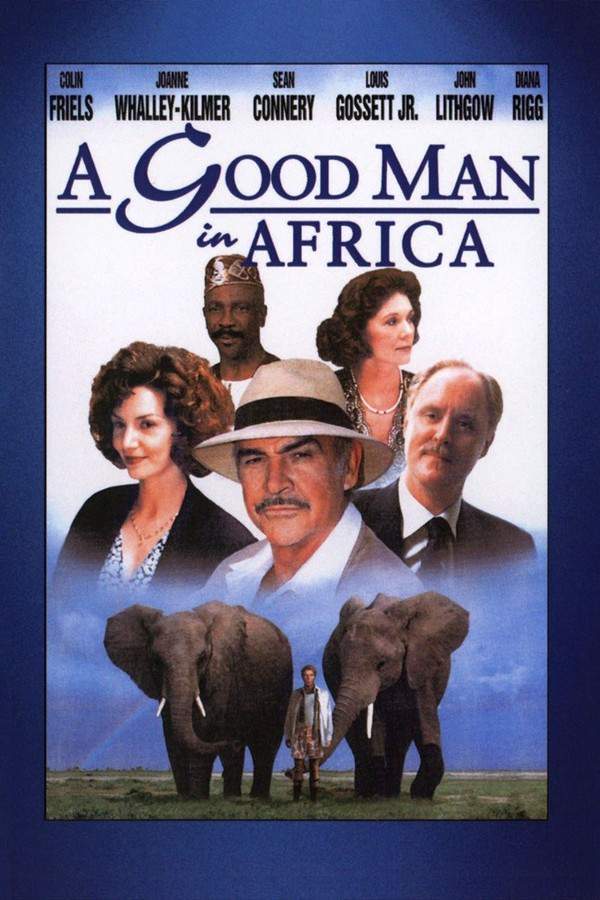
A Good Man in Africa (1994) Plot Summary & Ending Explained
Nigerian Prince (2018) Movie Recap & Themes
Mr. Jones (1993) Plot Summary & Ending Explained
Osuofia in London (2003) Full Summary & Key Details
Ben Johnson (2005) Movie Recap & Themes
Black Commando (1982) Detailed Story Recap
Tom Jones (1000) Full Summary & Key Details
The River Niger (1976) Movie Recap & Themes
Mister Moses (1965) Detailed Story Recap
Shaft in Africa (1973) Complete Plot Breakdown
Sanders of the River (1935) Story Summary & Characters
Kenner (1968) Complete Plot Breakdown
Black Joy (1977) Ending Explained & Film Insights
Emperor Jones (1933) Spoiler-Packed Plot Recap
Moses Jones (1000) Plot Summary & Ending Explained