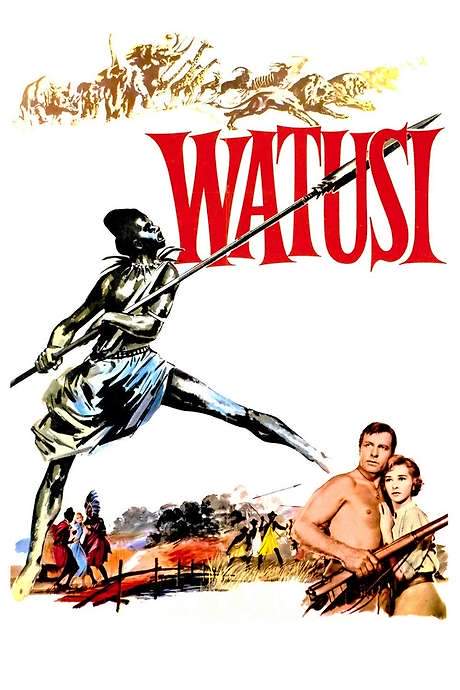
Beaten and expelled by African villagers for trying to cheat them, the unconscious Joe Moses Robert Mitchum drifts down a river and is discovered by the inhabitants of a neighboring village. That community faces pressure from District Officer Robert Ian Bannen to abandon their homeland, since waters released from a dam will flood the land; yet the villagers refuse to leave their homes. Deeply Christian, they compare Joe Moses to the biblical Moses because of his sudden appearance among the reeds, a moment that echoes the infant Moses’ discovery.
With a broken leg and no money, Joe Moses is taken in and cared for by missionary Rev. Anderson Alexander Knox and his daughter Julie Carroll Baker. Moses quickly wins the villagers’ trust with a show of healing and a knack for practical magic, turning his unexpected arrival into a kind of medicine‑show spectacle that fascinates the crowd. His presence also sparks awe when he recognizes Emily, an Indian elephant stationed in the village, and he trains her to respond to commands in Hindustani, a language he learned during his service in the China-Burma-India theatre.
The Chief Orlando Martins agrees to permit the exodus, but only if Moses leads the journey, step by step, with the elephant bearing the procession. Reverend Anderson and Julie weaponize their knowledge of Moses’s past, especially his diamond-smuggling, to pressure him into guiding the people toward what they call the "Promised Land." This manipulation casts a shadow over the mission, turning leadership into a bargaining chip and placing a moral burden on Moses as he navigates duty, desire, and self-preservation.
Seeing through Moses’s confidence tricks is an educated African, Ubi Raymond St. Jacques. Ubi initially considers allying with Moses to con other Africans, yet his plan shifts when a concealed flamethrower—used in a doomed attempt to steal Moses’s thunder—produces unintended, disastrous consequences that threaten everyone involved. The tension between aspiration and exploitation threads through the village’s exodus, testing loyalties and exposing the dangers of manipulation on a journey that mirrors a sacred pilgrimage.
As the villagers press forward atop the elephant, the trek unfolds with parallels to a biblical voyage: faith anchors them, leadership is tested, and the landscape itself becomes a participant in their fate. At a critical moment, the plan to part the waters—metaphorically and literally—emerges as a climactic test of resolve as the group confronts the dam and seeks a new beginning. Throughout, the narrative blends danger, commerce, and devotion, crafting a story about community, power, and the fragile line between salvation and exploitation.