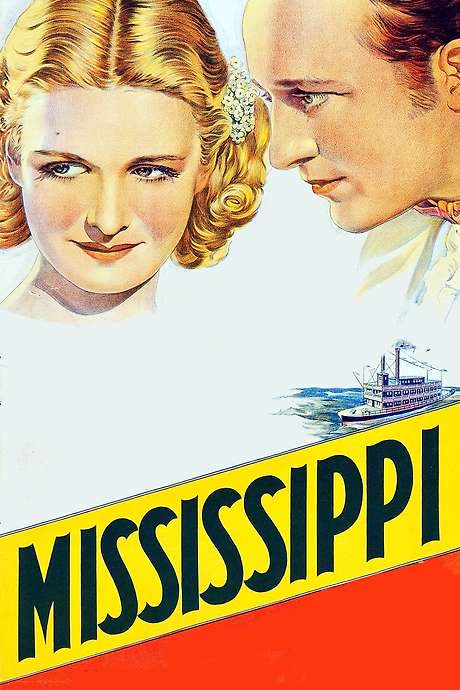
Set on a Mississippi showboat in the late nineteenth century, Commodore Jackson, W. C. Fields commands the ship as a roaming stage where romance, bravado, and danger mingle with the music that keeps the riverboat’s world spinning. Tom Grayson, [Bing Crosby], is a man faced with a harsh public judgment after he refuses to duel with Major Patterson, a decision that brands him a coward and casts a long shadow over his future. To escape the sting of disgrace, Grayson signs on with the Commodore’s showboat, stepping into a world he hadn’t planned to inhabit.
As the riverboat travels from town to town, Jackson fuels a growing disinformation campaign around Grayson, labeling him as The Notorious Colonel Steele and the Singing Killer. The Commodore even stages “duelling victories” for him by dragging corpses from the river beside the boat and presenting them as victims—yet another chapter in the legend of the supposed killer. The rumor mill does more than ruin Grayson’s reputation; it begins to reshape him from the inside, turning the once-meek man into someone who must decide what he truly believes about courage, loyalty, and love.
Lucy, [Joan Bennett], Grayson’s fiancée, watches these events unfold with a mix of concern and hope, hoping that the truth about the man she loves will prevail over the tall tales that keep swirling around him. The showboat becomes a crucible where Grayson’s character is tested, not by external duels but by the pressure of living up to a persona that others insist he must embody. The river and the performance space grow into a backdrop for a quiet transformation: from a restrained, almost passive figure into a man who begins to push back against a narrative that has defined him.
The film intertwines light entertainment with sharper social undertones, giving Crosby room to shine as a performer who can deliver warmth, wit, and a touch of melancholy. He sings Rodgers and Hart throughout the story, with the centerpiece number Soon providing a melodic thread that contrasts with the harsher flavors of rumor and reputation. The musical moments aren’t mere spectacle; they help illuminate Grayson’s inner shifts and the way art can both soothe and embolden a person under pressure.
Fields—who brings his hallmark humor and eccentric storytelling to the role of the Commodore—gets to play both raconteur and provocateur. There’s a memorable scene where he tries to coach Crosby on how to act tougher, a playful clash of temperaments that highlights the dynamic between the ship’s stern command and the younger man’s evolving resolve. The on-screen chemistry between Crosby and Fields—juxtaposing earnestness with sly bravado—gives the film its most enduring charm, especially as Crosby performs several sight gags that involve a chair and a bowie knife, moments that mix comedy with a touch of danger.
Beyond the central relationship, the narrative celebrates the endless color and bustle of showboat life—an ensemble of guests, gamblers, and performers moving through the ship’s decks, the dining room, and the opening nights. The tale is anchored by the tension between character and legend: Tom Grayson’s struggle to reclaim his name and his future, Lucy’s steadfast support, and the Commodore’s relentless push to shape a narrative that suits his theater of river life. In the end, the story offers a portrait of how reputations are built, contested, and sometimes reinvented on a stage where every gesture can be read as a declaration of courage or a fragile, performative lie.
With its blend of romance, humor, and melodrama, the film presents a vivid snapshot of a rowdy, romantic era on the Mississippi, where a showboat is more than a vessel—it is a moving arena for fame, fear, and the enduring question of what it means to be truly brave.