Plot Explained Spoilers guaranteed!
Plot Explained

Browse by genre

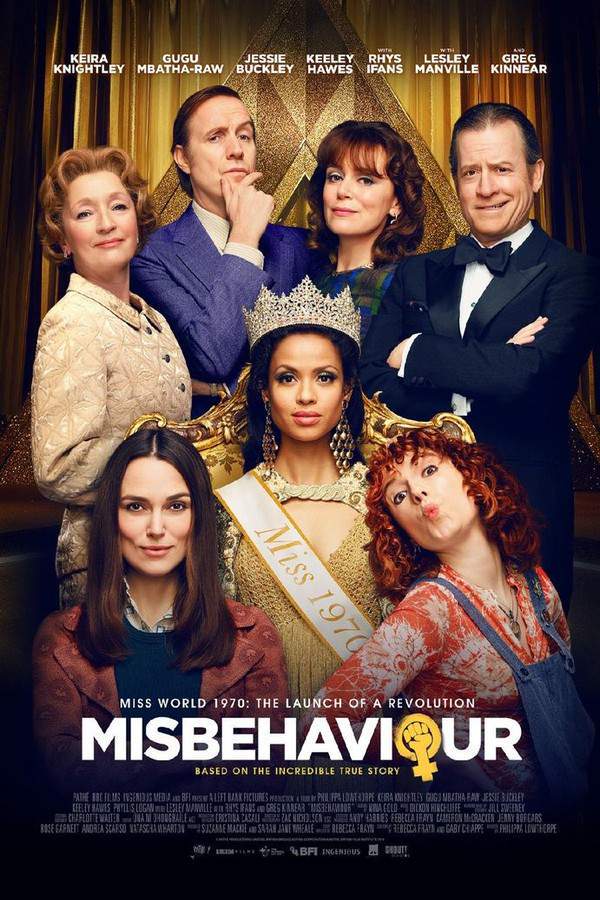
Misbehaviour (2020) movie poster

Plot Summary

Misbehaviour (2020) Plot Summary Explained

Release, runtime and language
2020 · 106 min · English
Echo score 75
Loading streaming availability…
Directed by
Philippa Lowthorpe
Starring
Kajsa Mohammar, Keira Knightley, Jessie Buckley, Greg Kinnear, Stephen Boxer, Ruby Bentall

During the 1970 Miss World competition in London, hosted by Bob Hope, the Women's Liberation Movement stages a dramatic protest, interrupting the live television broadcast. This unprecedented event challenges the competition's objectification of women and sparks a national conversation. The unexpected result sees Miss Grenada crowned, making her the first black woman to win the title, marking a significant moment that questions conventional beauty standards and societal expectations.

On this page (6)
  1. 1 Where to watch
  2. 2 What happens: full plot
  3. 3 Plot questions answered
  4. 4 Movie threads
  5. 5 Movies like Misbehaviour
  6. 6 Every angle
Loading streaming availability…

Full plot summary · contains spoilers

What Happens in Misbehaviour: Full Plot Summary

The whole story of Misbehaviour (2020) explained, from the opening scene to the final frame: every key event, every twist and what it all adds up to. Read it as a quick recap before the sequel, to check a scene you missed, or to finally understand what really happened.

Sally Alexander, Keira Knightley is a history student at University College London who is eager to understand how the past shapes the present. At a conference on women's rights, she meets Jo Robinson, Jessie Buckley, a passionate feminist organizer who fights for visibility and change. After helping Jo dodge arrest for defacing a sexist billboard, Jo invites Sally to join her women's group, where Sally helps shape the group’s messaging and media strategy for a planned protest at the 1970 Miss World pageant in London. The event is being presented by American comedian Bob Hope, Greg Kinnear, whose involvement is controversial inside his own household, particularly with Dolores, who disapproves of his affair with the pageant’s 1961 winner.

As the Miss World contestants arrive, the lineup includes Pearl Jansen (Miss Africa South) and Jennifer Hosten (Miss Grenada). Jennifer and Pearl connect over their shared experiences of racism, while Jennifer befriends Marjorie Johansson (Miss Sweden), the audience’s favorite who feels demeaned and exploited by the competition. Frustrated by the casual sexism she encounters at university, Sally devises a plan to disrupt the live television broadcast by mingling with the crowd. Several group members volunteer and purchase audience tickets. Pearl privately confides to Jennifer that apartheid-era South Africa warned her that she wouldn’t be allowed to return home if she spoke out about the treatment of Black South Africans. Sally's personal life also comes under strain as her mother questions the toll activism takes on Sally’s daughter and her relationship with Gareth.

A car bomb, attributed to an anarchist group, explodes outside the theatre hosting the event. Despite Gareth’s pleas for Sally to abort the protest, she and Jo press ahead. The pageant proceeds with contestants, the audience, organizers, and Hope crossing a precarious picket line of protestors. Hope opens the show with a volley of sexist quips. The judging panel reduces the field to seven finalists, among them Pearl and Jennifer. Jo and Sally’s group noisily interrupts with heckling and a flour bomb aimed at the stage. The two women are arrested, the broadcast is briefly halted, and then resumes. In a turning moment, Jennifer is crowned Miss World, the first woman of color to win, while Pearl takes second place. Behind the scenes, Sally is taken away by police and has a tense exchange with Jennifer about the protests.

The film’s epilogue sketches the later paths of the key figures: Jennifer goes on to study Political Science and International Relations and becomes Grenada’s High Commissioner to Canada; Sally becomes Professor of Modern History at the University of London; Jo gives birth five months after the competition and later trains as a midwife; Pearl returns to South Africa and pursues a singing career after the fall of Apartheid. The protest is portrayed as a significant ripple that helped bring the women’s liberation movement into broader public view. The closing note emphasizes the ongoing struggle with the line: > "Attempts to bring down the patriarchy remain ongoing."

Last updated: January 08, 2026 at 12:00

Was this helpful?

Plot questions answered

Misbehaviour Plot Explained: Your Questions Answered

The questions people ask most about Misbehaviour (2020): what happens in the confusing scenes, why the characters do what they do, the twists, hidden details and what the ending means. Each answer contains spoilers.

Q1

Why did Jennifer Hosten win Miss World?

Jennifer Hosten won Miss World 1970 after the protest disruption created an unexpected turn in the competition. While she was one of the seven finalists, the judges ultimately crowned her as the first woman of color to hold the title. Pearl Jansen, who had been warned by the South African apartheid regime not to speak out, took second place. The win was seen as a significant moment that challenged conventional beauty standards.

  • jennifer hosten
  • miss world 1970
  • first black winner
  • pearl jansen
Q2

What was the car bomb that exploded during the pageant?

A car bomb attributed to an anarchist group exploded outside the theatre hosting the Miss World competition. This occurred shortly before the pageant began and created chaos in an already tense atmosphere. Despite the explosion, the event continued with contestants, audience members, and Bob Hope crossing a picket line of protestors to enter the venue.

  • car bomb
  • miss world london
  • 1970 anarchist
Q3

Why was Pearl Jansen afraid to speak out about apartheid?

Pearl Jansen, representing Africa South, privately confided to Jennifer Hosten that the apartheid regime had warned her she would not be allowed to return home if she spoke out about the treatment of Black South Africans. This threat from the South African government created a dangerous dilemma for her during the competition, forcing her to remain silent about racial injustice while representing a country under apartheid rule.

  • pearl jansen
  • apartheid
  • threat
  • miss world 1970
Q4

What happened to Sally and Jo after the protest?

Sally Alexander and Jo Robinson were arrested during the protest for heckling Bob Hope and launching a flour bomb onto the stage. After being taken away by police, Sally had a tense backstage exchange with Jennifer Hosten about the protest. The epilogue reveals Sally became a Professor of Modern History at the University of London, while Jo gave birth five months after the competition and later trained as a midwife.

  • sally alexander
  • jo robinson
  • arrest
  • protest outcomes
Q5

Why did Bob Hope agree to host Miss World?

Bob Hope, the American comedian, agreed to host the 1970 Miss World pageant despite controversy within his own household. His wife Dolores disapproved of his involvement, particularly because of his affair with the pageant's 1961 winner. The film depicts Hope opening the show with sexist quips that highlighted the very attitudes the feminists were protesting.

  • bob hope
  • comedian
  • host
  • miss world 1970
Q6

How did the protest affect the Miss World pageant?

The protest significantly disrupted the live television broadcast. Jo and Sally's group heckled Bob Hope and launched a flour bomb onto the stage, causing the broadcast to be briefly halted. The chaos forced everyone to cross a picket line of protestors, and the interruption amplified the feminist message to a national audience. Despite the disruption, the competition resumed and crowned a winner.

  • protest disruption
  • broadcast
  • flour bomb
  • television
Q7

Why did Sally want to disrupt the Miss World pageant?

Sally Alexander, a history student at University College London, was frustrated by the casual sexism she encountered at university. After meeting Jo Robinson at a women's rights conference, she joined her women's group and helped shape their media strategy. She devised the plan to infiltrate the audience and disrupt the live broadcast as a direct action against the objectification of women promoted by beauty pageants.

  • sally alexander
  • feminist protest
  • motivation
  • sexism
Q8

What happened to Jennifer Hosten after winning Miss World?

After winning Miss World 1970, Jennifer Hosten went on to study Political Science and International Relations. She eventually became Grenada's High Commissioner to Canada, representing her country in diplomatic service. Her victory marked a significant moment as the first black woman to win the title.

  • jennifer hosten
  • high commissioner
  • grenada
  • diplomatic career
Q9

What was the significance of the 1970 Miss World protest?

The 1970 Miss World protest was a landmark moment for the women's liberation movement in Britain. It successfully disrupted a major televised event and brought feminist concerns about objectification and sexism into mainstream conversation. The protest is portrayed in the film as a pivotal ripple that helped bring the women's movement into broader public view, with the closing note emphasizing that attempts to bring down the patriarchy remain ongoing.

  • women's liberation movement
  • 1970 protest
  • historical significance
  • feminism
Q10

Why did Pearl Jansen take second place instead of winning?

Pearl Jansen finished as first runner-up to Jennifer Hosten despite being a strong contender. Though she was reduced to the final seven finalists alongside Jennifer, the judges ultimately crowned Jennifer as the winner. Pearl's second-place finish occurred despite her impressive performance, likely influenced by the political climate surrounding the pageant and the controversy of the protest.

  • pearl jansen
  • runner up
  • miss world results
  • africa south

Movie threads

More Movies Like Misbehaviour, by Mood & Story

Curated lists built around what makes Misbehaviour tick: the same mood, the same kind of story or the same emotional payoff. Each list explains why these movies belong together.

Inspiring Protest Dramas Based on True Events like Misbehaviour

Films centered on real-life activists who challenged the status quo. A collection of movies like Misbehaviour that dramatize real-life protest movements and pivotal moments of social activism. If you enjoyed seeing historical change unfold through character-driven drama, you'll find similar inspiring stories here.

  • empowering
  • tense
  • determined
  • historical
  • inspiring
  • activism
  • Tone: hopeful, determined, tense
  • Pacing: steady, build-up
Why these movies?

The story pattern: These narratives typically follow a build-up to a major public demonstration or act of civil disobedience, showing the planning, personal risks, and ideological conflicts leading to an event that challenges entrenched power structures. The aftermath often explores the mixed results and lasting impact of the action.

Why they belong together: Movies in this thread are grouped by their focus on dramatizing historical protests, blending factual events with human stories. They share a tone of hopeful determination, a steady narrative pace building to a climactic event, and a central theme of fighting for justice.

Bittersweet Journeys Towards Social Progress like Misbehaviour

Stories where victories for justice are hard-won and emotionally nuanced. Movies like Misbehaviour that explore the complexities of fighting for change, where success is tempered by the realization that the battle isn't over. If you liked the nuanced, bittersweet feel of progress, these films share that compelling emotional mix.

  • bittersweet
  • hopeful
  • reflective
  • empowering
  • thought-provoking
  • social justice
  • Tone: bittersweet, hopeful, reflective
  • Pacing: steady, character-driven
Why these movies?

The story pattern: The narrative arc follows a fight against an unjust system, culminating in a significant but partial victory. The focus is on the emotional and political complexities of activism, where characters achieve their immediate goals but are left with the understanding that systemic change requires continuous effort.

Why they belong together: These films are connected by their bittersweet emotional tone, which balances hope with a sober acknowledgment of reality. They avoid simplistic happy endings, instead focusing on the medium-intensity emotional weight and nuanced outcomes of fighting for a cause.

If you liked this

Movies Like Misbehaviour

Similar movies to Misbehaviour: the same genre, themes or kind of story. Each one comes with its own plot summary, timeline and ending explained.

Browse all movie summaries

Every angle

Misbehaviour (2020) Explained: Plot, Timeline & Characters

Everything about Misbehaviour in one place: what happens in the plot summary, the timeline in chronological order, the characters and meaning and a spoiler-free summary. What's After the Movie adds the cast, box office and post-credit scenes.

Coming soon on iOS and Android

The Plot Explained Movie Summary App

Plot summaries, endings explained and timelines on your phone. Catch up on any movie in minutes, save your favorites and never miss a twist again.

Be the first to know when we launch. Your email stays private, always.

Learn more about the app