Plot Explained Spoilers guaranteed!
Plot Explained

Browse by genre

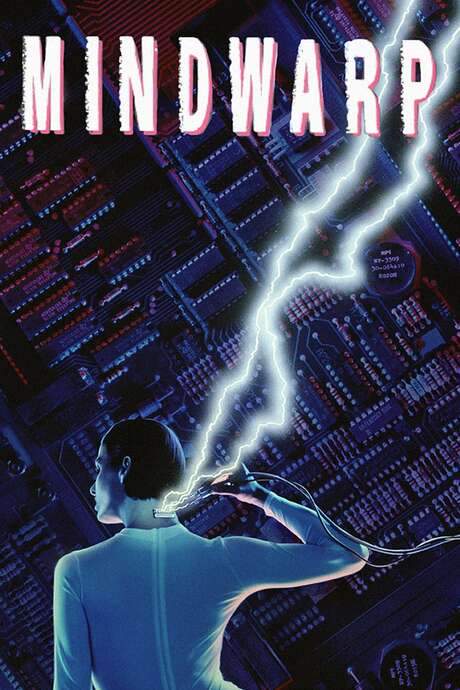
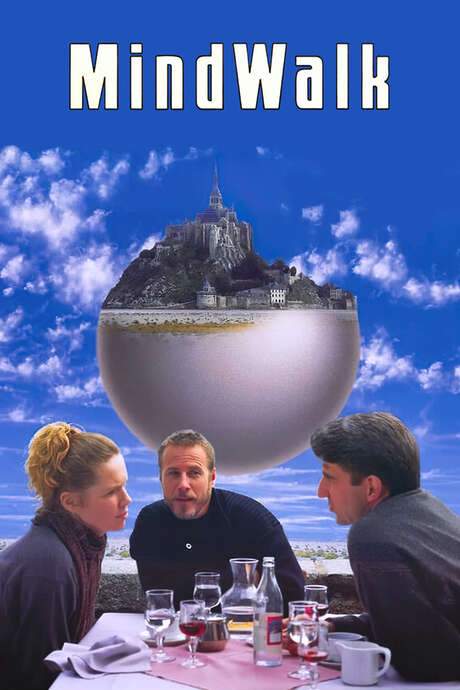
Mindwalk (1990) movie poster

Timeline

Mindwalk (1990) Timeline Explained – Every Event in Order

Release, runtime and language
1990 · 111 mins · English
Loading streaming availability…
Directed by
Bernt Amadeus Capra
Starring
Sam Waterston, John Heard, Liv Ullmann, Ione Skye

On Mont Saint‑Michel, a Norwegian physicist who abandoned a lucrative career after discovering her research was being used for weapons, an American politician coping with a recent presidential loss, and his disillusioned poet‑speechwriter friend wander the medieval abbey. Their dialogue weaves physics, politics, poetry and philosophy, examining social and political issues from their distinct intellectual perspectives.

On this page (6)
  1. 1 Where to watch
  2. 2 Events in order (12)
  3. 3 Timeline questions answered
  4. 4 Movie threads
  5. 5 Movies like Mindwalk
  6. 6 Every angle
Loading streaming availability…

12 events in order · contains spoilers

Mindwalk Timeline: Events in Chronological Order

Every key event of Mindwalk (1990) in order, scene by scene, with when and where it takes place. Use it to untangle flashbacks, time jumps and parallel storylines, to refresh your memory before the sequel or to find the exact scene you are thinking of.

  1. Three wanderers begin a thoughtful walk around Mont Saint-Michel

    Three travelers begin a thoughtful walk around Mont Saint-Michel, establishing the film's contemplative mood. The conversation settles on big questions about society and knowledge as Sonia, Jack, and Tom take turns speaking. Their surroundings become a silent interlocutor that shapes the tone of the dialogue.

    Where
    Mont Saint-Michel, Normandy
  2. Sonia reveals a deep moral conflict about her past work

    Sonia reveals a deep moral conflict stemming from her past work in physics. She explains that elements of her research were used in weapons development, which led her to abandon a lucrative career. She foregrounds holistic systems thinking as a way to address problems without ignoring their wider context.

    Where
    Mont Saint-Michel, Normandy
  3. Jack confronts his presidential defeat and seeks meaning

    Jack grapples with his recent defeat in the presidential race and searches for meaning beyond the campaign. He questions political narratives and the distance between public perception and reality. He looks for a way to respond that feels substantial rather than merely strategic.

    Where
    Mont Saint-Michel, Normandy
  4. Tom offers a lyrical perspective as poet and former speechwriter

    Tom contributes as a poet and former speechwriter, offering a lyrical angle to the discussion. He suggests that language and poetry can reveal connections that numbers alone miss. His presence brings a human touch to the debate and reminds the group of the stakes in public discourse.

    Where
    Mont Saint-Michel, Normandy
  5. Systems theory introduced as a framework for understanding problems

    Sonia introduces systems theory, explaining that problems are embedded in larger networks rather than being isolated. She argues that holistic thinking accounts for feedback loops, dependencies, and the interconnected consequences of actions. The others begin to see how politics, science, and culture influence each other beyond surface issues.

    Where
    Mont Saint-Michel, Normandy
  6. Multiple perspectives are considered for problem solving

    They discuss that different frameworks such as holistic, reductionist, and others offer valuable but incomplete insights. The emphasis shifts from finding a single correct solution to considering multiple lenses. Together they begin to see how combining viewpoints can yield a more robust understanding.

    Where
    Mont Saint-Michel, Normandy
  7. Physics as metaphor for complexity and interconnection

    The conversation uses ideas from quantum mechanics and particle physics as metaphors for complexity. They talk about uncertainty, probability, and nonlocal connections to illustrate how systems influence one another. This framing helps them view social and political issues as dynamic and intertwined rather than linear.

    Where
    Mont Saint-Michel, Normandy
  8. Acknowleding the limits of any single framework

    They acknowledge that no single framework fully captures reality. They warn against dogmatic adherence to any one school of thought. The dialogue points toward a path that honors diverse viewpoints and ongoing inquiry.

    Where
    Mont Saint-Michel, Normandy
  9. Science and policy carry moral responsibilities

    Sonia links scientific responsibility to policy implications. They discuss the moral duty of scientists when discoveries could be misused, and how policy must reflect systemic interdependencies. Ethical consideration is placed alongside practical solutions in their talk.

    Where
    Mont Saint-Michel, Normandy
  10. Broad problems, diverse viewpoints, not fixed answers

    They identify broad political and social problems but note that the film is not about finalized answers. Instead, the characters present alternative ways to view problems—through systems thinking, poetic insight, or pragmatic politics. The aim is to widen the frame for understanding rather than prescribe a single solution.

    Where
    Mont Saint-Michel, Normandy
  11. Tensions and mutual influence among the trio

    The dialogue reveals tensions and mutual influence among the trio. Jack challenges Sonia's approach while she responds with patient reasoning. Tom mediates with lyrical observation, guiding the conversation toward a shared exploratory stance.

    Where
    Mont Saint-Michel, Normandy
  12. Ending with Neruda’s Enigmas recited by Tom

    At the end, Tom recites Pablo Neruda's Enigmas, in the translation by Robert Bly, closing the core discussion. The recitation casts the exchange in a humanistic light and emphasizes mystery and interconnectedness. The film leaves a sense of unresolved questions rather than tidy answers.

    Where
    Mont Saint-Michel, Normandy

Last updated: March 05, 2026 at 18:38

Was this helpful?

Timeline questions answered

Mindwalk Timeline Explained: Your Questions Answered

When does it happen, and why in that order? The questions people ask about the chronology of Mindwalk (1990): time jumps, flashbacks, cause and effect between scenes and the correct order of events, each answered with spoilers.

Q1

Why did Sonia leave her lucrative career in physics?

Sonia left her physics career after discovering that parts of her research were being used for weapons development. This moral conflict became the driving force behind her adoption of holistic systems thinking, which she now uses as a framework to understand problems in their full context rather than in isolation. Her journey represents a scientist seeking to reconcile intellectual pursuit with ethical responsibility.

  • sonia hoffman
  • physics career
  • weapons research
  • moral conflict
  • systems thinking
Q2

What is systems theory and how does the film use it?

Systems theory is presented as a way of viewing problems as interconnected webs rather than isolated issues. Sonia introduces it as a framework where decisions ripple through families, communities, and nations through feedback loops and dependencies. The film uses this concept to argue that holistic thinking, considering long chains of consequences, offers a more responsible approach to science, politics, and personal choices than reductionist problem-solving.

  • systems theory
  • holistic thinking
  • interconnectedness
  • feedback loops
  • complex systems
Q3

Why is Jack's presidential defeat significant to the story?

Jack's recent presidential loss serves as the catalyst for his philosophical recalibration. Rather than treating defeat as a terminal setback, the film uses it to probe questions about leadership, accountability, and the limits of political rhetoric. His vulnerability after the loss opens him to consider perspectives beyond his previously pragmatic political framework, allowing genuine dialogue with Sonia and Tom.

  • jack edwards
  • presidential defeat
  • political loss
  • leadership
  • accountability
Q4

How does the film use quantum mechanics as a metaphor?

Quantum mechanics and particle physics serve as symbolic lenses for examining social choice, ethics, and power. The characters discuss uncertainty, probability, and nonlocal connections to illustrate how systems influence one another in nonlinear ways. This framing helps present social and political issues as dynamic and intertwined rather than simple cause-and-effect, suggesting that certainty is often an illusion in complex systems.

  • quantum mechanics
  • uncertainty
  • particle physics
  • metaphor
  • complexity
Q5

Why does Tom recite Neruda's poem at the end of the film?

Tom recites Pablo Neruda's "Enigmas" to close the discussion, casting the entire exchange in a humanistic light. The poem emphasizes mystery as a mode of understanding rather than avoidance, which aligns with the film's stance that truth exists as a spectrum of interpretations. The recitation serves as a bridge between intellect and emotion, inviting viewers to carry the conversation forward rather than expecting tidy answers.

  • tom harriman
  • neruda poem
  • enigmas
  • poetry
  • resolution
Q6

What do the three main characters each represent philosophically?

Sonia represents the holistic, systems-theory viewpoint focused on interconnected consequences. Jack embodies pragmatic political sensibility and the tension between ambition and public service. Tom serves as the poetic conscience, using language and beauty to reveal connections that numbers alone miss. Together, their three perspectives form a dialogue between science, politics, and poetry.

  • sonia jack tom
  • three perspectives
  • philosophy
  • science politics poetry
Q7

Does the film offer any concrete answers or solutions?

The film deliberately avoids offering concrete answers or definitive solutions. Instead, it presents alternative ways to view problems, through systems thinking, poetic insight, or pragmatic politics. The emphasis remains on seeing the whole rather than selecting a single correct answer, leaving viewers with expanded perspectives rather than conclusions.

  • answers
  • solutions
  • resolution
  • philosophy
  • open ending
Q8

Why is Mont Saint-Michel used as the setting?

Mont Saint-Michel serves as both backdrop and metaphor, a place where history and nature intersect, where ancient stones echo human contemplation. Its medieval architecture and tidal isolation create an intimate yet monumental atmosphere conducive to philosophical inquiry. The island's timelessness mirrors the eternal nature of the questions being discussed about knowledge, power, and responsibility.

  • mont saint-michel
  • setting
  • medieval abbey
  • normandy
  • atmosphere
Q9

What is the film's central message about knowledge and power?

The film argues that knowledge, power, and art shape one another across the thresholds of science, politics, and poetry. It presents a meditation on responsibility and curiosity, suggesting we must consider how our decisions ripple through systems larger than ourselves. The central message emphasizes interdependence, that no single framework captures reality fully, and wisdom comes from honoring diverse viewpoints while remaining humble about uncertainty.

  • knowledge
  • power
  • responsibility
  • interdependence
  • message
Q10

Why does the film have almost no traditional plot?

The film prioritizes intellectual curiosity and philosophical exploration over conventional narrative structure. Rather than a plot-driven story, it functions as a sustained dialogue examining systems theory, quantum mechanics, politics, and poetry. The absence of traditional plot allows the ideas themselves to become the focus, rewarding attentive listening rather than requiring dramatic action to maintain engagement.

  • plot structure
  • dialogue
  • philosophical film
  • narrative
  • experimental

Movie threads

More Movies Like Mindwalk, by Mood & Story

Curated lists built around what makes Mindwalk tick: the same mood, the same kind of story or the same emotional payoff. Each list explains why these movies belong together.

Philosophical conversation movies like Mindwalk

Profound discussions about life, meaning, and society in atmospheric settings. Discover movies featuring deep intellectual dialogues similar to Mindwalk. These films explore big ideas through conversation-driven narratives, perfect for viewers who enjoy philosophical discourse and atmospheric settings.

  • philosophical
  • conversational
  • atmospheric
  • intellectual
  • contemplative
  • melancholic
  • Tone: melancholic, intellectual, contemplative
  • Pacing: slow, deliberate, conversational
Why these movies?

The story pattern: Driven primarily by dialogue rather than action, these stories unfold through conversations that explore complex philosophical, political, or ethical questions. Characters often serve as representatives of different worldviews, with conflicts emerging from ideological clashes.

Why they belong together: Movies in this thread share a focus on intellectual discourse as the primary narrative engine, featuring disillusioned characters grappling with systemic issues in contemplative settings that enhance the philosophical tone.

Movies about disillusioned experts questioning systems like Mindwalk

Professionals confronting the ethical failures of their own fields and societies. If you enjoyed Mindwalk's exploration of professionals questioning their fields, discover movies featuring similar narrative arcs. These stories follow characters confronting systemic failures and seeking new paradigms.

  • disillusioned
  • intellectual
  • ethical
  • philosophical
  • contemplative
  • system-critique
  • Tone: melancholic, disillusioned, intellectually heavy
  • Pacing: slow, reflective, dialogue-heavy
Why these movies?

The story pattern: Protagonists who have achieved success within established systems suddenly see the flaws and ethical compromises. The story follows their intellectual and emotional journey as they question everything they once believed, often through dialogue with others.

Why they belong together: These films share protagonists confronting the moral and philosophical failures of the systems they're embedded in, featuring intellectual characters undergoing profound shifts in worldview through conversation and reflection.

If you liked this

Movies Like Mindwalk

Similar movies to Mindwalk: the same genre, themes or kind of story. Each one comes with its own plot summary, timeline and ending explained.

Browse all movie summaries

Every angle

Mindwalk (1990) Explained: Plot, Timeline & Characters

Everything about Mindwalk in one place: what happens in the plot summary, the timeline in chronological order, the characters and meaning and a spoiler-free summary. What's After the Movie adds the cast, box office and post-credit scenes.

Coming soon on iOS and Android

The Plot Explained Movie Summary App

Plot summaries, endings explained and timelines on your phone. Catch up on any movie in minutes, save your favorites and never miss a twist again.

Be the first to know when we launch. Your email stays private, always.

Learn more about the app