









Plot Explained Spoilers guaranteed!
Plot Explained

Browse by genre

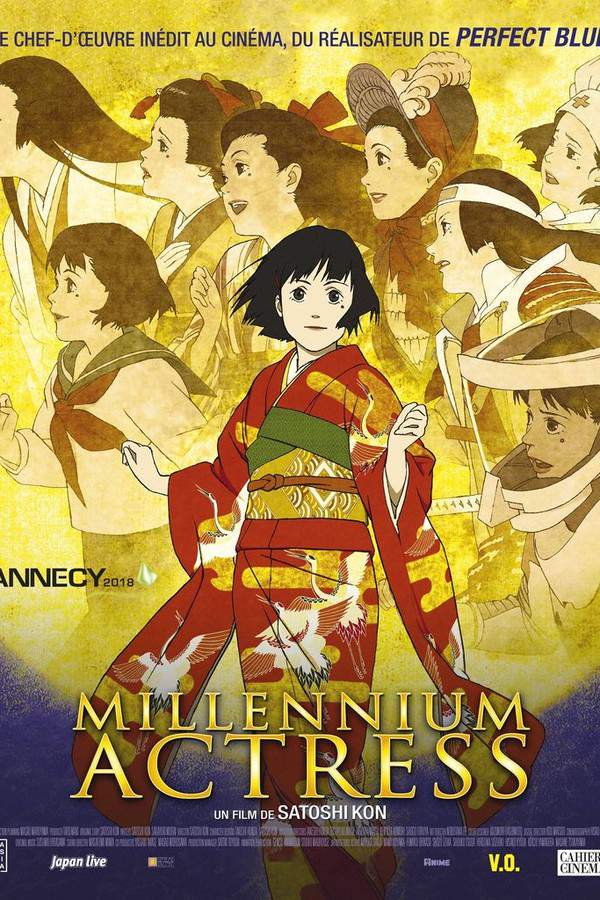
Millennium Actress (2003) movie poster

Timeline

Millennium Actress (2003) Timeline Explained – Every Event in Order

Release, runtime and language
2003 · 87 min · Japanese
JustWatch #12,841 10
Directed by
Satoshi Kon
Starring
Miyoko Shôji

A celebrated actress, nearing the end of her career, agrees to be the subject of a documentary. During filming, she shares her remarkable life story with the filmmakers, revealing a past filled with captivating roles and personal drama. The narrative interweaves her on-screen performances with the events of her life, exploring themes of love, loss, and the powerful connection between an actor’s identity and their art.

On this page (6)
  1. 1 Where to watch
  2. 2 Events in order (14)
  3. 3 Timeline questions answered
  4. 4 Movie threads
  5. 5 Movies like Millennium Actress
  6. 6 Every angle

Where to watch

Where to Watch Millennium Actress (2003)

Where can you watch Millennium Actress? Stream, rent or buy it in the US, including on AsianCrush, HBO Max and Retrocrush: current JustWatch availability with up-to-date prices.

Streaming availability powered by JustWatch

14 events in order · contains spoilers

Millennium Actress Timeline: Events in Chronological Order

Every key event of Millennium Actress (2003) in order, scene by scene, with when and where it takes place. Use it to untangle flashbacks, time jumps and parallel storylines, to refresh your memory before the sequel or to find the exact scene you are thinking of.

  1. Chiyoko's First Interview

    Chiyoko Fujiwara agrees to participate in her first interview in three decades as the Ginei film company readies to demolish its old studio. This moment marks a pivotal point in her life, reflecting on her legacy in the film industry and the passage of time since her abrupt departure.

    When
    Present day
    Where
    Ginei Film Studio
  2. The Great Kantō Earthquake

    Chiyoko's journey begins during the devastation of the 1923 Great Kantō earthquake, which tragically claims the life of her father. This event sets the stage for her tumultuous relationship with loss and her desire for escape into the world of acting.

    When
    1923
    Where
    Tokyo
  3. The Call to Stardom

    Despite her mother's disapproval, Chiyoko is recruited by Ginei's general manager to star in a government film designed to bolster soldiers' spirits during the Second Sino-Japanese War. This invitation ignites her passion for acting, pulling her further away from her family's confectionery shop.

    When
    During the Second Sino-Japanese War
    Where
    Ginei Film Studio
  4. The Artist's Arrival

    Chiyoko's life takes a turn when she meets a political dissident painter who is hiding from the authorities. She chooses to help him by hiding him in her home's storehouse, marking the beginning of a profound connection between them.

    When
    Before the painter's escape
    Where
    Chiyoko's Home
  5. A Promise of Reunion

    After the painter flees to Manchuria to join his comrades, Chiyoko is left with a key he gave her. This key symbolizes his art supplies and their shared promise to reunite, a promise that continues to resonate throughout her life and career.

    When
    Before his departure
  6. Manchuria and New Beginnings

    Chiyoko pursues her acting career in Manchuria, motivated by the hope that the artist will find her there. Along the way, she meets Junichi Ōtaki and Eiko Shimao, who become crucial figures in her film career and personal life.

    When
    During her acting career
    Where
    Manchuria
  7. Encounters with Danger

    While filming in northern Manchuria, Chiyoko's journey becomes perilous when bandits ambush her train. This event forces her narrative into a dramatic setting reminiscent of the Sengoku period, where she faces grave danger.

    When
    During her filming
    Where
    Northern Manchuria
  8. The Cursed Fate

    In a dramatic turn, Chiyoko finds herself as a princess who is tricked into consuming a cursed tea. This moment signifies her struggle with love and fate, echoing the trials of her past as she seeks the artist.

    When
    In a dramatic reenactment
  9. Chasing Shadows of the Past

    After World War II, although Chiyoko rises to stardom, she remains haunted by memories of the artist. Her emotional turmoil intensifies when she realizes that her memories of him are fading, prompting her to consider a more ordinary life.

    When
    Post World War II
    Where
    Film Set
  10. Eiko's Deceit

    Eiko, jealous of Chiyoko's innocence and success, steals the key that symbolizes Chiyoko's memories of the artist. This betrayal leads Chiyoko into a deeper reflection about her relationships and the nature of her love for the artist.

    When
    During production
  11. The Letter from the Artist

    An elderly man arrives with a letter from the artist, reigniting Chiyoko’s hope of reconnecting. This event sends her on a journey to the artist's hometown in Hokkaido, but the quest ends in disappointment and lack of closure.

    When
    After receiving the letter
    Where
    Hokkaido
  12. The Final Film and Disaster

    While making her last film, an earthquake strikes, and Chiyoko finds herself trapped in the chaos. An unexpected savior, a young Genya, manages to rescue her, marking the end of her acting career.

    When
    During filming
    Where
    Film Set
  13. Facing the Reflection

    In the aftermath of her acting life, Chiyoko sees the wraith of her past in her own reflection. This profound realization forces her to confront the passage of time and the lost innocence of her youth.

    When
    Present day
  14. Final Moments of Clarity

    As the interview concludes, another earthquake shakes Chiyoko's world, worsening her health. In her final moments, she expresses gratitude to Genya for rekindling her memories, reaffirming her love for the artist and their journey.

    When
    Present day

Last updated: November 08, 2024 at 07:05

Was this helpful?

Timeline questions answered

Millennium Actress Timeline Explained: Your Questions Answered

When does it happen, and why in that order? The questions people ask about the chronology of Millennium Actress (2003): time jumps, flashbacks, cause and effect between scenes and the correct order of events, each answered with spoilers.

Q1

Why did Chiyoko stop acting for three decades?

Chiyoko withdrew from acting after a devastating earthquake struck during the filming of her final movie. While trapped in the collapsing set, she was rescued by a young Genya Tachibana, who was then an assistant. The experience haunted her, as she saw the wraith's image in the prop mirror and realized she was no longer the young girl the artist had loved. This moment broke her psychologically, convincing her that her youth and purest self were lost, leading her to abandon her career entirely.

  • chiyoko retirement
  • acting career end
  • earthquake accident
  • genya rescue
Q2

What happened to the painter Chiyoko loved?

The painter was a political dissident hiding from authorities who Chiyoko sheltered in her home's storehouse. He eventually fled to Manchuria to join his comrades, leaving Chiyoko with the key to his art supplies box. Decades later, an elderly former policeman who had pursued the artist delivered a letter from him to Chiyoko. During the interview, Genya learns and confesses to Kyoji that the artist was tortured to death by the police, making their reunion impossible.

  • artist death
  • painter fate
  • manchuria
  • police torture
  • letter from artist
Q3

Why did Eiko steal the key from Chiyoko?

Eiko Shimao, the leading actress at Ginei, was jealous of Chiyoko's innocence and popularity. She stole the key not for its monetary value, but as a calculated move to undermine Chiyoko's emotional stability. By taking the key, Eiko hoped to sever Chiyoko's connection to the artist and make her more susceptible to settling down with Junichi Ōtaki, thereby clearing the path for her own designs on the director.

  • eiko jealousy
  • key theft
  • rival actress
  • junichi
Q4

What was the significance of the key Chiyoko kept throughout her life?

The key originally belonged to the painter's art supplies box. He gave it to Chiyoko as a symbol of their promise to reunite when he left for Manchuria. Throughout her life, Chiyoko kept the key as a tangible connection to her first love and the hope of reunion. When Genya presents it to her at the interview, it acts as a key to unlock her memories, which she admits had been fading. The key represents her unwavering commitment to the promise she made and the love that defined her journey.

  • antique key
  • promise reunion
  • memory
  • artist connection
Q5

Why did Chiyoko marry Junichi if she still loved the artist?

After Eiko stole the key, Chiyoko experienced a crisis: her memories of the artist were fading, making the pain of waiting feel increasingly pointless. Junichi Ōtaki, the general manager's nephew and a budding director who had loved Chiyoko throughout her career, offered her stability and companionship. Chiyoko chose to accept an ordinary life with him, not because she stopped loving the artist, but because the fading memories made holding onto that love unbearable.

  • marriage
  • junichi
  • ordinary life
  • memories fading
Q6

How does the film blend Chiyoko's real life with her movie roles?

The film uses a seamless narrative device where Chiyoko's interview recollections transition fluidly between her actual life experiences and the films she starred in. For example, her escape from bandits in Manchuria shifts into a Sengoku-period setting where she plays a princess. This isn't random, each film role reflects a stage of her real journey seeking the artist. The boundaries between her acting and reality blur entirely, representing how her entire life became devoted to her quest for love.

  • narrative technique
  • nonlinear
  • genre switching
  • movie within movie
  • biopic
Q7

Why does Chiyoko see a wraith in her reflection?

During the earthquake that ended her career, Chiyoko was trapped and saw a wraith-like image in a prop mirror while awaiting rescue. This vision came to symbolize her realization that the young girl the artist had fallen in love with no longer existed. In the present day, she sees this same wraith in her reflection, confronting the reality that time has transformed her into someone unrecognizable from the hopeful young woman who promised to wait for the painter.

  • wraith
  • mirror
  • earthquake trauma
  • lost youth
  • reflection
Q8

What happened when Chiyoko went to Hokkaido to find the artist?

After receiving a letter from the artist via the elderly policeman, Chiyoko traveled to the artist's hometown in Hokkaido hoping to reunite with him. However, her quest yielded no closure, she did not find him there. The journey represented the final chapter of her decades-long search, ending in the painful acknowledgment that their reunion would never happen, yet she continued carrying the key and her love nonetheless.

  • hokkaido
  • failed reunion
  • artist hometown
  • final search
Q9

Why did Genya save Chiyoko during the earthquake?

Genya Tachibana was an assistant at the film studio when the earthquake struck during the making of Chiyoko's final film. He bravely rescued her from the collapsing set, an act that clearly had deep significance for him since he was a lifelong admirer of her work. This rescue created a profound connection between them, which explains why decades later, as an established documentarian, he was so determined to interview her and why she thanked him for rekindling her memories.

  • genya rescue
  • earthquake
  • assistant
  • lifelong fan
  • gratitude
Q10

Why does Chiyoko thank Genya at the end?

In her final moments, Chiyoko expresses gratitude to Genya for bringing the key and reminding her of the artist. She explains that the key reopened her cherished memories of love and the journey she undertook. Even though she is dying without reuniting with the painter, she finds peace because the memories were reawakened. She affirms that her heart always belonged to the quest itself, not the destination, finding beauty in the searching rather than the finding.

  • death scene
  • gratitude
  • memories
  • key
  • peace
  • journey over destination

Movie threads

More Movies Like Millennium Actress, by Mood & Story

Curated lists built around what makes Millennium Actress tick: the same mood, the same kind of story or the same emotional payoff. Each list explains why these movies belong together.

Dreamy Memory Journeys like Millennium Actress

Dreamlike stories where characters explore their pasts with a bittersweet sense of longing. Explore movies like Millennium Actress that use surreal, flowing narratives to delve into themes of nostalgia and memory. If you enjoyed the blend of personal history and cinematic fantasy in Millennium Actress, these films offer similarly reflective and bittersweet journeys.

  • nostalgic
  • dreamlike
  • melancholic
  • reflective
  • surreal
  • haunting
  • Tone: melancholic, reflective
  • Pacing: variable, contemplative
Why these movies?

The story pattern: Narratives in this thread are often framed by recollection, with characters looking back on their lives. The structure tends to be subjective and non-linear, weaving together past and present, reality and imagination, to create a deeply personal and emotionally resonant arc centered on themes of love, loss, and the meaning of a life's journey.

Why they belong together: These movies are grouped by their shared melancholic tone, dreamlike mood, and complex narrative structures that break from conventional timelines. They all focus on the emotional weight of memory and the bittersweet nature of looking back, creating a cohesive, reflective viewing experience.


Movies About Artists and Their Work like Millennium Actress

Films that explore how an artist's life and work become inextricably intertwined. Discover films similar to Millennium Actress that explore the deep connection between an artist's life and their art. If you were fascinated by how Chiyoko's films mirrored her personal quest, these movies about painters, writers, and musicians offer profound insights into the creative soul.

  • romantic
  • reflective
  • passionate
  • tragic
  • inspirational
  • obsessive
  • Tone: melancholic, romantic
  • Pacing: steady, character-driven
Why these movies?

The story pattern: These narratives follow artists—painters, writers, actors, musicians—as they navigate their careers and personal lives. A central conflict is often the tension between artistic passion and personal fulfillment, with the artist's work serving as both an expression of and an escape from their reality. The story structure frequently mirrors the artist's subjective experience.

Why they belong together: These films share a focus on the artistic temperament and the biographical arc of a creator. They are united by themes of artistic obsession, the cost of genius, and the blurring of life and art, creating a specific vibe of romantic tragedy and creative passion.

If you liked this

Movies Like Millennium Actress

Similar movies to Millennium Actress: the same genre, themes or kind of story. Each one comes with its own plot summary, timeline and ending explained.

Browse all movie summaries

Every angle

Millennium Actress (2003) Explained: Plot, Timeline & Characters

Everything about Millennium Actress in one place: what happens in the plot summary, the timeline in chronological order, the characters and meaning and a spoiler-free summary. What's After the Movie adds the cast, box office and post-credit scenes.

Coming soon on iOS and Android

The Plot Explained Movie Summary App

Plot summaries, endings explained and timelines on your phone. Catch up on any movie in minutes, save your favorites and never miss a twist again.

Be the first to know when we launch. Your email stays private, always.

Learn more about the app