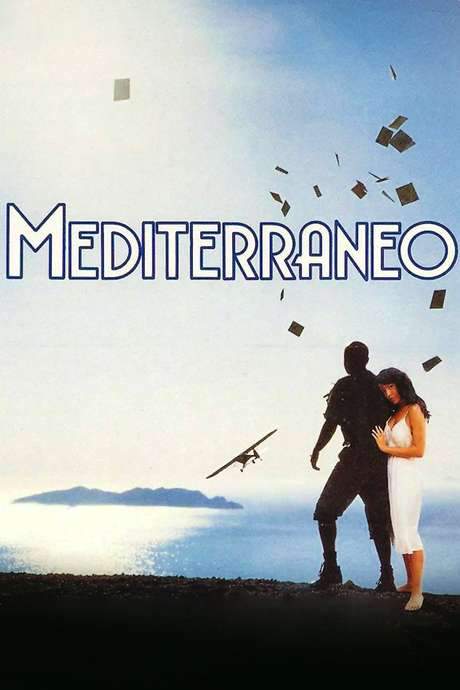
In 1941, one year after Italy aligned with Germany against the Allies in World War II, a small group of misfit Italian soldiers is sent to Megísti, a tiny Greek island in the Aegean Sea, for four months of lookout duty. The ensemble is a cross section of ordinary men who find themselves drawn to the island and its people: Lt. Raffaele Montini, a lieutenant with a painter’s eye, and Sgt. Nicola Lo Russo, a macho sergeant with a stubborn streak; a ski instructor who travels with his beloved donkey Silvana; and a handful of other quirky souls who discover that warmth and humor can bloom even in the margins of war. The group’s shared vibe is playful and resilient, repeatedly echoed by the motto they mutter to each other: > One face, one race
They arrive expecting danger, but their initial efforts to fortify the island are clumsy and lighthearted rather than heroic. They stumble upon a small town with no townspeople, and as night falls they witness distant bombing on the horizon. Through radio intercepts, they learn the ship meant to pick them up has been destroyed, a blow that should unsettle them yet somehow seeps into a calmer, almost dreamlike pace. The villagers later reappear, explaining that the Germans had taken all the men, yet, seeing how harmless the Italians appear, they choose to slip back into their everyday routines. The landscape—hot, bright, and serenely indifferent—begins to mold the soldiers into a different rhythm, a tempo less about marching and more about living. On the island, the local Orthodox priest befriends the lieutenant, a painter by instinct, and asks him to restore the murals in his church, inviting art into daily faith and ritual. Orthodox priest The lieutenant’s artfulness becomes a bridge between duty and beauty, and the priest’s trust grants him a canvas for quiet defiance against the war’s noise.
As days drift by, two soldiers who are brothers form a bond with a young shepherdess, a trio whose affection deepens with shared days under the sun and on the dusty lanes. They eventually consummate their friendship, and the shepherdess loves them both equally, a gentle counterpoint to the war that rages only in distant headlines. Meanwhile, Sergeant Lo Russo—still the only member of the group with a real taste for conflict—turns to folk dancing, letting the island’s warmth loosen his grip on war’s gravity and prompting him to ponder his place in the world. In a parallel thread, the shyest soldier, Antonio Farina, finds love with the island’s prostitute, Vassilissa. Their tender bond leads to marriage, and they choose to stay on the island so Vassilissa can pursue her dream of opening a restaurant, a bright aspiration that seems to bloom even in the shadow of war. The remaining soldiers eventually return to Italy, carrying with them memories that smell of sun, salt, and forgiveness rather than victory.
As time folds forward, the three men who remain most tethered to the island’s peace—those who have chosen to listen to its tempo—are drawn back together in old age, prompted by visits to the tomb of Vassilissa, who has since passed away. Their reunion on Megísti is a quiet testament to a life altered by a war they never truly felt as theirs, a life where friendship, art, love, and simple rituals of daily living outlast the echoes of conflict.