Plot Explained Spoilers guaranteed!
Plot Explained

Browse by genre

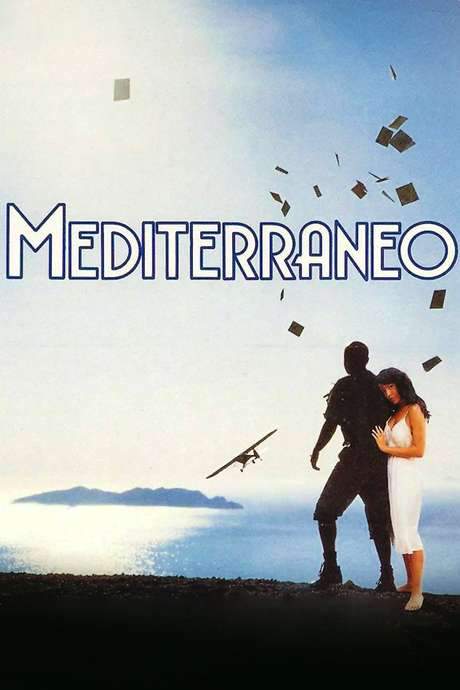
Mediterraneo (1991) movie poster

Timeline

Mediterraneo (1991) Timeline Explained – Every Event in Order

Release, runtime and language
1991 · 96 mins · Italian
Directed by
Gabriele Salvatores
Starring
Claudio Bigagli, Giuseppe Cederna, Diego Abatantuono, Ugo Conti, Claudio Bisio, Antonio Catania

On a Greek island during World War II, an Italian warship leaves a small crew to watch the coast and defend the island if needed. The quiet village appears deserted, so the soldiers begin to relax, finding love and leisure more appealing than combat. After their ship is destroyed by enemy fire, they are stranded and must confront their new reality.

On this page (5)
  1. 1 Events in order (12)
  2. 2 Timeline questions answered
  3. 3 Movie threads
  4. 4 Movies like Mediterraneo
  5. 5 Every angle

12 events in order · contains spoilers

Mediterraneo Timeline: Events in Chronological Order

Every key event of Mediterraneo (1991) in order, scene by scene, with when and where it takes place. Use it to untangle flashbacks, time jumps and parallel storylines, to refresh your memory before the sequel or to find the exact scene you are thinking of.

  1. Deployment to Megisti

    In 1941, a misfit group of Italian soldiers is sent to Megisti for four months of lookout duty. The unit includes a lieutenant who loves art, a macho sergeant, a ski instructor with his beloved donkey Silvana, and several quirky companions. They arrive with a sense of duty but are quickly drawn into the island's heat, light, and easy pace, far from a real war.

    When
    1941
    Where
    Megisti, Greece
  2. Inept wartime precautions

    With war seemingly distant, the soldiers prepare for an attack in overly elaborate ways, but their methods prove comically wrong. Their nervous energy clashes with the island's idle rhythm, revealing their unfamiliarity with actual combat. The mood shifts from alert to languid curiosity as they settle in.

    When
    1941
    Where
    Megisti, Greece
  3. Bombing horizon and lost pickup

    That night they see bombing on the horizon and, through radio intercepts, learn the ship that was supposed to pick them up has been destroyed. The revelation traps them on the island and reframes their sense of time. They begin to confront being stranded rather than ready to depart.

    When
    1941
    Where
    Megisti, Greece
  4. Villagers reappear and explain

    The villagers reemerge from hiding and reveal they had fled because Germans took all the men, but now see the Italians as harmless and resume their ordinary lives. The episode marks a turning point from fear to communal life. It also shows war’s absence in the everyday rhythm of the island.

    When
    1941
    Where
    Megisti, Greece
  5. Integration and cross-cultural warmth

    The Italian soldiers are absorbed into island life, enjoying the landscape and the hospitality of the Greeks and a visiting Turk. The refrain 'One face, one race' appears as a shared belief that humans can coexist across differences. The soldiers start to see the island as home rather than a battleground.

    When
    1941
    Where
    Megisti, Greece
  6. Priest and murals restoration

    The Orthodox priest befriends the lieutenant, who is an amateur painter, and asks him to restore murals in the church. Their collaboration deepens their bond and reveals art as a bridge between soldiers and locals. The lieutenant’s sketches begin to transform the village space.

    When
    1941
    Where
    Village church, Megisti, Greece
  7. Brothers and the shepherdess

    Two soldiers who are brothers befriend a young shepherdess, forming a complex, affectionate bond. The shepherdess, in turn, loves them both equally, creating a delicate triangle of care and emotion. Their relationship becomes a quiet, human center of the island’s life.

    When
    1941
    Where
    Megisti, Greece
  8. Farina falls for Vasilissa

    The shyest soldier, Farina, falls in love with Vasilissa, the island’s prostitute. Their romance blossoms slowly as they navigate trust and desire in a place far from wartime rules. The bond between them hints at a future beyond Italy for some of the men.

    When
    1941
    Where
    Megisti, Greece
  9. Wedding and island life

    Farina and Vasilissa marry and decide to stay on the island, pursuing Vasilissa’s dream of opening a restaurant. Their union becomes a symbol of choosing life over duty. Meanwhile, the rest of the group prepares to return to Italy.

    When
    1941
    Where
    Megisti, Greece
  10. Lo Russo’s existential turn

    Sergeant Lo Russo, the group’s fiery wartime spirit, takes up folk dancing and begins to reflect on his place in the universe. The light, communal moments contrast with earlier aggressive impulses, signaling inner change. The dance becomes a quiet rebellion against war’s logic.

    When
    1941
    Where
    Megisti, Greece
  11. The group returns to Italy

    The rest of the soldiers eventually decide to return to Italy, leaving the island to its sunlit routines and the couple who chose to stay. Their departure underscores the island’s power to change lives even as war continues elsewhere. The departure marks the end of their four-month assignment as soldiers.

    When
    1941
    Where
    Megisti, Greece
  12. Old age reunion and Vasilissa’s tomb

    Many years later, three of the men return to the island to visit Vasilissa’s tomb and are briefly reunited there. Vasilissa had died in the intervening years, but her memory connects the men to the place. The island remains a quiet witness to their histories and choices.

    When
    late life
    Where
    Megisti, Greece

Last updated: October 09, 2025 at 15:01

Was this helpful?

Timeline questions answered

Mediterraneo Timeline Explained: Your Questions Answered

When does it happen, and why in that order? The questions people ask about the chronology of Mediterraneo (1991): time jumps, flashbacks, cause and effect between scenes and the correct order of events, each answered with spoilers.

Q1

Why did the villagers hide from the Italian soldiers at first?

The villagers initially hid because the Germans had taken all the men from the island. When they saw the Italian soldiers arriving, they feared another occupying force. However, once they realized the Italians were harmless and only there for lookout duty, they felt safe enough to return to their everyday routines.

  • villagers
  • germans
  • hiding
  • occupation
  • fear
Q2

Why did the Italian soldiers decide to stay on the island instead of trying to return?

After their ship was destroyed by enemy fire, the soldiers found themselves stranded with no way to leave. Rather than fight against this reality, they gradually surrendered to the island's peaceful rhythm. The warmth of the locals, the beautiful landscape, and the slow passage of time made them question whether returning to war and duty was worth abandoning this unexpected happiness.

  • ship destroyed
  • stranded
  • island life
  • surrender
  • war
Q3

Why did Farina choose to marry Vassilissa and stay on the island?

Farina was the shyest of the soldiers, and his relationship with Vassilissa, the island's prostitute, developed into genuine love over time. Their bond gave him a sense of belonging that Italy and the war could not provide. When they married, he chose to stay so they could pursue Vassilissa's dream of opening a restaurant, creating a new life together away from the conflict.

  • farina
  • vassilissa
  • marriage
  • love
  • restaurant
  • stay
Q4

What was the significance of the church murals restoration?

The Orthodox priest asked Lieutenant Montini, who was a painter by instinct, to restore the murals in the village church. This collaboration became a bridge between the Italian soldiers and the local community. Through art, Montini found a way to contribute meaningfully to the island beyond military duty, and the priest's trust transformed the church into a space where duty and beauty could coexist peacefully.

  • murals
  • church
  • priest
  • painting
  • art
  • lieutenant
Q5

Why did both brothers have a relationship with the same shepherdess?

The two soldiers who were brothers befriended a young shepherdess on the island, and a tender affection developed between the three of them over time. Rather than creating rivalry or jealousy, the shepherdess loved both brothers equally. Their relationship represented a pure, uncomplicated form of love that existed outside the rules and conflicts of the war, becoming one of the quiet human centers of the island story.

  • brothers
  • shepherdess
  • love
  • trio
  • affection
Q6

Why did the ship getting destroyed change everything for the soldiers?

The ship that was supposed to pick the soldiers up after their four-month assignment was destroyed by enemy fire. This news reached them through radio intercepts while they were watching bombing on the horizon. The destruction trapped them on the island permanently, forcing them to confront being stranded rather than waiting for a quick departure. This moment shifted their mindset from duty-bound soldiers to men adrift in time.

  • ship destroyed
  • pickup
  • radio
  • trapped
  • bombing
Q7

Why did Sergeant Lo Russo stop wanting to fight and start folk dancing?

Sergeant Lo Russo was originally the only member of the group with a real taste for conflict, maintaining his macho demeanor and stubborn streak. However, the island's warm, peaceful atmosphere gradually loosened his grip on war's gravity. Taking up folk dancing became a physical manifestation of his internal transformation, a quiet rebellion against the aggressive masculinity that had defined him, prompting him to reflect on his true place in the world.

  • lo russo
  • sergeant
  • folk dancing
  • transformation
  • masculinity
  • war
Q8

What does the One face, one race motto mean in the film?

The soldiers repeatedly mutter the phrase "One face, one race" to each other as a shared belief and refrain throughout the film. It represents their realization that humans can coexist across national and cultural differences. This motto captures the film's central theme, that amid the divisions of war, the soldiers found common humanity with the Greek villagers and a Turkish visitor, choosing unity over conflict.

  • one face one race
  • motto
  • unity
  • coexistence
  • humanity
Q9

Why did most soldiers return to Italy at the end?

Most of the soldiers eventually decided to return to Italy, leaving the island to its sunlit routines. Their four-month lookout assignment had ended, and while they had been transformed by their time on Megisti, they ultimately chose to go back to their previous lives. Only Farina and Vassilissa, along with the brothers who remained tied to the shepherdess, stayed behind, creating a bittersweet departure.

  • return to italy
  • departure
  • soldiers
  • ending
  • bittersweet
Q10

What happens when the soldiers return to the island in old age?

Many years later, three of the men who remained most connected to the island's peace return to Megisti to visit Vassilissa's tomb, who had passed away in the intervening years. Their brief reunion on the island is a quiet testament to how their lives were altered by a war they never truly felt as theirs. The island serves as a permanent witness to their histories, friendships, and the choices they made during those transformative months.

  • old age
  • reunion
  • vassilissa
  • tomb
  • memory
  • legacy
Q11

Why were there no men in the village when the Italians arrived?

When the Italian soldiers first arrived at the village, they found it apparently deserted. The villagers later explained that the Germans had taken all the men from the island during their occupation. This explains both the initial emptiness and the villagers' fear when the Italians came, the men had already been taken, and the women and others had hidden to avoid another occupying force.

  • germans
  • occupation
  • men taken
  • village empty
  • fear

Movie threads

More Movies Like Mediterraneo, by Mood & Story

Curated lists built around what makes Mediterraneo tick: the same mood, the same kind of story or the same emotional payoff. Each list explains why these movies belong together.

Movies about wartime escapes and idyllic sanctuaries like Mediterraneo

Characters find a peaceful refuge from conflict in a beautiful, isolated place. Discover more movies like Mediterraneo where characters find a peaceful refuge from conflict. If you enjoyed the story of soldiers discovering paradise on a Greek island, you'll appreciate these films about escaping war to find tranquility, community, and a different way of living.

  • idyllic
  • peaceful
  • wistful
  • nostalgic
  • serene
  • escapist
  • Tone: bittersweet, wistful, hopeful
  • Pacing: slow, contemplative
Why these movies?

The story pattern: The narrative pattern involves characters being physically or emotionally removed from a larger conflict and discovering an enclave of peace. The story follows their integration into this new community, the relationships they form, and the personal transformation they undergo, often culminating in a bittersweet choice between their old life and their newfound happiness.

Why they belong together: Movies are grouped here for their shared focus on the powerful contrast between war and peace. They share a gentle, reflective mood, a slow pace that allows the audience to soak in the setting, and a bittersweet emotional core stemming from the fragile, temporary nature of the escape.

Movies about found family in isolation like Mediterraneo

A group of strangers stranded together forms deep, life-changing bonds. If you liked the found family dynamics in Mediterraneo, explore these similar movies about groups forming deep bonds in isolation. These stories share a gentle pace, a focus on friendship and cultural exchange, and a bittersweet feeling as characters create a new life together away from the world.

  • heartwarming
  • serene
  • nostalgic
  • gentle
  • wistful
  • community
  • Tone: bittersweet, gentle, heartfelt
  • Pacing: slow, character-driven
Why these movies?

The story pattern: The narrative follows a group of characters—often mismatched or initially at odds—who become a cohesive unit through shared experience. The plot is less about external events and more about the gradual development of relationships, personal growth, and the creation of a new, makeshift family. The ending typically acknowledges the beauty of the experience while accepting its transience.

Why they belong together: These films are connected by their core theme of found family as a transformative force. They share a light emotional weight, a slow, serene pacing that emphasizes character moments, and a universally bittersweet tone that celebrates connection while acknowledging impermanence.

If you liked this

Movies Like Mediterraneo

Similar movies to Mediterraneo: the same genre, themes or kind of story. Each one comes with its own plot summary, timeline and ending explained.

Browse all movie summaries

Every angle

Mediterraneo (1991) Explained: Plot, Timeline & Characters

Everything about Mediterraneo in one place: what happens in the plot summary, the timeline in chronological order, the characters and meaning and a spoiler-free summary. What's After the Movie adds the cast, box office and post-credit scenes.

Coming soon on iOS and Android

The Plot Explained Movie Summary App

Plot summaries, endings explained and timelines on your phone. Catch up on any movie in minutes, save your favorites and never miss a twist again.

Be the first to know when we launch. Your email stays private, always.

Learn more about the app