





Plot Explained Spoilers guaranteed!
Plot Explained

Browse by genre

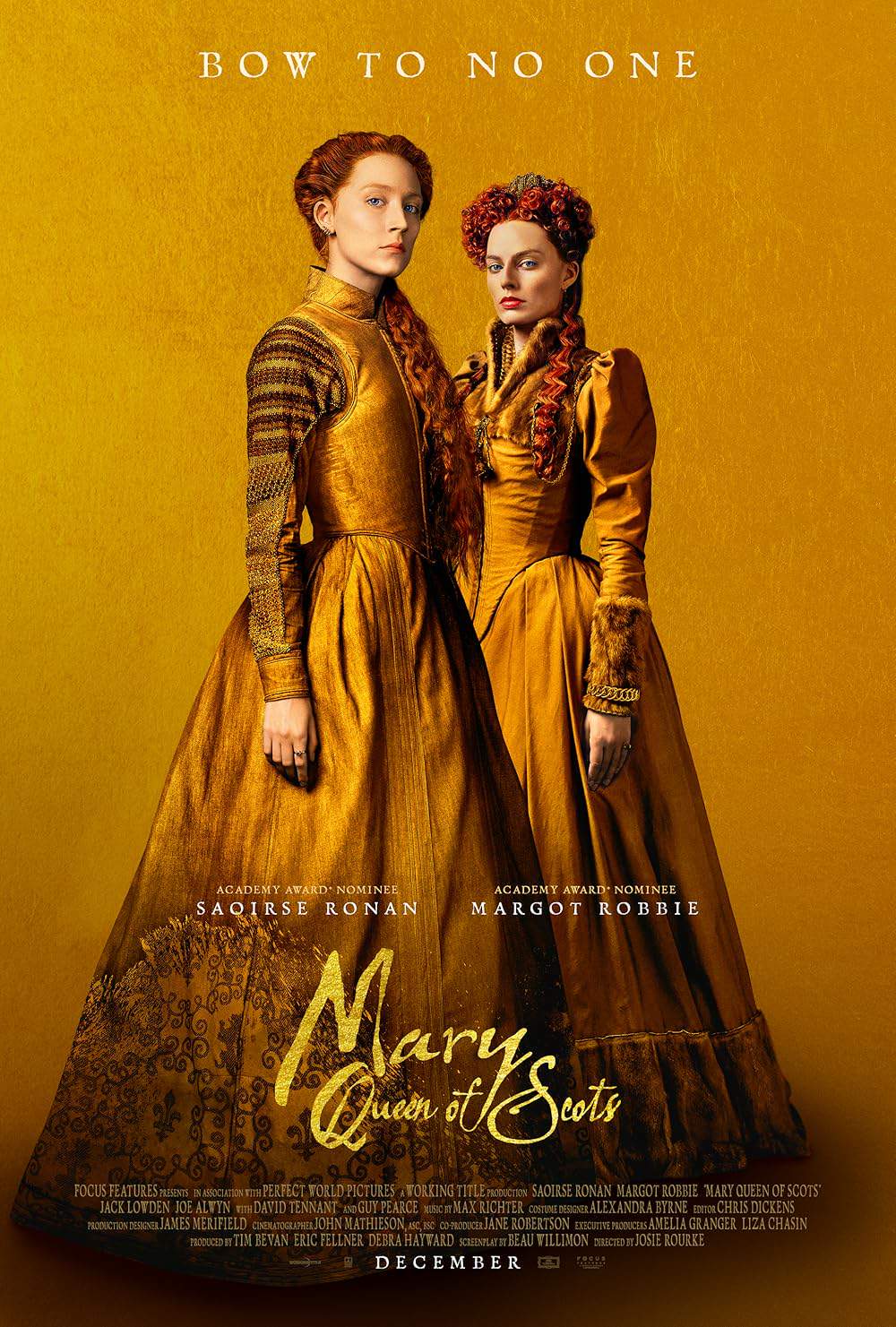
Mary Queen of Scots (2018) movie poster

Timeline

Mary Queen of Scots (2018) Timeline Explained – Every Event in Order

Release, runtime and language
2018 · 124 min · English
Echo score 57
Directed by
Josie Rourke
Starring
Guy Pearce, Gemma Chan, Margot Robbie, Jack Lowden, Joe Alwyn, Saoirse Ronan
Budget
$25M

A historical drama focusing on Mary, Queen of Scots, as she fights to claim her throne and contends with the powerful Elizabeth I of England. The two queens, related by blood, find themselves in a complex struggle for supremacy, navigating political intrigue and personal loyalties. Their ambitions are tested within a patriarchal society where marriage and maintaining independence are crucial for survival and influence.

On this page (7)
  1. 1 Where to watch
  2. 2 Events in order (15)
  3. 3 Timeline questions answered
  4. 4 The book behind the movie
  5. 5 Movie threads
  6. 6 Movies like Mary Queen of Scots
  7. 7 Every angle

Where to watch

Where to Watch Mary Queen of Scots (2018)

Where can you watch Mary Queen of Scots? Stream, rent or buy it in the US, including on Amazon Video, Apple TV Store and Fandango At Home: current JustWatch availability with up-to-date prices.

Streaming availability powered by JustWatch

15 events in order · contains spoilers

Mary Queen of Scots Timeline: Events in Chronological Order

Every key event of Mary Queen of Scots (2018) in order, scene by scene, with when and where it takes place. Use it to untangle flashbacks, time jumps and parallel storylines, to refresh your memory before the sequel or to find the exact scene you are thinking of.

  1. Mary's Return to Scotland

    In 1561, Mary Stuart, the young Catholic Queen of Scotland, returns to her homeland after the death of her husband, Francis II of France. At just nineteen, she steps back into a politically charged environment dominated by Protestant influence.

    When
    1561
    Where
    Scotland
  2. Meeting with Earl of Moray

    Upon her return, Mary is greeted by her half-brother, the Earl of Moray, who serves as the regent of Scotland. The two siblings must navigate the treacherous political waters as they confront the Protestant factions that threaten Mary's authority.

    Where
    Scotland
  3. Elizabeth's Concerns

    Meanwhile, in England, Queen Elizabeth I faces the threat of Mary's claim to the English throne. Her advisers warn her about the potential implications of Mary's return, and they plot to secure Elizabeth's reign through strategic marriage arrangements for Mary.

    Where
    England
  4. Marriage Considerations

    Among the marriage candidates proposed for Mary is Robert Dudley, whom Elizabeth secretly loves. As Mary contemplates the marriage, she insists that her position as Elizabeth's heir is secured, highlighting the complex interplay of personal and political motivations.

    Where
    England
  5. Darnley's Arrival

    In a twist of fate, Lord Darnley, a Catholic noble, arrives at Mary's court seeking refuge from persecution. Initially suspicious of his intentions, Mary slowly grows fond of Darnley, leading to a marriage proposal that sets off a constitutional crisis.

    Where
    Scotland
  6. Marriage of Mary and Darnley

    Mary and Darnley's marriage officializes their union, heightening tensions in both Scotland and England. Darnley's noble status propels Mary's claim to the English throne, leading to fear and animosity within Elizabeth's court as well as Scotland.

    Where
    Scotland
  7. Scandal with Rizzio

    The union becomes marred by scandal when Mary discovers Darnley in a compromising situation with her close confidant, David Rizzio. Faced with rebellion, Mary grapples with the need to assert her authority without losing her allies.

    Where
    Scotland
  8. Conspiracy Against Rizzio

    Amid brewing conspiracy, Darnley finds himself drawn into a plot to eliminate Rizzio, driven by jealousy and resentment. The plan leads to a violent confrontation, shaking the very foundation of Mary's reign and further isolating her.

    Where
    Scotland
  9. Call for Peace

    Despite the unfolding chaos, Mary reaches out to Elizabeth, inviting her to be the godmother of her unborn child. This gesture is intended to reconcile their strained relationship but ultimately reveals the deep political rift between them.

    Where
    Scotland
  10. Darnley's Murder

    Tragedy strikes when Darnley is mysteriously murdered, an act orchestrated by the Earl of Bothwell. This shocking event splinters any remaining loyalty and thrusts Mary into public scrutiny, resulting in her being labeled a harlot.

    Where
    Scotland
  11. Mary's Abdication

    Under immense pressure from her political adversaries and the public outcry following Darnley's murder, Mary reluctantly abdicates her throne. Seeking refuge, she flees to England, hoping for Elizabeth's support.

    Where
    Scotland
  12. Mary's Imprisonment

    In England, Elizabeth agrees to meet with Mary but, rooted in fears of a Catholic uprising, ultimately decides to imprison her instead. This decision solidifies the political divide and marks the beginning of Mary's tragic downfall.

    Where
    England
  13. Elizabeth's Decision

    The events culminate in 1567 when Elizabeth, pressed by her advisers and the threat posed by Mary, makes the life-altering decision to order her execution. This marks a devastating conclusion to their intertwined fates as queens.

    When
    1567
    Where
    England
  14. Mary's Execution

    As Mary walks toward her execution, she reflects on the tragic events that led to her death. Elizabeth, clad in a vivid red dress, mourns the loss of their sisterly bond and the potential for unity between their realms.

    Where
    England
  15. Rise of James

    In a poignant postscript, Mary expresses her hopes for her son, James, who would later rise to power. He becomes the first monarch to unite both Scotland and England after Elizabeth’s death in 1603, fulfilling his mother's legacy.

    When
    1603

Last updated: November 03, 2024 at 23:01

Was this helpful?

Timeline questions answered

Mary Queen of Scots Timeline Explained: Your Questions Answered

When does it happen, and why in that order? The questions people ask about the chronology of Mary Queen of Scots (2018): time jumps, flashbacks, cause and effect between scenes and the correct order of events, each answered with spoilers.

Q1

Why did Mary agree to marry Lord Darnley?

Mary married Darnley because he was a Catholic noble whose lineage strengthened her claim to the English throne. Despite initial suspicion about his intentions, she grew fond of him and believed the marriage would consolidate her political position. However, the union sparked a constitutional crisis in both Scotland and England.

Foreshadowing: Earlier, Mary's advisers had warned about the political implications of marrying without securing her position as Elizabeth's heir.

  • mary
  • lord darnley
  • marriage
  • political alliance
  • succession
Q2

Why was David Rizzio killed?

Rizzio was murdered because he was Mary's close confidant and seen as a French influence in her court. Darnley, motivated by jealousy and resentment, was persuaded by Moray and Lennox to participate in the plot. The conspirators wanted to eliminate Rizzio and weaken Mary's French ties, using Darnley's presence to gain access to her chambers.

Foreshadowing: The scandal earlier, when Mary discovered Darnley and Rizzio together, planted the seeds of Darnley's resentment.

  • david rizzio
  • murder
  • conspiracy
  • mary
  • darnley
Q3

Why did Elizabeth I order Mary's execution?

Elizabeth ordered Mary's execution in 1567 because her advisers convinced her that Mary posed an existential threat to the English throne. Despite being cousins, Elizabeth feared that Mary, as a Catholic queen with a strong claim to the succession, could rally Catholic forces against her Protestant reign. Political necessity overcame family loyalty.

Foreshadowing: Elizabeth's advisers had warned her from the beginning that Mary must yield to her authority or be neutralized.

  • elizabeth i
  • mary queen of scots
  • execution
  • political threat
  • succession
Q4

What happened to Mary's son James?

Mary's son James survived childhood and became James VI of Scotland. After Elizabeth I died in 1603, he inherited the English throne as James I, becoming the first monarch to unite both Scotland and England. This fulfilled Mary's lifelong ambition for her dynasty to rule both kingdoms.

Foreshadowing: Mary had declared her unborn child heir to both Scotland and England, a proclamation that stirred deep resentment in England.

  • james vi
  • mary
  • successor
  • unification
  • throne
Q5

Why was Mary forced to abdicate?

Mary was forced to abdicate after Darnley's murder, which Bothwell orchestrated. Public opinion turned against her when Bothwell was widely believed to have acted on her behalf. The Scottish nobles, already suspicious of her, demanded her removal. Facing rebellion and isolation, she relinquished her throne and fled to England.

Foreshadowing: Earlier, Mary's council had cast a wary eye on Darnley, fearing an English takeover that would threaten their power.

  • mary
  • abdication
  • Darnley
  • Bothwell
  • Scottish nobles
Q6

Who killed Lord Darnley?

Lord Darnley was murdered by the Earl of Bothwell, who orchestrated the bombing at Kirk o' Field. Bothwell's motives stemmed from his ambition to marry Mary and consolidate power. While Mary was not directly implicated in the planning, her subsequent marriage to Bothwell led to her being labeled a harlot and lost her crucial political support.

Foreshadowing: Darnley's banishment followed his growing unpopularity and the scandal surrounding Rizzio's murder.

  • lord darnley
  • Bothwell
  • murder
  • kirk o field
Q7

Why did Elizabeth imprison Mary instead of helping her?

Elizabeth imprisoned Mary because she feared the political consequences of supporting her cousin. Despite agreeing to a secret meeting where Mary pleaded for support, Elizabeth couldn't risk alienating her Protestant subjects or provoking a Catholic uprising. Mary's claim to the English throne made her too dangerous to release but too valuable to execute immediately.

Foreshadowing: Elizabeth's advisers had warned her from Mary's return that Mary must yield to her authority.

  • elizabeth i
  • mary
  • imprisonment
  • political fear
  • catholic threat
Q8

What was the relationship between Mary and Elizabeth?

Mary and Elizabeth were first cousins, both granddaughters of Margaret Tudor, which gave Mary a legitimate claim to the English throne. Despite their familial bond, they were political rivals who never met in person until Mary's final moments. Their relationship was defined by mutual suspicion, religious divide, and competition for power.

Foreshadowing: Elizabeth's advisers warned early on that Mary's presence threatened her reign.

  • mary
  • elizabeth i
  • cousins
  • throne claim
  • rivalry
Q9

Why did Mary's marriage to Darnley cause a political crisis?

Mary's marriage to Darnley created a crisis because his noble status elevated her claim to the English throne to a dangerous level. English advisers feared this union would produce an heir with claims to both kingdoms, threatening Elizabeth's Protestant succession. In Scotland, Mary's council worried Darnley represented English interference in Scottish affairs.

Foreshadowing: Elizabeth's court had already plotted to secure Mary's marriage to an English noble to control her.

  • mary
  • Darnley
  • marriage crisis
  • english throne
  • succession
Q10

What happened to the Earl of Bothwell after Darnley's murder?

After orchestrating Darnley's murder, Bothwell married Mary, which outraged Scottish nobles and destroyed her remaining support. He eventually fled Scotland and was imprisoned in Denmark, where he died in 1576. His downfall was directly tied to the scandal surrounding Darnley's death and his controversial marriage to Mary.

Foreshadowing: Bothwell's role in Darnley's murder became public knowledge, fueling calls for Mary's abdication.

  • bothwell
  • flee
  • imprisonment
  • Denmark
  • mary
Q11

Why did Mary return to Scotland in 1561?

Mary returned to Scotland in 1561 after her husband Francis II of France died. As the Catholic Queen of Scotland, she had been sent to France as a child to avoid religious persecution. Upon Francis's death, she was now nineteen and required to claim her birthright, though she returned to a kingdom dominated by Protestant influence and ruled by her half-brother Moray as regent.

Foreshadowing: Mary's French upbringing and Catholic faith would constantly clash with the Protestant Scottish nobles.

  • mary return
  • scotland
  • france
  • husband death
  • 1561
Q12

Why did Mary's declaration that her child would be heir to both kingdoms cause controversy?

Mary's proclamation that her unborn child would inherit both Scotland and England enraged Elizabeth's court. This directly challenged Elizabeth's refusal to name an heir and threatened the Protestant succession. English advisers saw this as an unacceptable Catholic power grab that could spark civil war.

Foreshadowing: Elizabeth had refused to name Mary as her successor despite their family relationship.

  • mary
  • child
  • heir
  • both kingdoms
  • succession
  • controversy

Movie threads

More Movies Like Mary Queen of Scots, by Mood & Story

Curated lists built around what makes Mary Queen of Scots tick: the same mood, the same kind of story or the same emotional payoff. Each list explains why these movies belong together.

Political Power Struggle Dramas like Mary Queen of Scots

Intense dramas where ambition and intrigue dictate the fate of kingdoms. If you were captivated by the political intrigue in Mary Queen of Scots, explore more movies about high-stakes power struggles. These similar historical and political dramas feature complex characters fighting for control, navigating webs of loyalty and deception in a tense, high-intensity atmosphere.

  • tense
  • political intrigue
  • power struggle
  • betrayal
  • oppressive
  • melancholic
  • Tone: tense, bleak, melancholic
  • Pacing: steady, deliberate
Why these movies?

The story pattern: Narratives in this thread typically follow ambitious leaders or rulers as they navigate a dangerous world of shifting allegiances. The plot is driven by strategic maneuvering, secret deals, and the constant threat of overthrow, often leading to a culmination where the protagonist's fate hinges on a single, decisive confrontation or betrayal.

Why they belong together: These movies are grouped together for their shared focus on the intense, cerebral conflict of political machinations. They create a specific vibe of claustrophobic tension and oppressive power dynamics, where the stakes are existential and the emotional journey is one of heavy, calculated ambition.

Tragic Historical Biographies like Mary Queen of Scots

Melancholic portraits of fated individuals whose ambition leads to tragedy. For viewers who appreciated the tragic arc of Mary Queen of Scots, this thread collects other biographical movies about doomed historical figures. These similar films share a steady pace, complex characterization, and a heavy, bittersweet emotional weight, exploring the paths of individuals destined for a tragic end.

  • tragic
  • melancholic
  • bittersweet
  • doomed
  • historical
  • biographical
  • Tone: melancholic, tragic, bittersweet
  • Pacing: steady, character-driven
Why these movies?

The story pattern: The narrative pattern follows a protagonist's determined quest for a goal—a throne, a principle, or a legacy—against overwhelming opposition. The story is often structured to highlight the inevitability of their downfall, creating a sense of tragic fate. The emotional journey is one of defiance in the face of doom, leading to an ending that is both sad and resonant.

Why they belong together: This thread groups films that share a specific emotional mix: a steady, building dread, a complex character study, and a profoundly bittersweet or tragic conclusion. The core similarity is the melancholic vibe of watching a compelling life story move toward an inescapable, often historically predetermined, tragic outcome.

If you liked this

Movies Like Mary Queen of Scots

Similar movies to Mary Queen of Scots: the same genre, themes or kind of story. Each one comes with its own plot summary, timeline and ending explained.

Browse all movie summaries

Every angle

Mary Queen of Scots (2018) Explained: Plot, Timeline & Characters

Everything about Mary Queen of Scots in one place: what happens in the plot summary, the timeline in chronological order, the characters and meaning and a spoiler-free summary. What's After the Movie adds the cast, box office and post-credit scenes.

Coming soon on iOS and Android

The Plot Explained Movie Summary App

Plot summaries, endings explained and timelines on your phone. Catch up on any movie in minutes, save your favorites and never miss a twist again.

Be the first to know when we launch. Your email stays private, always.

Learn more about the app