Plot Explained Spoilers guaranteed!
Plot Explained

Browse by genre

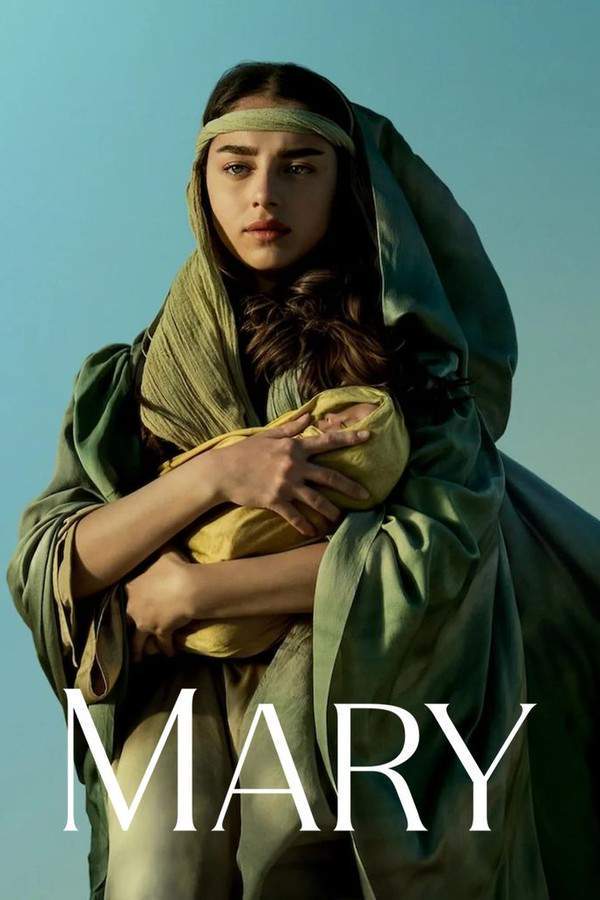
Mary (2024) movie poster

Plot Summary

Mary (2024) Plot Summary & Ending Explained

Release, runtime and language
2024 · British english
Echo score 45
Loading streaming availability…
Directed by
D.J. Caruso
Starring
Anthony Hopkins, Ori Pfeffer, Mila Harris, Soufiane El Khalidy, Keren Tzur, Stephanie Nur

This coming-of-age biblical epic tells the story of Mary, offering a perspective on the events surrounding one of history’s most profound figures and the journey leading to the birth of Jesus. Chosen to bring the Messiah into the world, Mary experiences a miraculous conception and is subsequently shunned, forcing her into hiding. When King Herod learns of the prophecy, he poses a threat, prompting a perilous journey.

On this page (7)
  1. 1 Where to watch
  2. 2 What happens: full plot
  3. 3 Plot questions answered
  4. 4 How it ends
  5. 5 Movie threads
  6. 6 Movies like Mary
  7. 7 Every angle
Loading streaming availability…

Full plot summary · contains spoilers

What Happens in Mary: Full Plot Summary

The whole story of Mary (2024) explained, from the opening scene to the final frame: every key event, every twist and what it all adds up to. Read it as a quick recap before the sequel, to check a scene you missed, or to finally understand what really happened.

After years spent fervently praying for a child, the angel Gabriel reveals a profound message to Joachim in 18 BC while he is in solitude in the desert. During his 40 days of fasting, Joachim believed that the Lord had punished him by denying him a child. Gabriel informs him that he and his wife, Anne (played by Hilla Vidor), are destined to have a daughter. In a sacred exchange, they promise to dedicate their future child to the service of God, who insists that she will dwell within His temple.

Nine months later, Anne gives birth to Mary in Nazareth, and she blossoms on her family's olive farm where Joachim works tirelessly. Meanwhile, we diverge to the situation in Judea under the oppressive rule of Herod the Great, portrayed by Anthony Hopkins. Herod's audacious ambition to rebuild the Second Temple in 17 BC has stirred unrest among the Hebrew people, who view it as a vanity project to gain Roman approval—a monument to Herod’s tyrannical reign, which has involved bloodshed and manipulation to maintain his authority. Resentment brews as whispers of a savior among the Hebrews gain traction.

Accompanied by the political turmoil of the time, tragedy strikes when Herod resolves to eliminate rival claims to power. Aristobulus, portrayed by Salim Benmoussa, becomes the target of Herod's jealousy and is assassinated by Marcellus, a Roman officer dutiful to Herod. The strife deepens when Herod’s own wife, Mariamne (Mili Avital), confronts him and meets a tragic fate at his hands when he stabs her. Adding to the intrigue, Herod's sister, Salome, alarmed by rumors of the impending Hebrew savior, conveys troubling information from her husband, Castobarus, further inflating Herod's paranoia.

Years pass, and Gabriel once again visits Anne, compelling her to keep her promise regarding Mary. Consequently, Joachim and Anne bring Mary to the Second Temple in Jerusalem in 6 BC to be consecrated to God. Here, Mary is greeted by Anna (Susan Brown), a revered prophetess, and Baba Ben Buta (Mehmet Kurtulus), a sage who previously advised Herod on the temple's construction. Mary dedicates herself to serving the Lord, showing kindness by sharing leftover temple food with the needy.

Amid her devoted life, Mary faces temptation when she encounters Lucifer (Eamon Farren), who tries to sway her with earthly pleasures, yet she remains steadfast in her resolve. The political landscape shifts dramatically when Herod, intent on consolidating power, decorates the temple walls with the Aquila of the Roman Empire, provoking the ire of Baba Ben Buta, whose disapproval leads to his blinding.

One fateful day while washing clothes in a stream, Mary meets Joseph, a humble Galilean carpenter. Instantaneously smitten, he seeks her hand in marriage, a union that Joachim and Anne support, recognizing the divine guidance of Gabriel behind this encounter. Although Mary is hesitant due to her vow, they soon realize that this path aligns with divine purpose.

In a pivotal moment, Gabriel visits Mary once more, announcing that she will conceive the son of God, Jesus, who is destined to reign over the house of David. Faced with disbelief due to her virginity, she learns that through the Holy Spirit, she will bear a child.

As rumors spread regarding Mary’s condition, she faces scorn and is cast out of the temple by the High Priests. In a gesture of support, Anne sends her to spend time with her cousin Elizabeth (Keren Tzur), who is also expecting. The situation escalates when Mary, seeking reassurance from Joseph, finds herself in danger of mob violence stirred by Lucifer's manipulations. However, Joseph intervenes, vowing his unwavering love for both Mary and their unborn child.

Despite their marriage, danger lurks as they attempt to flee to Bethlehem amidst political turbulence and a personal tragedy: the murder of Joachim. As unrest escalates in Judea, Herod discovers the prophecy of the King of the Hebrews set to be born in Bethlehem—a threat to his brutal rule. He orders the heinous Massacre of the Innocents, targeting every male infant in the vicinity as he hunts for the prophesied child.

In the midst of calamity, Joseph and Mary seek refuge but are met with denial at every inn due to overwhelming numbers of pilgrims. Their desperation leads them to a humble stable where, in AD 1, the miraculous birth of Jesus occurs, attended by three wise men bearing gifts for the newborn king.

Hounded by Herod's relentless pursuit, Mary and Joseph must flee to Egypt to save their child. Along their journey, they encounter kindness but also peril, as Herod’s tyranny culminates in chaotic consequences. In the end, the couple returns to Jerusalem amid the shifting tides of power following Herod’s demise, where they present Jesus to the Temple—marking the dawn of a new era for the Hebrews.
Last updated: January 14, 2025 at 19:25

Was this helpful?

Plot questions answered

Mary Plot Explained: Your Questions Answered

The questions people ask most about Mary (2024): what happens in the confusing scenes, why the characters do what they do, the twists, hidden details and what the ending means. Each answer contains spoilers.

Q1

Why did Joachim believe he was being punished for being childless

Joachim spent 40 days fasting in the desert, convinced that God was denying him and his wife Anne a child as punishment. This belief was rooted in the cultural stigma of childlessness at the time, which was seen as a sign of divine disfavor.

Foreshadowing: The angel Gabriel's later appearance reveals that rather than punishment, Joachim was being prepared for a sacred purpose.

  • joachim
  • anne
  • childlessness
  • desert
  • punishment
  • gabriel
Q2

Why did the angel Gabriel visit Joachim in the desert

Gabriel appeared to Joachim during his 40-day fast to deliver a divine message: Anne would bear a daughter who would be dedicated to God's service. This visit was part of God's plan to prepare Joachim for the role of raising Mary, the chosen vessel for the Messiah.

Foreshadowing: Gabriel later returns to Anne to remind her of her promise and to Mary to announce Jesus's conception.

  • gabriel
  • angel
  • desert
  • joachim
  • prophecy
  • message
Q3

Why was Mary dedicated to the Second Temple

Before Mary's birth, Joachim and Anne made a sacred promise to God: their future child would serve Him in His temple. When Gabriel reminded Anne of this vow years later, Joachim and Anne brought Mary to the Second Temple in Jerusalem to fulfill their commitment, where she would be raised in religious service.

Foreshadowing: This dedication sets the stage for Mary's encounter with Joseph at the stream and her ultimate role in biblical prophecy.

  • mary
  • temple
  • dedication
  • joachim
  • anne
  • jerusalem
  • second temple
Q4

Why did King Herod order Aristobulus's assassination

Herod viewed Aristobulus, who held the position of High Priest, as a threat to his throne. Fearful of rival claims to power, Herod instructed the Roman officer Marcellus to kill Aristobulus. When Herod's wife Mariamne confronted him about this crime, he murdered her as well to silence any potential opposition.

Foreshadowing: This paranoid pattern of eliminating perceived threats ultimately leads to Herod's order for the Massacre of the Innocents.

  • herod
  • aristobulus
  • assassination
  • high priest
  • mariamne
  • marcellus
Q5

Why was Baba Ben Buta blinded by Herod

Baba Ben Buta, a wise sage who previously advised Herod on temple construction, strongly opposed Herod's decision to place the Aquila of the Roman Empire on the temple walls. This act was seen as a desecration of the sacred space. In retaliation, Herod ordered the sage to be blinded.

Foreshadowing: Despite his blindness, Baba Ben Buta had previously blessed Mary at the temple, suggesting his spiritual wisdom transcended physical sight.

  • baba ben buta
  • herod
  • blinding
  • temple
  • roman aquila
Q6

Why did Lucifer tempt Mary at the temple

Lucifer appeared to Mary during her service at the Second Temple, attempting to seduce her with worldly pleasures and distract her from her spiritual purpose. This temptation tested Mary's faith and devotion to God, representing the ongoing spiritual conflict between good and evil.

Foreshadowing: Gabriel confronts and drives Lucifer away, preserving Mary's purity for her destined role as the mother of Jesus.

  • lucifer
  • temptation
  • temple
  • mary
  • faith
  • devil
Q7

Why did Mary agree to marry Joseph despite her temple vow

Although Mary had dedicated herself to God's service at the temple, her family recognized that her marriage to Joseph was divinely guided. Gabriel's earlier involvement in bringing them together convinced Joachim and Anne that this union was part of God's plan, and Mary ultimately accepted this path.

Foreshadowing: This marriage becomes essential when Mary learns she will conceive Jesus through the Holy Spirit.

  • mary
  • joseph
  • marriage
  • temple vow
  • engagement
  • nazareth
Q8

Why were Mary and her unborn child cast out of the temple

When the High Priests discovered Mary's pregnancy, they viewed it as a violation of her sacred vow and cast her out of the temple. Without knowledge of Gabriel's annunciation, they could not understand how a virgin could conceive, treating her as having committed transgression.

Foreshadowing: This rejection forces Mary to seek refuge with her cousin Elizabeth, who also carries a miraculous pregnancy.

  • mary
  • temple
  • high priests
  • pregnancy
  • rejection
  • expulsion
Q9

Why was Joachim killed during the flight to Bethlehem

Joachim was murdered by Zealots while Mary and Joseph attempted to flee to Bethlehem. The Zealots, who opposed Roman occupation and viewed collaboration with Roman authorities as treason, attacked Joachim and his family as they traveled, viewing them as collaborators.

Foreshadowing: This tragedy occurs shortly before the birth of Jesus, adding to the danger surrounding the Holy Family.

  • joachim
  • death
  • zealots
  • murder
  • bethlehem
  • flight
Q10

Why did King Herod order the Massacre of the Innocents

Upon learning from the wise men that a King of the Hebrews was to be born in Bethlehem, Herod's paranoia intensified. Believing this child posed a threat to his throne, he ordered all male infants in Bethlehem to be killed, attempting to eliminate the prophesied rival to his power.

Foreshadowing: This act of desperate tyranny ultimately fails, as Joseph is warned in a dream and flees with Mary and Jesus to Egypt.

  • herod
  • massacre
  • innocents
  • bethlehem
  • jesus
  • king
  • prophecy
Q11

Why was there no room at the inn for Mary and Joseph

Joseph and Mary arrived in Bethlehem during a time of massive overcrowding caused by the Roman census, which required everyone to return to their ancestral home. The city was filled with pilgrims, and every inn was full. With no other option, Mary gave birth to Jesus in a humble stable.

Foreshadowing: This humble birth in a stable fulfills prophetic expectations of the Messiah's lowly origins.

  • inn
  • stable
  • bethlehem
  • census
  • jesus
  • birth
  • overcrowded
Q12

Why did Mary and Joseph flee to Egypt after Jesus's birth

After the birth of Jesus, an angel appeared to Joseph in a dream, warning him of Herod's plan to kill the child. To escape Herod's Massacre of the Innocents and protect the infant Messiah, Mary and Joseph fled to Egypt, where they remained until Herod's death was confirmed.

Foreshadowing: The family's return to Jerusalem after Herod's demise allows them to present Jesus at the temple, fulfilling another prophecy.

  • egypt
  • flee
  • herod
  • jesus
  • joseph
  • mary
  • escape
  • massacre

Ending explained

What Happens at the End of Mary?

How Mary (2024) ends, in short: the final scene, the last twist and what it means for the characters. The full ending explained, with every spoiler, lives on its own page.

Read the full ending explained

Mary's story concludes with her and Joseph returning to Nazareth with the infant Jesus, a peaceful end after their perilous journey. The film emphasizes their trip to the Temple, where the family presents Jesus, and suggests that they continue to live safely in their hometown. Although the movie doesn't explore Mary's life beyond this point, biblical tradition states that she lived for many years after Jesus’ birth, witnessing his ministry and eventual death. She is believed to have remained in Nazareth for most of her life, and some stories imply she lived on even after Jesus died, although details vary. Joseph, too, is thought to have survived into Jesus’s childhood and adult years, with mentions of him in later biblical stories, such as when Jesus is left at the temple as a boy.

The movie also offers a resolution to Herod's brutal plot, as his tyranny begins to falter due to his loss of support after his violent acts against innocent children. Herod orders the killing of male infants out of fear of losing his throne, thinking that the child destined to be the Messiah might threaten his power. His paranoia leads him to commit these terrible acts, but ultimately, the people revolt against him, and he faces the consequences of his cruelty.

Continue reading the ending (1 more paragraphs)

Throughout the film, the angel Gabriel appears multiple times, serving as a divine messenger who guides Mary and her family. Gabriel’s frequent visits highlight the divine intervention at key moments, reinforcing the idea that Mary's journey is part of a larger divine plan. The film dramatizes her story for a modern audience, humanizing her as a relatable young woman rather than just a biblical figure. Its ending underscores the themes of faith, resilience, and hope, suggesting that Mary's story remains inspiring and approachable across centuries, especially by emphasizing her humanity and the struggles she faces. Ultimately, her story is about survival and trust in divine guidance, portraying her as a young girl chosen for a monumental purpose, yet very much someone who could be anyone’s neighbor today.

Mary ending explained in full

Movie threads

More Movies Like Mary, by Mood & Story

Curated lists built around what makes Mary tick: the same mood, the same kind of story or the same emotional payoff. Each list explains why these movies belong together.

Movies about religious persecution like Mary

Stories of unwavering belief tested by violent political oppression. If you were captivated by the tension of Mary's story, explore other movies like Mary that center on faith under fire. These films feature characters whose devout beliefs put them in direct conflict with oppressive rulers, leading to perilous journeys and a constant fight for survival against a backdrop of political tyranny.

  • faithful
  • oppressive
  • anxious
  • devout
  • persevering
  • hopeful
  • Tone: tense, oppressive, hopeful
  • Pacing: steady, building urgency
Why these movies?

The story pattern: Stories in this thread typically follow a faithful individual or group whose beliefs attract the dangerous attention of a powerful, paranoid authority. The narrative often involves a prophecy or divine calling that is perceived as a threat, forcing the protagonists into a fight for survival that tests their devotion. The journey culminates in a reaffirmation of faith, often at great personal cost.

Why they belong together: These movies are grouped by their core conflict: the collision of sincere religious faith with brutal political power. They share a tense, oppressive tone, high-stakes survival plots, and a central theme of perseverance in the face of persecution, creating a coherent experience of spiritual struggle against worldly might.

Movies about dangerous prophecies like Mary

Journeys where a divine or foretold fate brings immediate mortal danger. For viewers who enjoyed the high-stakes prophecy in Mary, this list collects similar movies like Mary where a foretold destiny sparks immediate and violent retaliation. These stories blend the wonder of a miracle with the relentless pursuit by a fearful antagonist, creating a tense and emotionally heavy journey for the chosen characters.

  • miraculous
  • anxious
  • hopeful
  • tragic
  • persevering
  • foreboding
  • Tone: tense, hopeful, tragic
  • Pacing: steady, linear pursuit
Why these movies?

The story pattern: The narrative pattern begins with a miraculous event or the revelation of a prophecy that signifies a great future change. This positive event instantly attracts the murderous attention of a powerful figure who seeks to prevent the prophecy by eliminating the chosen one. The core of the story becomes a race against time, a journey of hiding and evasion, where the promise of a hopeful future is weighed against the stark reality of present-day survival.

Why they belong together: These films are united by the specific narrative engine of a positive prophecy creating immediate negative consequences. They share a mix of awe and dread, a steady pacing driven by pursuit, and a central theme of protecting a destined future against a present-day threat. The emotional experience is defined by this juxtaposition of miraculous hope and visceral fear.

If you liked this

Movies Like Mary

Similar movies to Mary: the same genre, themes or kind of story. Each one comes with its own plot summary, timeline and ending explained.

Browse all movie summaries

Every angle

Mary (2024) Explained: Plot, Ending, Timeline & Characters

Everything about Mary in one place: what happens in the plot summary, the timeline in chronological order, the characters and meaning, the ending explained and a spoiler-free summary. What's After the Movie adds the cast, box office and post-credit scenes.

Coming soon on iOS and Android

The Plot Explained Movie Summary App

Plot summaries, endings explained and timelines on your phone. Catch up on any movie in minutes, save your favorites and never miss a twist again.

Be the first to know when we launch. Your email stays private, always.

Learn more about the app