Plot Explained Spoilers guaranteed!
Plot Explained

Browse by genre

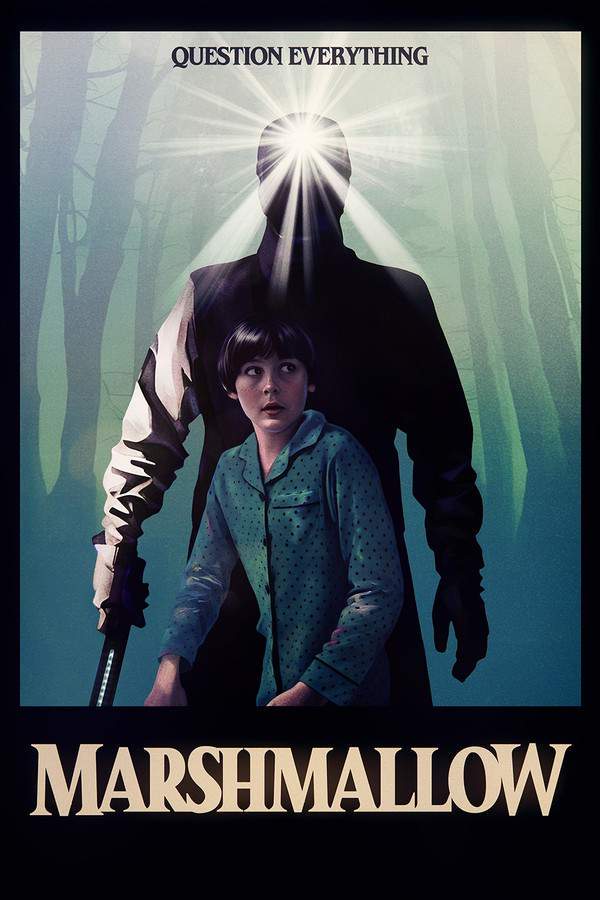
Marshmallow (2025) movie poster

Ending Explained

Marshmallow (2025) Ending Explained – Final Scene & Meaning

Release, runtime and language
2025 · 1 h 33 m · English
Echo score 78
Loading streaming availability…
Directed by
Daniel DelPurgatorio
Starring
Pierson Fode, Miya Cech, Sutton Johnston, Giorgia Whigham, Alysia Reiner, Paul Soter

During a summer camp, a shy and introverted twelve-year-old named Morgan finds himself caught in a terrifying ordeal when a local legend appears to be true. A mysterious figure arrives at the camp, forcing Morgan and his new friends to go on a dangerous quest to discover a dark secret hidden within.

On this page (7)
  1. 1 Where to watch
  2. 2 What happens at the end
  3. 3 Final events in order
  4. 4 Ending questions answered
  5. 5 Movie threads
  6. 6 Movies like Marshmallow
  7. 7 Every angle
Loading streaming availability…

Ending explained · contains spoilers

What Happens at the End of Marshmallow?

How Marshmallow (2025) ends, what the final scene means, which earlier moments set it up and how to read the ending if the film leaves it open. The full ending explained, with every spoiler.

The ending of Marshmallow reveals that the creepy, murderous "doctor" haunting the camp isn’t a ghost or a supernatural being, but rather a manufactured entity created by the camp's sinister experiment. Throughout the film, Morgan and his friends discover that the children at the camp, including those who seem to be possessed or controlled by the doctor, are actually victims of a horrifying project. These kids are neither truly alive nor dead—they are the result of a bizarre scientific process designed to erase their memories and keep them in a state of perpetual growth, without a real origin or ending. The camp’s director, Collins, and the staff have been using this twisted procedure for years, turning the children into living experiments in a cycle of memory deletion and physical growth, which is why Morgan and the others find files indicating they have no real past or future.

In the film’s climax, Franklin confesses to Morgan and Pilar that the children, including Morgan himself, were once dead and have been subjected to a scientific manipulation to keep them in a limbo state. This revelation explains why the “doctor” appears with a stun baton—he is not a ghost but a rigged-together construct or a malfunctioning part of the experiment, designed to intimidate or control the children. The story suggests that the camp’s horrific practices are part of a larger, global pattern, as Collins later receives a call about similar cases worldwide, hinting at an extensive and ongoing experiment involving these child “creations.”

In the final scenes, as Morgan and Pilar face the reality of their situation, Franklin offers them a choice: to undergo the procedure and forget everything, or to refuse and retain their memories and self-awareness. It’s implied that most of the kids go through with the memory wipe, accepting their manufactured existence, but Morgan and Pilar decide to resist, choosing to remember who they are. The film ends with Morgan feeling a sense of hope and camaraderie with his friends, standing outside the camp and embracing their shared reality. Meanwhile, the authorities and the camp’s staff are left uncertain, with Collins receiving disturbing news about the global spread of similar cases, indicating that the horror of the experiment might not be over. In a chilling final twist, it’s suggested that the glitches and “monsters” are not bound by human morality—they could turn on anyone, including Collins himself, as revealed by the final encounter with a bloodied girl attacking him with a knife, leaving the story open-ended with the suggestion that the horror could continue indefinitely.
Last updated: July 27, 2025 at 09:40

Was this helpful?

The last 4 events

How Marshmallow Ends: The Final Events in Order

The last events of Marshmallow (2025) in chronological order, the run-up to the ending explained above. The complete timeline has all 11 events, scene by scene.

Open the full timeline
  1. The truth about the campers is revealed

    It is revealed that Morgan and the other children had died in various circumstances and are being recreated using new technology for families who lost them. The camp and similar facilities are used to grow and program the kids before returning them to their families. The revelation reframes the experience as a chilling conspiracy.

    When
    Revelation moment
    Where
    Main building / lab area
  2. Memory wipe and selective remembrance

    The staff wipe the kids' memories of the night, erasing the trauma from most. However, Morgan and Pilar are offered the choice to remember what happened by a sympathetic staff member. This choice leaves a seed of individual truth in their minds.

    When
    After revelation
    Where
    Staff area
  3. Normal day, with unexplained injuries

    The next day everything seems normal on the surface, with day-to-day camp life resuming. Behind the scenes, staff injuries from the night are awkwardly explained to the curious kids. The pall of what happened lingers beneath the veneer of normalcy.

    When
    Next day morning
    Where
    Camp grounds
  4. Foreshadowing of systemic malfunctions

    In the final twist, the bullying by C.J. is reinterpreted as an early sign that the 'created' kids have faults. The film hints that malfunctions are spreading across camps and that the programming is failing. The chilling implication is that these 'recreated' children may be unstable.

    When
    Ending
    Where
    Camp

Ending questions answered

Marshmallow Ending: Your Questions Answered

The questions people ask most about the ending of Marshmallow (2025): what the final scene means, how the twist works, what happens to each character and how to read the ending. Each answer contains spoilers.

Q1

Why is the doctor not a ghost in Marshmallow?

The doctor is not a ghost but a manufactured entity created by the camp's sinister experiment. He is described as a rigged-together construct or a malfunctioning part of the experiment, designed to intimidate and control the children. This explains why he appears with a stun baton, he is a physical part of the scientific project, not a supernatural being.

Foreshadowing: Earlier scenes show the doctor behaving mechanically rather than spiritually, hinting at his artificial nature.

  • doctor
  • ghost
  • supernatural
  • experiment
  • construct
Q2

What happens to Morgan at the end of Marshmallow?

Morgan is given a choice by Franklin: undergo the memory-erasing procedure and forget everything, or refuse and retain his memories and self-awareness. Morgan chooses to resist the procedure, deciding to remember who he is. The film ends with Morgan feeling hope and camaraderie with his friends, standing outside the camp and embracing their shared reality.

Foreshadowing: Morgan's determination to uncover the truth throughout the film sets up his choice to reject the memory wipe.

  • morgan
  • choice
  • mist
  • endingemory
  • res
Q3

Are the children in Marshmallow actually dead?

Yes, the children at the camp are revealed to have been dead and then subjected to a bizarre scientific process designed to erase their memories and keep them in a state of perpetual growth without a real origin or ending. They exist in a limbo state, neither truly alive nor dead, maintained by the camp's twisted procedure.

Foreshadowing: The discovery of files showing the children have no real past or future hints at their unnatural existence.

  • children
  • dead
  • alive
  • limbo
  • experiment
Q4

What happens to Pilar at the end?

Pilar faces the same choice as Morgan, to undergo the memory wipe procedure or refuse and keep her memories. Like Morgan, she decides to resist the procedure and retain her self-awareness. She stands with Morgan at the end, embracing their shared reality and the truth of what they are.

Foreshadowing: Pilar's friendship with Morgan and their joint investigation into the camp's secrets foreshadow her choice to reject the memory erasure.

  • pilar
  • memory
  • choice
  • remember
  • resist
Q5

What is the memory procedure the children undergo?

The memory procedure is a scientific process designed to erase the children's memories and keep them in a state of perpetual growth without a real origin or ending. It essentially wipes their identity, making them forget they were ever dead and turning them into living experiments. Most of the children accept this procedure, choosing to live in manufactured ignorance.

Foreshadowing: Throughout the film, the children exhibit strange gaps in their knowledge and personality, suggesting memory manipulation.

  • memory
  • procedure
  • erase
  • experiment
  • children
Q6

Why does Collins get attacked at the end?

In the final twist, Collins is attacked by a bloodied girl with a knife. This suggests that the glitches and monsters created by the experiment are not bound by human morality and could turn on anyone, including the people who created them. It leaves the story open-ended, indicating that the horror of the experiment might continue indefinitely.

Foreshadowing: The film's earlier portrayal of the children as unstable experiments foreshadows their potential to turn against their creators.

  • collins
  • attack
  • knife
  • glitch
  • monster
Q7

What does the ending reveal about the larger experiment?

The ending reveals that the camp's horrifying practices are part of a larger, global pattern. Collins receives a call about similar cases worldwide, hinting at an extensive and ongoing experiment involving child creations. This suggests the horror is not isolated to this single camp but is part of a widespread network of these twisted programs.

Foreshadowing: The mysterious nature of the camp's operations and the high-level coordination required for such an experiment hint at something larger.

  • global
  • worldwide
  • experiment
  • cases
  • spread
Q8

Why does the doctor appear with a stun baton?

The doctor appears with a stun baton because he is not a supernatural entity but a physical construct created as part of the camp's experiment. The stun baton is one of the tools used to intimidate and control the children. His appearance is deliberately designed to frighten the children into compliance.

Foreshadowing: The doctor's mechanical movements and weapon suggest he is a tool of the experiment rather than a ghost.

  • doctor
  • stun baton
  • weapon
  • intimidate
  • control
Q9

Is the ending of Marshmallow hopeful or dark?

The ending contains both hopeful and dark elements. On one hand, Morgan and Pilar choose to resist the memory wipe and embrace their true identities, finding hope in their friendship and shared reality. On the other hand, the final attack on Collins and the revelation of global cases suggest the horror is far from over, leaving an ominous and ambiguous conclusion.

Foreshadowing: The film's consistent blend of hope through friendship and dread through the experiment's implications sets the tone for this mixed ending.

  • ending
  • hope
  • dark
  • ambiguous
  • resolution
Q10

What happens to the other children at the camp?

Most of the children at the camp choose to undergo the memory-wiping procedure, accepting their manufactured existence rather than facing the traumatic truth of what they are. They choose oblivion over the painful reality of knowing they were once dead and are now part of an experiment.

Foreshadowing: The children's reluctance to believe Morgan and Pilar's discoveries suggests they prefer the comfort of ignorance.

  • children
  • memory wipe
  • accept
  • manufactured
  • ignorance

Movie threads

More Movies Like Marshmallow, by Mood & Story

Curated lists built around what makes Marshmallow tick: the same mood, the same kind of story or the same emotional payoff. Each list explains why these movies belong together.

Existential horror stories like Marshmallow

Stories where unsettling discoveries provoke a profound identity crisis. If you liked the identity crisis in Marshmallow, explore more movies like it. These films blend sci-fi and horror to tell stories about clones, doppelgangers, and secret experiments that leave characters questioning their own reality and confronting dark, personal truths.

  • unsettling
  • paranoid
  • existential
  • melancholic
  • sinister
  • uncanny
  • Tone: dark, unsettling
  • Pacing: steady, methodical
Why these movies?

The story pattern: The narrative pattern involves a central truth being hidden from the protagonists, who discover it piece by piece through an unsettling investigation. This discovery process triggers a crisis of identity and reality, often leading to ambiguous and inconclusive endings that emphasize the lingering horror of the situation.

Why they belong together: These films are grouped together by their shared focus on the terror of self-discovery in the face of inhuman circumstances. They share a dark, melancholic tone, a steady pacing that builds suspense through revelation, and a heavy emotional weight derived from themes of memory, trauma, and lost autonomy.

Dark coming-of-age horror movies like Marshmallow

Young protagonists find terrifying secrets hidden within idyllic settings. Find more movies like Marshmallow where summer camps or youth retreats hide terrible secrets. These stories follow young characters on a dangerous quest, blending coming-of-age themes with sci-fi or horror elements, resulting in a tense and emotionally heavy experience.

  • claustrophobic
  • anxious
  • sinister
  • uncanny
  • melancholic
  • youthful horror
  • Tone: dark, anxious
  • Pacing: steady, suspenseful
Why these movies?

The story pattern: The narrative typically begins with character establishment in an isolated, seemingly safe setting. A local legend or strange occurrence prompts an investigation, leading the young protagonists to a hidden facility or dark conspiracy. Their journey is as much about survival as it is a traumatic loss of innocence.

Why they belong together: They share a specific setting and character dynamic: groups of young people facing existential threats. The mood is consistently anxious and claustrophobic, driven by themes of bullying, loss, and conspiracy. The pacing is steady, building from normalcy to terror, and the emotional weight is heavy due to the focus on child endangerment and trauma.

If you liked this

Movies Like Marshmallow

Similar movies to Marshmallow: the same genre, themes or kind of story. Each one comes with its own plot summary, timeline and ending explained.

Browse all movie summaries

Every angle

Marshmallow (2025) Explained: Plot, Ending, Timeline & Characters

Everything about Marshmallow in one place: what happens in the plot summary, the timeline in chronological order, the characters and meaning, the ending explained and a spoiler-free summary. What's After the Movie adds the cast, box office and post-credit scenes.

Coming soon on iOS and Android

The Plot Explained Movie Summary App

Plot summaries, endings explained and timelines on your phone. Catch up on any movie in minutes, save your favorites and never miss a twist again.

Be the first to know when we launch. Your email stays private, always.

Learn more about the app