Plot Explained Spoilers guaranteed!
Plot Explained

Browse by genre

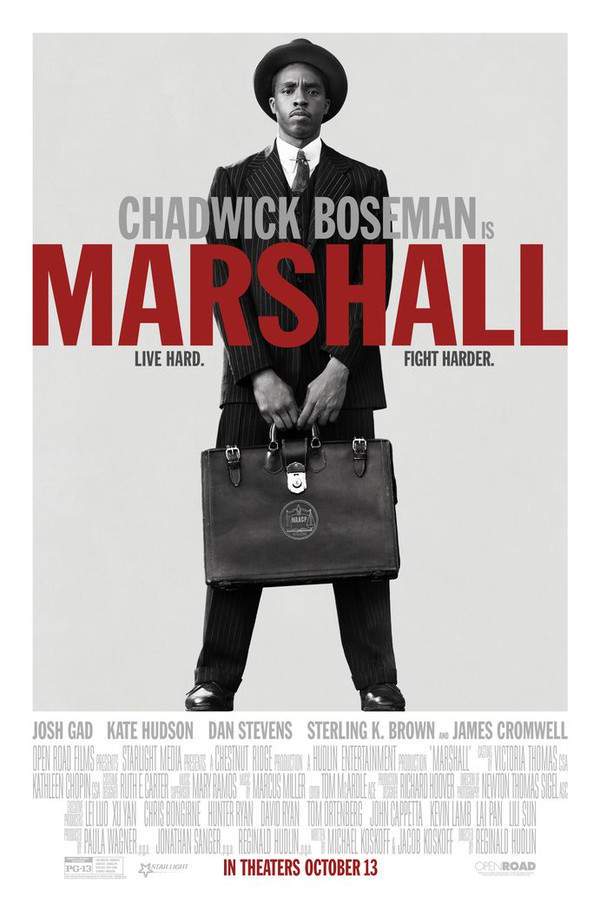
Marshall (2017) movie poster

Timeline

Marshall (2017) Timeline Explained – Every Event in Order

Release, runtime and language
2017 · 118 min · English
Echo score 77
Loading streaming availability…
Directed by
Reginald Hudlin
Starring
Chadwick Boseman, Sterling K. Brown, James Cromwell, Barrett Doss, Ahna O'Reilly, Dan Stevens
Budget
$12M

A young Thurgood Marshall, already a prominent lawyer for the NAACP, finds himself facing a challenging case when he defends Joseph Spell, a black chauffeur accused of assault by his wealthy white employer. Partnered with an inexperienced lawyer, Sam Friedman, Marshall must overcome racial prejudice and systemic injustice to prove his client’s innocence. The legal battle tests Marshall’s skills and courage as he fights for justice in a deeply divided society.

On this page (6)
  1. 1 Where to watch
  2. 2 Events in order (15)
  3. 3 Timeline questions answered
  4. 4 Movie threads
  5. 5 Movies like Marshall
  6. 6 Every angle
Loading streaming availability…

15 events in order · contains spoilers

Marshall Timeline: Events in Chronological Order

Every key event of Marshall (2017) in order, scene by scene, with when and where it takes place. Use it to untangle flashbacks, time jumps and parallel storylines, to refresh your memory before the sequel or to find the exact scene you are thinking of.

  1. Thurgood Marshall's Mission

    In April 1941, Thurgood Marshall, a dedicated NAACP lawyer, is traveling across the country to defend individuals of color who have been wrongly accused of crimes due to racial bias. His commitment to justice highlights the systemic issues faced by African Americans in the legal sphere.

    When
    April 1941
  2. The Case of Joseph Spell

    Upon returning to his office in New York City, Marshall is sent to Bridgeport, Connecticut, to defend Joseph Spell, a chauffeur falsely accused of raping his white employer, Eleanor Strubing. This case has attracted significant media attention due to its racially charged nature.

    Where
    Bridgeport, Connecticut
  3. Admittance to the Bar

    In Bridgeport, insurance lawyer Sam Friedman is reluctantly tasked to help Marshall get admitted to the local bar, a requirement for him to defend Spell during the trial. Despite facing opposition from the judge, Friedman works to secure Marshall’s presence in the courtroom.

    Where
    Bridgeport, Connecticut
  4. Trial Preparations Begin

    Judge Foster allows Marshall to practice law in his court but forbids him from speaking during the trial. This decision places immense pressure on Friedman as he must navigate the complex trial aided only by Marshall's guidance through notes.

  5. Spell's Claim

    Joseph Spell asserts to Marshall that he never had any sexual contact with Eleanor Strubing. He directs the lawyers to a police patrolman who stopped him that night while he was with Strubing, hoping this testimony will support his innocence.

  6. Investigating the Accusation

    Marshall and Friedman investigate Strubing's account, questioning the credibility of her claim that Spell assaulted her in the back seat of her car. Their doubts grow as they analyze the inconsistencies, specifically why Spell would attempt to throw her into a calmer part of the river.

    Where
    Bridgeport, Connecticut
  7. Confronting the Evidence

    During the trial, a doctor reveals that skin was found under Strubing's fingernails along with bruises on her body, suggesting a struggle. Strubing's testimony of being tied up when police arrived strengthens the prosecution’s case against Spell.

  8. Spell's Confession

    Under pressure from Marshall and Friedman, Spell confesses that he had sexual encounters with Strubing. He explains that the bruises could be attributed to her abusive husband, leading to a convoluted series of events that paint a much more complicated picture.

  9. The Distraught Strubing

    Spell recounts a night where Strubing, panicked over a potential pregnancy, jumped from a bridge while he tried to stop her. This moment highlights the volatile circumstances surrounding the situation and Strubing's emotional state.

    Where
    Bridgeport, Connecticut
  10. A Surprising Jury Dynamics

    As the trial progresses, a Southern white woman is selected as the jury forewoman, which plays a crucial role in the trial's outcome. Her assertive nature raises hopes for a fair deliberation among the jurors.

  11. Marshall's Departure

    Before the verdict is delivered, Marshall is called away to handle another case in Mississippi. As he leaves, the tensions of the trial weigh heavily on both him and Spell, with fate hanging in the balance.

  12. Final Plea Bargain

    In Marshall's absence, prosecutor Willis offers Spell a lighter plea agreement, but emboldened by the revelations in court, Spell refuses to accept it. This decision marks a turning point in his confidence regarding the trial.

  13. The Closing Arguments

    With Marshall gone, Friedman presents the closing statement on behalf of Spell. Their earlier preparation comes into play as they hope that their defense resonates with the jury during this critical moment.

  14. The Verdict

    The jury ultimately delivers a 'not guilty' verdict, much to the surprise and relief of Spell and his defense team. The verdict highlights a significant victory not only for Spell but for justice in a racially charged environment.

    Where
    Bridgeport, Connecticut
  15. Moving Forward

    After the trial, Joseph Spell is filled with joy as the jury celebrates the verdict. Both Marshall and Friedman reflect on their commitment to civil rights, with Marshall continuing his illustrious career in the American legal system.

Last updated: May 12, 2025 at 07:03

Was this helpful?

Timeline questions answered

Marshall Timeline Explained: Your Questions Answered

When does it happen, and why in that order? The questions people ask about the chronology of Marshall (2017): time jumps, flashbacks, cause and effect between scenes and the correct order of events, each answered with spoilers.

Q1

Why was Thurgood Marshall forbidden from speaking during the trial?

Judge Foster allowed Marshall to practice law in his court but prohibited him from speaking during the trial. This restriction was imposed because Marshall was not yet admitted to the Connecticut bar, and the judge was friends with the prosecutor Lorin Willis. As a result, Sam Friedman had to lead the defense while Marshall guided him through notes and advice throughout the trial.

  • thurgood marshall
  • trial restriction
  • judge foster
  • sam friedman
  • courtroom
Q2

Why did Joseph Spell initially lie about his encounter with Eleanor Strubing?

Spell lied because he feared the consequences that Black men faced in the South for relationships with white women. He explained that such accusations often led to brutal outcomes, including lynching. When confronted by Marshall and Friedman about the inconsistencies in the case, Spell eventually admitted to having a consensual relationship with Strubing.

  • joseph spell
  • lie
  • eleanor strubing
  • fear
  • racism
Q3

What caused the bruises on Eleanor Strubing's body?

The bruises on Strubing's body were not caused by Joseph Spell. During his testimony, Spell revealed that Strubing's husband was physically abusive, and the bruises were a result of this domestic abuse. This revelation was crucial in undermining the prosecution's theory that Spell had assaulted her.

  • eleanor strubing
  • bruises
  • husband
  • abuse
  • domestic violence
Q4

Why did Eleanor Strubing falsely accuse Joseph Spell of assault?

Strubing panicked after consensual sexual relations with Spell. When she realized the potential implications of her actions and feared becoming pregnant from the encounter, she attempted to take her own life by jumping off a bridge. Her false accusation of rape was an attempt to explain her injuries and the circumstances to her husband and others.

Foreshadowing: Earlier investigation into why Spell would throw her into calm waters rather than rapids hinted at inconsistencies in Strubing's story.

  • eleanor strubing
  • false accusation
  • panic
  • suicide attempt
  • bridge
Q5

Why was the Southern white woman selected as jury foreperson significant?

Thurgood Marshall specifically advised Sam Friedman to include a strong-willed Southern white woman on the jury, believing her assertiveness could work in their favor. This strategy proved crucial, the woman eventually became the jury foreperson and led the deliberation toward a "not guilty" verdict, defying expectations of racial prejudice.

Foreshadowing: Marshall's strategic advice about jury selection was a key moment early in the trial preparation.

  • jury
  • foreperson
  • southern woman
  • marshall strategy
  • verdict
Q6

Why did Joseph Spell refuse the plea deal offered by the prosecutor?

Spell refused the plea deal after hearing the full truth come out during the trial. The revelations about Strubing's domestic abuse, her panic over pregnancy, and the circumstances that led to the false accusation gave Spell confidence in his defense. With Marshall's earlier persuasion not to accept a plea and the strengthening of his case, Spell chose to reject the deal and risk a verdict.

Foreshadowing: Earlier in the case, Marshall had persuaded Spell to refuse an initial plea deal, building his confidence in fighting the charges.

  • joseph spell
  • plea deal
  • refuse
  • confidence
  • prosecutor
Q7

Why were investigators confused about where Spell supposedly tried to dispose of Strubing's body?

Marshall and Friedman were puzzled by Strubing's claim that Spell attempted to throw her into the river at a bridge. They questioned why Spell would choose the calm waters rather than the rapids, which seemed inconsistent with someone attempting to dispose of a body. This inconsistency helped cast doubt on Strubing's account of the alleged assault.

  • river
  • bridge
  • disposal
  • body
  • inconsistency
Q8

How did the jury reach a "not guilty" verdict in Joseph Spell's case?

The jury delivered a not guilty verdict after deliberating with foreperson guidance. Key factors included the inconsistencies in Strubing's testimony, the revelation that her bruises came from her abusive husband rather than an assault, and the defense's effective presentation of reasonable doubt. The Southern white woman foreperson played a pivotal role in leading the jury toward this surprising outcome.

  • jury
  • verdict
  • not guilty
  • deliberation
  • foreperson
Q9

Why did Thurgood Marshall leave before the verdict was announced?

Marshall was called away to handle another case in Mississippi before the verdict was delivered. Despite the timing, he had prepared Sam Friedman thoroughly for the closing arguments and had confidence in their defense strategy. Friedman ultimately presented the closing arguments alone and received the verdict news from Marshall over the phone.

  • thurgood marshall
  • departure
  • verdict
  • mississippi
  • sam friedman
Q10

What was Eleanor Strubing's husband's role in the case?

Eleanor Strubing's husband was abusive and the source of her bruises. He was never directly involved in the trial as a witness or suspect, but his abusive behavior was revealed when Spell finally testified about the truth. The husband's abuse provided an alternative explanation for Strubing's injuries, which the prosecution had attributed to Spell's alleged assault.

  • eleanor strubing
  • husband
  • abuse
  • bruises
  • domestic violence
Q11

Why did the Joseph Spell case attract so much media attention?

The case generated significant media attention because it involved a Black chauffeur accused of assaulting his wealthy white employer in 1941 Connecticut. The racial dynamics of the case, combined with the sexual assault allegations, made it a sensational story that highlighted the tensions between race, class, and justice during the Jim Crow era.

  • media
  • sensational
  • racial
  • accused
  • connecticut
Q12

What happened to Joseph Spell after he was acquitted?

After the jury delivered the "not guilty" verdict, Joseph Spell was filled with joy and relief. The courtroom erupted in applause as the verdict was announced. Beyond the immediate celebration, the closing credits reveal that Sam Friedman continued his work in numerous civil rights cases, though specific details about Spell's later life are not provided in the film.

  • joseph spell
  • acquitted
  • verdict
  • joy
  • aftermath

Movie threads

More Movies Like Marshall, by Mood & Story

Curated lists built around what makes Marshall tick: the same mood, the same kind of story or the same emotional payoff. Each list explains why these movies belong together.

Tense courtroom dramas about fighting injustice like Marshall

High-stakes legal battles where the courtroom becomes a battlefield for social change. If you enjoyed the legal tension and social justice themes of Marshall, explore more movies like it. This section features gripping courtroom dramas where lawyers take on powerful systems, fighting for truth in tense, high-stakes environments similar to the feel of Marshall.

  • tense
  • cerebral
  • urgent
  • gripping
  • hopeful
  • serious
  • Tone: tense, urgent, hopeful
  • Pacing: steady, procedural
Why these movies?

The story pattern: The narrative pattern follows a legal team, often an underdog, building a case against significant opposition. The tension steadily rises through witness testimonies, procedural hurdles, and dramatic reveals within the courtroom, culminating in a verdict that carries immense moral and social weight.

Why they belong together: These movies are grouped by their shared high-stakes setting, tense tone driven by legal suspense, and a central theme of using the law as a tool against systemic injustice. They deliver a cerebral, urgent, and hopeful experience focused on perseverance.

Biographical dramas about triumph over adversity like Marshall

Based-on-true-story journeys where determined individuals overcome systemic obstacles. For viewers who liked the inspiring true story of Thurgood Marshall in Marshall, this section collects similar movies. Discover biographical films about real people overcoming great obstacles, fighting for civil rights, and achieving historic victories against all odds, capturing a similar heavy yet hopeful emotional journey.

  • hopeful
  • serious
  • gripping
  • oppressive
  • inspiring
  • based on true story
  • Tone: serious, hopeful, gripping
  • Pacing: steady, biographical
Why these movies?

The story pattern: The narrative follows a pivotal chapter in a historical figure's life, depicting the specific challenges they faced. It's a straightforward but emotionally heavy arc that builds steadily towards a climax where their efforts result in a significant, positive impact, providing a satisfying and happy ending despite the difficult journey.

Why they belong together: These films share a focus on true stories of perseverance, a heavy emotional weight due to the serious themes of injustice, and a satisfying, happy ending that provides a sense of hope and historical importance. The tone is serious and gripping, with a steady pacing that builds towards triumph.

If you liked this

Movies Like Marshall

Similar movies to Marshall: the same genre, themes or kind of story. Each one comes with its own plot summary, timeline and ending explained.

Browse all movie summaries

Every angle

Marshall (2017) Explained: Plot, Timeline & Characters

Everything about Marshall in one place: what happens in the plot summary, the timeline in chronological order, the characters and meaning and a spoiler-free summary. What's After the Movie adds the cast, box office and post-credit scenes.

Coming soon on iOS and Android

The Plot Explained Movie Summary App

Plot summaries, endings explained and timelines on your phone. Catch up on any movie in minutes, save your favorites and never miss a twist again.

Be the first to know when we launch. Your email stays private, always.

Learn more about the app