


















Plot Explained Spoilers guaranteed!
Plot Explained

Browse by genre

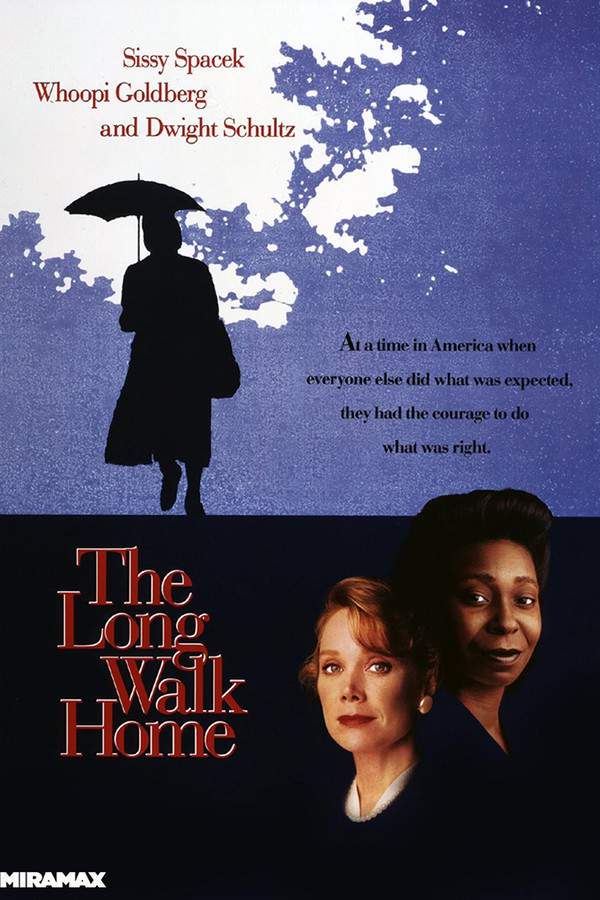
The Long Walk Home (1990) movie poster

Plot Summary

The Long Walk Home (1990) Plot Summary Explained

Release, runtime and language
1990 · 97 min · English
JustWatch #10,454
Directed by
Richard Pearce
Starring
Erika Alexander, Sissy Spacek, Ving Rhames, Dylan Baker, Whoopi Goldberg, Crystal Robbins

In 1955 Montgomery, Alabama, the complexities of racial segregation form the backdrop for an unlikely friendship. Odessa Carter, a dedicated civil rights activist, develops a strong bond with her employer, Miriam Thompson. Their daily commutes evolve into a powerful symbol of solidarity and defiance as they confront societal inequalities. Through their shared experiences, they challenge prevailing norms and embark on a journey toward meaningful change, forging an unforgettable connection.

On this page (6)
  1. 1 Where to watch
  2. 2 What happens: full plot
  3. 3 Plot questions answered
  4. 4 Movie threads
  5. 5 Movies like The Long Walk Home
  6. 6 Every angle

Where to watch

Where to Watch The Long Walk Home (1990)

Where can you watch The Long Walk Home? Stream, rent or buy it in the US, including on Amazon Prime Video, fuboTV and Fawesome: current JustWatch availability with up-to-date prices.

Streaming availability powered by JustWatch

Full plot summary · contains spoilers

What Happens in The Long Walk Home: Full Plot Summary

The whole story of The Long Walk Home (1990) explained, from the opening scene to the final frame: every key event, every twist and what it all adds up to. Read it as a quick recap before the sequel, to check a scene you missed, or to finally understand what really happened.

The film is a poignant expansion of a feature focusing on the historical context of the 1955 Montgomery bus boycott in Montgomery, Alabama. It centers around Odessa Cotter, portrayed by the talented Whoopi Goldberg, an African-American maid and nanny who works for Miriam Thompson, played by the remarkable Sissy Spacek. Odessa navigates the harsh realities faced by African Americans in the South, grappling with issues like poverty, racism, segregation, and violence.

As the city’s black community rallies in a widespread boycott against city-owned buses to combat segregation, Odessa is forced to undertake long walks to work. In a show of solidarity and compassion, Miriam decides to provide her with a ride two days a week, easing the burden of her “long walk home.” Meanwhile, the city witnesses the emergence of informal carpools to assist those affected by the boycott, although many are still left with no choice but to walk.

The escalating tensions within the city reflect an intense struggle, as the black community, previously the majority riders on the buses, witnesses the financial impact of the boycott. Miriam's support for Odessa puts her at odds with her husband, Norman Thompson (portrayed by Dwight Schultz), and various influential members of the white community who push for an end to the protests. This conflict forces Miriam to confront a critical dilemma: to adhere to her convictions or yield to the mounting pressures from her husband and their peers.

In a moment of defiance, after a significant argument with Norman, Miriam resolutely opts to follow her heart. She becomes actively involved in a carpool initiative, aiding other African-American workers like Odessa. The film culminates in a powerful scene where Miriam and her daughter, Mary Catherine, voiced by Lexi Randall, who narrates the story through flashbacks, align themselves with Odessa and other protesters in a courageous stand against oppression. This stirring conclusion encapsulates the spirit of resistance and unity in the face of adversity.

Last updated: November 15, 2024 at 16:59

Was this helpful?

Plot questions answered

The Long Walk Home Plot Explained: Your Questions Answered

The questions people ask most about The Long Walk Home (1990): what happens in the confusing scenes, why the characters do what they do, the twists, hidden details and what the ending means. Each answer contains spoilers.

Q1

Why does Miriam decide to give Odessa rides to work?

Miriam decides to give Odessa rides to work twice a week as a gesture of solidarity and compassion. After the Montgomery bus boycott begins, Odessa is forced to walk long distances to her job. Miriam, who is aware of the struggles Odessa faces as a Black woman in segregated Alabama, wants to ease the physical burden on her friend and show her support during this difficult time. This act represents the beginning of Miriam's moral awakening and her growing understanding of the injustice surrounding her.

Foreshadowing: Earlier scenes show Miriam observing Odessa's daily hardships, which builds her awareness of the need for action.

  • Miriam Thompson
  • Odessa
  • rides to work
  • compassion
  • solidarity
Q2

What causes Miriam to finally join the carpool after her argument with Norman?

After a significant argument with her husband Norman, who pressures her to abandon her support for Odessa and the boycott, Miriam reaches her breaking point. The conflict with Norman and pressure from influential white community members who want the protests to end forces her to make a choice. In a moment of defiance, Miriam chooses to follow her convictions rather than yield to external pressure. She then actively joins the carpool initiative to help other African-American workers like Odessa, publicly aligning herself with the civil rights struggle.

Foreshadowing: Throughout the film, Miriam's internal conflict builds as she witnesses the injustice firsthand, culminating in her decisive action.

  • Miriam
  • Norman
  • argument
  • carpool
  • defiance
  • conviction
Q3

How does the bus boycott impact the black community in Montgomery?

The bus boycott has a significant financial impact on the city's bus system, as Black residents had previously constituted the majority of riders. By refusing to use the buses, the Black community demonstrates its economic power and forces the city to confront the consequences of segregation. However, the boycott also creates hardships, as many Black workers like Odessa must walk long distances to their jobs. Informal carpools emerge to help, but many people remain without transportation, highlighting the sacrifices people made to participate in the protest.

Foreshadowing: The boycott's success depends on the community's unity, shown from the very first scenes of collective action.

  • bus boycott
  • Montgomery
  • financial impact
  • economic power
  • transportation
Q4

Why does Miriam supporting Odessa cause conflict with her husband Norman?

Miriam's decision to support Odessa by giving her rides and later joining the carpool puts her at odds with her husband Norman and other members of the white community. Norman and influential white citizens push for an end to the protests and view Miriam's actions as rebellious and embarrassing to their family. Her support for the boycott challenges the prevailing social norms and represents a direct refusal to comply with the segregated society they live in, creating tension in their marriage and within their social circle.

Foreshadowing: Early scenes show the couple's differing perspectives on race relations, setting up their eventual confrontation.

  • Miriam
  • Norman Thompson
  • husband
  • conflict
  • segregation
  • white community
Q5

Why does Odessa continue walking to work despite the difficulties?

Odessa continues walking to work because she is committed to the boycott's success and believes in the fight against segregation. As a Black woman living under Jim Crow laws in Montgomery, she understands that participating in the boycott is a form of resistance against systemic racism. Even when carpools form, many in the Black community still have no transportation option but to walk. Odessa's perseverance symbolizes the resilience and determination of the African-American community during the civil rights movement.

Foreshadowing: The film's opening establishes Odessa's character as someone who endures hardship while maintaining her dignity and principles.

  • Odessa Cotter
  • walking
  • boycott
  • perseverance
  • civil rights
  • resilience
Q6

Why does Mary Catherine narrate the story through flashbacks?

Mary Catherine, Miriam's daughter, narrates the film through flashbacks, providing a personal and emotional perspective on the events. Her narration connects past struggles with the ongoing fight for civil rights, adding depth to the narrative. As someone who witnessed her mother's transformation and participated in the final protest, Mary Catherine offers insights into the emotional landscape of the story and reflects on the significance of these events in hindsight.

Foreshadowing: The narrative framing establishes from the start that this is a story being remembered and reflected upon.

  • Mary Catherine
  • narration
  • flashbacks
  • perspective
  • memory
Q7

What is the significance of the final protest scene where Miriam and Mary Catherine join Odessa?

The final scene where Miriam and her daughter Mary Catherine join Odessa and other protesters represents the culmination of Miriam's moral journey. By publicly standing with the Black community in defiance of segregation, Miriam makes a powerful statement of solidarity. This act of courage transforms her from an observer into an active participant in the civil rights movement. The image of a white woman and her daughter walking alongside Black protesters embodies the theme of cross-racial unity and the spirit of resistance against oppression.

Foreshadowing: Miriam's earlier decision to join the carpool foreshadows her willingness to take this public stand.

  • final scene
  • protest
  • unity
  • solidarity
  • Miriam
  • Mary Catherine
  • Odessa
  • defiance
Q8

What role does Odessa play in the civil rights movement in the film?

Odessa serves as both a participant in the boycott and as a symbol of the everyday heroism of Black women who sustained the civil rights movement. As a maid and nanny working for a white family, she experiences firsthand the intersection of racial oppression and economic exploitation. Her willingness to walk long distances rather than capitulate to segregated buses demonstrates the personal sacrifices required to challenge systemic injustice. Her friendship with Miriam also shows how personal relationships can bridge racial divides and foster understanding.

Foreshadowing: The film opens by establishing Odessa's daily struggles, showing her as a central figure in the community's resistance.

  • Odessa Cotter
  • civil rights
  • activist
  • boycott
  • sacrifice
  • heroism
Q9

What was the purpose of the carpool initiative in the movie?

The carpool initiative emerges as a practical solution to help Black workers who cannot afford to own cars or rely on the boycotted buses. As the boycott continues, informal carpools form across Montgomery to transport African-American workers to their jobs. By joining this initiative, Miriam not only helps alleviate transportation hardships but also puts herself at risk socially and personally. The carpools represent a grassroots response to segregation, demonstrating the community's creativity and determination in sustaining the boycott.

Foreshadowing: The formation of carpools follows logically from the transportation crisis created by the boycott.

  • carpool
  • transportation
  • boycott
  • community support
  • grassroots
Q10

What triggers Miriam's moral awakening throughout the film?

Miriam's moral awakening is triggered by her growing awareness of the injustices Odessa and the broader Black community face. Through her daily interactions with Odessa, Miriam witnesses firsthand the hardships of racism, segregation, and poverty. As the boycott progresses and tensions rise, she cannot ignore what she sees. The pressure from her husband and the white community to abandon her support for Odessa ultimately forces her to choose between social conformity and her own ethical convictions, leading her to take a resolute stand.

Foreshadowing: Miriam's introduction shows her observing Odessa's struggles, planting the seeds of her eventual transformation.

  • Miriam Thompson
  • moral awakening
  • conscience
  • conviction
  • transformation

Movie threads

More Movies Like The Long Walk Home, by Mood & Story

Curated lists built around what makes The Long Walk Home tick: the same mood, the same kind of story or the same emotional payoff. Each list explains why these movies belong together.

Moral Awakening Dramas like The Long Walk Home

Personal stories of individuals confronting injustice and finding their voice. If you liked The Long Walk Home, discover more movies about personal transformations in the face of social injustice. These films feature characters who undergo a moral awakening, challenging the status quo and finding solidarity in unexpected places.

  • inspirational
  • thoughtful
  • courageous
  • tense
  • united
  • defiant
  • Tone: hopeful, defiant, thoughtful
  • Pacing: steady, character-driven
Why these movies?

The story pattern: These narratives typically follow a protagonist, often initially insulated from the problem, who is gradually educated about an injustice. Their internal moral conflict escalates as they witness its effects, leading to a pivotal choice to take a stand, despite personal risk and societal pressure.

Why they belong together: Movies are grouped here for their shared focus on a specific character arc: the journey from complacency to activism. They share a hopeful but emotionally heavy tone, balancing the weight of the subject matter with the uplifting power of personal conviction and human connection.

Movies about Unlikely Alliances like The Long Walk Home

Stories where bonds form across divides to challenge a common oppression. Find movies similar to The Long Walk Home that explore the power of solidarity. These stories focus on friendships that bridge social divides, becoming a symbol of resistance and hope against overwhelming opposition in tense historical settings.

  • united
  • defiant
  • tense
  • inspirational
  • courageous
  • hopeful
  • Tone: hopeful, tense, inspirational
  • Pacing: steady, linear progression
Why these movies?

The story pattern: The plot revolves around a burgeoning relationship between characters from opposing sides of a social conflict. Their alliance is tested by external dangers and internal prejudices, but their growing trust and shared purpose become the emotional core and driving force of the story, leading to a unifying climax.

Why they belong together: These films are connected by their emphasis on cross-cultural or cross-social friendship as an act of resistance. They share a vibe of tense defiance balanced by inspirational unity, often set against the backdrop of real-world historical struggles, creating a steady-paced, emotionally impactful experience.

If you liked this

Movies Like The Long Walk Home

Similar movies to The Long Walk Home: the same genre, themes or kind of story. Each one comes with its own plot summary, timeline and ending explained.

Browse all movie summaries

Every angle

The Long Walk Home (1990) Explained: Plot, Timeline & Characters

Everything about The Long Walk Home in one place: what happens in the plot summary, the timeline in chronological order, the characters and meaning and a spoiler-free summary. What's After the Movie adds the cast, box office and post-credit scenes.

Coming soon on iOS and Android

The Plot Explained Movie Summary App

Plot summaries, endings explained and timelines on your phone. Catch up on any movie in minutes, save your favorites and never miss a twist again.

Be the first to know when we launch. Your email stays private, always.

Learn more about the app