Plot Explained Spoilers guaranteed!
Plot Explained

Browse by genre

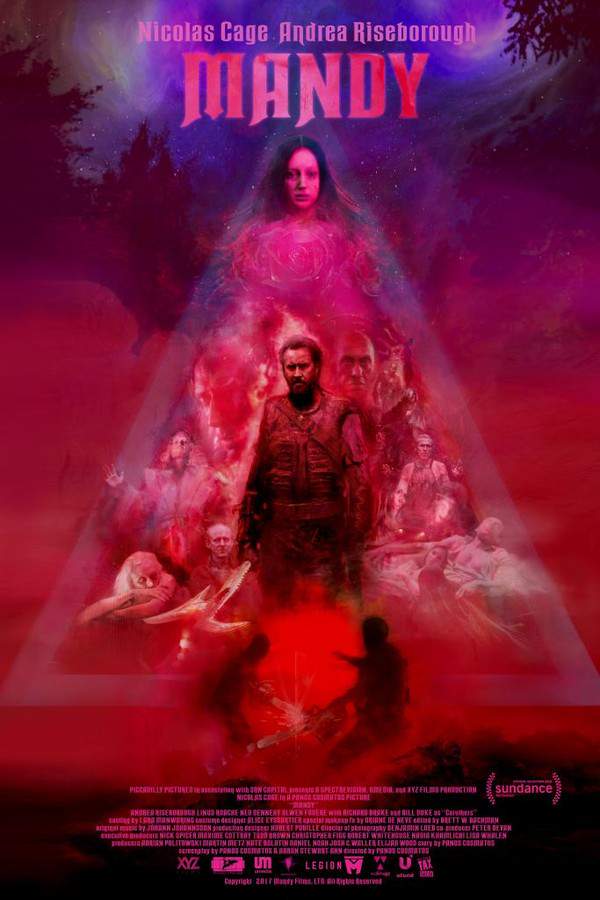
Mandy (2018) movie poster

Timeline

Mandy (2018) Timeline Explained – Every Event in Order

Release, runtime and language
2018 · 121 min · English
Echo score 85
Loading streaming availability…
Directed by
Chris 'Casper' Kelly, Panos Cosmatos
Starring
Andrea Riseborough, Nicolas Cage, Richard Brake, Olwen Fouere, Bill Duke, Ned Dennehy
Budget
$6M

In 1983, in the remote Pacific Northwest, a peaceful existence is violently disrupted when a twisted cult leader and his followers attack the home of Red Miller and Mandy Bloom. Driven by a desire for vengeance, Red sets out on a harrowing and surreal journey to confront those responsible for shattering his world. His quest is fueled by rage and descends into a bloody rampage against the cult and its members.

On this page (6)
  1. 1 Where to watch
  2. 2 Events in order (14)
  3. 3 Timeline questions answered
  4. 4 Movie threads
  5. 5 Movies like Mandy
  6. 6 Every angle
Loading streaming availability…

14 events in order · contains spoilers

Mandy Timeline: Events in Chronological Order

Every key event of Mandy (2018) in order, scene by scene, with when and where it takes place. Use it to untangle flashbacks, time jumps and parallel storylines, to refresh your memory before the sequel or to find the exact scene you are thinking of.

  1. Eerie Inscription

    The film opens with a haunting inscription about death and music, setting a darkly lyrical tone. This unsettling note foreshadows the tragic events that are to unfold in the lives of the characters.

  2. Red's Work as a Lumberjack

    Red Miller, played by Nicolas Cage, is introduced as a lumberjack laboring in the peaceful woods. His connection with nature contrasts sharply with the violence that soon disrupts his life.

    Where
    The Woods
  3. Mandy's Artistic Moment

    Mandy, portrayed by Andrea Riseborough, spends time sketching intense depictions of animals while enjoying her marijuana. This creative escape reflects her vibrant spirit amidst the looming darkness of the narrative.

    Where
    Their Home
  4. Intimate Conversations

    Red and Mandy engage in deep, philosophical conversations about life, the universe, and even comic book characters like Galactus. These tender moments illustrate their close bond, hinting at the love and loss to come.

    Where
    Their Home
  5. Symbol of Innocence Lost

    One day, while in the woods, Mandy discovers a lifeless fawn, which symbolizes the fragility of their happiness. This discovery resonates with her childhood trauma and foreshadows the immense suffering ahead.

    Where
    The Woods
  6. Encounter with Evil

    Mandy's unease grows as she comes across Jeremiah Sand, who becomes dangerously fixated on her. His obsession reveals a sinister side that threatens to unravel their tranquil life.

    Where
    The Woods
  7. The Abduction

    Mandy is kidnapped by Sand's followers, who inflict psychological torment on her. The horror escalates as she becomes a pawn in Sand's twisted machinations.

  8. Red's Anguish

    After witnessing the brutal treatment of Mandy, Red's grief transforms into an overwhelming rage, pushing him toward an inevitable path of vengeance. This moment marks a drastic shift in his character.

  9. Weapon of Vengeance

    In a moment of clarity mixed with madness, Red forges a weapon—a hand-crafted axe. This act symbolizes his transformation from a peaceful man to a relentless avenger.

  10. Confronting the Black Skulls

    Red engages in a brutal massacre against the gang known as the Black Skulls, showcasing his ruthless efficiency and the culmination of his grief into a singular purpose of revenge.

    Where
    Black Skulls' Lair
  11. Showdown with Jeremiah Sand

    In a climactic encounter, Red confronts Jeremiah Sand in his hideout, where delusions of grandeur and madness clash violently. Red's declaration, *'I'm your God now!'*, underscores the shift in power dynamics.

    Where
    Sand's Hideout
  12. Final Act of Vengeance

    Red mercilessly ends Sand's life, symbolically reclaiming his power and agency. This brutal act serves as the culmination of his transformation and the overarching theme of revenge throughout the film.

  13. Haunting Vision

    As Red escapes the chaos, he envisions a serene moment with Mandy, highlighting his grief and longing. This moment reflects how deeply altered he is by his violent journey and the loss he has endured.

  14. Credits Roll

    As the credits conclude, a stark black screen leaves the audience to grapple with the unsettling resolution of Red's journey. The silence following the chaos encapsulates the madness and horror of his revenge.

Last updated: November 03, 2024 at 22:16

Was this helpful?

Timeline questions answered

Mandy Timeline Explained: Your Questions Answered

When does it happen, and why in that order? The questions people ask about the chronology of Mandy (2018): time jumps, flashbacks, cause and effect between scenes and the correct order of events, each answered with spoilers.

Q1

Why does Jeremiah Sand become obsessed with Mandy?

Jeremiah Sand becomes obsessed with Mandy after seeing her in the woods. He is a failed musician turned cult leader who lives in delusions of grandeur. When he encounters Mandy, his twisted mind fixates on her as the "perfect" woman he believes he deserves. His obsession is driven by his narcissistic delusion that he is destined for something greater, and he sees Mandy as the key to fulfilling his messianic fantasies. When she laughs at him during his confrontation, it shatters his ego and triggers the violent events that follow.

Foreshadowing: Earlier in the film, Mandy narrates a childhood trauma about feeling pressured into killing a starling, foreshadowing how she becomes a victim of pressure and violence from dangerous men.

  • jeremiah sand
  • mandy
  • cult leader
  • obsession
  • delusion
Q2

What is "The Cherry on Top" that the cult performs on Mandy?

"The Cherry on Top" is the name of the horrific torture method the cult inflicts on Mandy during her abduction. While the summary describes it as a "sting," this refers to a particularly cruel method of torment that Sand's followers use as part of their sadistic rituals. The phrase itself is chillingly ironic, contrasting the innocent connotation of a "cherry" with the brutal reality of Mandy's suffering. This act is part of the cult's ritualistic abuse that ultimately leads to her death.

Foreshadowing: The cult members chant "Blood for Blood" earlier, establishing their sacrificial and violent nature.

  • the cherry on top
  • cult
  • torture
  • mandy
  • sacrifice
Q3

Why does Red become so violently vengeful after Mandy's death?

Red's transformation into a brutal avenger stems from witnessing the horrific torture and murder of the person he loved most. He is captured, tied with barbed wire, and forced to watch Mandy being tormented before she is killed. This combination of powerlessness, grief, and rage shatters his previous peaceful identity. The film shows his anguish reaching a peak, after which his grief transforms into overwhelming fury. Rather than processing his trauma normally, he channels it into a singular purpose: hunting down everyone responsible for taking Mandy from him.

Foreshadowing: The montage showing Red and Mandy gazing at flames foreshadows the destruction of their happiness through fire and violence.

  • red miller
  • vengeance
  • grief
  • rage
  • murder
Q4

What are the Black Skulls and why are they deformed?

The Black Skulls are a gang of grotesque, satanic bikers who serve as Jeremiah Sand's enforcers. They are revealed to be former Vietnam veterans who suffered severe psychological damage from a traumatic LSD experience during the war. The drug permanently warped their minds and bodies, leaving them as twisted, mutated individuals who now carry out the cult's violent bidding. The Chemist, who creates the LSD, later guides Red to Sand's hideout after witnessing the devastation the Black Skulls caused.

Foreshadowing: Red's friend explains the LSD origin after Red has a nightmarish vision, linking the bikers' condition to their traumatic past.

  • black skulls
  • bikers
  • cult
  • lsd
  • deformed
  • veterans
Q5

Is Mandy's appearance in the ending real or a hallucination?

The serene vision of Mandy that Red sees as he drives away is almost certainly a hallucination induced by the lingering effects of the LSD he encountered during his rampage. The film deliberately leaves this ambiguous, but the meta notes confirm the ending is meant to be bleak, Red is irreversibly broken by his violent journey. The vision represents his desperate longing for the peaceful life he lost, but the stark reality is that Mandy is dead and Red is consumed by the horror of what he has become.

Foreshadowing: The earlier surreal advertisement for "Cheddar Goblin" establishes that Red is experiencing drug-induced hallucinations.

  • ending
  • hallucination
  • mandys death
  • red
  • ambiguous
Q6

Why does Red say "I'm your God now" to Jeremiah Sand?

Red declares "I'm your God now" during his final confrontation as a statement of power reversal. Throughout the film, Jeremiah Sand has presented himself as a messianic cult leader who believes he is divinely chosen. Red, who was previously powerless and helpless while watching Mandy die, now fully dominates his captor. By claiming to be Sand's God, Red symbolically strips Sand of the false divinity he clung to and asserts complete control over him. This moments marks the culmination of Red's transformation from victim to vengeful god-like figure.

Foreshadowing: Sand's earlier delusions of grandeur and self-proclaimed messianic status set up this power dynamic reversal.

  • im your god now
  • jeremiah sand
  • red
  • confrontation
  • power
Q7

Why does Red forge an axe as his weapon of vengeance?

Red forges a hand-crafted axe after learning about the Black Skulls and their connection to the people who took Mandy. The axe serves as a deliberate contrast to the modern weapons and supernatural elements surrounding him. It represents a return to primitive, personal violence, the kind of direct, visceral revenge that matches his raw emotional state. The act of forging the weapon himself also symbolizes his complete transformation from a peaceful lumberjack into a deliberate force of destruction, taking control of his fate in the most direct way possible.

Foreshadowing: As a lumberjack, Red already works with axes daily, making the weapon choice both practical and symbolically connected to his identity.

  • red
  • axe
  • weapon
  • forging
  • revenge
Q8

Why does the film include surreal hallucinatory sequences?

The surreal sequences, including the nightmarish visions and the bizarre "Cheddar Goblin" advertisement, represent Red's psychological state as he descends into grief and rage. The LSD exposure from the Black Skulls amplifies his trauma, creating a dreamlike, disorienting texture that mirrors his fractured mind. These surreal moments also serve the film's aesthetic, blending horror with hallucinatory beauty. They blur the line between reality and Red's twisted perception, reinforcing the psychological horror of his transformation.

Foreshadowing: The eerie opening inscription itself has a surreal, poetic quality that sets the tone for the film's dreamlike nature.

  • surreal
  • hallucination
  • dreams
  • lsd
  • psychological
Q9

What is the significance of the dead fawn Mandy finds in the woods?

The lifeless fawn Mandy discovers symbolizes the fragility of her and Red's innocent, peaceful life in the woods. It serves as an ominous foreshadowing of the violence that will destroy their happiness. The discovery deeply unsettles Mandy, connecting to her childhood trauma about being pressured into killing a starling, both moments involving helpless creatures dying. This theme of innocence lost runs throughout the film, culminating in Mandy's own violent death at the hands of the cult.

Foreshadowing: Mandy's childhood trauma about killing the starling directly parallels the fawn incident, establishing her pattern of witnessing innocent deaths.

  • fawn
  • woods
  • symbolism
  • innocence
  • mandy
Q10

What happens to Brother Swan and Sister Lucy after Mandy's abduction?

Brother Swan and Sister Lucy are the cult members who call upon the Black Skulls to aid in the abduction. Brother Swan attempts to force Lucy into some act of desperation, but it proves fruitless. After the initial abduction, they continue serving Sand's will. Ultimately, when Red embarks on his revenge quest, he systematically eliminates all cult members and bikers involved in Mandy's capture, including the core followers. Both meet their ends as part of Red's bloody rampage.

Foreshadowing: The failed desperate act with Lucy hints at the cult's desperation and moral corruption.

  • brother swan
  • sister lucy
  • cult
  • death
  • revenge
Q11

Why does Red seem to enjoy the violence rather than show remorse?

Red's apparent enjoyment of violence reflects his complete psychological break after witnessing Mandy's torture and murder. The film shows him not fazed by the bloodshed but rather reveling in it, becoming a "harbinger of wrath." This is not enjoyment in a traditional sense but rather a complete immersion in his role as avenger. His humanity has been stripped away by trauma, leaving only the singular purpose of vengeance. The bleak tone of the film suggests this transformation is tragic rather than cathartic, he has become the very thing that destroyed his life.

Foreshadowing: The shift from peaceful conversations about planets and stars to brutal violence marks his complete character transformation.

  • red
  • violence
  • remorse
  • transformation
  • trauma
Q12

Why does the film shift so abruptly from peaceful romance to extreme violence?

The stark contrast between the peaceful, dreamlike opening and the brutal violence that follows is intentional. The slow, lyrical first act establishes what Red and Mandy have, their love, their tranquility, their innocence, so that its destruction carries maximum emotional weight. This structure mirrors the sudden, random nature of trauma in real life. The film wants viewers to feel the whiplash of losing that peace, just as Red does. The variable pacing is designed to mirror Red's psychological state: calm before the storm, then relentless fury.

Foreshadowing: The ominous inscription about death and music at the very beginning signals that destruction is coming.

  • pacing
  • violence
  • romance
  • transformation
  • trauma

Movie threads

More Movies Like Mandy, by Mood & Story

Curated lists built around what makes Mandy tick: the same mood, the same kind of story or the same emotional payoff. Each list explains why these movies belong together.

Psychedelic revenge thrillers like Mandy

When grief and obsession fuel a hallucinatory journey into brutal violence. If you liked the hallucinatory journey and brutal vengeance of Mandy, explore more movies where characters descend into a psychedelic hellscape. These films blur reality and nightmare, driven by heavy grief and a thirst for bloody, surreal retribution.

  • surreal
  • vengeful
  • psychedelic
  • brutal
  • nightmarish
  • grief-stricken
  • Tone: dark, nightmarish, bleak
  • Pacing: variable, starts slow then becomes relentless
Why these movies?

The story pattern: The narrative typically begins with a life-shattering event that propels the protagonist into a vengeful spiral. Their journey is steeped in surrealism and psychedelic visuals, making their violent actions feel like part of a waking nightmare, often culminating in pyrrhic victory.

Why they belong together: Movies in this thread share a core mix of extreme grief, surreal visual language, and brutal, visceral violence. The experience is defined by its high emotional weight, dark tone, and the disorienting, nightmarish quality of the protagonist's quest.

Movies with volatile pacing like Mandy

A deceptive calm shatters into relentless, fast-paced action and violence. Fans of Mandy's dramatic shift from a dreamlike beginning to a furious rampage will appreciate these movies. Discover films that start slow and atmospheric, then explode into relentless, fast-paced action or horror, creating a powerful sense of rupture.

  • slow burn
  • explosive
  • relentless
  • chaotic
  • tense
  • violent
  • Tone: tense, dark, violent
  • Pacing: variable, slow burn to fast-paced
Why these movies?

The story pattern: The narrative structure hinges on a pivotal, violent event that acts as a point of no return. The pacing shifts from slow, character-focused establishment to fast, often chaotic action, mirroring the protagonist's psychological break from order into anarchy.

Why they belong together: This thread groups films based on their distinctive, volatile pacing structure. The shared experience is the tension of a peaceful setup followed by the visceral impact of its destruction, leading to a high-intensity, emotionally draining second half.

If you liked this

Movies Like Mandy

Similar movies to Mandy: the same genre, themes or kind of story. Each one comes with its own plot summary, timeline and ending explained.

Browse all movie summaries

Every angle

Mandy (2018) Explained: Plot, Timeline & Characters

Everything about Mandy in one place: what happens in the plot summary, the timeline in chronological order, the characters and meaning and a spoiler-free summary. What's After the Movie adds the cast, box office and post-credit scenes.

Coming soon on iOS and Android

The Plot Explained Movie Summary App

Plot summaries, endings explained and timelines on your phone. Catch up on any movie in minutes, save your favorites and never miss a twist again.

Be the first to know when we launch. Your email stays private, always.

Learn more about the app