








Plot Explained Spoilers guaranteed!
Plot Explained

Browse by genre

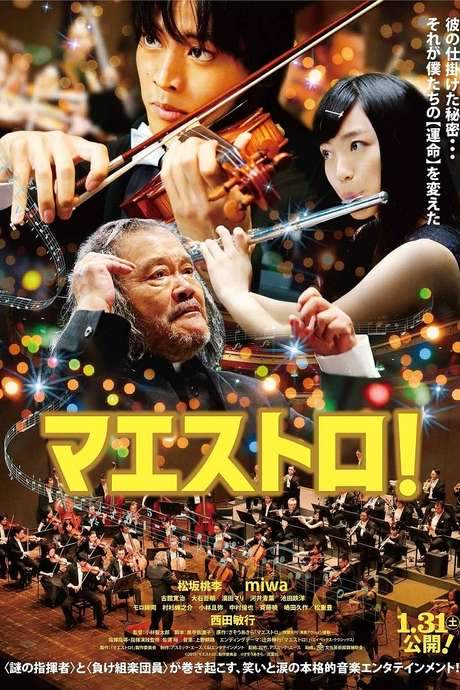
Maestro! (2015) movie poster

Timeline

Maestro! (2015) Timeline Explained – Every Event in Order

Release, runtime and language
2015 · 129 mins · Japanese
Directed by
Shotaro Kobayashi
Starring
Mari Hamada, Aoba Kawai, Kyûsaku Shimada, Yutaka Matsushige, Denden, Toshiyuki Nishida

Facing closure due to economic hardship, an orchestra finds itself disbanded. News arrives that the group might be reformed, prompting a reunion of some former members who haven't been rehired. Eager to play together again, they attempt a performance, but their sound is far from perfect. Suddenly, the conductor Tetsusaburo Tendou reappears, offering a chance to rediscover their musical harmony.

On this page (5)
  1. 1 Where to watch
  2. 2 Events in order (12)
  3. 3 Timeline questions answered
  4. 4 Movie threads
  5. 5 Every angle

Where to watch

Where to Watch Maestro! (2015)

Where can you watch Maestro!? Stream, rent or buy it in the US, including on Hulu, Hoopla and DistroTV: current JustWatch availability with up-to-date prices.

Streaming availability powered by JustWatch

12 events in order · contains spoilers

Maestro! Timeline: Events in Chronological Order

Every key event of Maestro! (2015) in order, scene by scene, with when and where it takes place. Use it to untangle flashbacks, time jumps and parallel storylines, to refresh your memory before the sequel or to find the exact scene you are thinking of.

  1. Orchestra reformation under a mysterious benefactor

    An orchestra that had been disbanded because of money is reformed by a mysterious benefactor. His involvement suggests a new path forward but also introduces a governance style that irritates many players. The setup promises renewed ambition while hinting at power struggles behind the scenes.

  2. Kosaka is offered a position in the re-formed ensemble

    Kosaka, a young violinist, is invited to join the re-formed ensemble. He navigates the shock of returning to a high-profile group with a tarnished recent history. The offer marks the beginning of his journey within the orchestra's fraught new dynamic.

    Where
    Orchestra base
  3. Rehearsals move to a disused factory

    Rehearsals take place in a disused factory, far removed from traditional concert halls. The space colors the experience as the performances feel erratic because many of the best players have already found positions elsewhere. The remaining musicians struggle to find cohesion under uncertain conditions.

    Where
    Disused factory
  4. Conductor Tendo arrives and clashes with the orchestra

    Conductor Tendo Tetsusaburo arrives to take charge. His unconventional and demanding methods irritate the group, creating immediate friction. Yet his presence is a catalyst, forcing the musicians to confront their limits.

    Where
    Disused factory
  5. Interpersonal friction grows within the group

    The ensemble's relationships grow tense as different players clash over ethics and professional pride. Small disagreements escalate into broader conflicts that threaten the group's fragile unity. The orchestra becomes a microcosm of competing ambitions.

  6. Amane Tachibana joins as an amateur yet gifted flutist

    Amane Tachibana, an amateur but highly gifted flute player, joins the orchestra and brings a new energy. Her presence unsettles some professionals who view her status with skepticism. The dynamic shifts as her talent challenges established hierarchies.

    Where
    Rehearsal space
  7. Financial problems threaten the orchestra's future

    Money woes continue to loom over the orchestra, threatening its very existence. The financial instability forces tough decisions about staffing and programming. The situations heighten stress as members weigh their loyalty against practical concerns.

  8. Conductor pushes discipline; early results emerge

    The conductor pushes the musicians to extremes in pursuit of precision and cohesion. Despite his abnormal methods, the rehearsals start to bear fruit as the ensemble shows signs of improved unity. Some players begin to respect the discipline he imposes.

    Where
    Rehearsal space
  9. Benefactor's influence continues to shape decisions

    The mysterious benefactor's management approach continues to shape the orchestra's lineup and priorities. His decisions provoke mixed reactions, with some musicians feeling forced into uncomfortable compromises. The tension between autonomy and control remains a central theme.

  10. Musicians adapt and reassess their roles

    Kosaka and the other players adjust to the conductor's style and the new realities of the group. Some adapt with discipline and perseverance, while others withdraw or seek opportunities elsewhere. The team gradually begins to function more smoothly, albeit with ongoing debate.

    Where
    Rehearsal space
  11. A turning point rehearsal signals progress

    A turning point rehearsal shows the ensemble's growing cohesion under the unconventional leadership. The music begins to reflect a more unified voice, hinting at a future beyond improvisation. The group gains a measure of confidence that had been missing.

    Where
    Rehearsal space
  12. Hints of stability and progress emerge

    A sense of stability starts to settle over the orchestra as the conductor's methods produce tangible results. The team shows signs of long-term potential, even as challenges from funding and egos linger. The film closes on a cautious note of optimism for what lies ahead.

Last updated: March 04, 2026 at 15:03

Was this helpful?

Timeline questions answered

Maestro! Timeline Explained: Your Questions Answered

When does it happen, and why in that order? The questions people ask about the chronology of Maestro! (2015): time jumps, flashbacks, cause and effect between scenes and the correct order of events, each answered with spoilers.

Q1

Why does conductor Tendou's leadership style create so much conflict?

Tendou's methods are unconventional and demanding, pushing musicians beyond their comfort zones. His theatrical approach unsettles even experienced players, creating friction between those who welcome rigorous discipline and those who resist his control. However, his controversial tactics ultimately force the ensemble to confront their limits, leading to improved cohesion despite the initial resistance.

Foreshadowing: Earlier scenes show the orchestra struggling with disorganized rehearsals and lack of direction, which sets up Tendou's controversial entry as a necessary disruption.

  • conductor
  • tendou
  • leadership
  • orchestra conflict
  • discipline
Q2

Why does Amane Tachibana's presence cause tension in the orchestra?

Amane is an amateur flutist whose exceptional talent challenges the established professional hierarchy. Her presence disrupts the existing dynamics because some musicians view her amateur status as threatening to their professional standing. Her skill forces the group to reconsider unspoken hierarchies and opens opportunities for breakthrough performances.

Foreshadowing: The timeline notes Amane's arrival as a catalyst that unsettles professional routines and creates new sources of tension.

  • amane tachibana
  • flute
  • amateur
  • hierarchy
  • tension
Q3

Why does the orchestra struggle to find cohesion during rehearsals?

The orchestra struggles because many of the best musicians have already found positions elsewhere after the disbandment. The remaining players arrive with inconsistent skill levels, nerves, and stubborn habits. Additionally, the transition from a disbanded state to a reformed ensemble creates interpersonal friction as different personalities and playing philosophies clash.

Foreshadowing: The timeline establishes that rehearsals move to a disused factory where performances feel erratic due to the depleted roster.

  • rehearsal
  • cohesion
  • orchestra struggle
  • disused factory
Q4

Why does the mysterious benefactor choose to reform the orchestra?

While the benefactor's exact motivations remain somewhat opaque, his reform of the orchestra appears driven by a desire for artistic prestige and revival. His hands-on management style suggests he wants to shape the ensemble into something significant, though his approach irritates many musicians by imposing control over artistic decisions.

Foreshadowing: The opening timeline establishes the reformation as a 'prestige project' that promises artistic glory but arrives with a sense of unease.

  • benefactor
  • orchestra reform
  • management
  • prestige project
Q5

How does the disused factory setting affect the orchestra's performance?

The disused factory serves as both a practical and symbolic setting. Acoustically imperfect, it forces musicians to adapt their playing and listen more carefully to each other. The space mirrors the film's mood, half-rehearsal, half-laboratory, creating an atmosphere where performances arrive in bursts, sometimes brilliant but often marred by the challenging environment.

Foreshadowing: The summary describes the factory as a makeshift stage where the acoustics are imperfect, directly impacting performance quality.

  • disused factory
  • acoustics
  • rehearsal space
  • setting
Q6

Why is Kosaka's role significant in the reformed ensemble?

Kosaka, a young violinist, earns a coveted seat in the reformed orchestra, marking the beginning of his journey within the group's fraught new dynamic. His position represents both the promise of new talent and the challenges of integrating into an ensemble scarred by financial failure and interpersonal conflicts. His arc intertwines with other characters, building toward a shared sense of purpose.

Foreshadowing: Timeline item 2 establishes Kosaka's invitation as a pivotal moment, navigating the shock of returning to a high-profile group with a tarnished recent history.

  • kosaka
  • violin
  • young violinist
  • new member
Q7

Why do the financial problems continue to threaten the orchestra throughout the story?

The orchestra's financial woes stem from its original disbandment due to economic hardship. Even after reformation, money problems loom over the group, threatening its very existence. These ongoing pressures intensify the conductor's controversial regimen and amplify the stakes of every rehearsal, forcing tough decisions about staffing and programming.

Foreshadowing: The opening summary establishes that the orchestra originally dissolved over money troubles, setting up financial instability as a persistent theme.

  • financial problems
  • money
  • budget
  • orchestra funding
  • threat
Q8

What causes the turning point in the orchestra's cohesion?

The turning point emerges from the conductor's relentless push for discipline combined with the musicians' gradual adaptation to his methods. As players adjust to the new realities and some learn to respect the imposed discipline, the ensemble begins to function more smoothly. A particularly difficult musical passage finally yielding creates a private victory that marks the shift from erratic performance toward unified sound.

Foreshadowing: Timeline item 11 describes a 'turning point rehearsal' where the music begins to reflect a more unified voice, hinting at future progress.

  • turning point
  • cohesion
  • breakthrough
  • rehearsal progress
  • harmony
Q9

Why do some musicians resist Tendou's methods despite the results?

Some musicians resist because Tendou's theatrical and uncompromising approach feels like an infringement on their artistic autonomy. The conflict isn't just about notes and tempo, it's about identity, pride, and what each musician is willing to sacrifice for a larger musical truth. While his methods produce results, they intensify friction among group members who value different approaches to performance.

Foreshadowing: The summary notes that Tendou's effectiveness 'comes with a price: it intensifies the friction among the group.'

  • resistance
  • autonomy
  • artistic freedom
  • ego conflict
  • discipline
Q10

How does Amane's amateur status challenge the professional hierarchy?

Amane's status as a gifted amateur flutist directly challenges the unspoken hierarchies within the orchestra. Professional musicians who have dedicated their careers to music find their positions potentially undermined by someone without formal professional training. Her talent forces the group to question what defines worth in the ensemble, years of training or raw musical ability.

Foreshadowing: Timeline item 6 notes that Amane's presence unsettles some professionals who view her status with skepticism.

  • amateur
  • professional hierarchy
  • talent
  • status
  • challenge
Q11

What drives the musicians to continue despite ongoing challenges?

The musicians persist because of their lingering passion for music and the shared pursuit of creating something meaningful together. Even as financial strain and competing egos test their resolve, the desire to make music in a room that fights back against their ambitions keeps them going. The film shows that commitment to a shared rhythm ultimately trumps practical difficulties.

Foreshadowing: The summary emphasizes 'the emotional weight of men and women who have staked their careers on a single shared pursuit: making music together.'

  • persistence
  • passion
  • dedication
  • teamwork
  • orchestra motivation
Q12

Why does Tendou's strict approach eventually work despite initial criticism?

Tendou's strict approach works because it forces musicians to confront their limits and push beyond what they believed possible. While his methods are controversial and theatrical, they produce tangible results by demanding precision and cohesion. Some players eventually respect the discipline he imposes, recognizing that his unconventional leadership creates the structure the fragmented ensemble desperately needs.

Foreshadowing: Timeline item 8 shows that despite abnormal methods, rehearsals 'start to bear fruit as the ensemble shows signs of improved unity.'

  • conductor effectiveness
  • strict methods
  • results
  • discipline
  • leadership

Movie threads

More Movies Like Maestro!, by Mood & Story

Curated lists built around what makes Maestro! tick: the same mood, the same kind of story or the same emotional payoff. Each list explains why these movies belong together.

Underdog Ensemble Rediscovering Their Groove like in Maestro!

Misfit groups reunite to face old conflicts and reclaim their shared passion. If you liked the hopeful reunion of flawed individuals in Maestro!, this collection features movies about misfit ensembles reforming to tackle shared goals. These stories capture the specific emotional journey of overcoming internal conflict and financial hardship to reclaim a collective identity and achieve imperfect but meaningful success.

  • hopeful
  • melancholic
  • determined
  • harmonious
  • frustrated
  • teamwork
  • Tone: hopeful, determined, melancholic
  • Pacing: steady, character-driven
Why these movies?

The story pattern: The narrative typically begins with a group that has fallen apart due to external pressures or internal strife. An opportunity for reunification forces members to confront unresolved conflicts and personal shortcomings. Through a process of shared struggle, guided by a strong leader, they slowly rebuild trust and rediscover their collective purpose.

Why they belong together: These films share a core theme of collective redemption. They aren't about easy victories, but the authentic struggle of flawed individuals learning to work together again, resulting in a deeply satisfying emotional arc from discord to harmony.


Movies about Artistic Passion vs. Financial Reality like Maestro!

Stories where financial pressures threaten to extinguish artistic dreams. For viewers who enjoyed the struggle of the orchestra against closure in Maestro!, this thread gathers movies where artistic integrity clashes with economic hardship. These films focus on the emotional toll of keeping a creative dream alive when the world seems indifferent, celebrating resilience and the transformative power of art.

  • frustrated
  • tense
  • hopeful
  • melancholic
  • economic hardship
  • artistic passion
  • Tone: melancholic, tense, hopeful
  • Pacing: steady
Why these movies?

The story pattern: The story follows artists or artistic institutions facing imminent collapse due to a lack of funding or public support. The plot revolves around their fight for survival, often involving a last-ditch effort to prove their worth. The journey explores the sacrifices required to preserve art and the meaning found in the struggle itself.

Why they belong together: This group is defined by a shared, high-stakes conflict between the desire to create and the need to pay the bills. The movies resonate with anyone who has fought for a passion project, blending the melancholy of potential loss with the hope of preservation.

Every angle

Maestro! (2015) Explained: Plot, Timeline & Characters

Everything about Maestro! in one place: what happens in the plot summary, the timeline in chronological order, the characters and meaning and a spoiler-free summary. What's After the Movie adds the cast, box office and post-credit scenes.

Coming soon on iOS and Android

The Plot Explained Movie Summary App

Plot summaries, endings explained and timelines on your phone. Catch up on any movie in minutes, save your favorites and never miss a twist again.

Be the first to know when we launch. Your email stays private, always.

Learn more about the app