Plot Explained Spoilers guaranteed!
Plot Explained

Browse by genre

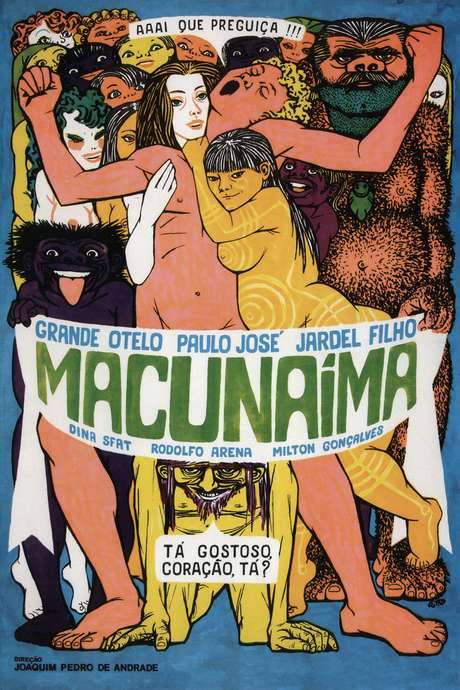
Macunaima (1969) movie poster

Timeline

Macunaima (1969) Timeline Explained – Every Event in Order

Release, runtime and language
1969 · 110 mins · Portuguese
Loading streaming availability…
Directed by
Joaquim Pedro de Andrade
Starring
Milton Gonçalves, Hugo Carvana, Joana Fomm, Maria Lúcia Dahl, Paulo José, Guará Rodrigues

Born as an adult black man in a remote Brazilian jungle village, Macunaíma magically transforms into a white man and travels to São Paulo. In the city he becomes a dandy, falls for the revolutionary Ci, who dies in an accidental bombing. After robbing an industrialist, he returns to his village to find his knowledge and riches of little use.

On this page (6)
  1. 1 Where to watch
  2. 2 Events in order (12)
  3. 3 Timeline questions answered
  4. 4 Movie threads
  5. 5 Movies like Macunaima
  6. 6 Every angle
Loading streaming availability…

12 events in order · contains spoilers

Macunaima Timeline: Events in Chronological Order

Every key event of Macunaima (1969) in order, scene by scene, with when and where it takes place. Use it to untangle flashbacks, time jumps and parallel storylines, to refresh your memory before the sequel or to find the exact scene you are thinking of.

  1. Miraculous birth in the Amazon

    Macunaíma is born to an old indigenous mother deep in the Amazon, arriving as a fully grown man with the heart of a playful child. The birth sets up a paradox that will shape his later identity and misadventures. Soon after, his mother dies, leaving him to navigate a world that will test him at every turn.

    When
    mythic birth
    Where
    Amazon rainforest
  2. The spring that turns him white

    A magical spring in the jungle changes his skin color to white, complicating how others perceive him. The transformation makes him a spectacle in the social hierarchy and foreshadows the race-based conflicts he will confront. He retains the childlike spirit that drives his curiosity and mischief.

    When
    shortly after birth
    Where
    Amazon jungle
  3. Journey with his brothers toward Rio

    With his two brothers, Macunaíma leaves the Amazon in search of a better life in the city. They cross forests, rivers, and landscapes, encountering strangers and dangers along the way. The journey marks the shift from mythic wilderness to urban Brazilian culture.

    When
    early phase
    Where
    From Amazon to Rio de Janeiro
  4. Arrival in Rio and hostile welcome

    The brothers reach Rio de Janeiro, where they are promptly interrogated and harassed by street terrorists who challenge their origins. The encounter exposes the precariousness of safety for newcomers and unveils the social violence present in the city. It forces Macunaíma to improvise and survive through wit and luck.

    When
    upon arrival
    Where
    Rio de Janeiro
  5. Affair with Ci, the white guerrilla

    Macunaíma becomes involved with Ci, a white woman who embodies the era's political and sexual tensions. The liaison blends romance, danger, and social critique, highlighting Brazil's mixed-race fantasies and power dynamics. The affair propels him toward further adventures rather than domestic happiness.

    When
    during or after arrival
    Where
    Rio de Janeiro
  6. Birth of a black son

    From the affair, Ci bears a black child fathered by Macunaíma, intensifying the film's race allegory. This event complicates his identity and the expectations placed on him by various communities. The mother and child’s presence anchors his ties to both the indigenous and urban worlds.

    When
    after affair
    Where
    Rio
  7. Death of Ci and the child

    Ci and their son die, leaving Macunaíma to face loss and responsibility alone. The double tragedy becomes a catalyst for his next quest across Brazil. The event also underscores the fragility of life amid cultural and political upheaval.

    When
    after childbirth
    Where
    Rio
  8. Quest for the magical stone begins

    Grieving and restless, Macunaíma undertakes a mission to recover a magical stone owned by a wealthy city dweller. The stone symbolizes power, prestige, and the ability to navigate Brazil's social order. His journey spans urban centers and rural backwaters as he pursues this elusive artifact.

    When
    after Ci's death
    Where
    Brazil – from city to city
  9. Lessons about Brazilian life and society

    Along the road, he confronts stereotypes, class disparities, and racial myths that color Brazilian life. The misadventures blend humor with social critique, teaching him about the nation's complexities. These lessons gradually shape his understanding of himself and his homeland.

    When
    throughout the journey
  10. The three Brazilian races as myth

    The film frames the white, black, and indigenous Brazilians as an essentialist trilogy through Macunaíma, his brothers, and his mother. The allegory is woven into encounters across different communities and landscapes. It critiques the simplistic idea of racial purity while highlighting national contradictions.

    When
    throughout
  11. Reflection of political turmoil

    Macunaíma’s escapades are read as an allegory for the turbulence of Brazil's military coup era. The character's rapid shifts and transformations echo the period's political volatility. The film uses myth to comment on national history and social change.

    When
    mid-20th century Brazil
  12. Endings and what the stone reveals

    The quest for the magical stone culminates with outcomes that reveal how power, race, and identity are constructed in Brazilian culture. The ending invites viewers to reflect on myth versus reality in a nation still wrestling with its roots. The journey remains an open commentary on Brazil's future.

    When
    end

Last updated: February 03, 2026 at 07:41

Was this helpful?

Timeline questions answered

Macunaima Timeline Explained: Your Questions Answered

When does it happen, and why in that order? The questions people ask about the chronology of Macunaima (1969): time jumps, flashbacks, cause and effect between scenes and the correct order of events, each answered with spoilers.

Q1

Why does Macunaíma turn white?

Macunaíma turns white after a magical spring appears in the jungle shortly after his birth. This supernatural transformation is the catalyst that propels him to leave the Amazon and venture into urban Brazilian society. The change complicates how others perceive him, making him a spectacle within Brazil's racial hierarchy and setting up the film's central allegory about identity and race.

  • magical transformation
  • spring
  • race change
  • Amazon
  • identity
Q2

Why does Macunaíma leave the jungle?

Macunaíma leaves the Amazon after his mother dies and he undergoes the magical transformation that turns his skin white. With this new appearance, he and his two brothers decide to seek a better life in the city. The journey represents a shift from mythic wilderness to urban Brazilian culture, exposing him to the social violence and precariousness that newcomers face in Brazil's urban centers.

Foreshadowing: The film establishes early on that Macunaíma carries a playful, curious spirit that drives him to explore beyond the familiar jungle.

  • Amazon
  • journey
  • Rio de Janeiro
  • brothers
  • migration
Q3

Why do Ci and her child die?

Ci and her child die in Rio de Janeiro, leaving Macunaíma to face loss and responsibility alone. The double tragedy occurs as part of the film's exploration of the fragility of life amid cultural and political upheaval. This devastating event becomes the catalyst for Macunaíma's next major quest, he decides to pursue a magical stone that he believes can change his fate.

Foreshadowing: The affair with Ci already blends romance, danger, and social critique, setting the stage for the tragic consequences that follow.

  • Ci
  • death
  • child
  • Rio de Janeiro
  • tragedy
  • loss
Q4

Why does Macunaíma search for the magical stone?

Macunaíma begins his quest for the magical stone after Ci and their child die, driving him to pursue something that might alter his destiny. The stone is owned by a wealthy city dweller and symbolizes power, prestige, and the ability to navigate Brazil's social order. His search spans urban centers and rural backwaters as he seeks this elusive artifact that represents a way to overcome his circumstances.

Foreshadowing: The deaths of Ci and the child leave Macunaíma grieving and restless, pushing him toward this new purpose.

  • magical stone
  • quest
  • power
  • wealth
  • Brazil
Q5

What do the three Brazilian races represent in the film?

The film frames White, Black, and Indigenous Brazilians as an essentialist trilogy through Macunaíma, his two brothers, and his mother. Macunaíma himself undergoes transformations that move between these racial categories, embodying the complex racial dynamics of Brazilian identity. This allegory critiques the simplistic idea of racial purity while highlighting the nation's contradictions and the shifting nature of national identity.

Foreshadowing: The racial allegory is established from the moment Macunaíma is born black, then transforms to white, and fathers a black child.

  • race
  • allegory
  • Brazil
  • indigenous
  • black
  • white
  • identity
Q6

Why is Macunaíma considered an allegory for Brazil?

Macunaíma's journey serves as an allegory for Brazil's social and political struggles, particularly the turbulence following the country's military coup. His rapid shifts and transformations mirror the political volatility of mid-20th century Brazil. The film uses the trickster figure to comment on national history, cultural memory, and how myth can illuminate a country's contradictions, hopes, and upheavals.

Foreshadowing: The meta notes explicitly connect the film to the Brazilian military coup era, and Macunaíma's misadventures reflect the era's instability.

  • allegory
  • Brazil
  • military coup
  • political
  • national identity
Q7

Why do Macunaíma's riches have no use when he returns?

At the end of the film, Macunaíma returns to his village with wealth and knowledge, but finds them of little use. This bittersweet conclusion suggests that the lessons learned and riches gained in urban Brazilian society cannot truly address the deeper contradictions of national identity. It represents the disillusionment of returning to one's roots after being changed by experiences that do not translate back into the original context.

Foreshadowing: The journey exposes Macunaíma to class disparities and racial myths that color Brazilian life, ultimately leaving him changed but not necessarily healed.

  • return
  • riches
  • disillusionment
  • village
  • ending
Q8

Why does Macunaíma father a black son with Ci?

Ci, who is white, bears Macunaíma a black child, despite Macunaíma having been transformed to white by the magical spring. This moment intensifies the film's race allegory, demonstrating that racial identity is not simply a matter of skin color but carries deeper cultural and social meanings. The black child anchors Macunaíma's ties to both the indigenous world and the complexities of Brazilian racial dynamics.

Foreshadowing: Macunaíma's transformation to white does not erase his original identity, and the child represents the persistence of that original identity.

  • son
  • Ci
  • race
  • black child
  • identity
Q9

Why do Macunaíma's brothers join his journey?

Macunaíma travels with his two brothers throughout his journey from the Amazon to Rio de Janeiro and beyond. They accompany him as he leaves the jungle seeking a better life. The brothers represent different aspects of the Brazilian identity allegory, with their collective journey symbolizing the collective experience of Brazilian peoples navigating modernity and urban life.

Foreshadowing: The three brothers embody the trilogy of Brazilian races established throughout the narrative.

  • brothers
  • journey
  • Amazon
  • Rio
  • company
Q10

What happens when Macunaíma arrives in Rio de Janeiro?

When Macunaíma and his brothers reach Rio de Janeiro, they are immediately interrogated and harassed by street criminals who challenge their origins. This hostile welcome exposes the precariousness of safety for newcomers and unveils the social violence present in the city. The encounter forces Macunaíma to improvise and survive through wit and luck, setting the tone for his urban struggles.

Foreshadowing: The shift from the wild freedom of the Amazon to the city's rough edges foreshadows the challenges that await.

  • Rio de Janeiro
  • arrival
  • street criminals
  • harassment
  • welcome

Movie threads

More Movies Like Macunaima, by Mood & Story

Curated lists built around what makes Macunaima tick: the same mood, the same kind of story or the same emotional payoff. Each list explains why these movies belong together.

Satirical Magical Realism Movies like Macunaima

Stories that use fantasy and humor to deliver poignant cultural critiques. If you enjoyed the allegorical critique and whimsical tone of Macunaima, you'll find similar stories here. These movies use fantasy, satire, and a touch of melancholy to explore complex themes, offering a unique blend of humor and social commentary.

  • satirical
  • allegorical
  • whimsical
  • melancholic
  • playful
  • absurd
  • Tone: whimsical, satirical, melancholic
  • Pacing: variable, episodic
Why these movies?

The story pattern: Narratives in this thread often follow a protagonist on a surreal journey through a society in conflict with itself. The story uses symbolic characters and events to critique social structures, blending episodic, often absurd adventures with moments of genuine emotional weight, leading to a reflective, often bittersweet conclusion.

Why they belong together: These movies are grouped for their shared approach to storytelling: using a fantastical, humorous lens to examine real-world issues. They create a distinct vibe where laughter is intertwined with poignant insight, making the societal critique more digestible and memorable.

Movies about Transformation and Culture Shock like Macunaima

Protagonists undergo a physical or spiritual transformation into a new society. Fans of Macunaima's story of a magical transformation and a journey from jungle to city will appreciate these films. They explore the disorienting and illuminating experience of crossing between vastly different worlds, focusing on identity, adaptation, and the price of change.

  • transformative
  • culture shock
  • identity crisis
  • bittersweet
  • journey
  • allegorical
  • Tone: bittersweet, reflective, absurd
  • Pacing: variable, journey-based
Why these movies?

The story pattern: The narrative pattern involves a protagonist undergoing a significant transformation—literal or metaphorical—that transports them to a new environment. The core conflict arises from their attempt to navigate this unfamiliar world, leading to a journey of self-discovery that often ends with a sense of disillusionment or a changed perspective on their original home.

Why they belong together: These films share a core narrative structure and emotional arc centered on transformation and cultural displacement. They resonate with viewers interested in stories about identity, the dissonance between rural/urban life, and the bittersweet nature of gaining knowledge at a personal cost.

If you liked this

Movies Like Macunaima

Similar movies to Macunaima: the same genre, themes or kind of story. Each one comes with its own plot summary, timeline and ending explained.

Browse all movie summaries

Every angle

Macunaima (1969) Explained: Plot, Timeline & Characters

Everything about Macunaima in one place: what happens in the plot summary, the timeline in chronological order, the characters and meaning and a spoiler-free summary. What's After the Movie adds the cast, box office and post-credit scenes.

Coming soon on iOS and Android

The Plot Explained Movie Summary App

Plot summaries, endings explained and timelines on your phone. Catch up on any movie in minutes, save your favorites and never miss a twist again.

Be the first to know when we launch. Your email stays private, always.

Learn more about the app