Plot Explained Spoilers guaranteed!
Plot Explained

Browse by genre

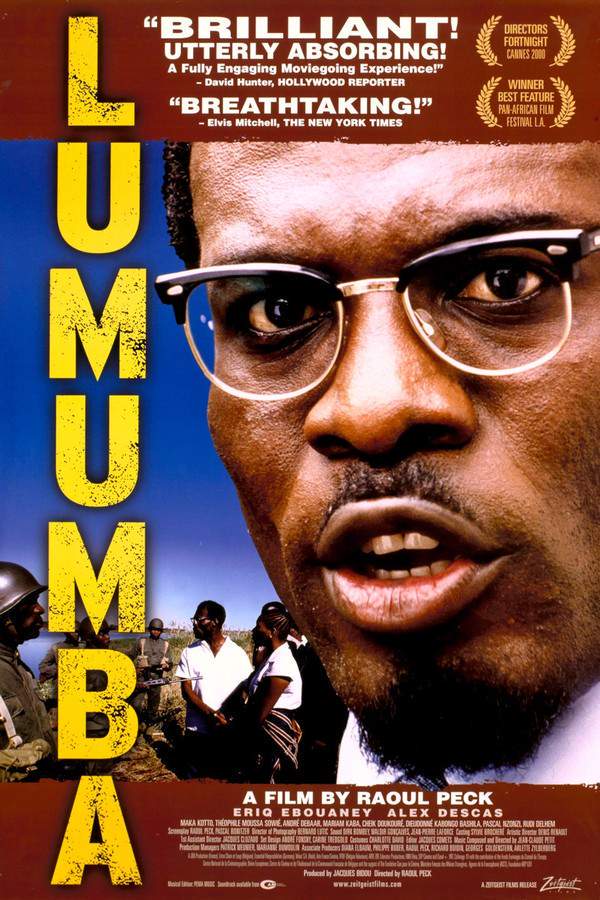
Lumumba (2001) movie poster

Plot Summary

Lumumba (2001) Plot Summary Explained

Release, runtime and language
2001 · 115 min · French
Loading streaming availability…
Directed by
Raoul Peck
Starring
Alex Descas, Eriq Ebouaney

Following Congo's independence from Belgium, charismatic leader Patrice Emery Lumumba becomes Prime Minister, quickly earning a reputation as a skilled and engaging politician. His progressive policies and nationalistic fervor spark both admiration and fierce opposition, leading to political turmoil and threats to his leadership. Facing betrayal and complex international pressures, Lumumba's brief time in office becomes a dramatic struggle for Congo's future, revealing the challenges of establishing a new nation.

On this page (6)
  1. 1 Where to watch
  2. 2 What happens: full plot
  3. 3 Plot questions answered
  4. 4 Movie threads
  5. 5 Movies like Lumumba
  6. 6 Every angle
Loading streaming availability…

Full plot summary · contains spoilers

What Happens in Lumumba: Full Plot Summary

The whole story of Lumumba (2001) explained, from the opening scene to the final frame: every key event, every twist and what it all adds up to. Read it as a quick recap before the sequel, to check a scene you missed, or to finally understand what really happened.

The film opens with a stark montage of Lumumba and his allies Joseph Okito and Maurice Mpolo being driven to their executions, followed by a brutal sequence where their bodies are exhumed, dismembered, and burned on the orders of Mobutu Sese Seko. The viewpoint then flips back to the late 1950s, centering on a heated debate in which Lumumba squares off with Moïse Tshombe and Godefroid Munongo, rival leaders from the pro-Western CONAKAT party. His bold Pan-Africanist ideals spark fury in Tshombe and Munongo, setting the stage for a long, turbulent struggle for power and independence.

The story then returns to Lumumba's day-to-day life, beginning with his job as a beer salesman in Léopoldville. He uses his street presence and charisma to spread his political message, and it’s during one of these gatherings that he encounters Joseph Mobutu for the first time. News arrives that Baudouin of Belgium has grown more favorable toward independence, but the moment is cut short when Force Publique soldiers disperse the crowd—Lumumba is arrested, beaten by Belgian guards, and ultimately sent to Brussels to negotiate Congo’s path to freedom.

In Brussels, Lumumba meets Joseph Kasa-Vubu, a fellow independence-minded politician from ABAKO who seeks a pragmatic deal with the Belgians. Frustrated by Belgium’s refusal to recognize the legitimacy of the Mouvement National Congolais despite electoral success, Lumumba backs Kasavubu for president, and Kasavubu appoints Lumumba as prime minister. The coalition formation is rocky from the start: Tshombe and Munongo feel sidelined and threaten the government, foreshadowing future strain within the new leadership.

On the eve of formal independence, Lumumba delivers a speech that adopts a more combative tone than Kasavubu’s, underscoring the oppression Congo endured under Belgian rule. Back in the Congo, the cabinet debates removing Émile Janssens, who resists African officers. A troubling incident involving a Walloon couple leads the Belgian ambassador to press Lumumba with veiled threats about involving the United Nations and NATO, a confrontation that intensifies Lumumba’s resolve to challenge Belgian interference and the lingering colonial order. Lumumba ultimately dismisses Janssens and expels the ambassador.

During a trip to Katanga, Munongo refuses to permit the government’s plane to land, signaling Katanga’s secession as the State of Katanga. After clashes with Belgian troops at Ndjili, Lumumba drives to quell the separatists, and evidence surfaces that Mobutu’s forces have massacred civilians in the fighting, forcing Lumumba to rethink his relationship with Mobutu and his willingness to rely on American backing. He confronts Kasavubu once more, confessing distrust of foreign influence and a belief that the Soviet Union may be the only reliable ally. A later scene shows the American ambassador pledging support to Mobutu if he helps remove Lumumba, compounding the political gridlock that follows Kasavubu’s dismissal of Lumumba over alleged communist sympathies and responsiblity for the South Kasai massacres.

Amid personal hardship, Lumumba learns that his infant daughter must be sent to Switzerland for medical care, a tragedy that compounds the political peril surrounding him. Mobutu’s arrival signals a shift toward arrest, and Kasavubu leaves Lumumba under house arrest rather than an outright arrest—an ominous hint that foreign powers may already be at play. Soon afterward, Mobutu proclaims that the army has seized power, and Lumumba, along with Mpolo and Okito, is pursued as the regime consolidates its control.

As Lumumba plots an escape to Stanleyville, he learns that his infant daughter has died in Switzerland. While attempting to flee with his partisans, Lumumba’s family is confronted by soldiers along the riverbank, forcing him to return and face the crackdown. At a military encampment, Lumumba, Mpolo, and Okito are sentenced to death by a council that includes Kasavubu, who reluctantly endorses the killing. They are transported to Katanga, where they are brutally beaten in the final hours, with Munongo among the assailants.

The film closes by juxtaposing Mobutu Sese Seko’s public memory of Lumumba with stark, shadowed footage of the executions in the dark woods, creating a somber meditation on the human cost of Congo’s drive for independence and the brutal political forces that shaped its fate.
Last updated: October 09, 2025 at 15:44

Was this helpful?

Plot questions answered

Lumumba Plot Explained: Your Questions Answered

The questions people ask most about Lumumba (2001): what happens in the confusing scenes, why the characters do what they do, the twists, hidden details and what the ending means. Each answer contains spoilers.

Q1

Why was Lumumba executed?

Lumumba was executed because he became a threat to both domestic rivals and foreign powers. After being dismissed by President Kasavubu, he attempted to rally support in Stanleyville, which alarmed Western governments fearing a communist takeover. Belgian authorities, with complicity from Mobutu's forces and approval from key Congolese leaders including Kasavubu, ordered the execution. His Pan-Africanist stance, refusal to accept foreign interference, and challenge to the Katanga secession made him enemies among both Western powers and Congolese rivals who saw him as an obstacle to their interests.

Foreshadowing: The opening sequence directly shows Lumumba's execution, establishing from the start that his political career would end in death.

  • execution
  • assassination
  • murder
  • political death
  • katanga
Q2

Why did Kasavubu dismiss Lumumba as Prime Minister?

Kasavubu dismissed Lumumba primarily over alleged communist sympathies and concerns about regional massacres in South Kasai. However, the dismissal was also driven by personal power struggles and pressure from Western nations who viewed Lumumba's increasingly independent foreign policy, especially his openness toward the Soviet Union, as a threat. Kasavubu, representing a more pragmatic pro-Western stance, believed Lumumba's confrontational approach would provoke Belgian military intervention and destabilize the country further.

Foreshadowing: Early tensions between Lumumba's combative Pan-Africanism and Kasavubu's diplomatic approach were evident during their competing independence day speeches.

  • kasavubu
  • dismissal
  • prime minister
  • coup
  • political rivals
Q3

Why did Mobutu turn against Lumumba?

Mobutu turned against Lumumba after receiving explicit backing from the American ambassador, who promised support if Mobutu helped remove Lumumba from power. Initially Lumumba had relied on Mobutu's army to maintain order, but when evidence emerged of Mobutu's forces massacring civilians during fighting in Katanga, Lumumba dismissed him. This betrayal, combined with American pressure and Mobutu's own political ambitions, led Mobutu to orchestrate the coup that overthrew Lumumba's government.

Foreshadowing: Lumumba's first encounter with Mobutu occurs early in the film when Mobutu is still a relatively unknown army officer working within Lumumba's political sphere.

  • mobutu
  • betrayal
  • coup
  • army
  • american support
Q4

Why did Katanga secede from the Congo?

Katanga seceded because its leaders, particularly Moïse Tshombe and Godefroid Munongo, opposed Lumumba's government and sought to protect their regional interests and mineral wealth. With Belgian support and military backing, Munongo refused to allow the government's plane to land in Katanga, formally declaring secession. Belgium encouraged the split to maintain economic control over Katanga's rich copper and cobalt resources while destabilizing Lumumba's nationalist government.

Foreshadowing: During the coalition formation in 1960, Tshombe and Munongo explicitly threatened Lumumba for not granting them leadership roles, signaling their willingness to break away.

  • katanga
  • secession
  • tshombe
  • munongo
  • mineral wealth
Q5

Why did Belgium want Lumumba removed from power?

Belgium wanted Lumumba removed because his nationalist policies threatened Belgian economic interests in the Congo, particularly the lucrative mining operations in Katanga. Lumumba challenged colonial interference, expelled the Belgian ambassador, and demanded the withdrawal of Belgian military forces. His refusal to accept Belgium's continued economic dominance and his willingness to seek support from the Soviet Union made him an unacceptable leader from Belgium's perspective.

Foreshadowing: The Belgian ambassador's veiled threats about involving the United Nations and NATO during the Janssens controversy revealed Belgium's willingness to intervene directly.

  • belgium
  • colonialism
  • independence
  • interference
  • economic interests
Q6

Why did Lumumba consider turning to the Soviet Union?

Lumumba considered turning to the Soviet Union because he believed Western powers, particularly Belgium and the United States, were actively working to undermine his government and restore colonial influence. After his confrontation with Kasavubu, where he expressed distrust of American backing and skepticism about Western intentions, Lumumba concluded that the Soviet Union might be the only reliable ally willing to support Congo's independence without imposing colonial conditions. This perceived necessity ultimately provided his enemies with justification to accuse him of communism.

Foreshadowing: Lumumba's growing distrust of American support becomes explicit after evidence surfaces of Mobutu's massacres and the American ambassador's secret dealings with Mobutu.

  • soviet union
  • cold war
  • allies
  • independence
  • foreign powers
Q7

Why did Lumumba send his infant daughter to Switzerland?

Lumumba sent his infant daughter to Switzerland because she required medical treatment that was unavailable in the Congo at the time. This personal tragedy occurred while Lumumba was already facing intense political pressure, and the separation compounded his difficulties. The situation highlights the personal cost of both the political crisis and the limited infrastructure in the newly independent Congo.

Foreshadowing: No direct foreshadowing exists, though the personal tragedy contrasts with the broader political narrative.

  • daughter
  • switzerland
  • medical
  • family
  • personal tragedy
Q8

Why were Joseph Okito and Maurice Mpolo executed alongside Lumumba?

Okito and Mpolo were executed alongside Lumumba because they were his closest political allies and loyal supporters who had helped him throughout his brief time in office. Both were key figures in his government who opposed the Katanga secession and remained loyal during his struggle to maintain power. Their execution was ordered as part of the broader effort to eliminate Lumumba's entire political movement and send a clear message to his supporters.

Foreshadowing: The film opens with all three being driven to their executions together, establishing their fates as intertwined from the start.

  • okito
  • mpolo
  • execution
  • allies
  • political murder
Q9

What happened to Lumumba's body after execution?

After execution, Lumumba's body was exhumed, dismembered, and burned on the orders of Mobutu Sese Seko. This destruction of the bodies was intended to prevent Lumumba from becoming a martyr and to erase physical evidence of the execution. The film shows this brutal process in its opening sequence, underscoring the extent to which his enemies sought to eliminate both his political legacy and his physical presence.

Foreshadowing: The opening montage shows the exhumation and burning, revealing the fate of the bodies before the main narrative begins.

  • body
  • exhumation
  • burning
  • mobutu
  • cover-up
Q10

Why were Tshombe and Munongo opposed to Lumumba?

Tshombe and Munongo opposed Lumumba because they represented regional interests and the pro-Western CONAKAT party, which clashed with Lumumba's Pan-Africanist nationalism. They sought leadership positions in the new government and felt sidelined when Lumumba formed his coalition without granting them prominent roles. Their opposition was also motivated by ethnic and regional rivalries, as well as their preference for maintaining close ties with Belgium and the West rather than pursuing the confrontational anti-colonial stance that Lumumba advocated.

Foreshadowing: The late 1950s debates show Lumumba's bold Pan-Africanist ideals directly provoking anger in Tshombe and Munongo.

  • tshombe
  • munongo
  • conakat
  • regional rivals
  • political opposition
Q11

Why did Lumumba dismiss Colonel Janssens?

Lumumba dismissed Colonel Janssens, the Belgian army commander, because Janssens refused to accept African officers and resisted the Africanization of the military hierarchy. This dismissal was part of Lumumba's broader effort to assert Congo's sovereignty and remove remaining colonial influence from key institutions. The Belgian ambassador's warning that this would provoke UN and NATO involvement only strengthened Lumumba's resolve to push back against Belgian interference.

Foreshadowing: The Janssens issue occurs after independence, highlighting the tension between the new African leadership and colonial military structures.

  • janssens
  • colonel
  • military
  • africanization
  • belgian army
Q12

Why was Lumumba's independence day speech important?

Lumumba's independence day speech was significant because it adopted a much more combative tone than President Kasavubu's measured address, directly confronting Belgium about the oppression and exploitation Congo suffered under colonial rule. The speech articulated a vision of true independence and national dignity, contrasting with Kasavubu's diplomatic approach. This moment crystallized the ideological divide within Congo's new leadership and set Lumumba on a collision course with both colonial powers and his more moderate domestic rivals.

Foreshadowing: The contrast between Lumumba and Kasavubu's speeches on the eve of independence foreshadows their eventual split.

  • independence
  • speech
  • june 30 1960
  • confrontation
  • colonialism
Q13

What triggered the Congo Crisis after independence?

The Congo Crisis was triggered by multiple interconnected factors: the Katanga secession backed by Belgium, the dismissal and attempted arrest of Lumumba, and the competing claims to power between Kasavubu and Lumumba. The crisis escalated when Mobutu's army seized power, creating a three-way political deadlock between Lumumba's supporters, Kasavubu's presidency, and Mobutu's military regime. Foreign powers, particularly Belgium, the United States, and the Soviet Union, intervened to advance their own interests, further destabilizing the young nation.

Foreshadowing: The coalition formation threats from Tshombe and Munongo foreshadowed the political fragmentation that would grip the country.

  • congo crisis
  • secession
  • civil war
  • political chaos
  • cold war

Movie threads

More Movies Like Lumumba, by Mood & Story

Curated lists built around what makes Lumumba tick: the same mood, the same kind of story or the same emotional payoff. Each list explains why these movies belong together.

Political thrillers with tragic endings like Lumumba

Frenetic tales of idealism crushed by ruthless realpolitik and betrayal. For viewers who appreciated the high-stakes political drama of Lumumba, this section features movies like it. These similar historical dramas and thrillers explore the downfall of charismatic leaders, complex international intrigue, and stories of idealism crushed by realpolitik.

  • tense
  • urgent
  • tragic
  • paranoid
  • brutal
  • somber
  • Tone: dark, tense, bleak
  • Pacing: fast, urgent
Why these movies?

The story pattern: Stories in this thread typically follow a rapid ascent to power, where a principled protagonist attempts radical change, triggering fierce opposition from internal and external forces. The narrative is driven by a fast-paced series of betrayals, coups, and conspiracies, culminating in a bleak, often fatal, conclusion for the central figure.

Why they belong together: These films are grouped by their shared focus on the deadly mechanics of power, a relentless and fast-paced narrative of downfall, a uniformly dark and tense tone, and an emotionally heavy, tragic conclusion that leaves a somber impression.

Somber historical epics like Lumumba about colonialism

Gritty portrayals of national liberation struggles and their human cost. If you liked Lumumba's focus on colonialism and national liberation, explore these similar movies. This collection features other heavy historical dramas and war films that depict the tragic human cost of independence struggles and the brutal end of empires.

  • somber
  • tragic
  • brutal
  • oppressive
  • historical
  • gritty
  • Tone: somber, tragic, oppressive
  • Pacing: steady, driven by events
Why these movies?

The story pattern: The narrative pattern involves a nation at a crossroads, breaking free from an oppressive power but immediately grappling with internal strife, corruption, and foreign interference. The journey is less about triumph and more about the sobering realities and moral compromises of revolution, often ending with a reflection on legacy rather than victory.

Why they belong together: These movies share a somber, oppressive mood rooted in historical trauma. They are united by themes of betrayal, corruption, and the heavy price of freedom, delivering a viewing experience that is intellectually challenging and emotionally draining, with a focus on historical accuracy and moral ambiguity.

If you liked this

Movies Like Lumumba

Similar movies to Lumumba: the same genre, themes or kind of story. Each one comes with its own plot summary, timeline and ending explained.

Browse all movie summaries

Every angle

Lumumba (2001) Explained: Plot, Timeline & Characters

Everything about Lumumba in one place: what happens in the plot summary, the timeline in chronological order, the characters and meaning and a spoiler-free summary. What's After the Movie adds the cast, box office and post-credit scenes.

Coming soon on iOS and Android

The Plot Explained Movie Summary App

Plot summaries, endings explained and timelines on your phone. Catch up on any movie in minutes, save your favorites and never miss a twist again.

Be the first to know when we launch. Your email stays private, always.

Learn more about the app