Plot Explained Spoilers guaranteed!
Plot Explained

Browse by genre

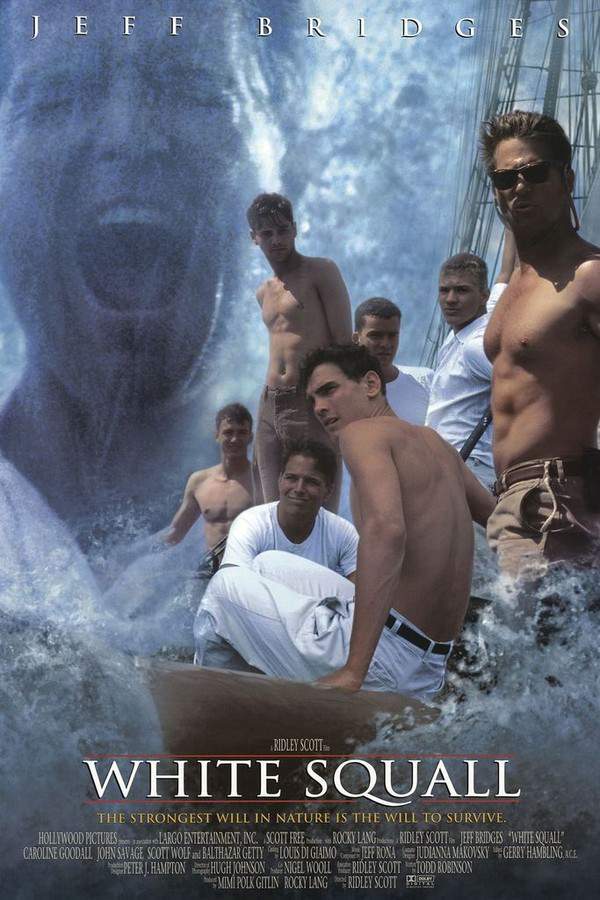
White Squall (1996) movie poster

Plot Summary

White Squall (1996) Plot Summary Explained

Release, runtime and language
1996 · 129 min · English
Directed by
Ridley Scott
Starring
Jeff Bridges, Caroline Goodall

In the 1960s, a group of privileged prep school students sets sail on an unusual voyage led by the unconventional Captain Christopher Sheldon. The sailing expedition is meant to build character and resilience, but the journey takes a dangerous turn when a violent white squall hits. The crew must then battle the storm and their own personal struggles as they fight for survival at sea, learning valuable lessons about leadership, friendship, and courage.

On this page (6)
  1. 1 Where to watch
  2. 2 What happens: full plot
  3. 3 Plot questions answered
  4. 4 Movie threads
  5. 5 Movies like White Squall
  6. 6 Every angle

Where to watch

Where to Watch White Squall (1996)

Where can you watch White Squall? Stream, rent or buy it in the US, including on Amazon Video, Apple TV Store and Fandango At Home: current JustWatch availability with up-to-date prices.

Streaming availability powered by JustWatch

Full plot summary · contains spoilers

What Happens in White Squall: Full Plot Summary

The whole story of White Squall (1996) explained, from the opening scene to the final frame: every key event, every twist and what it all adds up to. Read it as a quick recap before the sequel, to check a scene you missed, or to finally understand what really happened.

The film delves into the tragic story of the brigantine Albatross, which met its fate on May 2, 1961, supposedly due to a terrifying white squall. The narrative centers around a poorly-fated school sailing expedition that is helmed by the resolute Dr. Christopher B. Sheldon, known affectionately as "Skipper" to the boys and portrayed by Jeff Bridges. He is a stern yet caring figure who emphasizes discipline and teamwork amongst the boys on board. Throughout the journey, he develops meaningful connections with a group of boys, including the affluent Chuck Gieg, played by Scott Wolf, the troubled Frank Beaumont, brought to life by Jeremy Sisto, the reserved Gil Martin, portrayed by Ryan Phillippe, and the rebellious Dean Preston, played by Eric Michael Cole.

As the adventure unfolds, the boys quickly discover that Gil grapples with acrophobia, which becomes evident when he fails to assist Chuck, who finds himself entangled and choking after a slip from the mast. Instead, it is Skipper Sheldon who saves Chuck while Gil is left to confront his fears, ultimately being assigned limited duties on the vessel. Frank’s snobbish demeanor causes him to clash with others, particularly the more easygoing boys aboard. One night, in a rare moment of vulnerability, Gil reveals to Chuck the struggles he faces at home, and Frank unexpectedly relates to his story, creating a unique bond between them amidst the chaos.

Following a series of misadventures both on land and at sea, the boys gradually begin to appreciate Skipper’s teachings, transforming into true shipmates as they form deeper, more resilient connections with one another. At one point, they take leave on shore, where Frank is unexpectedly visited by his wealthy parents. This surprise reunion sparks tension, leading to a heated confrontation between father and son that strains their already fragile relationship. Frank veers off course with encouragement from Chuck, Gil, and Dean after a night of revelry ends in chaos.

The narrative takes a darker turn when the crew embarks on their next journey. As they sail, they stumble upon a pod of dolphins, and driven by frustration towards his father, Frank strikingly shoots at one of the dolphins with a harpoon. Skipper’s profound disappointment is palpable when he confronts Frank, who is unable to bring himself to finish what he started. In a decisive moment, Skipper eliminates the animal himself and, consequently, expels Frank from the program, leaving him at the next port. On the day of his departure, an apologetic Frank receives a bittersweet send-off from Gil, who finally finds the courage to climb the ropes and ring the bell—the symbolic gesture illustrating their unity: "Where we go one, we go all."

Tragically, shortly after, while navigating the open sea, the brigantine is caught in an unpredictable white squall storm. The violent tempest tests the survival skills they learned from the Skipper. While most boys manage to abandon ship, Gil, Dean, Skipper's wife Alice, and chef Girard Pascal tragically drown in the turmoil. Upon being rescued and returned to shore, the emotional journey reaches its climax as Skipper faces a hearing led by Frank's influential parents, who are determined to see his sailing license revoked.

In a moment of profound integrity and one of courage, Skipper refuses to let blame fall on anyone else for the calamity, claiming responsibility for the loss. Yet, as the trial unfolds, his loyalty and grace are met with support from his former students, including Frank, who stands up to his parents in a pivotal moment of solidarity. The film concludes as the boys rally around Skipper, showcasing their unyielding bond, while the closing credits serve as a poignant reminder of the real-life tragedy that inspired the tale, noting that in truth, six lives were lost in total, four of whom were students, and pays tribute to their memory.

Last updated: January 14, 2025 at 19:25

Was this helpful?

Plot questions answered

White Squall Plot Explained: Your Questions Answered

The questions people ask most about White Squall (1996): what happens in the confusing scenes, why the characters do what they do, the twists, hidden details and what the ending means. Each answer contains spoilers.

Q1

Why did Gil fail to help Chuck when he was entangled on the mast?

Gil struggled with severe acrophobia, a fear of heights that paralyzed him during the emergency. When Chuck slipped and became entangled, Gil was unable to climb the rigging to assist him. Skipper Sheldon had to save Chuck himself, and Gil was subsequently assigned limited duties aboard the vessel to manage his limitations.

Foreshadowing: Earlier scenes establish Gil's discomfort with heights, making his failure to act both psychologically consistent and emotionally impactful.

  • gil martin
  • acrophobia
  • chuck gieg
  • mast incident
  • fear of heights
Q2

Why did Frank shoot the dolphin with a harpoon?

Frank's violent act was driven by bottled-up rage toward his wealthy, overbearing father. After a heated confrontation with his parents during a port stop, Frank took his frustrations out on a nearby dolphin, firing a harpoon at the animal in a moment of emotional breakdown.

Foreshadowing: Frank's escalating tension with his father throughout the film builds to this outburst, showing how parental pressure can manifest in destructive behavior.

  • frank beaumont
  • dolphin
  • harpoon
  • father conflict
  • anger
Q3

Why did Skipper expel Frank from the ship after the dolphin incident?

Skipper confronted Frank about the dolphin, insisting it be killed humanely to prevent suffering. When Frank couldn't bring himself to finish the act, Skipper took responsibility and killed the animal himself. He then expelled Frank for showing violent behavior and failing to take accountability for his actions, leaving him at the next port.

Foreshadowing: Throughout the voyage, Skipper emphasizes discipline and responsibility as core values, making this expulsion consistent with his teaching philosophy.

  • skipper sheldon
  • frank beaumont
  • expulsion
  • dolphin
  • accountability
Q4

What is a white squall and why was it so dangerous?

A white squall is a sudden, violent storm at sea characterized by powerful winds and treacherous conditions that can appear with little warning. Unlike typical storms, white squalls develop rapidly and produce extreme turbulence, making them particularly deadly for sailing vessels. The Albatross was caught unprepared despite calm seas moments earlier.

Foreshadowing: The sudden shift from calm seas to catastrophe demonstrates how quickly maritime dangers can emerge, a central theme of the film's cautionary tale.

  • white squall
  • storm
  • albatross
  • sailing
  • weather
Q5

Why did Gil, Dean, Alice, and Girard drown while others survived the white squall?

During the violent white squall, Gil, Dean, Skipper's wife Alice, and chef Girard Pascal were trapped aboard the Albatross as it was overwhelmed by the storm. The ship's catastrophic failure and the overwhelming force of the sea prevented their escape, while other crew members managed to abandon ship in time. Their positions on the vessel and the speed of the disaster determined their fates.

Foreshadowing: The tragedy underscores the ruthless randomness of the storm, where preparation and character mean little against nature's power.

  • gil martin
  • dean preston
  • alice
  • girard pascal
  • drowning
  • white squall
  • deaths
Q6

Why did Frank's parents want to revoke Skipper's sailing license?

Grief-stricken and seeking someone to blame for the tragedy that claimed their son's life, Frank's wealthy and influential parents led the charge against Skipper at the hearing. They sought to hold him accountable and have his sailing license revoked, essentially demanding justice through professional destruction rather than accepting the tragic randomness of the disaster.

Foreshadowing: The parents' authoritarian approach mirrors their treatment of Frank throughout the film, revealing their inability to accept responsibility.

  • frank's parents
  • skipper sheldon
  • trial
  • sailing license
  • blame
Q7

Why did Frank stand up for Skipper during the trial?

Despite pressure from his family, Frank chose to defend Skipper because the voyage had transformed him. He recognized that Skipper had taught him accountability, courage, and integrity. In a pivotal moment of rebellion against his parents' bullying behavior, Frank publicly renounced his family's stance and supported the man who had helped him mature during the sailing expedition.

Foreshadowing: Frank's journey from expelled troublemaker to loyal supporter represents his complete character arc, showing how the voyage's lessons stayed with him.

  • frank beaumont
  • skipper
  • trial
  • loyalty
  • growth
Q8

What did Gil ringing the bell symbolize?

When Gil finally climbed the rigging and rang the ship's bell, it symbolized his triumph over his acrophobia and his acceptance into the crew as a true shipmate. The bell-ringing represented the group's motto 'Where we go one, we go all,' demonstrating unity and mutual support. This moment occurred as Frank was departing, making it a poignant farewell that showed Gil's growth.

Foreshadowing: Gil's acrophobia had isolated him from full participation, so conquering this fear represented the culmination of his personal journey.

  • gil martin
  • bell
  • unity
  • 'where we go one we go all'
  • growth
Q9

Is White Squall based on a true story?

Yes, the film is inspired by the real-life tragedy of the brigantine Albatross, which sank on May 2, 1961, due to a white squall. In the actual incident, six people lost their lives, four students and two crew members. The film pays tribute to these individuals in its closing credits, using the fictionalized narrative to explore themes of loss, leadership, and camaraderie.

Foreshadowing: The dedication at the end grounds the fictional story in tragedy, adding emotional weight to the narrative's fictional elements.

  • true story
  • albatross
  • 1961
  • real tragedy
  • inspiration
Q10

Why did Skipper take full responsibility for the white squall tragedy?

During the hearing, Skipper refused to let blame fall on anyone else for the disaster, claiming full responsibility as the captain. This act of integrity demonstrated the leadership values he had taught the boys throughout the voyage. Rather than protecting himself, he accepted accountability, showing the same courage and moral character he instilled in his students.

Foreshadowing: Skipper's refusal to deflect blame aligns with his consistent emphasis on responsibility and accountability throughout the journey.

  • skipper sheldon
  • responsibility
  • trial
  • accountability
  • leadership

Movie threads

More Movies Like White Squall, by Mood & Story

Curated lists built around what makes White Squall tick: the same mood, the same kind of story or the same emotional payoff. Each list explains why these movies belong together.

Tragic sea survival stories like White Squall

Groups are tested by nature's fury, forced to survive and bond through tragic loss. If you enjoyed the high-stakes drama and tragic bonding of White Squall, you'll find similar movies here. These survival at sea stories focus on groups tested by nature's fury, exploring themes of leadership, courage, and loss with a heavy emotional weight, perfect for fans of character-driven disaster films.

  • tense
  • tragic
  • resilient
  • somber
  • cathartic
  • disaster
  • Tone: tense, bittersweet
  • Pacing: steady, building to chaos
Why these movies?

The story pattern: A group embarks on a journey by sea, often for adventure or education, before a sudden and violent disaster—a storm, shipwreck, or other catastrophe—tests their resolve. The narrative structure follows their struggle for survival, the loss of comrades, and the profound personal growth that emerges from the trauma.

Why they belong together: They are grouped by their shared setting of the open ocean, the high-intensity catalyst of a disaster, and the resulting exploration of human resilience and tragic bonding. The tone is consistently heavy and bittersweet, balancing survival triumphs with deep emotional scars.

Intense coming-of-age dramas like White Squall

Young characters face a traumatic event that violently shatters their innocence. Find movies similar to White Squall that explore the painful end of innocence. These intense coming-of-age stories follow groups of young men or women whose character-building journey is shattered by a traumatic event, leading to a heavy, bittersweet exploration of friendship and loss.

  • coming of age
  • tragic
  • somber
  • cathartic
  • reflective
  • loss of innocence
  • Tone: bittersweet, somber
  • Pacing: steady, character-driven
Why these movies?

The story pattern: The narrative begins with a group of youths on a purposeful expedition or in a secluded setting, designed to build character. A sudden, extreme event—often a disaster or violent conflict—interrupts this idyllic phase, forcing the characters to confront mortality, sacrifice, and responsibility, resulting in a permanently altered worldview.

Why they belong together: They share the core pattern of a youth-oriented journey that pivots sharply into a survival scenario, using trauma as the primary mechanism for character development. The pacing is steady to allow for character establishment, the emotional weight is heavy, and the ending is fundamentally bittersweet.

If you liked this

Movies Like White Squall

Similar movies to White Squall: the same genre, themes or kind of story. Each one comes with its own plot summary, timeline and ending explained.

Browse all movie summaries

Every angle

White Squall (1996) Explained: Plot, Timeline & Characters

Everything about White Squall in one place: what happens in the plot summary, the timeline in chronological order, the characters and meaning and a spoiler-free summary. What's After the Movie adds the cast, box office and post-credit scenes.

Coming soon on iOS and Android

The Plot Explained Movie Summary App

Plot summaries, endings explained and timelines on your phone. Catch up on any movie in minutes, save your favorites and never miss a twist again.

Be the first to know when we launch. Your email stays private, always.

Learn more about the app