Plot Explained Spoilers guaranteed!
Plot Explained

Browse by genre

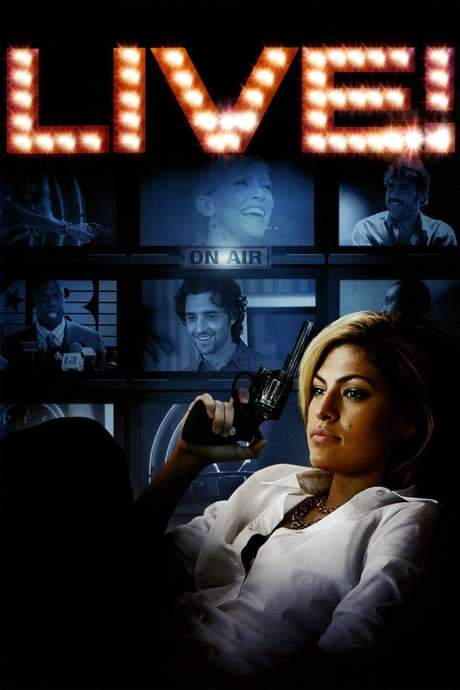
Live! (2007) movie poster

Timeline

Live! (2007) Timeline Explained – Every Event in Order

Release, runtime and language
2007 · 96 mins · English
Loading streaming availability…
Directed by
Bill Guttentag
Starring
Jay Hernandez, Patrick Fischler, David Krumholtz, Rob Brown, Andre Braugher, Jeffrey Dean Morgan

The film is presented as a mockumentary that tracks an ambitious television network executive as he battles corporate red tape and moral objections to launch a sensational reality series in which participants gamble with Russian Roulette. The satire exposes the extremes of reality‑TV production and the dangerous allure of a single, high‑stakes shot.

On this page (6)
  1. 1 Where to watch
  2. 2 Events in order (14)
  3. 3 Timeline questions answered
  4. 4 Movie threads
  5. 5 Movies like Live!
  6. 6 Every angle
Loading streaming availability…

14 events in order · contains spoilers

Live! Timeline: Events in Chronological Order

Every key event of Live! (2007) in order, scene by scene, with when and where it takes place. Use it to untangle flashbacks, time jumps and parallel storylines, to refresh your memory before the sequel or to find the exact scene you are thinking of.

  1. Katy Courbet's Ambitious Idea

    Television executive Katy Courbet envisions creating a revolutionary game show called Live!. She aims for it to become the most watched television show in history, featuring an extreme form of Russian roulette with real stakes.

    Where
    Television Network Headquarters
  2. Casting Contestants

    As Katy prepares for the show, she holds auditions that attract a larger number of hopefuls than anticipated. However, she quickly realizes that many applicants are suicidal individuals seeking the ultimate escape.

    Where
    Audition Hall
  3. Raising the Stakes

    In an effort to attract more spirited contestants, Katy decides to increase the prize money from $1 million to $5 million for the surviving contestants. This move is crucial to ensuring that the contestants genuinely want to live.

    Where
    Television Network Office
  4. Documentary Filmmaker Rex Joins

    Rex, a documentary filmmaker, begins chronicling Katy's life and the production of Live!. He captures behind-the-scenes moments and creates biographical segments about the contestants, adding depth to the show.

    Where
    Television Set
  5. Introducing the Contestants

    The six contestants are introduced: Byron, Brad, Rick, Jewel, Abalone, and Pablo. Each contestant comes with their personal struggles and stories, making their participation more poignant as they prepare for the challenge ahead.

    Where
    Studio Set
  6. Jewel's Turn

    Jewel steps up first and successfully pulls the trigger with the gun pointed at her head, but thankfully, the chamber is empty. Her success provides a brief respite and relieves some tension in the studio.

    Where
    Studio Set
  7. Pablo's Decision

    Next is Pablo, who also faces the barrel of the gun. He too pulls the trigger, and much to everyone's surprise, he is unharmed. His turn brings the audience a mix of relief and anticipation for what is to come.

    Where
    Studio Set
  8. Abalone's Performance

    Abalone takes her turn next and decides to put on an alarming performance where she points the gun at the host before aiming it at herself. Ultimately, she pulls the trigger and survives, creating a shocking moment for everyone involved.

    Where
    Studio Set
  9. Byron's Turn

    Byron steps up to the challenge, pulls the trigger, and emerges unscathed. His experience adds to the tension as the remaining contestants begin to feel the pressure of the situation.

    Where
    Studio Set
  10. Brad's Tragic Outcome

    Tragically, Brad is fifth in line and takes his own life by pulling the trigger. Katy, witnessing the event, is overwhelmed by guilt and immediately retreats to the bathroom to vomit, while the audience is left in shock.

    Where
    Studio Set
  11. Rick Wins Unfathomably

    Rick, who is next in line, curiously does not need to pull the trigger as he becomes the unexpected winner by default. Despite the chaos around him, he stands to win the $5 million prize without having to face the gun.

    Where
    Studio Set
  12. The After-Show Press Gang

    After the show concludes, the press gathers to discuss the shocking events that unfolded. Suddenly, an armed man appears and shoots Katy dead, leaving everyone in horror as she falls to the ground.

    Where
    Television Studio
  13. Network Response

    Following the murder of Katy, the network quickly issues a statement claiming the incident is unrelated to the show's theme. The fallout from the event raises ethical questions about the impact of such extreme entertainment.

    Where
    Television Network Headquarters
  14. Annual Broadcast Success

    Despite the tragic events, Live! becomes an annual broadcast, generating significant ratings and media attention. Each year, six new contestants are selected, perpetuating the cycle of thrill and controversy surrounding the show.

    Where
    Television Studio

Last updated: October 02, 2026 at 03:21

Was this helpful?

Timeline questions answered

Live! Timeline Explained: Your Questions Answered

When does it happen, and why in that order? The questions people ask about the chronology of Live! (2007): time jumps, flashbacks, cause and effect between scenes and the correct order of events, each answered with spoilers.

Q1

Why did Katy raise the prize money from $1 million to $5 million?

Katy initially offered each contestant $1 million, but the auditions for Live! attracted an alarming number of suicidal people who saw the show as a glamorous way to die. Realizing that contestants needed a reason to actually want to survive, Katy increased the payout to $5 million per survivor while denying compensation to the families of those killed, hoping the higher stakes would filter in participants who genuinely valued their lives.

Foreshadowing: The auditions revealed the disturbing pattern of suicidal applicants, which directly forced Katy to rethink the show's incentive structure before taping began.

  • prize money
  • katy courbet
  • audition
  • suicidal contestants
  • live show stakes
Q2

How did Rick win the game without ever pulling the trigger?

The revolver used in Live! contained one live round and five empty chambers, and the cylinder was spun before each pull. After Jewel, Pablo, Abalone, and Byron all survived their turns, Brad went fifth and was killed by the gun. Because Brad's death ended the game, Rick, who was scheduled to go last, was declared the sole survivor and won the $5 million prize by default without ever having to face the barrel.

Foreshadowing: The film's slow build of tension across the first four turns primes the audience to expect a death, but the mathematics of the six-chamber revolver determine which contestant actually falls.

  • rick
  • russian roulette
  • revolver
  • winner
  • prize
  • chamber
Q3

Why did Brad pull the trigger and die during the show?

The summary notes that Brad "tragically chooses to end his life," suggesting his decision was not accidental. By the time he stepped up, four contestants had already survived, leaving a 50/50 chance that his pull would be fatal. The film implies Brad was drawn to the show precisely because it offered a televised, socially permissible way to gamble with death, blurring the line between extreme sports enthusiasm and suicidal intent.

Foreshadowing: Katy had already discovered that suicidal people were applying to the show in large numbers, hinting that some contestants, like Brad, were seeking death rather than money.

  • brad
  • suicide
  • russian roulette
  • contestant death
  • extreme sports
Q4

Why were so many suicidal people drawn to the auditions for Live!?

The show offered a public, televised, and seemingly thrilling way to end one's life, removing much of the stigma and isolation associated with traditional suicide. For people already contemplating death, participating in Live! provided spectacle, audience, performance, and even the possibility of financial gain for their families, a twisted incentive that the auditions revealed before Katy adjusted the rules.

Foreshadowing: Katy recognized this pattern early in casting, which motivated her decision to raise the prize money and remove payouts to victims' families.

  • suicidal contestants
  • auditions
  • reality tv
  • desperation
  • casting
Q5

Why did Abalone point the gun at the host before her turn?

Abalone is introduced as a former supermodel turned performance artist, and her on-stage theatrics reflect that identity. Pointing the gun at the host was a calculated act of performance art designed to assert control, shock the audience, and frame her participation as something more provocative than a simple game show appearance.

Foreshadowing: Her introduction as a performance artist foreshadows her willingness to blur the boundary between art, danger, and spectacle during the broadcast.

  • abalone
  • performance art
  • host
  • gun
  • theatrics
Q6

What was Rex's role in producing Live!?

Rex, a documentary filmmaker, embedded himself with the production to chronicle Katy's life behind the scenes and to create biographical segments about each contestant. These packages were designed to humanize the players and make viewers emotionally invested, which in turn made the possibility of their deaths feel more dramatic and exploitable for ratings.

Foreshadowing: Rex's decision to document production mirrors the mockumentary format of the film itself, foreshadowing the meta-commentary on documentary complicity in spectacle.

  • rex
  • documentary filmmaker
  • biographical segments
  • production
Q7

Why did Katy vomit and feel overwhelming guilt after Brad's death?

Katy had raised the prize money specifically because she believed a larger payout would attract contestants who wanted to live. Brad's death shattered that belief and forced her to confront the fact that her show had become a vehicle for suicide rather than a celebration of survival. Her physical reaction, rushing to the bathroom to vomit, signals the moment she recognizes her complicity in Brad's choice.

Foreshadowing: Katy's earlier confidence that money alone could ensure contestants' desire to live was directly contradicted by Brad's actions on stage.

  • katy
  • guilt
  • brad
  • death
  • moral responsibility
Q8

What does Katy's murder at the press conference symbolize?

The film does not give the shooter a clear motive, but the timing is the point. Katy, who built her career on staging death for entertainment, becomes a victim of real, uncontrolled violence the moment the cameras move off the studio floor. Her murder collapses the distance between the sanitized violence of Live! and the chaos it helped normalize, arguing that the culture of spectacle she profited from eventually consumed her.

Foreshadowing: From its earliest scenes, the film frames the network's appetite for lethal content as something that will inevitably escape the controlled environment of the studio.

  • katy
  • murder
  • press conference
  • satire
  • violence
Q9

Why did the network claim Katy's murder was unrelated to the show?

By publicly insisting the shooting had nothing to do with Live!, the network shielded the program from legal liability, regulatory scrutiny, and public backlash. The denial allowed the show to keep airing, protected advertising relationships, and preserved the brand of a format that depended on audiences believing the violence was contained entertainment rather than real-world consequence.

Foreshadowing: The network had already demonstrated throughout production that it was willing to bend the truth to keep the show on the air, foreshadowing its post-tragedy pivot to denial.

  • network
  • denial
  • accountability
  • brand
  • live show
Q10

Why did Live! continue as an annual broadcast after the deaths?

The continuation is the film's central satirical statement. Despite a contestant's on-air suicide and the executive producer's murder, the show delivered record ratings, and the network decided that audience demand outweighed any moral or legal concerns. By transforming Live! into an annual event with six new contestants each year, the film exposes how media institutions treat tragedy as fuel for content rather than a reason to stop.

Foreshadowing: The network's willingness to push past the FCC, sponsors, and moral objections during production foreshadowed its refusal to shut the show down after the deaths.

  • live show
  • annual broadcast
  • ratings
  • satire
  • media ethics
Q11

What is the satirical message of the film?

The film argues that modern reality television has become so desensitized and profit-driven that networks will broadcast lethal content for ratings and audiences will watch it willingly. By framing Russian roulette as a game show with sponsors, network oversight, and FCC negotiations, the movie reduces the horror of death to a managed product, suggesting that contemporary media has already normalized human suffering as entertainment.

Foreshadowing: The premise itself, a network greenlighting a show where people can die, is the satirical setup, and every event that follows reinforces the critique.

  • satire
  • reality tv
  • media critique
  • violence
  • exploitation
Q12

Why did Jewel volunteer to take the first turn in the game?

Jewel is described as an aspiring actress desperate for fame, and going first guaranteed her the longest screen time, the strongest audience impression, and the most replayable moment of the broadcast. For someone whose goal was visibility, the risk of going first was outweighed by the reward of being the face the audience remembered longest.

Foreshadowing: Jewel's introduction as someone "eager for fame" foreshadowed her willingness to take the most visible and dangerous role in the lineup.

  • jewel
  • first turn
  • fame
  • contestant
  • screen time

Movie threads

More Movies Like Live!, by Mood & Story

Curated lists built around what makes Live! tick: the same mood, the same kind of story or the same emotional payoff. Each list explains why these movies belong together.

Dark media satire like Live!

Films where cameras turn human conscience into collateral damage for ratings. Movies like Live! that use satire, mockumentary, or found footage to skewer reality TV and media exploitation. If you liked Live!, these disturbing films pull back the curtain on cameras, complicity, and the grotesque appetite of spectacle, exposing how ethics dissolve when ratings call the shots.

  • dark satire
  • cynical
  • voyeuristic
  • unsettling
  • media critique
  • provocative
  • Tone: dark, satirical, bleak
  • Pacing: steady, observational
Why these movies?

The story pattern: Films in this thread typically follow producers, hosts, or networks as they chase a sensational concept, gradually crossing moral lines until tragedy erupts on camera. The narrative arc moves from ambitious pitch to ethical compromise to catastrophic fallout, often with the show or spectacle continuing despite — or because of — death. Characters include ambitious executives, complicit crews, desperate contestants, and an audience framed as guilty voyeurs. The structure leans on meta-commentary, breaking the fourth wall, or documentary framing so the viewer becomes part of the critique rather than outside it.

Why they belong together: These films share a bleak, cynical tone, dark satire, and a steady or slow-build pacing that lets unease accumulate. They tend to carry heavy emotional weight, disturbing themes, and endings where institutions or audiences profit from tragedy. Common throughlines include voyeurism, exploitation, the normalization of violence, and a pointed critique of how media manufactures consent from its viewers.
Deadly game shows and lethal spectacle like Live!

Competitions where losing means the final curtain — and the cameras keep rolling. If you liked Live! and its grim Russian roulette reality show, these movies deliver similar high-stakes thrillers where contestants gamble with their lives on camera. From dystopian death games to twisted survival contests, expect violence, anxiety, bleak endings, and pointed commentary on entertainment, exploitation, and how far society will go for spectacle.

  • high stakes
  • lethal game
  • tense
  • anxious
  • violent
  • bleak
  • Tone: tense, dark, bleak
  • Pacing: steady to fast, mounting dread
Why these movies?

The story pattern: The protagonist — often a producer, contestant, or reluctant participant — is drawn into a televised or staged contest with lethal consequences. Setup introduces the rules, the contestants, and the stakes; escalation pushes moral boundaries as deaths occur and ratings climb; the climax forces a confrontation with the architects of the system. Endings tend to be bleak, ambiguous, or pyrrhic: a survivor may escape, but the machine keeps broadcasting, or the cost of winning proves greater than the prize.

Why they belong together: These films share a tension-soaked, anxious atmosphere and dark or bleak tones. Pacing is typically steady or fast with mounting dread, intensity runs high, and emotional weight lands heavy. Recurring motifs include Russian roulette, death matches, survival arenas, game shows with fatal stakes, and institutions that profit from killing — often filtered through social commentary on class, exploitation, or media complicity.

If you liked this

Movies Like Live!

Similar movies to Live!: the same genre, themes or kind of story. Each one comes with its own plot summary, timeline and ending explained.

Browse all movie summaries

Every angle

Live! (2007) Explained: Plot, Timeline & Characters

Everything about Live! in one place: what happens in the plot summary, the timeline in chronological order, the characters and meaning and a spoiler-free summary. What's After the Movie adds the cast, box office and post-credit scenes.

Coming soon on iOS and Android

The Plot Explained Movie Summary App

Plot summaries, endings explained and timelines on your phone. Catch up on any movie in minutes, save your favorites and never miss a twist again.

Be the first to know when we launch. Your email stays private, always.

Learn more about the app