





Plot Explained Spoilers guaranteed!
Plot Explained

Browse by genre

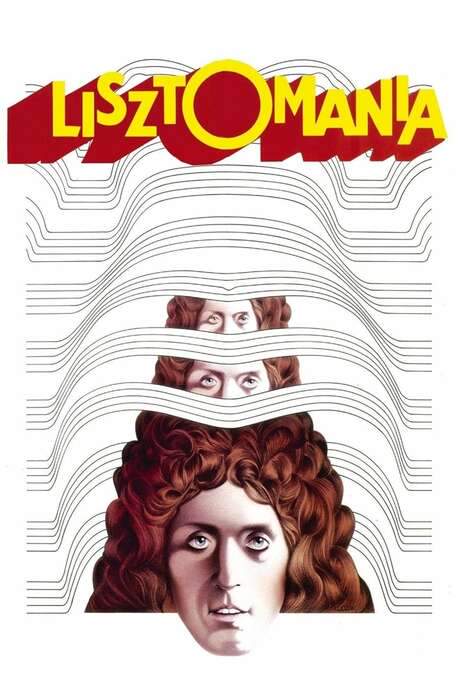
Lisztomania (1975) movie poster

Spoiler-Free Summary

Lisztomania (1975) Spoiler-Free Summary – What It's About

Release, runtime and language
1975 · 103 mins · English
Directed by
Ken Russell
Starring
Oliver Reed, Ringo Starr, Kenneth Colley, Aubrey Morris, Roger Daltrey, Paul Nicholas

A flamboyant, psychedelic rock fantasy that satirically dramatizes the 19th‑century life of Romantic composer‑pianist Franz Liszt. Determined to abandon his hedonistic habits, Liszt repeatedly falls under the spell of the charismatic and seductive fellow composer Richard Wagner, leading to a wild, erotic and exotic musical romp.

On this page (6)
  1. 1 Where to watch
  2. 2 What it is about
  3. 3 Is it worth watching?
  4. 4 After you watch
  5. 5 Movie threads
  6. 6 Every angle

Where to watch

Where to Watch Lisztomania (1975)

Where can you watch Lisztomania? Stream, rent or buy it in the US, including on Amazon Video, Apple TV Store and Fandango At Home: current JustWatch availability with up-to-date prices.

Streaming availability powered by JustWatch

Spoiler-free summary · safe to read

What Is Lisztomania About? (No Spoilers)

The plot of Lisztomania (1975) without spoilers: what it is about, who it follows and where it takes place, told without the twists or the ending. Enough to decide whether it is your next watch, not enough to ruin it.

In a neon‑lit, kaleidoscopic re‑imagining of 19th‑century Europe, the film plunges the viewer into a world where classical concert halls pulse like rock venues and history unfurls through psychedelic dreamscapes. Music is not merely heard but felt as a visual shockwave, and every turn of the camera treats the past with an electric, anachronistic flair. The tone is simultaneously reverent and irreverent, a satirical ballet that winks at grand Romantic myths while reveling in flamboyant excess.

At the heart of this feverish tableau is Franz Liszt, a virtuoso whose prodigious talent is matched only by his unapologetic hedonism. Determined to escape the self‑destructive patterns that have defined his life, he finds his resolve constantly tested by the magnetic presence of Richard Wagner. Their relationship crackles with a mixture of artistic rivalry and seductive allure, pulling Liszt between the promise of disciplined genius and the intoxicating pull of unbridled creativity. Alongside them, the headstrong Marie d'Agoult and the enigmatic Princess Carolyn embody contrasting visions of love, ambition, and the price of artistic freedom, each shaping Liszt’s yearning for redemption.

The narrative unfolds through a series of surreal, episodic vignettes that blend fact, fantasy, and time‑bending anachronisms. Legendary composers appear as flamboyant companions in Liszt’s orbit, turning every rehearsal into a theatrical spectacle where orchestral crescendos meet glitter‑splashed rock choreography. The film’s visual language is deliberately hyper‑stylized, casting familiar historical figures in bold, otherworldly hues that amplify the story’s mischievous commentary on fame, fame‑driven excess, and the myth of the tortured artist.

Against this dazzling backdrop, the central tension revolves around Liszt’s struggle to channel his prodigious gifts without succumbing again to the very pleasures he wishes to leave behind. The seductive spell of Wagner and the tantalizing offers of patronage and artistic rebirth loom large, promising both salvation and further entanglement. As the story spirals through mounting curiosities and electric performances, the audience is left to wonder whether Liszt can truly reinvent himself, or if the very brilliance that defines him will keep him forever caught in a dazzling, impossible dance.

Last updated: December 04, 2025 at 18:13

Was this helpful?

What to expect

Is Lisztomania Worth Watching? What It Feels Like

Is it dark, sad, slow, intense or confusing? The mood of Lisztomania (1975) in a few tags, without a word about how it ends. Each tag opens a list of movies that feel the same.

After you watch

Seen Lisztomania? Now Read the Spoilers

Once you have watched Lisztomania (1975), come back for the full story: the plot summary with spoilers, the timeline in chronological order, the characters and meaning.

Movie threads

More Movies Like Lisztomania, by Mood & Story

Curated lists built around what makes Lisztomania tick: the same mood, the same kind of story or the same emotional payoff. Each list explains why these movies belong together.

Anachronistic Historical Fantasies like Lisztomania

Historical stories reimagined with a surreal, psychedelic, and modern energy. If you loved the irreverent, rock-and-roll energy of Lisztomania, explore more movies that violently and joyfully smash history. These films use surrealism, anachronism, and psychedelic style to create wild biographical satires and historical fantasies, offering a chaotic and exhilarating alternative to traditional period dramas.

  • surreal
  • anachronistic
  • flamboyant
  • satirical
  • psychedelic
  • manic
  • Tone: whimsical, satirical
  • Pacing: fast, chaotic
Why these movies?

The story pattern: Narratives in this thread often follow a biographical or historical framework but deliberately fracture it with surreal digressions, fantastical elements, and modern cultural references. The journey is less about factual progression and more about a manic, thematic exploration of the subject's life and legacy through a distorted, contemporary lens.

Why they belong together: These movies are grouped by their shared ambition to reinvent history as a vibrant, chaotic playground. They connect through a fast-paced, high-energy tone, a willingness to break narrative rules, and a visual and auditory style that is intentionally excessive, anachronistic, and flamboyant.
Movies about Excess and Artistic Torment like Lisztomania

Flamboyant stories of creative genius consumed by hedonism and madness. Fans of Lisztomania's portrayal of a genius seduced by his own desires will enjoy these films about artistic torment. They feature flamboyant characters, surreal narratives, and a mix of eroticism and darkness, capturing the manic energy of creation collapsing into hedonistic chaos.

  • flamboyant
  • hedonistic
  • manic
  • erotic
  • surreal
  • tormented
  • Tone: whimsical, dark
  • Pacing: fast, manic
Why these movies?

The story pattern: The narrative pattern follows a talented artist or visionary whose life becomes a whirlwind of creative output and personal indulgence. The story charts their struggle with external seductions and internal demons, often escalating into surreal or supernatural conflicts that mirror their artistic and psychological turmoil, leading to a mixed or tragic resolution.

Why they belong together: This thread unites films through their focus on the archetype of the tormented genius, a high-intensity and fast-paced exploration of artistic struggle. The shared elements include a flamboyant visual style, a complex blend of dark and whimsical tones, and themes of hedonism, temptation, and the corrupting nature of genius.

Every angle

Lisztomania (1975) Explained: Plot, Timeline & Characters

Everything about Lisztomania in one place: what happens in the plot summary, the timeline in chronological order, the characters and meaning and a spoiler-free summary. What's After the Movie adds the cast, box office and post-credit scenes.

Coming soon on iOS and Android

The Plot Explained Movie Summary App

Plot summaries, endings explained and timelines on your phone. Catch up on any movie in minutes, save your favorites and never miss a twist again.

Be the first to know when we launch. Your email stays private, always.

Learn more about the app