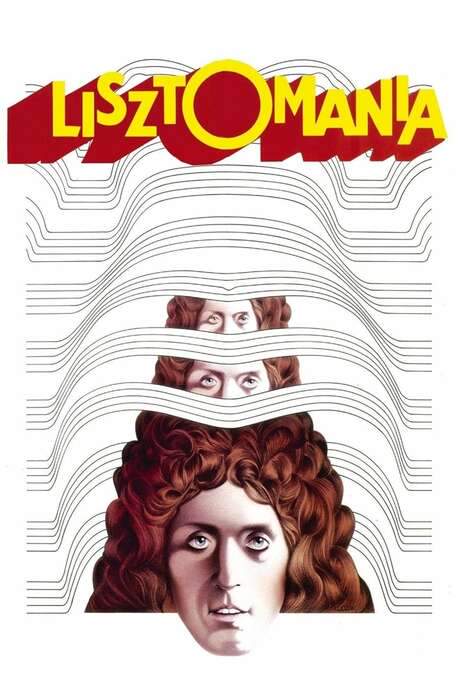






Lisztomania

Lisztomania

Year: 1975

Runtime: 103 mins

Language: English

Director: Ken Russell

MusicHistoryComedy

A flamboyant, psychedelic rock fantasy that satirically dramatizes the 19th‑century life of Romantic composer‑pianist Franz Liszt. Determined to abandon his hedonistic habits, Liszt repeatedly falls under the spell of the charismatic and seductive fellow composer Richard Wagner, leading to a wild, erotic and exotic musical romp.

Warning: spoilers below!

Haven’t seen Lisztomania yet? This summary contains major spoilers. Bookmark the page, watch the movie, and come back for the full breakdown. If you're ready, scroll on and relive the story!

Timeline – Lisztomania (1975)

Trace every key event in Lisztomania (1975) with our detailed, chronological timeline. Perfect for unpacking nonlinear stories, spotting hidden connections, and understanding how each scene builds toward the film’s climax. Whether you're revisiting or decoding for the first time, this timeline gives you the full picture.

1

Opening scandal

The film opens with Liszt being found in bed with Marie d'Agoult by her husband, Count d'Agoult. The Count challenges him to a sabre duel. Marie pleads for mercy, but the Count's staff traps Liszt and Marie inside the body of a piano and leaves it on railroad tracks.

Opening scene Count d'Agoult's residence
2

Flashback framed backstage

The moment is revealed as a flashback triggered by a camera flash backstage before one of Liszt's concerts. The memory frames the fall from grace in a surreal, dreamlike sequence. It sets the film’s blend of fact, fantasy, and memory.

Before concert Backstage before Liszt's concert
3

Wagner introduced to Liszt's circle

Liszt introduces Richard Wagner to his circle of colleagues, including Gioachino Rossini, Hector Berlioz, Frédéric Chopin, and Hans von Bülow. The meeting shows Liszt as the central hub of a world where genius and ambition collide. The surreal setting hints at loyalties, rivalries, and future collaborations.

Early career Liszt's circle/salon
4

Rienzi variation commissioned

Liszt pays Wagner to allow him to perform a variation on a theme from Rienzi. The arrangement marks the uneasy mix of commercial spectacle and serious musicianship in Liszt's career. Their collaboration unfolds amid backstage feints and audience expectations.

Concert preparation Rehearsal room / concert venue
5

Concert showmanship sparks crowd

During the concert, Wagner balks at Liszt's crowd-pleasing approach, including adding a playful touch by weaving Chopsticks into the Rienzi theme. The audience, mostly young screaming girls, erupts with enthusiasm and storms the stage. The moment blurs art and entertainment into a riotous spectacle.

During Rienzi variation Concert hall
6

Carolyn seduction and bargain

Carolyn seduces Liszt, offering him the power to compose brilliant music if he yields control of his life. He is torn as a hallucinatory dance sequence of Carolyn's court unfolds with her watching from a distance. The dreamlike moment signals a dangerous pledge that will reshape his life.

After concert Carolyn's court
7

Guillotine bargain revealed

In an ostentatious turn, Liszt is drawn into a ritual world where the women drag him toward a guillotine. Carolyn reveals that the bargain with her will sacrifice his libertinism in exchange for artistic genius. The scene underscores the price of exceptional talent.

Revealing moment Carolyn's court
8

Dresden and the May Uprising

Back in Dresden during the May Uprising, Liszt wrestles with whether to stand with his friends or remain isolated to compose. The tension mirrors his creative crisis and personal neglect at home. It is implied that Marie and his two youngest children have been killed in the turmoil.

May Uprising Dresden
9

Wagner exposes vampiric nature

Wagner asks for money to flee with his family, then drugs Liszt and reveals himself to be a vampire with a mission to spark a new German nationalism. He drains Liszt’s blood and continues to compose on the piano. Before leaving, Wagner leaves a political pamphlet that nods to Nietzsche’s Superman.

During May Uprising Liszt's room
10

Vatican marriage attempt

Liszt and Carolyn travel to the Vatican to marry after the Pope agrees to grant a divorce from her husband. The wedding is ultimately voided by intervention from the husband and the Tsar. Liszt joins the church as an abbé.

Post-Uprising Vatican
11

Pope's warning and Wagner's cult

The Pope informs Liszt that Wagner has married Cosima and now leads a devilish cult around his music. He orders Liszt to exorcise Wagner or face excommunication and a music ban. The revelation deepens Liszt’s burden and sets him on a dangerous path.

After marriage attempt Vatican
12

Confrontation at Wagner's castle

Liszt travels to Wagner’s castle to confront him; Wagner and Cosima perform a secret Nazi ritual in Superman costumes. Wagner reveals himself as a vampire and threatens to steal Liszt’s music. The castle also houses a mechanical Viking Siegfried built to rid the country of Jews.

Late events Wagner's castle
13

Imprisonment and the death of Liszt

Cosima imprisons Liszt and resurrects Wagner in a Frankenstein-Hitler persona wielding a guitar-mounted machine gun for a ritual that culminates in violence against the town’s Jews. Liszt is killed by a voodoo doll as chaos erupts around them.

Final confrontation Wagner's castle
14

Heavenly peace and return to Earth

In Heaven, Liszt is reunited with the women he loved and Cosima. They fly to Earth in a spaceship to destroy Wagner-Hitler, and Liszt sings that he has found peace at last.

Ending Heaven / Earth

Last Updated: October 05, 2025 at 12:33

Mobile App Preview

Coming soon on iOS and Android

The Plot Explained Mobile App

From blockbusters to hidden gems — dive into movie stories anytime, anywhere. Save your favorites, discover plots faster, and never miss a twist again.

Sign up to be the first to know when we launch. Your email stays private — always.

Explore Movie Threads

Discover curated groups of movies connected by mood, themes, and story style. Browse collections built around emotion, atmosphere, and narrative focus to easily find films that match what you feel like watching right now.

Anachronistic Historical Fantasies like Lisztomania

Historical stories reimagined with a surreal, psychedelic, and modern energy.If you loved the irreverent, rock-and-roll energy of Lisztomania, explore more movies that violently and joyfully smash history. These films use surrealism, anachronism, and psychedelic style to create wild biographical satires and historical fantasies, offering a chaotic and exhilarating alternative to traditional period dramas.

surrealanachronisticflamboyantsatiricalpsychedelicmanicexcessivefantastical

Narrative Summary

Narratives in this thread often follow a biographical or historical framework but deliberately fracture it with surreal digressions, fantastical elements, and modern cultural references. The journey is less about factual progression and more about a manic, thematic exploration of the subject's life and legacy through a distorted, contemporary lens.

Why These Movies?

These movies are grouped by their shared ambition to reinvent history as a vibrant, chaotic playground. They connect through a fast-paced, high-energy tone, a willingness to break narrative rules, and a visual and auditory style that is intentionally excessive, anachronistic, and flamboyant.
Movies about Excess and Artistic Torment like Lisztomania

Flamboyant stories of creative genius consumed by hedonism and madness.Fans of Lisztomania's portrayal of a genius seduced by his own desires will enjoy these films about artistic torment. They feature flamboyant characters, surreal narratives, and a mix of eroticism and darkness, capturing the manic energy of creation collapsing into hedonistic chaos.

flamboyanthedonisticmaniceroticsurrealtormentedsatiricalexcessive

Narrative Summary

The narrative pattern follows a talented artist or visionary whose life becomes a whirlwind of creative output and personal indulgence. The story charts their struggle with external seductions and internal demons, often escalating into surreal or supernatural conflicts that mirror their artistic and psychological turmoil, leading to a mixed or tragic resolution.

Why These Movies?

This thread unites films through their focus on the archetype of the tormented genius, a high-intensity and fast-paced exploration of artistic struggle. The shared elements include a flamboyant visual style, a complex blend of dark and whimsical tones, and themes of hedonism, temptation, and the corrupting nature of genius.

Unlock the Full Story of Lisztomania

Don't stop at just watching — explore Lisztomania in full detail. From the complete plot summary and scene-by-scene timeline to character breakdowns, thematic analysis, and a deep dive into the ending — every page helps you truly understand what Lisztomania is all about. Plus, discover what's next after the movie.

Lisztomania Summary

Read a complete plot summary of Lisztomania, including all key story points, character arcs, and turning points. This in-depth recap is ideal for understanding the narrative structure or reviewing what happened in the movie.

Lisztomania Summary

Characters, Settings & Themes in Lisztomania

Discover the characters, locations, and core themes that shape Lisztomania. Get insights into symbolic elements, setting significance, and deeper narrative meaning — ideal for thematic analysis and movie breakdowns.

Characters, Settings & Themes in Lisztomania

Lisztomania Spoiler-Free Summary

Get a quick, spoiler-free overview of Lisztomania that covers the main plot points and key details without revealing any major twists or spoilers. Perfect for those who want to know what to expect before diving in.

Lisztomania Spoiler-Free Summary

More About Lisztomania

Visit What's After the Movie to explore more about Lisztomania: box office results, cast and crew info, production details, post-credit scenes, and external links — all in one place for movie fans and researchers.

More About Lisztomania