





Plot Explained Spoilers guaranteed!
Plot Explained

Browse by genre

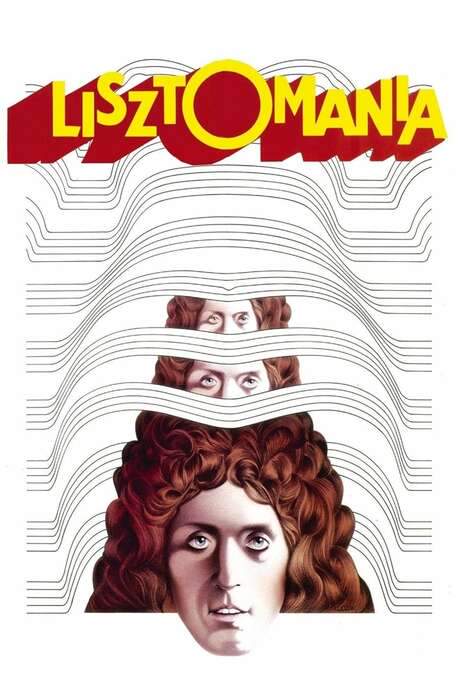
Lisztomania (1975) movie poster

Characters & Themes

Lisztomania (1975) Characters, Setting & Themes Explained

Release, runtime and language
1975 · 103 mins · English
Directed by
Ken Russell
Starring
Oliver Reed, Ringo Starr, Kenneth Colley, Aubrey Morris, Roger Daltrey, Paul Nicholas

A flamboyant, psychedelic rock fantasy that satirically dramatizes the 19th‑century life of Romantic composer‑pianist Franz Liszt. Determined to abandon his hedonistic habits, Liszt repeatedly falls under the spell of the charismatic and seductive fellow composer Richard Wagner, leading to a wild, erotic and exotic musical romp.

On this page (7)
  1. 1 Where to watch
  2. 2 Characters explained (6)
  3. 3 Where & when it takes place
  4. 4 Themes & meaning (3)
  5. 5 Character & meaning questions
  6. 6 Movie threads
  7. 7 Every angle

Where to watch

Where to Watch Lisztomania (1975)

Where can you watch Lisztomania? Stream, rent or buy it in the US, including on Amazon Video, Apple TV Store and Fandango At Home: current JustWatch availability with up-to-date prices.

Streaming availability powered by JustWatch

6 main characters · contains spoilers

Lisztomania Characters Explained: Who Is Who

The main characters of Lisztomania (1975), heroes and villains: what drives them, how they change over the course of the story and what each of them reveals about the film's bigger ideas.

  • Franz Liszt

    played by Roger Daltrey

    Franz Liszt is depicted as a dazzling 19th-century virtuoso whose public persona eclipses his private life. The film frames his genius as both a gift and a peril, entangled with romantic exploits and a craving for creative vitality. His interactions with Carolyn reflect a dangerous bargain between artistic brilliance and personal liberty. The serialized, surreal portrayal emphasizes the tension between showmanship and soulful composition.

    • 🎼 Virtuoso
    • 💫 Fame
    • 💔 Inner turmoil
  • Marie d'Agoult

    played by Fiona Lewis

    Marie is Liszt's partner and mother to Cosima, whose jealousy and desire for control intensify the couple's conflicts. Her presence drives power struggles and shapes Liszt's personal decisions. She pushes for influence over his life, complicating both romance and artistry. Her character embodies passion, manipulation, and the costs of devotion.

    • 💋 Affair
    • 🔒 Control
    • 💔 Jealousy
  • Cosima

    played by Veronica Quilligan

    Cosima is Liszt's eldest daughter, a figure who embodies family ties amid romantic and ideological upheaval. She expresses piety and concern for her father, even as she becomes a participant in the family's dramatic saga. Her presence anchors the domestic stakes and hints at the generational consequences of Liszt's choices.

    • 🕊️ Family
    • 🙏 Piety
    • 👧 Daughter
  • Richard Wagner

    played by Paul Nicholas

    Richard Wagner is portrayed as a charismatic yet dangerous figure with nationalist ambitions. He exerts influence over Liszt through manipulation and a vampiric metaphor, using music to advance a political vision. The character embodies artistic ambition fused with ideological extremism, challenging Liszt's moral and artistic stance.

    • 🧛 Vampire
    • 🎭 Art
    • 🗡️ Power
  • Princess Carolyn

    played by Sara Kestelman

    Princess Carolyn is a powerful figure who seduces Liszt, offering him inspiration and brilliance in exchange for control over his life. She represents the allure of fame and the lure of autonomy over the artist's hand. Her presence adds a seductive, manipulative dynamic to Liszt's creative journey.

    • 👑 Power
    • 🎨 Creativity
    • 💃 Seduction
  • Count d'Agoult

    played by John Justin

    Count d'Agoult is Marie's husband, whose jealousy and authority propel the narrative's darker turns. His influence culminates in a dramatic moment where Liszt and Marie are entrapped in the body of a piano, symbolizing control and confinement. He embodies the social forces that constrain personal freedom and artistic impulse.

    • ⚖️ Jealousy
    • 🗝️ Sabotage
    • 🕰️ Power

Last updated: October 04, 2025 at 19:17

Was this helpful?

Setting

Where and When Does Lisztomania Take Place?

The setting of Lisztomania (1975): the year and time period, the places and locations, and how they shape the characters, the mood and the tension of the story.

Time period

19th century

The narrative is rooted in the Romantic era, tracing Liszt's career through the mid-1800s, including political upheavals like the May Uprising of 1849. The era is marked by grand concerts, aristocratic salons, and evolving ideas about art, faith, and nationalism. The film shifts between real historical moments and fantastical reinterpretations, maintaining a 19th-century sensibility amid surreal sequences.

Location

Backstage and concert venues across Europe, including Dresden, Vatican City, and St. Petersburg

The film unfolds across historic European locales, moving from Dresden during the May Uprising to the Vatican and performances in St. Petersburg. It blends opulent concert halls with backstage chaos and surreal dreamlike sequences, reflecting Liszt's public spectacle and private turmoil. The locations anchor a surreal narrative in a recognizable musical-romantic world.

  • 🎭 European setting
  • 🎶 Musical milieu
  • 🗺️ Historic European cities

Last updated: October 04, 2025 at 19:17

Was this helpful?

3 major themes

Lisztomania Meaning: Themes & Message Explained

What is Lisztomania (1975) really about? The emotional, social and philosophical themes the film keeps returning to, its symbolism and the message beneath the surface.

  • Genius and Price

    Franz Liszt's extraordinary talent draws mass adulation and dramatic attention. The film portrays his life as a continuous performance, where public glory clashes with private freedoms. A bargain with Carolyn hints that artistic brilliance may come at the cost of personal liberty and hedonistic impulses. This theme presents genius as both luminous and costly, shaping his music and fate.

  • Love and Jealousy

    Marie d'Agoult's affair and Carolyn's manipulations spark intense jealousy and power struggles within Liszt's domestic life. The couple's fragility and Liszt's infidelities are shown as forces that threaten creativity and stability. The characters maneuver for influence over Liszt's choices, turning romance into a battleground of control. The turmoil fuels the film's emotional and dramatic energy.

  • Religion and Nationalism

    The Pope's authority and Wagner's nationalist ambitions pull Liszt into conflicts between faith, art, and power. Surreal rituals and a Nazi-like vision use music to probe questions of identity and political destiny. The narrative frames religion and nationalism as forces that instrumentalize art, challenging Liszt to reckon with the spiritual stakes of his work. The climax suggests a struggle between artistic integrity and ideological manipulation.

Last updated: October 04, 2025 at 19:17

Was this helpful?

Character & theme questions

Lisztomania Characters & Meaning: Your Questions Answered

The questions people ask about Lisztomania (1975): who the characters really are, their relationships, what the symbols mean, where it takes place and what the movie is really about. Each answer contains spoilers.

Q1

Where does the film take place?

The film unfolds across historic European locations, primarily in Dresden during the May Uprising, the Vatican, and performances in St. Petersburg. These settings blend opulent concert halls with backstage chaos and surreal dreamlike sequences, anchoring the surreal narrative in a recognizable musical-romantic world.

Foreshadowing: Dresden appears early as a key location, establishing the film's European cultural landscape.

  • dresden
  • vatican
  • st petersburg
  • european settings
  • concert halls
  • locations
Q2

What time period does the film depict?

Lisztomania is set in the 19th century, specifically during the Romantic era. The narrative traces Liszt's career through the mid-1800s, including the May Uprising of 1849. The film maintains a 19th-century sensibility while incorporating surreal sequences that blend historical events with fantastical reinterpretations.

Foreshadowing: The May Uprising of 1849 establishes the historical timeframe from the opening moments.

  • 19th century
  • romantic era
  • 1849
  • historical period
  • mid-1800s
Q3

What does the Genius and Price theme explore?

The film portrays Franz Liszt's extraordinary talent as drawing mass adulation while creating a clash between public glory and private freedoms. A bargain with Princess Carolyn suggests that artistic brilliance may come at the cost of personal liberty and hedonistic impulses. This theme presents genius as both luminous and costly, shaping his music and fate.

  • genius
  • artistic brilliance
  • price
  • personal freedom
  • creativity
Q4

How does the Love and Jealousy theme function in the film?

Marie d'Agoult's affair and Princess Carolyn's manipulations spark intense jealousy and power struggles within Liszt's domestic life. The film shows these romantic tensions as forces that threaten both creativity and stability, with characters maneuvering for influence over Liszt's choices. This turmoil fuels the film's emotional and dramatic energy.

  • love
  • jealousy
  • marie d'agoult
  • romantic tension
  • power struggle
Q5

How does the Religion and Nationalism theme feature in the story?

The Pope's authority and Wagner's nationalist ambitions pull Liszt into conflicts between faith, art, and power. Surreal rituals and a Nazi-like vision use music to probe questions of identity and political destiny. The narrative frames religion and nationalism as forces that instrumentalize art, challenging Liszt to reckon with the spiritual stakes of his work.

  • religion
  • nationalism
  • pope
  • wagner
  • politics
  • faith
Q6

Who is Franz Liszt in this film?

Franz Liszt is depicted as a dazzling 19th-century virtuoso whose public persona eclipses his private life. The film frames his genius as both a gift and a peril, entangled with romantic exploits and a craving for creative vitality. His interactions with Princess Carolyn reflect a dangerous bargain between artistic brilliance and personal liberty.

  • franz liszt
  • virtuoso
  • genius
  • pianist
  • artist
Q7

What kind of character is Richard Wagner?

Richard Wagner is portrayed as a charismatic yet dangerous figure with nationalist ambitions. He exerts influence over Liszt through manipulation and a vampiric metaphor, using music to advance a political vision. The character embodies artistic ambition fused with ideological extremism, challenging Liszt's moral and artistic stance.

  • richard wagner
  • charismatic
  • vampiric
  • nationalist
  • manipulation
Q8

Who is Princess Carolyn in the story?

Princess Carolyn is a powerful figure who seduces Liszt, offering him inspiration and brilliance in exchange for control over his life. She represents the allure of fame and the lure of autonomy over the artist's hand. Her presence adds a seductive, manipulative dynamic to Liszt's creative journey.

  • princess carolyn
  • seduction
  • fame
  • manipulation
  • power
Q9

What is Marie d'Agoult's role in the film?

Marie d'Agoult is Liszt's partner and mother to Cosima, whose jealousy and desire for control intensify the couple's conflicts. She pushes for influence over his life, complicating both romance and artistry. Her character embodies passion, manipulation, and the costs of devotion.

  • marie d'agoult
  • cosima
  • jealousy
  • control
  • partner
Q10

What kind of world does the film create?

The film blends opulent concert halls with backstage chaos and surreal dreamlike sequences, reflecting Liszt's public spectacle and private turmoil. It creates a surreal narrative within a recognizable musical-romantic world, where historical 19th-century settings coexist with fantastical, psychedelic elements.

  • world
  • setting
  • surreal
  • dreamlike
  • concert halls
  • romantic
Q11

What is the tone and style of the film?

The film features a whimsical, psychedelic rock fantasy approach with satirical dramatization of history. This whimsy is consistently undercut by dark themes like vampirism, political extremism, and mass killing, creating a complex tonal blend. The pacing is fast, mirroring the protagonist's chaotic life with relentless, fast-paced succession of surreal events.

  • tone
  • style
  • whimsical
  • dark themes
  • satirical
  • psychedelic
  • fast paced

Movie threads

More Movies Like Lisztomania, by Mood & Story

Curated lists built around what makes Lisztomania tick: the same mood, the same kind of story or the same emotional payoff. Each list explains why these movies belong together.

Anachronistic Historical Fantasies like Lisztomania

Historical stories reimagined with a surreal, psychedelic, and modern energy. If you loved the irreverent, rock-and-roll energy of Lisztomania, explore more movies that violently and joyfully smash history. These films use surrealism, anachronism, and psychedelic style to create wild biographical satires and historical fantasies, offering a chaotic and exhilarating alternative to traditional period dramas.

  • surreal
  • anachronistic
  • flamboyant
  • satirical
  • psychedelic
  • manic
  • Tone: whimsical, satirical
  • Pacing: fast, chaotic
Why these movies?

The story pattern: Narratives in this thread often follow a biographical or historical framework but deliberately fracture it with surreal digressions, fantastical elements, and modern cultural references. The journey is less about factual progression and more about a manic, thematic exploration of the subject's life and legacy through a distorted, contemporary lens.

Why they belong together: These movies are grouped by their shared ambition to reinvent history as a vibrant, chaotic playground. They connect through a fast-paced, high-energy tone, a willingness to break narrative rules, and a visual and auditory style that is intentionally excessive, anachronistic, and flamboyant.
Movies about Excess and Artistic Torment like Lisztomania

Flamboyant stories of creative genius consumed by hedonism and madness. Fans of Lisztomania's portrayal of a genius seduced by his own desires will enjoy these films about artistic torment. They feature flamboyant characters, surreal narratives, and a mix of eroticism and darkness, capturing the manic energy of creation collapsing into hedonistic chaos.

  • flamboyant
  • hedonistic
  • manic
  • erotic
  • surreal
  • tormented
  • Tone: whimsical, dark
  • Pacing: fast, manic
Why these movies?

The story pattern: The narrative pattern follows a talented artist or visionary whose life becomes a whirlwind of creative output and personal indulgence. The story charts their struggle with external seductions and internal demons, often escalating into surreal or supernatural conflicts that mirror their artistic and psychological turmoil, leading to a mixed or tragic resolution.

Why they belong together: This thread unites films through their focus on the archetype of the tormented genius, a high-intensity and fast-paced exploration of artistic struggle. The shared elements include a flamboyant visual style, a complex blend of dark and whimsical tones, and themes of hedonism, temptation, and the corrupting nature of genius.

Every angle

Lisztomania (1975) Explained: Plot, Timeline & Characters

Everything about Lisztomania in one place: what happens in the plot summary, the timeline in chronological order, the characters and meaning and a spoiler-free summary. What's After the Movie adds the cast, box office and post-credit scenes.

Coming soon on iOS and Android

The Plot Explained Movie Summary App

Plot summaries, endings explained and timelines on your phone. Catch up on any movie in minutes, save your favorites and never miss a twist again.

Be the first to know when we launch. Your email stays private, always.

Learn more about the app