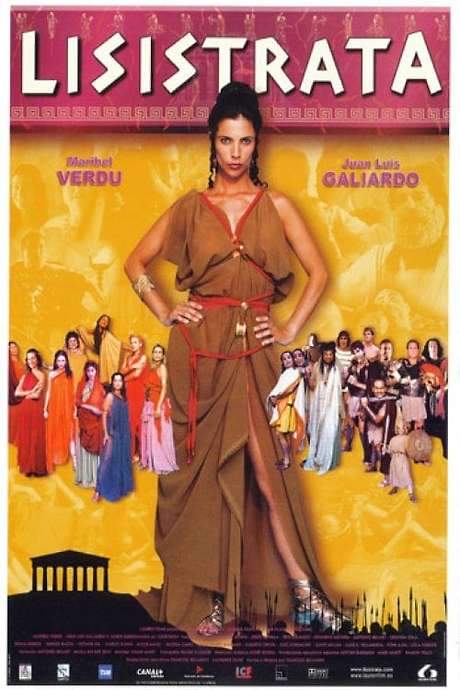
Lisístrata
Year: 2002
Runtime: 89 mins
Language: Spanish
Director: Francesc Bellmunt
In 411 BC, the warring city‑states of Sparta and Athens are locked in an endless conflict. Lisistrata, a strikingly beautiful woman, devises a bold plan: she rallies the women of both sides to withhold sexual relations until the men negotiate peace. Her daring sex strike forces the warriors to confront the cost of war and seek an end to the fighting.
Warning: spoilers below!
Haven’t seen Lisístrata yet? This summary contains major spoilers. Bookmark the page, watch the movie, and come back for the full breakdown. If you're ready, scroll on and relive the story!
Timeline – Lisístrata (2002)
Trace every key event in Lisístrata (2002) with our detailed, chronological timeline. Perfect for unpacking nonlinear stories, spotting hidden connections, and understanding how each scene builds toward the film’s climax. Whether you're revisiting or decoding for the first time, this timeline gives you the full picture.
Last updated: October 09, 2025 at 16:52
Lisístrata (2002) Timeline Questions Answered – Chronology FAQ
Find frequently asked questions about the Lisístrata (2002) timeline, including chronological order, nonlinear jumps, cause-and-effect links, and scene sequence clarifications. This timeline FAQ helps explain when key events happen, how moments connect, and why the story unfolds in that specific order.
Why does Lisístrata organize the sex strike against the men?
Lisístrata rallies the women of Athens and Sparta to withhold sexual relations from their husbands as a strategic maneuver to force peace negotiations. By denying men intimacy, she transforms the political war into a domestic crisis, making continued fighting impossible and forcing the generals to confront the cost of their conflict.
The film establishes early on that the war has dragged on for nearly two decades, creating desperation for any solution.
How does the sex strike affect the military?
The sex strike paralyzes the war machine. Both Athenian and Spartan soldiers suffer from exaggerated erections that prevent them from fighting effectively. This physiological barrier becomes a running visual gag and creates a military stalemate, linking the outcome of the war to private desires.
The women's vow to withhold sex directly targets the soldiers' ability to function in battle.
Who is Hepatitos and what solution does he propose?
Hepatitos is an eccentric figure posing as a medical doctor who emerges to address the crisis. He convinces the generals to allow temporary, circumstantial homosexuality among soldiers as a remedy for sexual pressure. His unorthodox plan eventually leads soldiers to form bonds with each other and even with enemy combatants.
Hepatitos arrives precisely when the military is at its most paralyzed.
What happens when soldiers start forming bonds with enemies?
As the soldiers experiment with new relationships under Hepatitos's plan, some begin forming intimate attachments to members of the opposing side. This blurs the line between friend and foe, shifting the camp atmosphere from martial tension to fragile camaraderie and complicating the war's logic.
The initial experiment was meant to relieve sexual pressure, not create lasting connections.
Why do the women become worried about the outcome?
The women who initiated the strike grow anxious as personal bonds begin weakening the clarity of their political demands. They fear that the pleasure soldiers find in new relationships may derail their hoped-for settlement and create more ambiguity in the peace negotiations.
The women's original plan relied on sexual deprivation as leverage, not alternative satisfaction.
How does peace eventually get achieved?
After a period of negotiation and shifting loyalties driven by the changing relationships among soldiers, the sex strike dissolves and peace is reached. The women's intervention achieves its political goal, though the story suggests the resolution carries complex human costs and ambiguities beyond the simple victory of ending the war.
The buildup of intimate bonds ultimately undermines the clarity of the original demands.
What is the mythic scene where beauty stops a warrior?
The film includes a scene where a radiant beauty halts a warrior from killing, echoing the legend of Achilles and Troilus. This moment demonstrates how aesthetics can override violence and honor in combat, blending Greek myth with the film's satirical tone about the power of beauty over war.
The scene appears during battlefield action and serves as a visual exclamation point on the film's themes.
Why does the film include a replica of the Athena statue?
The life-size replica of Phidian Pallas Athene in the Parthenon grounds the farcical comedy in historical authenticity. It serves as a visual anchor to Greek identity and artistic achievement amid the chaos of the sex strike, providing a contrast between cultural permanence and political absurdity.
The statue appears in the background of key scenes, reinforcing Greek identity.
What does the ending suggest about sexuality?
The conclusion presents heterosexual and homosexual connections as fluid and interchangeable, challenging traditional wartime codes. The boundary between different types of bonds becomes porous, leaving a provocative note about how intimate choices ripple through political structures and reshape societal norms.
The shift in soldier relationships foreshadows this broader reconfiguration of intimacy.
What is the purpose of the exaggerated erections visual gag?
The exaggerated erections serve as a theatrical visual motif drawn from Aristophanes' comedic tradition. It creates a surreal, farcical twist on the battlefield while visually representing how the sex strike literally prevents the men from engaging in warfare, blending crude humor with political commentary.
This visual element appears immediately once the strike begins.

Explore Movie Threads
Discover curated groups of movies connected by mood, themes, and story style. Browse collections built around emotion, atmosphere, and narrative focus to easily find films that match what you feel like watching right now.
Subversive Social Satire Movies like Lisístrata
Outrageous and humorous critiques of society that challenge the status quo.Explore other witty and audacious movies like Lisístrata that use humor as a weapon against societal norms. These films offer a similar blend of sharp political satire and farcical comedy, perfect for viewers who enjoy thought-provoking laughs.

UHF
1989

Delirious
1991
The Hudsucker Proxy
1994
Turnabout
1940

My Big Fat Independent Movie
2005

The Rebel
1961

Blithe Spirit
1945
Keep an Eye Out
2021

Laughing Gravy
1931

Delusions of Grandeur
1971

Never Been Thawed
2005

The Sin of Harold Diddlebock
1947

Laughter in Paradise
1951

Fierce Creatures
1997

The Adventure of Sherlock Holmes’ Smarter Brother
1975
Narrative Summary
The narrative typically involves a bold, unconventional idea or character that disrupts a rigid system. The plot follows the escalating consequences of this disruption, often through absurd cause-and-effect chains, leading to a humorous yet revealing resolution that questions authority.
Why These Movies?
These films are grouped by their shared purpose: to entertain while questioning the establishment through a lens of clever, often bawdy, humor. They share a lighthearted yet pointed approach to serious topics, making social commentary accessible and fun.
Playful Historical Farce Movies similar to Lisístrata
Comedic anachronisms and humorous takes on serious historical settings.If you liked the anachronistic humor and playful ancient Greece setting of Lisístrata, you'll enjoy these other historical farces. Discover movies that share its lighthearted, bawdy, and satirical take on the past.

Bizarre, Bizarre
1937

The Great Garrick
1937

History of the World: Part I
1981

A Funny Thing Happened on the Way to the Forum
1966

The Importance of Being Earnest
1952

Theodora Goes Wild
1936

The Happiest Days of Your Life
1950

A Royal Scandal
1945

For Love and Gold
1966

Carry On Cleo
1964

The Importance of Being Earnest
2011

The Importance of Being Earnest
2018

Love Happy
1949

Lost in a Harem
1944

The Triumph of Love
2002
Narrative Summary
Stories are set in a recognizable historical period but are driven by comedic anachronisms and exaggerated characters. The plot often revolves around a high-concept premise that feels modern, using the historical setting to highlight universal human follies in a fresh, humorous way.
Why These Movies?
These movies are connected by their unique blend of history and humor. They share a specific vibe: taking a serious setting and filling it with playful energy, anachronistic jokes, and a farcical plot, resulting in a consistently light and uplifting comic experience.
Unlock the Full Story of Lisístrata
Don't stop at just watching - explore Lisístrata in full detail. From the complete plot summary and scene-by-scene timeline to character breakdowns, thematic analysis, and a deep dive into the ending - every page helps you truly understand what Lisístrata is all about. Plus, discover what's next after the movie.
Lisístrata Summary
Read a complete plot summary of Lisístrata, including all key story points, character arcs, and turning points. This in-depth recap is ideal for understanding the narrative structure or reviewing what happened in the movie.

Characters, Settings & Themes in Lisístrata
Discover the characters, locations, and core themes that shape Lisístrata. Get insights into symbolic elements, setting significance, and deeper narrative meaning - ideal for thematic analysis and movie breakdowns.


