Plot Explained Spoilers guaranteed!
Plot Explained

Browse by genre

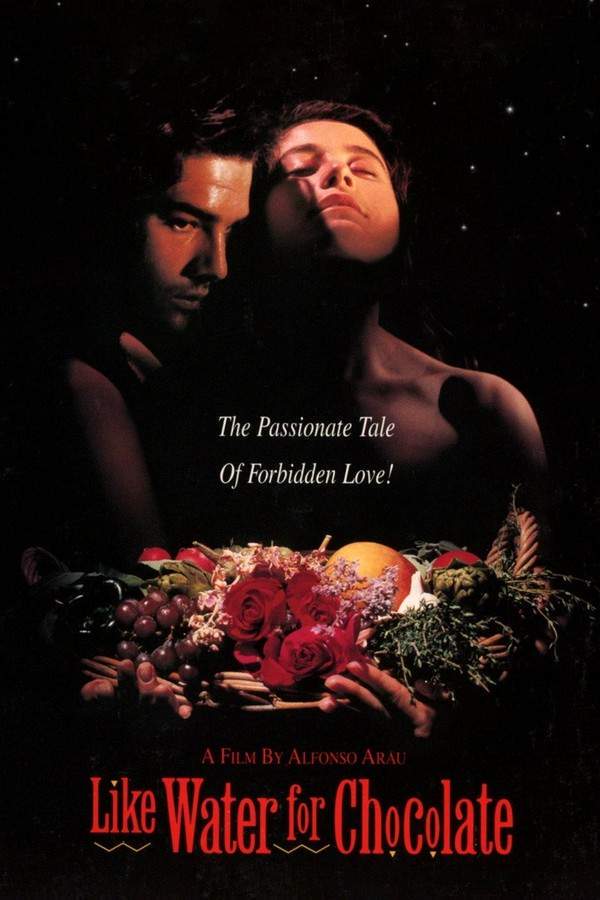
Like Water for Chocolate (1993) movie poster

Plot Summary

Like Water for Chocolate (1993) Plot Summary Explained

Release, runtime and language
1993 · 105 min · Spanish
JustWatch #6,266 4
Starring
Ada Carrasco, Claudette Maillé, Farnesio de Bernal, Joaquín Garrido, Lumi Cavazos, Marco Leonardi

In a family deeply rooted in tradition, Tita’s dreams of marrying Pedro are dashed when she is obliged to remain home and care for her mother. Unable to express her love directly, Tita pours her emotions into her cooking, and those who taste her dishes are strangely affected by her feelings. As the years pass, Pedro marries Tita’s sister, Rosaura, but their longing for each other continues, subtly influencing everyone around them through the evocative power of her recipes.

On this page (6)
  1. 1 Where to watch
  2. 2 What happens: full plot
  3. 3 Plot questions answered
  4. 4 The book behind the movie
  5. 5 Movie threads
  6. 6 Every angle

Where to watch

Where to Watch Like Water for Chocolate (1993)

Where can you watch Like Water for Chocolate? Stream, rent or buy it in the US, including on fuboTV, MGM Plus and Paramount Plus Essential: current JustWatch availability with up-to-date prices.

Streaming availability powered by JustWatch

Full plot summary · contains spoilers

What Happens in Like Water for Chocolate: Full Plot Summary

The whole story of Like Water for Chocolate (1993) explained, from the opening scene to the final frame: every key event, every twist and what it all adds up to. Read it as a quick recap before the sequel, to check a scene you missed, or to finally understand what really happened.

A woman named Tita, played by Lumi Cavazos, finds herself navigating the intricate tapestry of love, family dynamics, and deeply rooted traditions in the early 1900s. As she slices through onions, we are drawn into her poignant story. Tita's mother, Elena, gives birth at the kitchen table with the support of Nacha, the family cook. Shortly after, tragedy strikes when Elena's husband suffers a heart attack after a stranger cruelly reveals an alleged affair, suggesting that the newborn is not his.

Amidst the turmoil, Elena confides in Nacha about her inability to bear more children. It is then proclaimed by family tradition that Tita, being the youngest daughter, must sacrifice her own happiness and remain to care for her mother until her passing, while her sisters, Rosaura and Gertrudis, are free to marry. Under the patient guidance of Nacha, Tita learns to infuse her powerful emotions into her cooking, creating dishes that evoke profound responses.

As time passes, a young man, Pedro Muzquiz, portrayed by Marco Leonardi, arrives, declaring his love for Tita. On her birthday, he visits with his father, Don Pascual Muzquiz. However, Elena offers Rosaura's hand in marriage instead, leaving Tita heartbroken. Pedro, too, feels the heavy weight of his decision, revealing to his father that he only intends to marry Rosaura so he can remain close to Tita. Although Nacha shares this revelation with Tita, her grief clouds her judgment. During the wedding reception, Tita's tears fall into the cake batter, leading to an unexpected reaction among the guests who are overwhelmed by sadness and feelings of lost love. Elena, suspicious of Tita and Pedro, commands her to stay away from him.

As the story unfolds, Rosaura gets pregnant, and Tita is entrusted to care for her son Roberto. But when tragedy strikes and the child dies, Tita's pent-up emotions clash with Elena's oppressive commands, leading to a severe confrontation. Tita finds sanctuary in a dovecote, which symbolizes her inner struggle and need for freedom. Eventually, she is rescued by Dr. John Brown, who nurtures her back to health, and Tita begins a new chapter in her life when she accepts his marriage proposal.

The ensuing chaos sees bandits invade their ranch, leading to further tragedies, including the demise of Elena. Tita inherits her family's burdens as the cycle of family tradition continues. Rosaura gives birth again but becomes unable to have more children, prompting Tita to step in once more. The weight of legacy looms over Tita, particularly when she discovers the trials of her love for Pedro, which have now led to infidelity.

With the return of Gertrudis, now a general, and her husband, the narrative escalates. Tita wrestles with guilt and the expectation of conformity until she ultimately decides to confront her past. However, during a passionate encounter with Pedro, tragedy strikes once more when he succumbs to a heart attack. Heartbroken, Tita tragically ends her own life through an act of self-immolation, igniting the entire property in flames.

In a twist of fate, the story concludes with a young woman, revealing herself as the daughter of Esperanza, recounting the tale of Tita. She discovers Tita's cherished cookbook amid the ashes of a home that was once filled with love and strife, passing down the legacy of her formidable ancestor.
Last updated: November 16, 2024 at 17:53

Was this helpful?

Plot questions answered

Like Water for Chocolate Plot Explained: Your Questions Answered

The questions people ask most about Like Water for Chocolate (1993): what happens in the confusing scenes, why the characters do what they do, the twists, hidden details and what the ending means. Each answer contains spoilers.

Q1

Why is Tita forced to stay unmarried?

Tita is the youngest daughter in her family, and according to family tradition, the youngest daughter must remain unmarried to care for her mother until her mother passes away. This tradition was established after Elena confided to Nacha that she could not have more children, making Tita the one bound to this role of perpetual caretaker.

Foreshadowing: The tradition is introduced immediately after Tita's birth, setting the stage for her lifelong sacrifice.

  • family tradition
  • youngest daughter
  • caring for mother
  • elena
  • nacha
Q2

How does Tita's cooking affect those who eat it?

Tita learned from Nacha to channel her emotions into her cooking. When people eat her food, they experience whatever feelings she had while preparing the dish. Her tears, love, grief, and longing physically transfer to anyone who consumes her cooking, causing profound emotional reactions.

Foreshadowing: Nacha teaches Tita early on that cooking with emotion creates powerful effects.

  • cooking
  • magic
  • emotions
  • food
  • nacha
  • romance
Q3

Why does Pedro marry Rosaura instead of Tita?

Pedro agrees to marry Rosaura because it is the only way he can remain close to Tita. He tells his father that he only wants to marry Rosaura so he can stay on the ranch and be near Tita, whom he truly loves.

Foreshadowing: This decision is revealed during Pedro's visit with his father Don Pascual.

  • pedro
  • rosaura
  • marriage
  • love triangle
  • sacrifice
Q4

What happens when Tita's tears fall into the wedding cake?

During the wedding reception, Tita cries into the cake batter while preparing it. When guests eat the cake, they are overwhelmed by intense sadness and feelings of lost love, causing an emotional outbreak among everyone at the wedding.

Foreshadowing: This moment establishes the magical realism of the film where food carries emotional energy.

  • wedding
  • cake
  • tears
  • sadness
  • magical realism
Q5

Why does Roberto die suddenly?

Roberto dies suddenly while in Tita's care. The exact cause is not explicitly detailed in the summary, but the timing follows a pattern where Tita's intense emotional state (her pent-up grief and frustration) manifests through her proximity, similar to how her cooking affects others.

Foreshadowing: Tita's emotional repression throughout the film builds to this tragic moment.

  • roberto
  • death
  • rosaura's son
  • tragedy
Q6

Why does Tita retreat to the dovecote?

After the confrontation with Elena following Roberto's death, Tita seeks refuge in the dovecote. This acts as a symbol of her inner struggle and desperate need for freedom from the oppressive family expectations that have trapped her life.

Foreshadowing: The dovecote represents confinement and the desire to escape, themes established throughout the film.

  • dovecote
  • escape
  • freedom
  • elena
  • rebellion
Q7

Who is Dr. John Brown and what role does he play?

Dr. John Brown is a doctor who rescues Tita after she becomes ill in the dovecote. He nurses her back to health and eventually proposes marriage to her, offering Tita a chance at a new life and freedom from her family's tradition-bound existence.

Foreshadowing: John Brown represents an alternative future outside of Tita's predetermined role.

  • dr john brown
  • marriage proposal
  • escape
  • new life
Q8

What happens when bandits invade the ranch?

Bandits invade the family ranch, causing chaos and tragedy. During this invasion, Elena dies, which forces Tita to inherit the family burdens and continue the cycle of tradition and sacrifice.

Foreshadowing: The bandits return Tita to the ranch after her time with Dr. John Brown, trapping her back into family obligations.

  • bandits
  • invasion
  • elena's death
  • ranch
  • tragedy
Q9

How does Pedro die at the end?

After years of separation, Pedro and Tita finally reunite. During a passionate intimate encounter, Pedro succumbs to a heart attack and dies, preventing the two lovers from finally being together.

Foreshadowing: The tragedy of their lifelong unfulfilled love reaches its devastating climax.

  • pedro
  • heart attack
  • death
  • love
  • reunion
Q10

Why does Tita set herself on fire?

Overcome by grief after Pedro's sudden death, Tita commits suicide by self-immolation. This final act represents both her inability to live without Pedro and her ultimate bid for freedom from the years of emotional repression and sacrifice imposed by her family tradition.

Foreshadowing: The intense emotional repression throughout the film builds to this tragic release.

  • suicide
  • self-immolation
  • freedom
  • death
  • tragedy
Q11

What is the significance of the cookbook at the end?

After Tita's self-immolation destroys the family home, a young woman (revealed as the daughter of Esperanza) discovers Tita's cherished cookbook among the ashes. This symbolizes the enduring legacy of Tita's love, emotions, and culinary artistry, passing down her story and recipes through generations.

Foreshadowing: The cookbook represents Tita's唯一的表达方式 throughout the film - her emotions channeled through cooking.

  • cookbook
  • legacy
  • ending
  • esperanza
  • recipe book
Q12

Why does Pedro agree to marry Rosaura if he loves Tita?

Pedro accepts marrying Rosaura because he cannot bear to leave the ranch and be away from Tita. By marrying Rosaura, he ensures he can remain close to the woman he truly loves, even if they can never be together.

Foreshadowing: Pedro explains this to his father during the marriage proposal visit.

  • pedro
  • rosaura
  • marriage
  • sacrifice
  • love
Q13

Who is Esperanza and how is she connected to Tita?

Esperanza is Rosaura's daughter. At the end of the film, Esperanza's daughter discovers Tita's cookbook in the ashes of the destroyed home, revealing that Tita's legacy continues through Rosaura's bloodline.

Foreshadowing: The final revelation connects the entire family saga to a new generation.

  • esperanza
  • rosaura
  • daughter
  • legacy
  • family

Movie threads

More Movies Like Like Water for Chocolate, by Mood & Story

Curated lists built around what makes Like Water for Chocolate tick: the same mood, the same kind of story or the same emotional payoff. Each list explains why these movies belong together.

Movies Where Cooking is a Love Language like in Like Water for Chocolate

Stories where food becomes the secret, sensual expression of repressed desire. For fans of movies like *Like Water for Chocolate* that explore love and emotion through the art of cooking. This section features similar films where food becomes a powerful, sensual metaphor for repressed passion, family legacy, and the unspoken bonds formed in the kitchen.

  • sensual
  • passionate
  • melancholic
  • longing
  • magical realism
  • emotional
  • Tone: passionate, melancholic, sensual
  • Pacing: steady, deliberate
Why these movies?

The story pattern: Narratives in this thread often revolve around characters who are emotionally restrained by societal or familial expectations. Their true feelings—especially passionate or forbidden love—find a physical and creative outlet in cooking. The food they create literally or symbolically carries their emotions, influencing the plot and other characters, often leading to dramatic revelations or cathartic moments centered around a shared meal or a secret recipe.

Why they belong together: These films are grouped by their unique use of culinary arts as a narrative device. They share a focus on sensuality, emotional repression, and the transformative power of food, creating a distinct atmosphere that blends the mundane with the deeply emotional or magical.

Tragic Melodramas About Oppressive Family Duty like Like Water for Chocolate

Heart-wrenching stories of sacrifice and longing under the weight of tradition. If you were moved by the heavy emotional weight and tragic love story in *Like Water for Chocolate*, explore these films. Discover similar movies about characters crushed by family obligation, featuring bittersweet endings, intense longing, and the high cost of sacrificing personal passion for tradition.

  • tragic
  • melancholic
  • oppressive
  • longing
  • heavy
  • dramatic
  • Tone: melancholic, tragic, oppressive
  • Pacing: steady, deliberate
Why these movies?

The story pattern: The narrative pattern follows a protagonist, usually a woman, whose life path is dictated by uncompromising family rules. Their deepest wish—typically for love and autonomy—is denied, forcing them into a state of emotional repression. The story unfolds over years, building a sense of inevitable tragedy as their suppressed feelings create ripple effects of suffering, infidelity, and loss for everyone around them, culminating in a bittersweet or deeply sad conclusion.

Why they belong together: These movies share a core theme of the individual versus the family unit, characterized by a melancholic tone, high emotional intensity, and a steady pacing that allows the tragedy to unfold with profound weight. They are united by their exploration of generational trauma, sacrifice, and the destructive power of unyielding tradition.

Every angle

Like Water for Chocolate (1993) Explained: Plot, Timeline & Characters

Everything about Like Water for Chocolate in one place: what happens in the plot summary, the timeline in chronological order, the characters and meaning and a spoiler-free summary. What's After the Movie adds the cast, box office and post-credit scenes.

Coming soon on iOS and Android

The Plot Explained Movie Summary App

Plot summaries, endings explained and timelines on your phone. Catch up on any movie in minutes, save your favorites and never miss a twist again.

Be the first to know when we launch. Your email stays private, always.

Learn more about the app