Plot Explained Spoilers guaranteed!
Plot Explained

Browse by genre

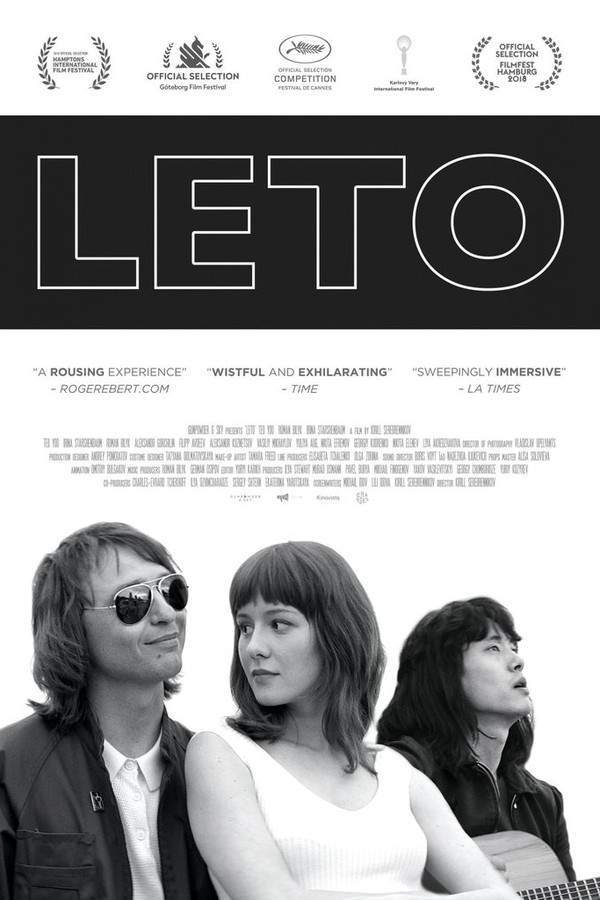
Leto (2019) movie poster

Timeline

Leto (2019) Timeline Explained – Every Event in Order

Release, runtime and language
2019 · 126 min · Russian
Echo score 70
Loading streaming availability…
Directed by
Kirill Serebrennikov
Starring
Teo Yoo, Yuliya Aug, Anton Adasinsky, Aleksandr Bashirov, Aleksandr Gorchilin, Aleksandr Kuznetsov
Budget
$150K

During the 1980s in Leningrad, a burgeoning cultural movement challenges the status quo. This film follows Mike and Natasha as they navigate a world of underground music, discovering the subversive power of rock and roll alongside Viktor Tsoï and his band. They risk everything to share forbidden music, smuggling records by artists like Lou Reed and David Bowie during the tense pre-Perestroika era, and experiencing the transformative power of artistic expression.

On this page (6)
  1. 1 Where to watch
  2. 2 Events in order (12)
  3. 3 Timeline questions answered
  4. 4 Movie threads
  5. 5 Movies like Leto
  6. 6 Every angle
Loading streaming availability…

12 events in order · contains spoilers

Leto Timeline: Events in Chronological Order

Every key event of Leto (2019) in order, scene by scene, with when and where it takes place. Use it to untangle flashbacks, time jumps and parallel storylines, to refresh your memory before the sequel or to find the exact scene you are thinking of.

  1. Summer in Leningrad: Introduction to the trio

    In the summer of 1981 in Leningrad, Viktor Tsoi, Mike Naumenko, and Natalia become the film's central trio. Viktor is a quiet young man with a knack for melody, while Mike fronts a popular club band and Natalia is his girlfriend. The story centers on their evolving relationships and sets the stage for the city's precarious rock scene.

    When
    Summer 1981
    Where
    Leningrad
  2. Leningrad Rock Club: a rare stage for rebellion

    The Leningrad Rock Club is one of the few state-permitted venues where boundary-pushing rock can be performed. The audience is encouraged to sit politely and listen, but the performances push against that constraint. Narrator Skeptic periodically reframes the club as extravagant and dangerous, adding a larger-than-life aura.

    When
    Summer 1981
    Where
    Leningrad Rock Club
  3. Mike's band and Natalia: a closed start

    Mike's band is popular in the club circuit, and his relationship with Natalia begins as deeply monogamous. Natalia starts noticing Viktor's melancholic magic and unusual lyrical phrasing, which hints at his growing importance. The film slowly redirects its focus toward Viktor.

    When
    Summer 1981
    Where
    Leningrad
  4. Viktor's talent emerges

    Viktor's talent, melodies, and lyrics hint at a future stardom that could transform the scene. Natalia's perception of him deepens, complicating the trio's dynamics. The film begins to reframe the story around Viktor's emergence rather than Mike's established path.

    When
    Summer 1981
    Where
    Leningrad
  5. Recording Kino's first album, 45

    The production of Kino's first album, 45, unfolds within studio sessions amid the club's frenetic energy. The process brings the band together, contrasting frugal living with bursts of creative output. These sessions become a touchstone for Viktor's rising profile.

    When
    Summer 1981
    Where
    Studio (Leningrad)
  6. Diegetic performances and stylized sequences

    The film's musical numbers alternate between diegetic performances and stylized music-video sequences. In one memorable moment, a train confrontation among musicians escalates into a surreal, cartoonish singalong to Talking Heads' Psycho Killer.

    When
    Summer 1981
    Where
    On a packed train
  7. The club as frugal cradle of creativity

    The musicians live frugally, focusing on art rather than material wealth. The club serves as a crucible for experimentation and audience-facing moments, where boundaries are tested and ideas spread. This atmosphere defines the era's creative drive.

    When
    Summer 1981
    Where
    Leningrad Rock Club
  8. Skeptic's navigational frame

    The film's narration by Skeptic situates events within a frame that can be read as exaggerated, hedonistic, and dangerous. This meta commentary invites the audience to question what is real and what is stylized. The Skeptic's perspective colors the entire depiction of the club and its heroes.

    When
    Throughout the film
  9. Viktor's rising prominence overshadows Mike

    As Viktor's profile rises, the focus shifts from Mike's career to Viktor's ascent, altering group dynamics and loyalties. The film shows Viktor receiving attention from audiences and peers, signaling a turning point for the band and the scene.

    When
    Summer 1981
    Where
    Leningrad
  10. Shifting love triangle and ambitions

    Natalia's growing fascination with Viktor further complicates the relationships within the trio. Mike's position as frontman clashes with Viktor's emergence, triggering emotional tensions behind the music. The interplay between love and artistic ambition drives the narrative forward.

    When
    Summer 1981
    Where
    Leningrad
  11. Recording wrap and bit of triumph

    Late-summer sees Kino's 45 nearing completion, with the band's sound solidifying into a signature of the era. The group manages to capture the raw energy of Leningrad's scene in the studio while navigating bureaucratic constraints. The moment marks a tangible milestone in the film's arc.

    When
    Late Summer 1981
    Where
    Studio (Leningrad)
  12. Coda: history vs cinema

    The film closes with reflections on the blurred line between historical fact and cinematic fantasy. The Skeptic narrator and explicit caveats remind the audience that many sequences are stylized or hypothetical, inviting interpretation rather than strict chronology.

    When
    End of Summer 1981

Last updated: January 28, 2026 at 12:45

Was this helpful?

Timeline questions answered

Leto Timeline Explained: Your Questions Answered

When does it happen, and why in that order? The questions people ask about the chronology of Leto (2019): time jumps, flashbacks, cause and effect between scenes and the correct order of events, each answered with spoilers.

Q1

Why does the film shift its focus from Mike to Viktor?

The film gradually redirects its focus toward Viktor because his talent represents the future of Leningrad's rock scene. While Mike is an established frontman, Viktor's gift for melody and beguiling lyrics hints at a stardom that could transform the entire movement. Natalia is the first to notice Viktor's melancholic magic, and as his profile rises throughout the summer of 1981, the narrative naturally follows his ascent, even as it maintains the trio's emotional tension.

Foreshadowing: Early in the film, Natalia notices Viktor's unusual lyrical phrasing, foreshadowing her growing fascination with him.

  • Viktor Tsoi
  • Mike Naumenko
  • focus shift
  • rock scene
  • stardom
Q2

Who is the Skeptic narrator and what is his purpose?

The Skeptic is an omniscient narrator portrayed by Aleksandr Kuznetsov who periodically interjects throughout the film. He frames the Leningrad Rock Club as extravagant, hedonistic, reckless, and dangerous, adding a charged, larger-than-life tension to each performance. His commentary serves as a meta-layer that invites the audience to question what is real and what is stylized, reinforcing the film's theme that many scenes are exaggerated or fictionalized retellings of history.

Foreshadowing: The Skeptic's navigational frame appears throughout the film, establishing early that this is a subjective, possibly embellished account.

  • Skeptic
  • narrator
  • Aleksandr Kuznetsov
  • Leningrad Rock Club
  • meta commentary
Q3

Why does Natalia become drawn to Viktor instead of staying with Mike?

Natalia is the first to notice Viktor's melancholic magic and unusual lyrical phrasing, which represents something different from Mike's established rock star persona. Viktor's quiet, otherworldly quality and his gift for melody represent a fresh artistic vision that contrasts with Mike's more conventional path. Her growing fascination with Viktor complicates the trio's dynamics, driven by both emotional connection and artistic appreciation.

Foreshadowing: The summary notes that Natalia starts noticing Viktor's melancholic magic early, hinting at the developing attraction.

  • Natalia
  • Viktor
  • Mike
  • love triangle
  • attraction
Q4

What does it mean when captions say scenes "didn't really happen"?

Throughout the film, captions explicitly note that many sequences are stylized or hypothetical. This device acknowledges the blurred line between historical fact and cinematic fantasy, reminding viewers that the film is not a strict documentary but a stylized interpretation of the Leningrad rock scene. The Skeptic's perspective colors the entire depiction, inviting interpretation rather than strict chronology.

Foreshadowing: The film establishes early on that the Skeptic's frame presents events as exaggerated, hedonistic, and dangerous.

  • this didn't really happen
  • historical accuracy
  • fictionalized scenes
  • documentary vs drama
Q5

What is the significance of the train Psycho Killer sequence?

The train sequence represents a key stylistic choice where a realist altercation between musicians and conservative citizens escalates into a surreal, carriage-traversing singalong of Talking Heads' Psycho Killer. The scene transitions from documentary-style imagery to early-MTV-style cartoon flourishes, showcasing the film's blend of historical narrative and music-video fantasy.

Foreshadowing: The film consistently alternates between diegetic stage performances and stylized lyrical flights, preparing viewers for this fusion.

  • train
  • Psycho Killer
  • Talking Heads
  • musical sequence
  • surrealism
Q6

What was the Leningrad Rock Club and why was it important?

The Leningrad Rock Club was one of the few state-permitted venues where boundary-pushing rock music could be performed in the Soviet Union. Despite official rules requiring audiences to sit politely and listen rather than mosh, the club became a crucible for artistic experimentation. It represented a rare space where underground music could be shared, challenging the status quo during the tense pre-Perestroika era.

Foreshadowing: The timeline establishes the Rock Club as a central location from the very beginning.

  • Leningrad Rock Club
  • Soviet Union
  • rock music
  • underground scene
  • venue
Q7

What is Kino's album 45 and why does it matter?

Album 45 was Kino's first studio album, recorded during the summer of 1981. The production unfolds within studio sessions amid the club's frenetic energy, bringing the band together and contrasting frugal living with creative output. The sessions mark a tangible milestone in Viktor's rising profile and represent the raw energy of Leningrad's scene being captured for posterity.

Foreshadowing: The timeline shows the recording as a key turning point that solidifies the band's sound.

  • Kino
  • album 45
  • recording
  • studio
  • Viktor Tsoi
  • band
Q8

Why was underground rock music dangerous in 1981 Leningrad?

During the pre-Perestroika era in the Soviet Union, rock music was viewed as subversive and politically charged. Musicians risked persecution for sharing forbidden music from Western artists like Lou Reed and David Bowie. The Leningrad Rock Club existed in a precarious position as a state-permitted venue, allowing musicians to perform but still operating under bureaucratic constraints and surveillance.

Foreshadowing: The description establishes the historical context of the tense pre-Perestroika era from the beginning.

  • underground music
  • Soviet Union
  • persecution
  • forbidden music
  • Perestroika
  • risk
Q9

What makes Viktor's talent different from the other musicians?

Viktor is described as having a quiet, almost otherworldly magnetism with a gift for melody and beguiling turn of phrase. His melancholic magic and unusual lyrical phrasing set him apart from more conventional rock performers. This talent hints at his future stardom and the transformation he would bring to Leningrad's rock scene, eventually making Kino one of the most influential bands in Soviet history.

Foreshadowing: Early scenes establish Viktor's unusual lyrical phrasing as something distinct from Mike's established style.

  • Viktor Tsoi
  • talent
  • melody
  • lyrics
  • uniqueness
  • Kino
Q10

What is the film's ending trying to say about history?

The film closes with explicit reflections on the blurred line between historical fact and cinematic fantasy. Through the Skeptic narrator and explicit caveats noting that many sequences didn't really happen, the film invites viewers to interpret rather than accept a strict chronological account. The ending feels hopeful due to the transformative power of the artists' success, but leaves room for questioning what is authentic versus embellished.

Foreshadowing: The Skeptic's frame established early on that events are being presented through a subjective, possibly exaggerated lens.

  • ending
  • history vs cinema
  • fact vs fiction
  • interpretation
  • conclusion

Movie threads

More Movies Like Leto, by Mood & Story

Curated lists built around what makes Leto tick: the same mood, the same kind of story or the same emotional payoff. Each list explains why these movies belong together.

Movies about artistic rebellion like Leto

The liberating power of creativity against a backdrop of societal constraints. For viewers who enjoyed Leto, this section highlights movies that capture the defiant spirit of artists. Discover similar films about musicians, painters, and writers using their art to challenge authority and find personal freedom, often set against tense political climates.

  • rebellious
  • transformative
  • nostalgic
  • yearning
  • underground
  • atmospheric
  • Tone: melancholic, rebellious, hopeful
  • Pacing: steady, reflective
Why these movies?

The story pattern: The narrative arc follows a protagonist or group discovering a forbidden art form, forming a community around it, and confronting authority figures. The central conflict is between the desire for authentic expression and the constraints of the system they live in, leading to acts of quiet or overt defiance.

Why they belong together: Movies are grouped here for their shared focus on art as an act of resistance. They mix the personal journey of artistic discovery with the political tension of challenging the status quo, creating a unique blend of creative passion and societal critique.


Dreamlike coming-of-age stories similar to Leto

Bittersweet stories of youth defined by nostalgia and transformative relationships. If you liked the nostalgic and yearning vibe of Leto, explore these movies. They share a focus on young characters discovering themselves through art, friendship, and love triangles, all wrapped in a melancholic and atmospheric mood that captures a specific time and place.

  • nostalgic
  • dreamlike
  • yearning
  • coming of age
  • atmospheric
  • subdued
  • Tone: nostalgic, melancholic, dreamlike
  • Pacing: steady, atmospheric
Why these movies?

The story pattern: Stories unfold through the protagonist's subjective experience, often using stylistic flourishes to convey their inner world. The plot revolves around self-discovery, complicated friendships, and romantic entanglements that shape their identity. The ending is often hopeful but tinged with the melancholy of change.

Why they belong together: These films are connected by their specific emotional palette: a dreamlike, nostalgic mood combined with the bittersweet process of growing up. They balance melancholic yearning with the transformative energy of youth, creating a deeply atmospheric and reflective viewing experience.

If you liked this

Movies Like Leto

Similar movies to Leto: the same genre, themes or kind of story. Each one comes with its own plot summary, timeline and ending explained.

Browse all movie summaries

Every angle

Leto (2019) Explained: Plot, Timeline & Characters

Everything about Leto in one place: what happens in the plot summary, the timeline in chronological order, the characters and meaning and a spoiler-free summary. What's After the Movie adds the cast, box office and post-credit scenes.

Coming soon on iOS and Android

The Plot Explained Movie Summary App

Plot summaries, endings explained and timelines on your phone. Catch up on any movie in minutes, save your favorites and never miss a twist again.

Be the first to know when we launch. Your email stays private, always.

Learn more about the app