Plot Explained Spoilers guaranteed!
Plot Explained

Browse by genre

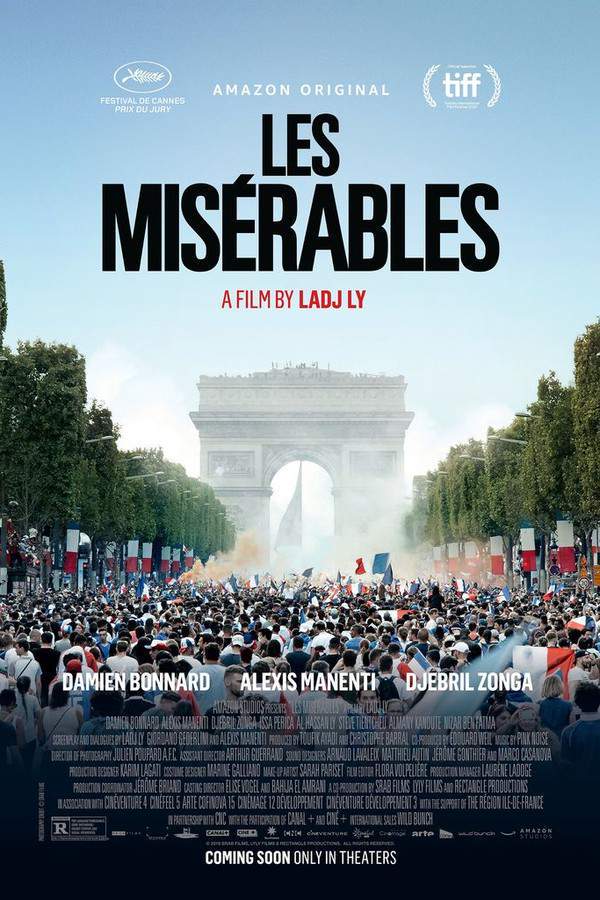
Les Misérables (2020) movie poster

Characters & Themes

Les Misérables (2020) Characters, Setting & Themes Explained

Release, runtime and language
2020 · 102 min · French
Echo score 80
Loading streaming availability…
Directed by
Ladj Ly
Starring
Damien Bonnard, Jeanne Balibar, Alexis Manenti, Djibril Zonga
Budget
$2.1M

In the Parisian suburbs, a newly arrived officer named Stephane joins a local police brigade in Montfermeil. He quickly finds himself caught between rival neighborhoods and complex relationships with his colleagues, Chris and Gwada. A seemingly simple arrest escalates into a tense situation, further complicated by the constant surveillance of a drone, revealing the fragility of order and the simmering tensions within the community.

On this page (7)
  1. 1 Where to watch
  2. 2 Characters explained (3)
  3. 3 Where & when it takes place
  4. 4 Themes & meaning (3)
  5. 5 Character & meaning questions
  6. 6 Movie threads
  7. 7 Every angle
Loading streaming availability…

3 main characters · contains spoilers

Les Misérables Characters Explained: Who Is Who

The main characters of Les Misérables (2020), heroes and villains: what drives them, how they change over the course of the story and what each of them reveals about the film's bigger ideas.

  • Stéphane Ruiz

    played by Damien Bonnard

    Stéphane Ruiz is a newly assigned police officer navigating the challenging dynamics of law enforcement in Paris. He grapples with feelings of discomfort regarding his partners' aggressive tactics yet often finds himself conflicted instead of taking a definitive stand. His character embodies the struggle between upholding the law and recognizing the complexities of the community.

    • 👮‍♂️ Officer
    • 🤔 Conflicted
    • 🌍 Newcomer
  • Chris

    played by Alexis Manenti

    Chris serves as the squad leader within the police unit, displaying aggressive tendencies toward the local youth. As a character, he reflects the tensions between authority and rebellion, often prioritizing power over empathy. His flawed approach to policing reveals the struggles faced by those in positions of authority amid socio-economic pressures.

    • 👮‍♂️ Leader
    • 🔥 Aggressive
    • 💔 Flawed
  • Gwada

    played by Djibril Zonga

    Gwada is a brigadier who often turns a blind eye to Chris's misconduct, showcasing a lack of moral integrity in his role. His character represents the systemic issues within law enforcement, where personal stress and professional duties collide, leading to reckless decisions. This inner turmoil compels him to navigate the dangerous waters of guilt and denial.

    • 👮‍♂️ Brigadier
    • 😟 Indifferent
    • ⚠️ Systemic Issues

Last updated: October 22, 2024 at 19:05

Was this helpful?

Setting

Where and When Does Les Misérables Take Place?

The setting of Les Misérables (2020): the year and time period, the places and locations, and how they shape the characters, the mood and the tension of the story.

Time period

2018

Taking place in 2018, the film echoes a time of both national pride and social unrest in France. Coinciding with the celebration of the French national football team's World Cup victory, underlying tensions between law enforcement and marginalized communities reveal a deeper narrative of struggle and survival. The year becomes a pivotal moment reflecting societal issues present during this period.

Location

Paris, Montfermeil

The film is set against the backdrop of Paris, a city known for its rich history, culture, and vibrant street life. Montfermeil, a nearby suburb, represents a more complex urban reality where social tensions and conflicts often surface. The contrasting environments highlight the dynamics of class and ethnicity within contemporary France.

  • 🌍 City
  • 🏙️ Urban
  • 🚧 Crime

Last updated: October 22, 2024 at 19:05

Was this helpful?

3 major themes

Les Misérables Meaning: Themes & Message Explained

What is Les Misérables (2020) really about? The emotional, social and philosophical themes the film keeps returning to, its symbolism and the message beneath the surface.

  • Justice

    The theme of justice permeates the story, exploring the moral dilemmas faced by law enforcement. As the characters confront the consequences of their actions, the film questions the integrity of the justice system when juxtaposed with social inequality. It raises critical discussions about accountability, authority, and the true meaning of justice in a fractured society.

  • Violence

    Violence is a recurring element that showcases the volatile relationship between the police and the community. The film presents raw and intense moments where aggression and retaliation spiral out of control, ultimately affecting all parties involved. This theme serves as a critique of how societal conditions can breed cycles of violence.

  • Community

    Community ties play a crucial role in the narrative, highlighting the complexities of familial and social bonds. As characters navigate precarious alliances and conflicts, the sense of community is both a source of strength and a catalyst for tension. The film reflects on how different backgrounds and experiences shape relationships and responses to conflict.

Last updated: October 22, 2024 at 19:05

Was this helpful?

Character & theme questions

Les Misérables Characters & Meaning: Your Questions Answered

The questions people ask about Les Misérables (2020): who the characters really are, their relationships, what the symbols mean, where it takes place and what the movie is really about. Each answer contains spoilers.

Q1

Where is the movie set?

The film takes place in Montfermeil, a suburb located in the northeastern outskirts of Paris. This area is known for its urban challenges and social tensions, serving as a microcosm of contemporary French society. The story primarily unfolds within this working-class neighborhood, contrasting with the nearby French capital.

  • montfermeil
  • paris suburb
  • setting
  • location
  • france
Q2

When does the story take place?

The movie is set in 2018, during a significant moment in contemporary French history. This timing coincides with France's World Cup victory, a time of national celebration that contrasts sharply with the underlying social tensions depicted in the film. The year 2018 serves as a backdrop to explore ongoing issues between law enforcement and marginalized communities.

  • 2018
  • time period
  • france
  • world cup
  • contemporary
Q3

What are the main themes?

The film explores three interconnected themes: justice, violence, and community. Justice examines the moral dilemmas facing law enforcement and questions the integrity of the system when confronted with social inequality. Violence portrays the volatile cycle between police and residents, showing how aggression escalates on all sides. Community highlights the complex bonds between people in the neighborhood, serving as both a source of support and a trigger for conflict.

  • justice
  • violence
  • community
  • themes
  • social issues
Q4

Who is Stéphane and what is his role?

Stéphane Ruiz is a newly assigned police officer who joins the local brigade in Montfermeil. As the protagonist, he represents an outsider trying to navigate the complicated dynamics of law enforcement in a tense urban environment. He struggles with discomfort over his partners' aggressive tactics but often remains conflicted rather than taking a definitive stand, embodying the moral ambiguity of the police force.

  • stéphane ruiz
  • main character
  • police officer
  • new recruit
Q5

Who is Chris and what does he represent?

Chris serves as the squad leader of the police unit, characterized by his aggressive approach toward local youth. He reflects the broader tensions between authority and rebellion, often prioritizing displays of power over empathy. His character illustrates how systemic pressures and personal insecurities can shape those in positions of authority into becoming part of the problem rather than the solution.

  • chris
  • squad leader
  • police
  • aggression
  • authority
Q6

Who is Gwada and what is his role?

Gwada is a brigadier within the police unit who frequently overlooks Chris's misconduct. His character represents the systemic issues within law enforcement, where peer pressure and personal self-interest lead to moral compromise. He embodies the choices many officers face between speaking out against injustice or staying silent to protect themselves.

  • gwada
  • brigadier
  • police
  • misconduct
  • complicity
Q7

How does the movie portray the police?

The film presents a critical portrayal of French law enforcement, showing the complex and often troubled relationship between police and marginalized communities. Through Stéphane's internal conflict and the aggressive tactics of his partners, the movie questions police integrity and accountability. It highlights how systemic issues within the force contribute to cycles of violence and distrust.

  • police
  • law enforcement
  • france
  • corruption
  • accountability
Q8

What does the title refer to?

The title references Victor Hugo's famous novel and draws a parallel between the struggles of 19th-century Paris and contemporary French society. Like Hugo's work, the film examines poverty, social injustice, and the treatment of marginalized people. The ending features a Victor Hugo quote that reinforces this connection, suggesting the cycle of struggle continues in modern France.

  • title
  • victor hugo
  • les misérables
  • reference
  • literary
Q9

What is Montfermeil like as a setting?

Montfermeil is portrayed as a working-class suburb with significant social tensions between residents and law enforcement. The film highlights its urban challenges, including crime, poverty, and the complex dynamics between different ethnic and social groups. The neighborhood serves as both a character in the film and a symbol of broader French social issues.

  • montfermeil
  • suburb
  • urban
  • working class
  • neighborhood
Q10

What social issues does the film address?

The film addresses systemic issues including police brutality, social inequality, and the strained relationship between law enforcement and marginalized communities in France. It explores how poverty, ethnicity, and social class create divisions that perpetuate cycles of violence and injustice. The movie does not offer easy answers, instead presenting a raw depiction of these ongoing tensions.

  • social issues
  • inequality
  • police brutality
  • class
  • france
Q11

What is the overall tone and atmosphere of the film?

The film maintains a consistently tense and anxious atmosphere throughout, driven by the ever-present threat of violence and the oppressive power dynamics between police and the community. The narrative moves quickly from tension to escalation, creating a feeling of instability and unpredictability. This tone reflects the high stakes and emotional weight of the subject matter.

  • tone
  • atmosphere
  • tension
  • anxiety
  • atmosphere

Movie threads

More Movies Like Les Misérables, by Mood & Story

Curated lists built around what makes Les Misérables tick: the same mood, the same kind of story or the same emotional payoff. Each list explains why these movies belong together.

Movies about a single-day urban crisis like Les Misérables

Stories where a city's tensions explode over one frantic, relentless day. If you liked the fast-paced, single-day collapse of order in Les Misérables, explore these movies. They feature similar urgent stories of community tension and police conflict erupting over a short, intense timeframe, creating a gripping and anxious viewing experience.

  • urgent
  • chaotic
  • frenetic
  • gritty
  • anxious
  • unsettling
  • Tone: tense, chaotic, bleak
  • Pacing: fast, relentless, urgent
Why these movies?

The story pattern: Narratives in this thread typically follow a linear, escalating structure, beginning with a minor incident that rapidly spirals into a major confrontation. The focus is on the collective experience of a neighborhood or institution under extreme stress, often told from multiple perspectives to highlight the systemic nature of the conflict.

Why they belong together: Movies are grouped here for their shared high-intensity, fast-paced structure that unfolds almost in real-time, their gritty depiction of urban social fractures, and their focus on the explosive consequences of systemic pressure on a single, fateful day.

Movies about moral ambiguity in law enforcement like Les Misérables

Stories of police officers trapped in ethically gray and violent systems. For viewers who appreciated the complex portrayal of police ethics in Les Misérables, this list features similar gritty dramas. These movies delve into the heavy moral conflicts faced by officers within corrupt or violent systems, offering tense and thought-provoking stories.

  • gritty
  • tense
  • unsettling
  • oppressive
  • heavy
  • moral conflict
  • Tone: tense, bleak, unsettling
  • Pacing: steady to fast, driven by conflict
Why these movies?

The story pattern: The typical journey follows a law enforcement protagonist, often a newcomer or an idealist, who becomes ensnared in a situation that challenges their morals. The plot forces them to confront the brutality and failure of the system they represent, leading to a crisis of conscience and an ending that offers no easy resolutions.

Why they belong together: These films are connected by their deep exploration of police brutality, systemic failure, and the heavy moral burden carried by their characters. They share a tense, gritty tone, high emotional weight, and often conclude with ambiguous or bleak endings that reflect the complexity of the issues.

Every angle

Les Misérables (2020) Explained: Plot, Timeline & Characters

Everything about Les Misérables in one place: what happens in the plot summary, the timeline in chronological order, the characters and meaning and a spoiler-free summary. What's After the Movie adds the cast, box office and post-credit scenes.

Coming soon on iOS and Android

The Plot Explained Movie Summary App

Plot summaries, endings explained and timelines on your phone. Catch up on any movie in minutes, save your favorites and never miss a twist again.

Be the first to know when we launch. Your email stays private, always.

Learn more about the app