Plot Explained Spoilers guaranteed!
Plot Explained

Browse by genre

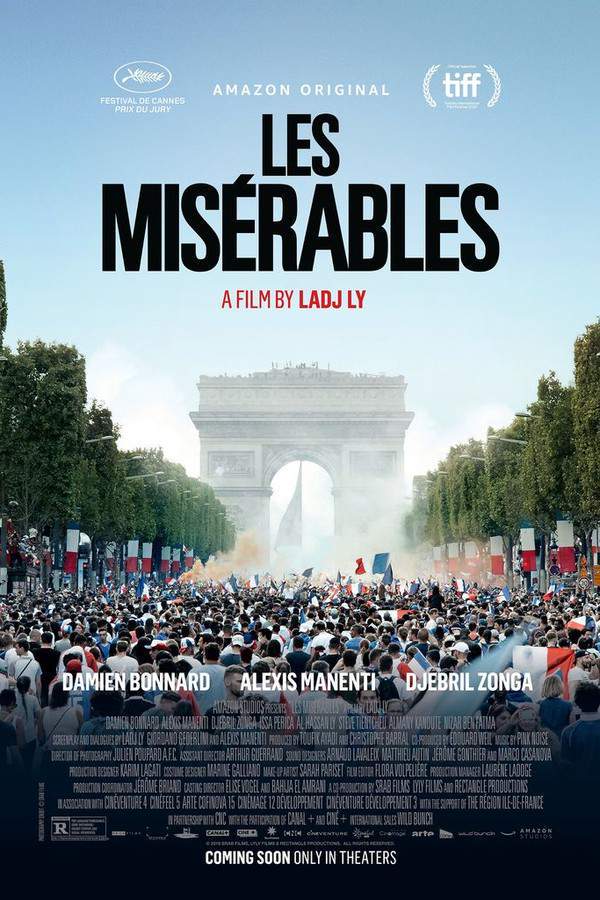
Les Misérables (2020) movie poster

Plot Summary

Les Misérables (2020) Plot Summary Explained

Release, runtime and language
2020 · 102 min · French
Echo score 80
Loading streaming availability…
Directed by
Ladj Ly
Starring
Damien Bonnard, Jeanne Balibar, Alexis Manenti, Djibril Zonga
Budget
$2.1M

In the Parisian suburbs, a newly arrived officer named Stephane joins a local police brigade in Montfermeil. He quickly finds himself caught between rival neighborhoods and complex relationships with his colleagues, Chris and Gwada. A seemingly simple arrest escalates into a tense situation, further complicated by the constant surveillance of a drone, revealing the fragility of order and the simmering tensions within the community.

On this page (5)
  1. 1 Where to watch
  2. 2 What happens: full plot
  3. 3 Plot questions answered
  4. 4 Movie threads
  5. 5 Every angle
Loading streaming availability…

Full plot summary · contains spoilers

What Happens in Les Misérables: Full Plot Summary

The whole story of Les Misérables (2020) explained, from the opening scene to the final frame: every key event, every twist and what it all adds up to. Read it as a quick recap before the sequel, to check a scene you missed, or to finally understand what really happened.

The film opens with vibrant scenes of crowds in Paris joyously celebrating the French team's victory in the 2018 FIFA World Cup along the iconic Avenue des Champs-Élysées. This festive moment is depicted as a symbol of unity among diverse social classes and ethnicities within France. Shortly thereafter, we are introduced to Stéphane Ruiz (Damien Bonnard), a police officer fresh to Paris who has recently joined the anti-crime brigade. He finds himself partnered with squad leader Chris (Alexis Manenti) and brigadier Gwada (Djibril Zonga) as they embark on their duties in the neighboring city of Montfermeil.

Chris tends to wield his power aggressively against local youths, while Gwada turns a blind eye to this misconduct; despite feeling discomfort, Stéphane remains apathetic. Meanwhile, Issa, a notorious juvenile delinquent, steals Johnny, a lion cub belonging to a circus, inciting the owner, Zorro, to seek aid from a man referred to as "the Mayor." Zorro threatens to procure firearms if Johnny isn't returned. Chris and his team are then assigned the task of finding the stolen cub.

When Issa's friends upload a photo of him with the stolen cub on Instagram, it inadvertently leads Chris to identify Issa as the thief. A chase ensues, and they manage to capture him. As they try to take him in, Issa claims the cub has escaped. Tensions rise as Issa's friends launch an attack, hurling objects to prevent his capture. In a chaotic moment, Gwada accidentally teargasses himself and retaliates by shooting Issa in the face with a flash-ball. Although Issa’s friends scatter, the squad soon realizes they have been recorded by an escaping drone. Stéphane insists they should rush Issa to the hospital, but Chris and Gwada dismiss this notion, insisting they focus on locating the drone's owner.

The trio visits a local contact of Chris's, leaving Issa in their care while they pursue leads about Buzz, the teen drone owner. They corner Buzz before he can upload the footage, but he escapes, seeking refuge with Salah, a pivotal figure in the local Islamic community. As the squad and the Mayor converge on Salah's restaurant, a confrontation ignites when Chris attempts an illegal arrest on Buzz. In a moment of negotiation, Stéphane persuades Salah to hand over the drone's memory card, claiming the shooting was merely an accident.

After retrieving both Issa and the cub, who is fortuitously near them, they are taken back to Zorro. Although they force Issa to apologize, Zorro's wayward decision almost results in the two being locked inside a cage with a fully grown lion, which frightens Issa deeply. Stéphane's instinct prompts him to ready his weapon at the lion, but he ultimately chooses restraint. Recognizing that Issa has absorbed a crucial lesson, Chris drops him off, cautioning him to keep the incident under wraps and to attribute his injuries to a fall.

As the day comes to a close, our protagonists seemingly resume their normal lives, but signs of trauma and confusion are present. Issa, abandoned by his father for his behavior, finds himself alone on a dilapidated couch, haunted by the day's events. Later, Stéphane confronts Gwada at a bar, revealing his awareness that a flash-ball doesn't discharge accidentally. Gwada, deflecting blame, attributes his actions to the overwhelming stress of the day, but Stéphane, unconvinced, leaves him with the memory card and advises him to "do what you gotta do."

The following day, while on patrol, the squad is ambushed by a group led by Issa. As they chase them, they fall into a carefully laid trap and find themselves besieged by a larger number of teens, forced into a desperate struggle for survival. Chris suffers an injury from a flying bottle, and any chance of calling for backup crumbles as their vehicle is destroyed by the attackers. The chaos escalates as they even launch an assault on the Mayor's office, culminating in him being beaten and thrown down stairs.

In a tense moment, Stéphane pleads for help at the closest door, which turns out to be the residence of Buzz, who only fortifies it shut. As Issa prepares a molotov cocktail to finish off the squadron, Stéphane points his gun at him, momentarily locking them in a standoff as the screen fades to black. Just then, a quote from Victor Hugo's Les Misérables appears: > "Remember this, my friends: there are no such things as bad plants or bad men. There are only bad cultivators."
Last updated: November 16, 2024 at 11:30

Was this helpful?

Plot questions answered

Les Misérables Plot Explained: Your Questions Answered

The questions people ask most about Les Misérables (2020): what happens in the confusing scenes, why the characters do what they do, the twists, hidden details and what the ending means. Each answer contains spoilers.

Q1

Why does Gwada shoot Issa in the face with a flash-ball?

Gwada intentionally shoots Issa with the flash-ball during the chaotic chase, not accidentally as he claims. After accidentally teargassing himself, Gwada retaliates by firing the weapon directly at Issa's face. Stéphane later confronts Gwada at the bar, making it clear he knows the discharge was deliberate, not a mishap. Gwada deflects by blaming the stress of the day, but the film suggests his action was a deliberate abuse of power.

Foreshadowing: Chris's aggressive pattern of policing throughout the day establishes the squad's willingness to use excessive force against local youths.

  • Gwada
  • flash-ball
  • Issa
  • police brutality
  • Montfermeul
Q2

What does the drone footage reveal about the police?

The drone footage captured by Buzz records Gwada shooting Issa in the face with a flash-ball and the subsequent police misconduct. This recording becomes the key evidence of police brutality that the squad desperately tries to suppress. Stéphane uses the memory card containing this footage as leverage, ultimately giving it to Gwada with a warning, suggesting the evidence could destroy their careers.

Foreshadowing: The drone appears precisely as Gwada fires the flash-ball, turning a local altercation into a potential scandal.

  • drone
  • Buzz
  • footage
  • police brutality
  • memory card
Q3

Why does Stéphane confront Gwada about the flash-ball at the bar?

Stéphane confronts Gwada because he knows the flash-ball discharge wasn't accidental. He explicitly tells Gwada that a flash-ball doesn't go off by accident, revealing he understands Gwada deliberately shot Issa. This confrontation marks Stéphane's shift from apathetic newcomer to someone willing to challenge his colleagues' misconduct, though he ultimately chooses not to report them.

Foreshadowing: Stéphane's initial discomfort watching Chris abuse his power foreshadows his eventual willingness to speak up.

  • Stéphane
  • Gwada
  • flash-ball
  • confrontation
  • memory card
Q4

What triggers the police ambush the following day?

The ambush is triggered by Issa seeking revenge for being shot in the face with the flash-ball. After being dropped off by Chris with warnings to keep quiet, Issa organizes a trap for the police squad. The attack escalates from a street confrontation into a full-scale siege, with the teens using bottles, fireworks, and eventually a molotov cocktail. The violence reflects the cycle of retribution and the deep tensions between police and the community.

Foreshadowing: Chris tells Issa to blame his injuries on a fall, but the community clearly knows the truth from the drone footage.

  • Issa
  • ambush
  • revenge
  • police
  • attack
  • molotov
Q5

Why does Stéphane point his gun at Issa but let him go?

Stéphane confronts Issa during the final standoff as Issa prepares a molotov cocktail to kill the squad. Rather than shooting, Stéphane hesitates and eventually lets Issa escape. This choice reflects Stéphane's moral crisis - he cannot bring himself to kill a wounded teenager, even one trying to kill him. The decision underscores the film's theme about the cycle of violence and the failure of both police and community to break it.

Foreshadowing: Stéphane's earlier instinct to protect Issa from the lion, readying his weapon but choosing restraint, foreshadows his choice not to fire.

  • Stéphane
  • Issa
  • standoff
  • molotov
  • restraint
Q6

What does the Victor Hugo quote at the end mean?

The closing quote from Les Misérables states: 'There are no such things as bad plants or bad men. There are only bad cultivators.' This references the film's exploration of how society cultivates conflict between police and marginalized communities. The quote suggests neither the police nor the youths are inherently evil, but the systems and conditions that shape them create violence. It frames the tragic events as a failure of social cultivation rather than individual moral failure.

Foreshadowing: The World Cup opening scene shows unity across social barriers, implying such unity is possible but rare.

  • Victor Hugo
  • quote
  • Les Misérables
  • society
  • cultivation
Q7

How does Instagram help Chris identify Issa?

After Issa steals the lion cub Johnny, his friends post a photo of him with the cub on Instagram. This social media post inadvertently reveals Issa's identity to Chris, who recognizes him as the thief. The viral photo becomes the crucial clue that sets off the chase to capture Issa, demonstrating how digital evidence can both help and endanger individuals in this community.

Foreshadowing: The social media exposure that helps police find Issa will later enable the community to expose police brutality through the drone.

  • Instagram
  • Issa
  • lion cub
  • photo
  • identification
Q8

Why does the mob attack the mayor during the riots?

The mayor is attacked because he represents the establishment that controls the local community but fails to protect its residents. During the escalating chaos, the crowd storms the mayor's office, beating him and throwing him down stairs. This attack reflects the community's anger not just at police, but at all figures of authority who they perceive as complicit in their oppression. The mayor had earlier been contacted by Zorro seeking help retrieving the lion cub, showing his entanglement in local power dynamics.

Foreshadowing: The mayor's earlier involvement with Zorro and the circus establishes his role as a local power broker.

  • mayor
  • attack
  • riots
  • anger
  • authority
Q9

What happens to the drone's memory card after Stéphane gets it?

After Stéphane negotiates the memory card from Salah, he gives it to Gwada at the bar confrontation. Stéphane tells Gwada to 'do what you gotta do' with the card, suggesting he wants Gwada to either destroy it or use his connections to suppress the evidence. This act represents Stéphane's moral compromise - he refuses to participate in the cover-up actively but doesn't turn his colleagues in either.

Foreshadowing: The memory card represents the truth that could expose police misconduct, but Stéphane ultimately chooses not to wield it as leverage.

  • memory card
  • Stéphane
  • Gwada
  • evidence
  • drone footage
Q10

Why does the film open with the World Cup celebration?

The film opens with joyful scenes of Parisians celebrating France's 2018 World Cup victory on the Champs-Élysées, showing unity across social classes and ethnicities. This moment of collective national pride contrasts sharply with the film's descending into violence and division. Director Ladj Ly uses this opening to establish that unity is possible, making the subsequent breakdown of order more tragic and suggesting such moments of harmony are fleeting in marginalized communities.

Foreshadowing: The quote's message about 'bad cultivators' implies the unity seen in the celebration is the exception, not the rule.

  • World Cup
  • France
  • opening
  • unity
  • Champs-Élysées
  • celebration

Movie threads

More Movies Like Les Misérables, by Mood & Story

Curated lists built around what makes Les Misérables tick: the same mood, the same kind of story or the same emotional payoff. Each list explains why these movies belong together.

Movies about a single-day urban crisis like Les Misérables

Stories where a city's tensions explode over one frantic, relentless day. If you liked the fast-paced, single-day collapse of order in Les Misérables, explore these movies. They feature similar urgent stories of community tension and police conflict erupting over a short, intense timeframe, creating a gripping and anxious viewing experience.

  • urgent
  • chaotic
  • frenetic
  • gritty
  • anxious
  • unsettling
  • Tone: tense, chaotic, bleak
  • Pacing: fast, relentless, urgent
Why these movies?

The story pattern: Narratives in this thread typically follow a linear, escalating structure, beginning with a minor incident that rapidly spirals into a major confrontation. The focus is on the collective experience of a neighborhood or institution under extreme stress, often told from multiple perspectives to highlight the systemic nature of the conflict.

Why they belong together: Movies are grouped here for their shared high-intensity, fast-paced structure that unfolds almost in real-time, their gritty depiction of urban social fractures, and their focus on the explosive consequences of systemic pressure on a single, fateful day.

Movies about moral ambiguity in law enforcement like Les Misérables

Stories of police officers trapped in ethically gray and violent systems. For viewers who appreciated the complex portrayal of police ethics in Les Misérables, this list features similar gritty dramas. These movies delve into the heavy moral conflicts faced by officers within corrupt or violent systems, offering tense and thought-provoking stories.

  • gritty
  • tense
  • unsettling
  • oppressive
  • heavy
  • moral conflict
  • Tone: tense, bleak, unsettling
  • Pacing: steady to fast, driven by conflict
Why these movies?

The story pattern: The typical journey follows a law enforcement protagonist, often a newcomer or an idealist, who becomes ensnared in a situation that challenges their morals. The plot forces them to confront the brutality and failure of the system they represent, leading to a crisis of conscience and an ending that offers no easy resolutions.

Why they belong together: These films are connected by their deep exploration of police brutality, systemic failure, and the heavy moral burden carried by their characters. They share a tense, gritty tone, high emotional weight, and often conclude with ambiguous or bleak endings that reflect the complexity of the issues.

Every angle

Les Misérables (2020) Explained: Plot, Timeline & Characters

Everything about Les Misérables in one place: what happens in the plot summary, the timeline in chronological order, the characters and meaning and a spoiler-free summary. What's After the Movie adds the cast, box office and post-credit scenes.

Coming soon on iOS and Android

The Plot Explained Movie Summary App

Plot summaries, endings explained and timelines on your phone. Catch up on any movie in minutes, save your favorites and never miss a twist again.

Be the first to know when we launch. Your email stays private, always.

Learn more about the app