Plot Explained Spoilers guaranteed!
Plot Explained

Browse by genre

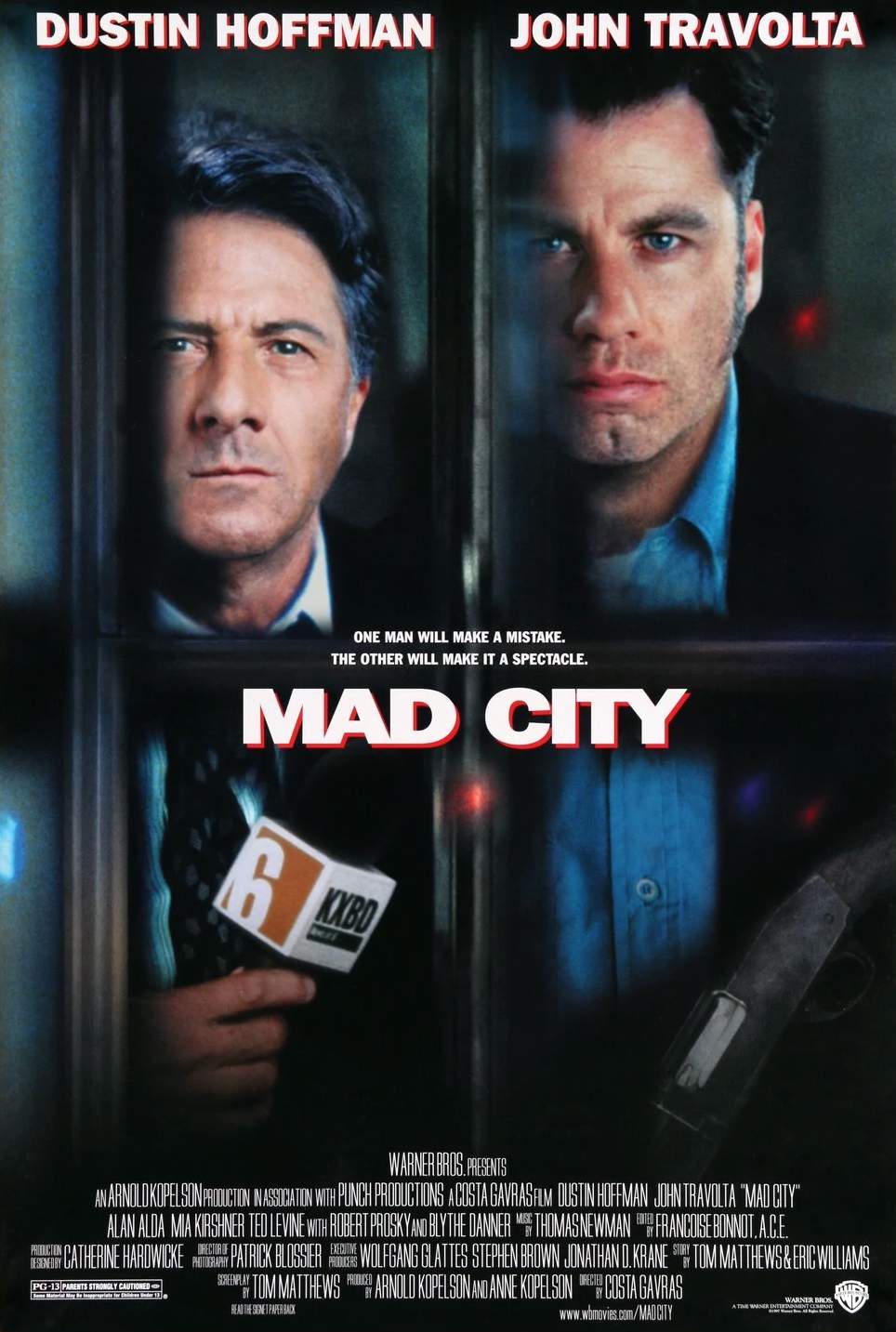
Mad City (1997) movie poster

Plot Summary

Mad City (1997) Plot Summary Explained

Release, runtime and language
1997 · 115 min · English
Directed by
Costa-Gavras
Starring
John Travolta, Dustin Hoffman, Alan Alda
Budget
$50M

A captivating story set within a vibrant urban environment, it follows a diverse group of residents who unexpectedly find themselves raising backyard chickens. As they navigate the practicalities of poultry care, they also confront the reactions of their neighbors and broader societal expectations. Through their shared endeavor, they discover the importance of community, explore the rewards of self-sufficiency, and forge unexpected connections with one another.

On this page (6)
  1. 1 Where to watch
  2. 2 What happens: full plot
  3. 3 Plot questions answered
  4. 4 Movie threads
  5. 5 Movies like Mad City
  6. 6 Every angle

Where to watch

Where to Watch Mad City (1997)

Where can you watch Mad City? Stream, rent or buy it in the US, including on YouTube Free, Amazon Video and Apple TV Store: current JustWatch availability with up-to-date prices.

Streaming availability powered by JustWatch

Full plot summary · contains spoilers

What Happens in Mad City: Full Plot Summary

The whole story of Mad City (1997) explained, from the opening scene to the final frame: every key event, every twist and what it all adds up to. Read it as a quick recap before the sequel, to check a scene you missed, or to finally understand what really happened.

Sam Baily, a former museum security guard, is fired from his job and returns to the museum armed with a shotgun and dynamite, taking his former boss, Mrs. Banks, and a group of schoolchildren on a field trip hostage. Inside the museum, local TV journalist Max Brackett happens to be there, just after an interview about the museum’s financial troubles, and he quickly becomes drawn into the crisis. He steps in as the intermediary between the hostages inside and the outside world, trying to keep communication open with the police.

The tense situation escalates when Sam Baily accidentally shoots his friend Cliff, another security guard, sending him to the hospital. He fires again later, heightening fear among the children, and he relies on caffeine pills to stay alert. Amid the growing media attention, Brackett, along with a young intern named Laurie, starts reporting the story on television, which revives Brackett’s stalled career. Through his ability to move about the museum, Brackett negotiates with a national network and its star news anchor, Kevin Hollander, a figure with whom Brackett has an uneasy history.

Sam Baily refuses to accept jail and longs to return home to his wife and kids, while Brackett pursues the best possible story for his station. He strikes a deal to keep Hollander from getting the access he desires, which leads Hollander to publicly accuse Brackett of prolonging the crisis and endangering the children. Laurie betrays Brackett, showing that she, too, will do whatever it takes to advance her own career.

When Cliff dies, Sam Baily begins to realize how much he has lost. The hostage situation deteriorates as Brackett and Baily let the crisis worsen, until the police issue a five-minute ultimatum for the release of the hostages. Baily finally allows the children and Mrs. Banks to go. He also sends Brackett outside to persuade the police to lower their guns so he can personally usher out Baily. But instead of surrendering to prison and his wife, Baily seals the doors of the museum on Brackett, who is outside trying to persuade the authorities.

Brackett’s attempts to coax Baily out fail, and he remains inside. Unaware of Baily’s plan, Brackett watches as the explosives are set off and Baily commits suicide. The blast flings Brackett to the pavement in the parking lot, with reporters swarming to ask for a comment on the events. In the aftermath, Brackett can only reflect, “We killed him,” a stark line that underscores how the media’s handling of the crisis contributed to the tragedy.

Last updated: October 09, 2025 at 15:39

Was this helpful?

Plot questions answered

Mad City Plot Explained: Your Questions Answered

The questions people ask most about Mad City (1997): what happens in the confusing scenes, why the characters do what they do, the twists, hidden details and what the ending means. Each answer contains spoilers.

Q1

Why did Sam Baily take hostages at the museum?

Sam Baily returned to the museum armed with a shotgun and dynamite because he had just been fired from his job as a security guard. Angry and desperate, he took his former boss Mrs. Banks and a group of schoolchildren on a field trip hostage. He refused to accept jail time and desperately wanted to return home to his wife and kids, believing he could somehow escape the consequences of his actions.

Foreshadowing: Earlier scenes establish Baily's financial desperation and emotional instability following his termination.

  • sam baily
  • hostage
  • museum
  • fired
  • security guard
  • motivation
Q2

How did Max Brackett become the intermediary during the hostage crisis?

Max Brackett happened to be inside the museum when the hostage situation began, just after finishing an interview about the museum's financial troubles. He was in the restroom when Baily took control. Because he was already on scene and had access to both the hostages and the outside world through his media contacts, Baily chose him to communicate with the police and negotiate, effectively making him the intermediary between the two sides.

Foreshadowing: Brackett's presence at the museum for an interview about finances establishes his accidental involvement.

  • max brackett
  • intermediary
  • hostage
  • negotiator
  • tv journalist
Q3

Why did Sam Baily accidentally shoot Cliff?

Baily accidentally shot Cliff, another security guard who worked at the museum, during the chaotic takeover. Cliff was apparently trying to intervene or escape, and Baily's finger was on the trigger during the tense confrontation. The shooting demonstrated Baily's deteriorating mental state and lack of control under pressure, marking a dangerous escalation in the hostage situation.

Foreshadowing: The timeline shows Baily's growing instability from the moment he returned with weapons.

  • cliff
  • shooting
  • security guard
  • accident
  • escalation
Q4

What deal did Max Brackett make with Kevin Hollander?

Brackett negotiated with national network anchor Kevin Hollander, with whom he had an uneasy history, to prevent Hollander from getting full access to the story. Brackett used his unique position inside the museum as leverage to secure favorable coverage for his local station. This deal ultimately backfired when Hollander publicly accused Brackett of prolonging the crisis and endangering the children to protect his own career.

Foreshadowing: The tension between Brackett and Hollander hints at past professional rivalry.

  • kevin hollander
  • deal
  • network
  • coverage
  • media
Q5

Why did Laurie betray Max Brackett during the crisis?

Laurie, the young intern working with Brackett, betrayed him by going behind his back to advance her own career. Like Brackett, she was willing to do whatever it took to get ahead in journalism. Her betrayal showed that the crisis had brought out opportunistic behavior in multiple people involved, with everyone prioritizing their own career advancement over the hostages' safety.

Foreshadowing: Laurie's ambition was visible earlier as she helped amplify the media coverage.

  • laurie
  • betrayal
  • intern
  • career
  • opportunism
Q6

Why did Sam Baily release the children but refuse to surrender?

When police issued a five-minute ultimatum, Baily released the children and Mrs. Banks as a partial concession, showing he still had some regard for their safety. However, he could not bring himself to surrender because that meant facing jail time and losing his family. He remained inside, clinging to a delusional hope of somehow escaping, until he ultimately chose suicide over capture.

Foreshadowing: Baily's repeated statements about wanting to return home to his wife and kids establish his refusal to accept prison.

  • children
  • release
  • surrender
  • ultimatum
  • police
Q7

Why did Sam Baily detonate the explosives instead of surrendering?

Rather than surrender to police and face imprisonment, Baily chose to lock the museum doors and detonate the dynamite he had brought, killing himself in the process. After accidentally killing his friend Cliff and realizing the extent of what he had lost, Baily saw no way out that wouldn't result in losing everything anyway. His final act was a desperate, tragic choice to avoid capture rather than live with the consequences.

Foreshadowing: Cliff's death earlier marks the psychological turning point where Baily begins accepting his loss.

  • explosives
  • suicide
  • dynamite
  • museum
  • death
Q8

What does Brackett mean when he says 'We killed him'?

When Brackett says 'We killed him' after the explosion, he is acknowledging that the media's handling of the crisis contributed to Baily's death. The intense media circus, the competitive journalism, the pressure tactics, and the way Brackett used the situation for his own career all worsened the standoff and prevented a peaceful resolution. The film uses this line to criticize sensationalist media practices that prioritize ratings over human lives.

Foreshadowing: The media coverage throughout the film repeatedly escalates the situation rather than calming it.

  • we killed him
  • meaning
  • media criticism
  • brackett
  • theme
Q9

How did the media coverage worsen the hostage situation?

The constant media attention created pressure on both sides. Brackett's live reporting and negotiations with networks like Hollander's kept the crisis in the public eye, making it harder for police to resolve quietly. The competitive journalism encouraged opportunistic behavior from everyone involved, including Laurie's betrayal. The 24-hour news cycle amplified every development, making it increasingly difficult for Baily to see any way out except the tragic one he chose.

Foreshadowing: The film's narrative constantly shows cameras and reporters surrounding the museum.

  • media coverage
  • news
  • escalation
  • press
  • coverage
Q10

Why did Sam Baily want to return home instead of surrendering?

Baily repeatedly expressed his desire to go back to his wife and kids, refusing to accept that he would serve jail time for his actions. He maintained this hope throughout the crisis, even as circumstances deteriorated. This desperate attachment to his previous life drove many of his decisions and ultimately contributed to his choice of suicide over facing legal consequences and losing his family anyway.

Foreshadowing: Baily's family is mentioned early as his primary motivation for returning to the museum.

  • wife
  • kids
  • family
  • home
  • surrender
  • jail
Q11

What happened to Mrs. Banks during the hostage crisis?

Mrs. Banks was the former boss of Sam Baily at the museum, and she was one of the initial hostages taken when he returned with weapons. She remained captive throughout much of the standoff but was released as part of Baily's partial concession when police issued the five-minute ultimatum. She survived the crisis, unlike the tragic outcome for Baily himself.

Foreshadowing: Mrs. Banks is identified as Baily's former boss from the initial takeover.

  • mrs banks
  • hostage
  • release
  • survived
  • boss

Movie threads

More Movies Like Mad City, by Mood & Story

Curated lists built around what makes Mad City tick: the same mood, the same kind of story or the same emotional payoff. Each list explains why these movies belong together.

Media Sensationalism Thrillers like Mad City

Thrillers where public spectacle and ethical collapse collide. If you liked the cynical portrayal of media in Mad City, explore more movies about public spectacle and moral compromise. These tense dramas and thrillers examine how ambition and sensationalism exploit human desperation, leading to tragic outcomes.

  • tense
  • cynical
  • gripping
  • unsettling
  • desperate
  • tragic
  • Tone: tense, cynical, bleak
  • Pacing: fast, relentless
Why these movies?

The story pattern: These narratives typically revolve around a crisis—a hostage situation, a crime, or a scandal—that is seized upon by ambitious journalists or media figures. The story unfolds in a fast-paced, high-pressure environment, charting the ethical compromises of the characters as the line between reporting and exploitation blurs, often culminating in a bleak or tragic realization of shared guilt.

Why they belong together: Movies are grouped here for their shared cynical tone, their critique of media ethics, and their focus on how public narratives are manufactured from private pain. They create a gripping, anxious experience by pitting human desperation against institutional ambition.

Claustrophobic Siege Thrillers like Mad City

High-stakes stories of desperation and confinement under pressure. For viewers who enjoyed the high-tension, single-location conflict of Mad City, this collection features movies where characters are trapped in a desperate situation. These stories are defined by their fast pace, gripping anxiety, and exploration of human behavior under siege.

  • claustrophobic
  • tense
  • anxious
  • desperate
  • gripping
  • unsettling
  • Tone: tense, desperate, anxious
  • Pacing: fast, anxious
Why these movies?

The story pattern: The core pattern is a volatile situation that erupts in a confined setting, like a bank, museum, or building. The plot follows a linear, cause-and-effect chain as negotiations and external pressures escalate. Character arcs are often tragic, driven by desperation and fatal mistakes, leading to an emotionally heavy conclusion where escape or survival feels uncertain.

Why they belong together: This thread groups films based on their shared claustrophobic atmosphere, fast pacing driven by immediate danger, and high emotional intensity. They deliver a consistent experience of anxiety and dread, making the viewer feel the walls closing in alongside the characters.

If you liked this

Movies Like Mad City

Similar movies to Mad City: the same genre, themes or kind of story. Each one comes with its own plot summary, timeline and ending explained.

Browse all movie summaries

Every angle

Mad City (1997) Explained: Plot, Timeline & Characters

Everything about Mad City in one place: what happens in the plot summary, the timeline in chronological order, the characters and meaning and a spoiler-free summary. What's After the Movie adds the cast, box office and post-credit scenes.

Coming soon on iOS and Android

The Plot Explained Movie Summary App

Plot summaries, endings explained and timelines on your phone. Catch up on any movie in minutes, save your favorites and never miss a twist again.

Be the first to know when we launch. Your email stays private, always.

Learn more about the app