Plot Explained Spoilers guaranteed!
Plot Explained

Browse by genre

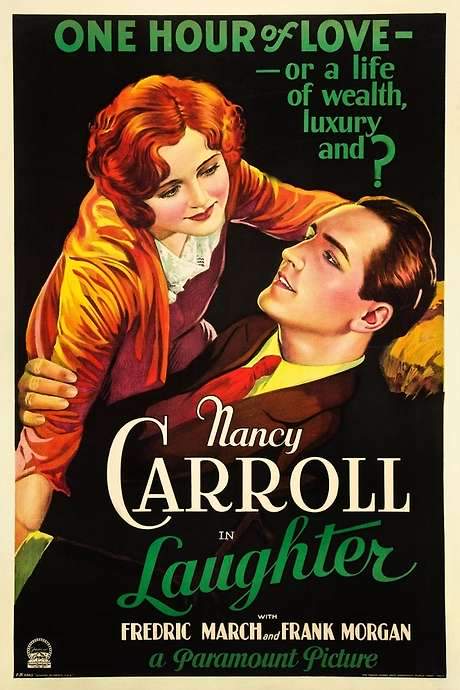
Laughter (1930) movie poster

Characters & Themes

Laughter (1930) Characters, Setting & Themes Explained

Release, runtime and language
1930 · 85 mins · English
Loading streaming availability…
Directed by
Harry d'Abbadie d'Arrast
Starring
Charles Halton, Fredric March, Eric Blore, Frank Morgan, Nancy Carroll, Diane Ellis

A modern woman, celebrated beauty Peggy of the Zeigfeld Follies, marries the older C. Morton Gibson but soon tires of their quiet life. She resists the advances of longtime friend Ralph Le Saint. When pianist Paul Lockridge arrives from Paris, he implores her to flee to France for adventure, yet Gibson’s alluring daughter complicates her choice.

On this page (8)
  1. 1 Where to watch
  2. 2 Characters explained (7)
  3. 3 Where & when it takes place
  4. 4 Themes & meaning (3)
  5. 5 Character & meaning questions
  6. 6 Movie threads
  7. 7 Movies like Laughter
  8. 8 Every angle
Loading streaming availability…

7 main characters · contains spoilers

Laughter Characters Explained: Who Is Who

The main characters of Laughter (1930), heroes and villains: what drives them, how they change over the course of the story and what each of them reveals about the film's bigger ideas.

  • Peggy Gibson (Nancy Carroll)

    Peggy is a Follies dancer who marries a wealthy but dull broker, seeking security yet growing restless with a life of routine. She longs for entertainment and authentic affection, leading her into intimate entanglements with Paul and, subsequently, Ralph. Her actions reveal a craving for laughter and connection over propriety or material comfort. By the end, she confesses her unhappiness to Gibson and chooses to join Paul in Paris.

    • 💃 Performer
    • 💎 Wealth
    • ❤️ Love
  • Paul Lockridge (Fredric March)

    A composer and pianist who returns from Paris and is in love with Peggy. He offers companionship as a diversion from Peggy's stifling life and urges her toward a life of laughter in Paris. Paul embodies romance and spontaneity, challenging Peggy to choose authenticity over security. His insistence on leaving for Paris with Peggy drives the film toward its hopeful, liberating conclusion.

    • 🎹 Music
    • 💖 Romance
    • ✈️ Travel
  • Ralph Le Sainte (Glenn Anders)

    A devil-may-care young sculptor in love with Peggy, he marries passion to habit and plans his own dramatic exit from life. Peggy exposes him as a fortune hunter, which shatters his pride and leads to his suicide. His presence catalyzes the conflict that tests Peggy's loyalties and Mortimer's patience. He represents the destructive side of desire when money and affection intertwine.

    • 🎨 Artist
    • 💔 Jealousy
    • 🌪️ Turbulence
  • C. Mortimer Gibson (Frank Morgan)

    Peggy's elderly husband and a well-meaning yet stifling broker who embodies wealth without joy. His stodgy routine and material security stand in contrast to Peggy's craving for laughter and romance. His life is unsettled by his daughter Marjorie's romance and by Peggy's infidelities, pushing him toward a crisis point. He remains a patient, conflicted figure whose world is challenged by the newer generation's desires.

    • 💼 Businessman
    • 💤 Boredom
    • 🤝 Family
  • Marjorie Gibson (Diane Ellis)

    Mortimer's daughter, who returns from schooling abroad and becomes involved with Ralph. Her romance with Ralph adds another layer of complication to the marital tension and exposes the perils of matching love with money. She serves as a catalyst for the entanglements that drive the story toward its dramatic turning points. Her presence highlights the global, cosmopolitan backdrop of the plot.

    • 🎓 Scholar
    • 💘 Romance
    • 🌍 Abroad
  • Winslow (Charles Halton)

    Gibson's secretary, a minor but present figure within the household. He provides the institutional backdrop of the wealthy couple's life and helps move the plot through the day-to-day functioning of their world.

    • 💼 Secretary
    • 🗂️ Bureaucracy
  • Benham (Leonard Carey)

    Gibson's butler, another minor but essential member of the household staff. He underscores the upper-class milieu and daily routines that Peggy seeks to escape.

    • 🏰 Household
    • 🧹 Servants

Last updated: February 20, 2026 at 00:08

Was this helpful?

Setting

Where and When Does Laughter Take Place?

The setting of Laughter (1930): the year and time period, the places and locations, and how they shape the characters, the mood and the tension of the story.

Time period

Location

New York, Paris

The action centers on Peggy’s glamorous life as a Follies dancer, hinting at a New York city stage world. A year into marriage, the plot moves toward Paris, where Peggy seeks laughter and escape from a stuffy, wealthy life. Paris serves as the ultimate backdrop for the lovers’ choices, contrasting Mortimer's formal wealth with the couple's desire for freedom. The film blends high-society settings with the joie de vivre of the Parisian scene.

  • 🏙️ City life
  • 💎 Wealth
  • 🎭 Theatre
  • 🌃 Nightlife

Last updated: February 20, 2026 at 00:08

Was this helpful?

3 major themes

Laughter Meaning: Themes & Message Explained

What is Laughter (1930) really about? The emotional, social and philosophical themes the film keeps returning to, its symbolism and the message beneath the surface.

  • Love vs Wealth

    Peggy’s marriage to a wealthy but dull husband highlights the clash between financial security and emotional fulfillment. Her pursuit of affection leads her back to Paul and to the entanglement with Ralph, revealing the hollowness of wealth without companionship. The narrative uses these romances to critique a society that equates status with happiness. In the end, Peggy chooses love and laughter over a life of comfort.

  • Escape

    Laughter acts as the emotional escape hatch for Peggy and Paul, a counterpoint to the rigid routine of Mortimer's world. The pursuit of merriment drives the plot—from the Broadway-style milieu to the Parisian freedom they seek. The title itself frames the film as a satire on adult disillusionment and the need for joy. Their final move to Paris marks a redemption through shared humor rather than money.

  • Consequences

    The entanglements expose the moral complexities of high society: deception, desire, and the cost of pursuing pleasure. Ralph's plan to exploit Peggy ends in tragedy when he commits suicide after being exposed. Peggy's own confession catalyzes a break from the old life, suggesting that truth and accountability can lead to freedom, even at the cost of security.

Last updated: February 20, 2026 at 00:08

Was this helpful?

Character & theme questions

Laughter Characters & Meaning: Your Questions Answered

The questions people ask about Laughter (1930): who the characters really are, their relationships, what the symbols mean, where it takes place and what the movie is really about. Each answer contains spoilers.

Q1

Where does the story take place?

The film is set in two primary locations: New York City and Paris. The early part of the story unfolds in New York, where Peggy lives as a Follies dancer and later as the wife of a wealthy broker. The plot then moves to Paris, which serves as a symbol of freedom and escape from the rigid, affluent lifestyle Peggy longs to leave behind.

  • new york
  • paris
  • setting
  • broadway
  • follies
Q2

What is the Love vs Wealth theme about?

The film explores the conflict between financial security and emotional fulfillment. Peggy marries a wealthy but dull broker seeking stability, but soon realizes that wealth without companionship leads to unhappiness. Her journey illustrates that true happiness comes from authentic connection rather than material comfort, as she ultimately chooses love over a life of luxury.

  • love
  • wealth
  • marriage
  • security
  • happiness
Q3

What does the Escape theme represent?

Laughter serves as an emotional escape from the suffocating routine of high society. The pursuit of joy and merriment drives the narrative forward, with Paris representing the ultimate freedom. The title itself frames the film as a satire on adult disillusionment, where characters seek redemption through shared humor rather than material wealth.

  • laughter
  • escape
  • paris
  • freedom
  • joy
Q4

What consequences do the characters face?

The film explores how the pursuit of pleasure leads to serious moral consequences. Ralph's schemes are exposed, resulting in his suicide after being revealed as a fortune hunter. Peggy's confession to her husband marks a break from her old life, suggesting that truth and accountability, though painful, can lead to genuine freedom.

  • consequences
  • morality
  • suicide
  • truth
  • accountability
Q5

Who is Peggy Gibson and what does she want?

Peggy is a celebrated Follies dancer who marries the wealthy but dull broker C. Mortimer Gibson. She craves authentic affection and genuine laughter rather than material comfort, growing restless with the routine of her affluent but emotionally empty marriage. Her journey reflects a desire for spontaneity and emotional fulfillment over propriety.

  • peggy
  • follies dancer
  • marriage
  • happiness
Q6

Who is Paul Lockridge?

Paul Lockridge is a composer and pianist who arrives from Paris and is in love with Peggy. He represents romance and spontaneity, urging her to leave her stifling life behind and seek adventure in Paris. His insistence on leaving with Peggy drives the film toward its hopeful conclusion, embodying the pursuit of authenticity over security.

  • paul lockridge
  • composer
  • paris
  • romance
Q7

Who is C. Mortimer Gibson?

C. Mortimer Gibson is Peggy's elderly husband, a well-meaning but stodgy broker who embodies wealth without joy. His material security and rigid routine stand in stark contrast to Peggy's longing for laughter and romance. Though conflicted by his wife's infidelities and his daughter's romances, he remains a patient figure whose world is disrupted by the younger generation's desires.

  • mortimer gibson
  • broker
  • wealth
  • husband
Q8

Who is Ralph Le Sainte?

Ralph Le Sainte is a sculptor in love with Peggy, described as a devil-may-care young man who plans a dramatic exit from life. He represents the destructive side of desire when money and affection intertwine. After being exposed as a fortune hunter, his pride is shattered and he commits suicide, serving as a catalyst for the dramatic turning points in the story.

  • ralph le sainte
  • sculptor
  • fortune hunter
  • suicide
Q9

What is the tone of the movie?

The film has a bittersweet tone. While the protagonist achieves her desired freedom and escape to Paris, this is framed against the hurt of a failed marriage and the tragic suicide of a secondary character. The emotional weight remains medium, balancing romantic dilemmas with the social concerns of the era rather than deep psychological trauma.

  • tone
  • bittersweet
  • mood
  • romance
  • drama
Q10

What does the title Laughter mean?

The title 'Laughter' serves as the emotional counterpoint to the rigid routine of Mortimer's world. It represents the joy and freedom Peggy and Paul seek through their escape to Paris. The film uses laughter as a metaphor for authentic living, contrasting the hollow wealth of high society with the genuine happiness found in love and merriment.

  • title
  • laughter
  • meaning
  • symbolism

Movie threads

More Movies Like Laughter, by Mood & Story

Curated lists built around what makes Laughter tick: the same mood, the same kind of story or the same emotional payoff. Each list explains why these movies belong together.

Movies like Laughter about bittersweet escapes from marriage

Characters seek liberation from comfortable but suffocating circumstances at an emotional cost. If you enjoyed the sophisticated dilemma in Laughter, explore these movies about characters breaking free from stifling lives. These are glamorous but melancholic romantic dramas where freedom comes with a bittersweet cost, perfect for fans of complex emotional choices.

  • yearning
  • melancholic
  • glamorous
  • romantic
  • discontent
  • liberation
  • Tone: bittersweet, melancholic
  • Pacing: steady, deliberate
Why these movies?

The story pattern: These stories typically follow a protagonist disillusioned with their current life—often a secure marriage devoid of passion—who is tempted by an offer of adventure or romance. The narrative explores the tension between duty and desire, building towards a choice for liberation that is simultaneously triumphant and tinged with regret for the relationships left behind.

Why they belong together: Movies are grouped here because they share a core emotional conflict: the yearning for personal fulfillment against the backdrop of societal and marital obligations. They balance romantic idealism with the sobering reality of consequences, creating a sophisticated, bittersweet mood that resonates deeply.

Movies like Laughter with the glamorous melancholy of the Jazz Age

Sophisticated dramas set in the opulent 1920s-30s, where glamour masks emotional turmoil. For viewers who loved the theatrical glamour and melancholic romance of Laughter, this thread features films with a similar Jazz Age vibe. Discover stories of high society, forbidden love, and personal crises set against a backdrop of beautiful costumes and a bittersweet mood.

  • theatrical
  • glamorous
  • melancholic
  • romantic
  • sophisticated
  • historical
  • Tone: melancholic, bittersweet
  • Pacing: steady, atmospheric
Why these movies?

The story pattern: Narratives in this thread are often character-driven explorations of the upper class, focusing on romantic triangles, extramarital affairs, and the clash between societal expectations and personal desire. The pacing is steady, allowing for the nuanced development of relationships against a visually sumptuous historical setting that feels both enchanting and melancholic.

Why they belong together: These films are united by their specific historical atmosphere—the Jazz Age—and a consistent mood that blends high glamour with deep-seated melancholy. They offer a similar viewing experience of elegant costumes, dramatic romance, and a bittersweet reflection on the cost of living a gilded life.

If you liked this

Movies Like Laughter

Similar movies to Laughter: the same genre, themes or kind of story. Each one comes with its own plot summary, timeline and ending explained.

Browse all movie summaries

Every angle

Laughter (1930) Explained: Plot, Timeline & Characters

Everything about Laughter in one place: what happens in the plot summary, the timeline in chronological order, the characters and meaning and a spoiler-free summary. What's After the Movie adds the cast, box office and post-credit scenes.

Coming soon on iOS and Android

The Plot Explained Movie Summary App

Plot summaries, endings explained and timelines on your phone. Catch up on any movie in minutes, save your favorites and never miss a twist again.

Be the first to know when we launch. Your email stays private, always.

Learn more about the app