Plot Explained Spoilers guaranteed!
Plot Explained

Browse by genre

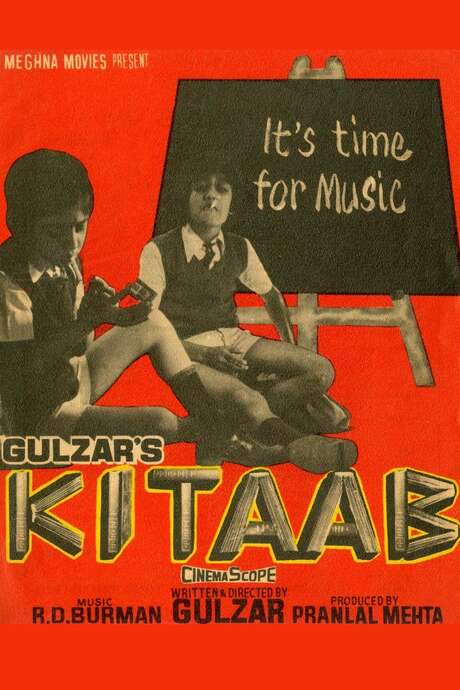
Kitaab (1977) movie poster

Timeline

Kitaab (1977) Timeline Explained – Every Event in Order

Release, runtime and language
1977 · 124 mins · Hindi
Loading streaming availability…
Directed by
Gulzar
Starring
Dina Pathak, Raju Shrestha, Rammohan Sharma, Shreeram Lagoo, Om Shivpuri, Keshto Mukherjee

Director Sampooran Singh Gulzar’s insightful comic drama aims to capture the unique perspective of childhood.

On this page (6)
  1. 1 Where to watch
  2. 2 Events in order (15)
  3. 3 Timeline questions answered
  4. 4 Movie threads
  5. 5 Movies like Kitaab
  6. 6 Every angle
Loading streaming availability…

15 events in order · contains spoilers

Kitaab Timeline: Events in Chronological Order

Every key event of Kitaab (1977) in order, scene by scene, with when and where it takes place. Use it to untangle flashbacks, time jumps and parallel storylines, to refresh your memory before the sequel or to find the exact scene you are thinking of.

  1. Babla leaves village for schooling in the city

    Babla's mother Dina Pathak decides he should go to his sister Vidya Sinha in the city so he can attend a better school. She hopes the change will help him grow and learn. Babla is initially excited about leaving the village for urban life.

    Where
    Village
  2. Arrives at Vidya's home; city life begins

    Babla arrives at his sister's home in the city and feels welcomed at first. He loves the city and instantly makes friends, enjoying the new freedoms. The home becomes a base for his early exploration and adaptation.

    Where
    City (Vidya's home)
  3. Babla befriends Pappu and explores the city streets

    Babla befriends his classmate Pappu and the two roam the busy streets together. They watch street magic shows, peek at how sweets are made, and imagine performing similar tricks themselves. The pair revel in carefree city life away from rules.

    Where
    City streets
  4. Discipline and school trouble

    As school starts, Babla's carefree attitude clashes with expectations. His sister and brother-in-law scold him for seeming disinterested in studies and for antics in class. The school also flags complaints, making him feel misunderstood by adults who can’t see his innocence.

    Where
    City / Vidya's home
  5. Realisation of harsh city life

    Babla begins to grasp the harsh realities hidden behind city life. He realizes that many people struggle, and his own comfort hides deeper hardships. This insight shatters his earlier carefree view and pushes him toward longing for home.

    Where
    City
  6. Decision to return to village

    Feeling overwhelmed, Babla resolves that life with his mother might be easier and more honest. He decides to leave the city and go back to his village. The choice marks a turning point in his understanding of where he truly belongs.

    Where
    City
  7. Runs away and boards a train without a ticket

    Babla runs away from Vidya's home and sneaks onto a train without a ticket. He hopes to return to his mother, but the journey is uncertain and risky. The act shows his desperation to escape the pressure and find a simpler life.

    When
    Evening
    Where
    Train
  8. Caught at the next station

    The ticket-master catches him and forces Babla to alight at the next station. The humiliation of being caught marks a harsh moment in his escape. He finds himself stranded with only his resolve to guide him.

    When
    Evening
    Where
    Train platform
  9. Night on the platform; cold and alone

    On the platform at night, Babla feels cold and searches for a safe place to sleep. He endures the chill while wondering what his next move will be. The platform becomes an unfamiliar, precarious space far from home.

    When
    Night
    Where
    Train platform
  10. Old woman and her death

    He finds an old woman sleeping under a blanket and lying down beside her, sharing the warmth. In the morning, he wakes up to the crowd gathered around the sleeping elder and learns she has died. The moment starkly reveals the vulnerability of the poor.

    When
    Morning
    Where
    Train platform
  11. Coin incident and realisation of hardship

    In the commotion, Babla spots a coin in the old lady's container and pockets it briefly before putting it back. He goes to drink water and is startled by the growing crowd around the scene. The episode cements his understanding that life is not simple for those with little.

    When
    Morning
    Where
    Train platform
  12. Return to his mother's home

    Feeling shaken, Babla returns to his mother's village home and finds his mother, sister, and brother-in-law worried and overjoyed to see him. The family reunion underscores the closeness of home life. He realizes the distance he created could have been avoided.

    When
    Morning
    Where
    Village
  13. Reunion and relief

    The family expresses relief at his return, with the mother, sister, and brother-in-law embracing him warmly. They worry about the dangers he faced on the journey, but their joy at his safe return outweighs their concerns. Babla admits that he wants to take his studies seriously and make his family proud.

    Where
    Village
  14. Promise to study sincerely

    Back home, Babla makes a firm pledge to study sincerely and avoid causing trouble. The vow marks his commitment to maturing while staying connected to his family. The story solidifies a plan to balance innocence with responsibility.

    When
    Return
    Where
    Village
  15. Closing: growth and hope

    Babla's journey ends with a realization that innocence must be balanced with responsibility. The film closes on a note of hope as he resolves to pursue his education while preserving his sense of wonder. The cycle of childhood and hardship continues, but with a plan to grow.

    When
    End
    Where
    Village

Last updated: October 09, 2025 at 11:13

Was this helpful?

Timeline questions answered

Kitaab Timeline Explained: Your Questions Answered

When does it happen, and why in that order? The questions people ask about the chronology of Kitaab (1977): time jumps, flashbacks, cause and effect between scenes and the correct order of events, each answered with spoilers.

Q1

Why does Babla leave his sister's house in the city?

Babla leaves because he feels misunderstood by his sister and brother-in-law, who scold him constantly for his disinterest in studies and classroom antics. He senses that adults cannot understand the innocence and wonder that children carry. Overwhelmed by this feeling and the harsh realities of city life he begins to grasp, he decides to return to his mother in the village where life felt simpler and more honest.

Foreshadowing: Earlier scenes show Babla and Pappu roaming freely, laughing at street magic and sweets being made, joys that contrast sharply with the discipline he faces at his sister's home.

  • Babla leaves city
  • sister scolds Babla
  • childhood misunderstanding
  • city life difficulties
Q2

What happens to Babla on the train platform?

After being caught riding the train without a ticket and kicked off at the next station, Babla spends a cold night alone on the platform. He finds an old woman sleeping under a blanket and lies beside her to share warmth. When he wakes up in the morning, he sees a crowd gathered around her, she has died. This moment shocks him deeply as he witnesses the vulnerability and hardship faced by the poor.

Foreshadowing: The summary notes Babla's growing realization that many people struggle in the city, setting up this pivotal encounter with mortality.

  • Babla train platform
  • old woman dies
  • Babla cold night
  • train station incident
Q3

Why does Babla take the coin from the old woman?

Babla takes the coin because he is hungry and thirsty after the cold night on the platform. He spots the coin in the old woman's container and pockets it briefly to buy water. However, when he sees the crowd gathering around her and realizes she has died, the weight of what he has witnessed shakes him to his core. He quietly returns the coin, understanding for the first time that life is not fair or easy for those who are poor.

Foreshadowing: Earlier, Babla and Pappu marvel at street food and sweets, highlighting his innocent curiosity about mundane things, this later contrasts with his desperate act of taking money from a dead person.

  • Babla takes coin
  • old woman death
  • Babla hungry
  • poverty realization
Q4

What does Babla realize after seeing the old woman die?

Babla realizes that life is not simply fair or easy for those who are poor. The old woman's death, unnoticed, alone, on a cold platform, exposes the harsh vulnerability of homeless elderly people. This experience shatters his earlier carefree view of the world and forces him to understand deeper hardships that exist beyond his own comfortable life.

Foreshadowing: The narrative mentions Babla beginning to grasp harsh realities hidden behind city life before this incident occurs.

  • Babla realizes poverty
  • old woman death meaning
  • childhood innocence lost
  • life hardship
Q5

Why does Babla decide to go back to his village?

Babla decides to return because the city overwhelms him with pressures he cannot handle, the scolding from his sister, the discipline at school, and now the traumatic experience on the train platform. He believes life with his mother in the village will be easier and more honest. The contrast between his carefree days exploring with Pappu and the cold reality he now faces makes him long for the safety and simplicity of home.

Foreshadowing: The timeline shows his gradual realization of harsh city life leading to his decision to return.

  • Babla returns village
  • city vs village
  • Babla misses mother
  • homecoming
Q6

How does Babla's friendship with Pappu shape his city experience?

Babla's friendship with Pappu makes his initial city life joyful and adventurous. The two classmates roam streets together, watching street magic shows, marveling at how sweets are made, and teasing teachers. These carefree moments represent the small bright wonders of everyday life that make the city exciting. However, this friendship exists alongside the discipline he receives at home, showing how childhood joy coexists with adult expectations.

Foreshadowing: Their exploration scenes occur early in the film, establishing the contrast between Babla's happiness and the trouble that follows.

  • Babla Pappu friendship
  • Babla city adventures
  • childhood friendship
  • street exploration
Q7

Why does Babla promise to study sincerely after returning home?

After witnessing the old woman's death and experiencing the harsh realities of the world outside his family, Babla understands that growing up requires responsibility. His journey has shown him the dangers and difficulties of life beyond his mother's protection. He promises to study more earnestly and avoid causing trouble, recognizing that education is the path to a better future while still preserving the curiosity and wonder that give life its color.

Foreshadowing: His earlier disinterest in studies stemmed from his carefree attitude, which the traumatic events fundamentally change.

  • Babla studies promise
  • Babla maturity
  • responsibility childhood
  • growth ending
Q8

Why does Babla return the coin after taking it?

Babla returns the coin because seeing the old woman dead and the crowd gathered around her creates a profound emotional impact. The act of taking money from someone who has just died feels wrong to him, and witnessing the poverty and vulnerability she represented makes him understand the seriousness of his action. He quietly returns the coin before leaving, showing his instinctive moral compass despite his desperate situation.

Foreshadowing: This moment comes right after he wakes beside her and discovers she has died, connecting his need for survival with his newly awakened conscience.

  • Babla returns coin
  • moral compass
  • guilt theft
  • conscience childhood

Movie threads

More Movies Like Kitaab, by Mood & Story

Curated lists built around what makes Kitaab tick: the same mood, the same kind of story or the same emotional payoff. Each list explains why these movies belong together.

Movies like Kitaab: Stories from a Child's Perspective

Stories seen through the innocent and inquisitive eyes of a young protagonist. If you liked Kitaab for its young protagonist's point of view, you'll enjoy these movies that explore complex themes through the innocent and inquisitive eyes of a child. Discover similar coming-of-age stories where the steady, straightforward narrative mirrors a child's growing understanding of the world.

  • innocent
  • nostalgic
  • inquisitive
  • melancholic
  • reflective
  • hopeful
  • Tone: bittersweet, melancholic
  • Pacing: steady, character-driven
Why these movies?

The story pattern: Narratives in this thread are typically driven by a single child protagonist's linear journey of discovery. The story unfolds as a series of events, both small and significant, that chip away at their innocence, leading to a more mature, often bittersweet, understanding of life's realities.

Why they belong together: Movies are grouped here because they share the core experience of filtering complex adult themes—such as loss, poverty, or responsibility—through a child's unfiltered and often poignant perspective. They balance a steady, straightforward pace with a medium emotional impact.

Bittersweet Coming-of-Age Movies Similar to Kitaab

Stories of growing up where joy and sorrow intertwine on the path to maturity. Explore movies like Kitaab that master the bittersweet tone of growing up. These films feature a steady, medium-intensity narrative where characters learn life's hard lessons, resulting in an ending that is neither purely happy nor sad, but a mature mix of both.

  • bittersweet
  • nostalgic
  • melancholic
  • reflective
  • coming of age
  • hopeful
  • Tone: bittersweet, reflective
  • Pacing: steady, linear
Why these movies?

The story pattern: The narrative pattern involves a protagonist, often a child or young adult, undergoing a pivotal life journey that forces them to confront difficult truths. The central conflict is between the simplicity of childhood and the complex responsibilities of adulthood, culminating in a resolution that acknowledges both loss and growth.

Why they belong together: These films are grouped together due to their shared bittersweet emotional core, steady pacing, and medium emotional weight. They focus on the universal theme of losing innocence while gaining understanding, creating a reflective and poignant viewing experience that avoids being overwhelmingly heavy.

If you liked this

Movies Like Kitaab

Similar movies to Kitaab: the same genre, themes or kind of story. Each one comes with its own plot summary, timeline and ending explained.

Browse all movie summaries

Every angle

Kitaab (1977) Explained: Plot, Timeline & Characters

Everything about Kitaab in one place: what happens in the plot summary, the timeline in chronological order, the characters and meaning and a spoiler-free summary. What's After the Movie adds the cast, box office and post-credit scenes.

Coming soon on iOS and Android

The Plot Explained Movie Summary App

Plot summaries, endings explained and timelines on your phone. Catch up on any movie in minutes, save your favorites and never miss a twist again.

Be the first to know when we launch. Your email stays private, always.

Learn more about the app