









Plot Explained Spoilers guaranteed!
Plot Explained

Browse by genre

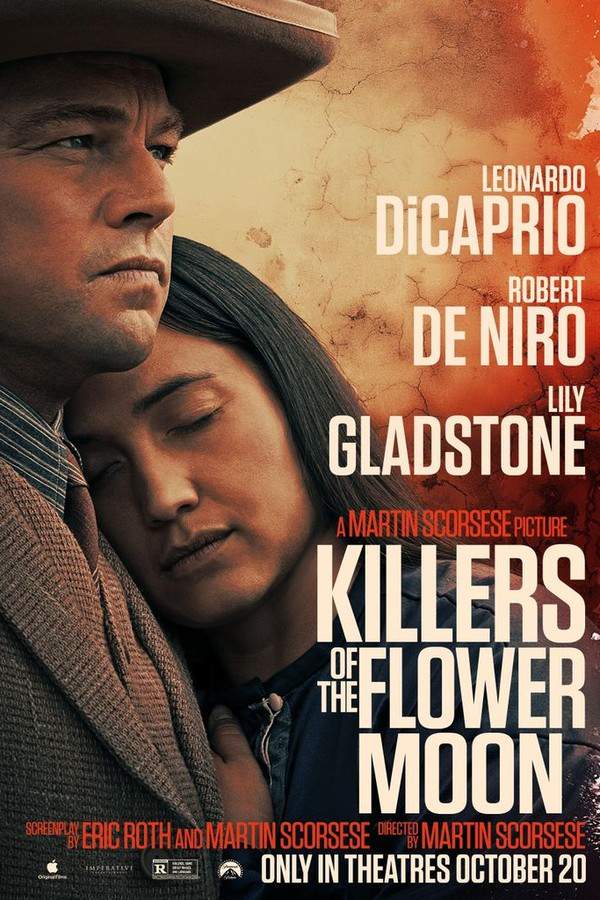
Killers of the Flower Moon (2023) movie poster

Ending Explained

Killers of the Flower Moon (2023) Ending Explained – Final Scene & Meaning

Release, runtime and language
2023 · 3 h 26 m · English
Echo score 74
JustWatch #1,338 31
Directed by
Martin Scorsese
Starring
Robert De Niro, John Lithgow, Leonardo DiCaprio, Brendan Fraser, Jesse Plemons, Lily Gladstone
Budget
$200M

In 1920s Oklahoma, the discovery of oil brought unexpected wealth and status to the Osage Nation. This prosperity attracted outsiders seeking to exploit the Osage through manipulation, intimidation, and violence. As the Osage people experience a series of mysterious deaths, an investigation uncovers a dark and sinister plot driven by greed and a lust for power, revealing the devastating human cost of unchecked ambition.

On this page (7)
  1. 1 Where to watch
  2. 2 What happens at the end
  3. 3 Final events in order
  4. 4 Ending questions answered
  5. 5 Movie threads
  6. 6 Movies like Killers of the Flower Moon
  7. 7 Every angle

Where to watch

Where to Watch Killers of the Flower Moon (2023)

Where can you watch Killers of the Flower Moon? Stream, rent or buy it in the US, including on Apple TV, Amazon Video and Apple TV Store: current JustWatch availability with up-to-date prices.

Streaming availability powered by JustWatch

Ending explained · contains spoilers

What Happens at the End of Killers of the Flower Moon?

How Killers of the Flower Moon (2023) ends, what the final scene means, which earlier moments set it up and how to read the ending if the film leaves it open. The full ending explained, with every spoiler.

Now, as the story concludes, the true horror of the Osage murders becomes painfully clear. Ernest Burkhart, initially motivated by greed, is driven to testify against his uncle, William Hale, after realizing the consequences of their actions and fearing prison for his involvement. His confession reveals that Hale orchestrated the murders of Mollie’s family and others to take control of their wealth, embodying greed and cruelty at its worst. Ernest's admission is a turning point—though he claims to love Mollie, his participation in the killings was ultimately for selfish reasons, and he only betrayed Hale when his own life was threatened. Throughout the film, Hale’s manipulative cunning is on full display, as he wielded power over law enforcement and the community, escaping justice for most of his life. Despite his heinous crimes, Hale was released early from prison in 1947, demonstrating how deeply entrenched corruption and racial injustice were at the time. The film ends with Mollie leaving Ernest after discovering his betrayal, asserting her strength and dignity in the face of betrayal. Her decision to divorce Ernest marks her reclaiming her agency, as she refuses to be a pawn in a system that dehumanized her community. Mollie’s life after the ordeal, marked by widowhood and hardship, underscores the lasting scars of the violence inflicted upon her people. The story concludes on a somber note, illustrating how greed, racism, and indifference allowed such atrocities to happen, and leaving viewers with a haunting reflection on the persistent injustice faced by Indigenous communities in America. Ultimately, the film shows that true justice remains elusive for the Osage, as those who committed horrific crimes often escaped full accountability, leaving behind a legacy of pain and unresolved grief.

Last updated: June 25, 2025 at 08:44

Was this helpful?

The last 4 events

How Killers of the Flower Moon Ends: The Final Events in Order

The last events of Killers of the Flower Moon (2023) in chronological order, the run-up to the ending explained above. The complete timeline has all 15 events, scene by scene.

Open the full timeline
  1. Mollie Rallies Her Community

    Despite her ailing health, Mollie takes a stand and rallies the Osage community, traveling to Washington to plead for assistance from President Calvin Coolidge. Unfortunately, Hale attempts to thwart her efforts by poisoning her insulin, a reflection of his desperate, malicious plans.

    Where
    Washington, D.C.
  2. Ernest Agrees to Testify

    Amid the unraveling chaos, Ernest, driven by the desire to protect his children after witnessing devastating family losses, agrees to testify against Hale. In a profound moment of clarity, he chooses to come forward, risking his safety to bring justice to the Osage.

  3. Justice for the Osage

    The investigation concludes with Hale and Ernest facing justice for their numerous crimes, both sentenced to life in prison. The Osage community demands accountability, reflecting the depth of their suffering and the desire for reparation following the tragic events.

  4. Legacy of the Osage

    In the film's conclusion, Mollie, profoundly impacted by her family's tragic history, relocates and eventually passes away at a young age. The final scenes pan over a modern Osage powwow dancing circle, representing the enduring spirit and resilience of the Osage Nation despite their tumultuous past.

    Where
    Osage Nation

Ending questions answered

Killers of the Flower Moon Ending: Your Questions Answered

The questions people ask most about the ending of Killers of the Flower Moon (2023): what the final scene means, how the twist works, what happens to each character and how to read the ending. Each answer contains spoilers.

Q1

Why does Ernest testify against his uncle William Hale?

Ernest testifies against Hale because he fears going to prison for his involvement in the murders. When the FBI begins closing in and charging him, Ernest realizes his own life is at risk and chooses to confess and implicate his uncle to save himself. While he claims to love Mollie, his decision to betray Hale is ultimately driven by selfish survival instincts rather than genuine remorse or moral awakening.

Foreshadowing: Earlier scenes show Ernest's growing anxiety as FBI investigations intensify, hinting at his eventual collapse under pressure.

  • ernest burkhart
  • william hale
  • testimony
  • confession
  • fbi investigation
Q2

What happens to William Hale at the end of the film?

William Hale is convicted for his role in orchestrating the Osage murders and sentenced to life in prison. However, he is released early in 1947 due to poor health, demonstrating how the corrupt system that enabled his crimes also allowed him to escape full justice. Hale dies in 1939 according to historical records, though the film suggests a later release.

Foreshadowing: Hale's manipulate control over law enforcement and the community throughout the film establishes his ability to evade consequences.

  • william hale
  • conviction
  • prison release
  • reign of terror
  • osage murders
Q3

Why does Mollie leave Ernest after the trial?

Mollie leaves Ernest after discovering he was complicit in the murders of her family members. When Ernest confesses to the FBI, the full truth of his involvement becomes undeniable. Mollie asserts her strength and dignity by divorcing him, refusing to remain with the man who participated in killing her people. Her departure represents her reclaiming agency in a system that dehumanized her community.

Foreshadowing: Throughout the film, Mollie's growing suspicion and illness coincide with Ernest's increasingly suspicious behavior.

  • mollie burkhart
  • divorce
  • betrayal
  • osage
  • leaves ernest
Q4

Does Mollie get justice for her family's murders?

Mollie does not receive true justice. While Hale and Ernest are convicted, the sentences do not match the scale of the crimes. Hale's early release further underscores the incompleteness of justice. Mollie dies young, in 1937, and her obituary makes no mention of the tragedy that befell her family, reflecting how the horror inflicted on the Osage was largely ignored or erased from historical memory.

Foreshadowing: The film's steady buildup of murders without consequences establishes a pattern of injustice throughout.

  • justice
  • osage murders
  • mollie
  • conviction
  • accountability
Q5

Is Ernest Burkhart arrested at the end?

Yes, Ernest Burkhart is arrested and charged for his involvement in the Osage murders. He avoids the death penalty by agreeing to testify against William Hale. His confession reveals the extent of Hale's orchestration but also exposes Ernest's own guilt, he participated in the killings primarily for financial gain and only turned on his uncle when faced with his own imprisonment.

Foreshadowing: Ernest's greedy behavior and willingness to profit from Osage deaths throughout the film foreshadow his eventual legal consequences.

  • ernest burkhart
  • arrest
  • trial
  • prison sentence
  • fbi
Q6

What does the ending mean for the Osage people?

The ending illustrates how greed, racism, and systemic indifference allowed the Osage murders to happen and go largely unpunished. While the FBI successfully convicted some perpetrators, the legacy of violence left lasting scars on the community. The film concludes on a somber note, acknowledging both the resilience of the Osage Nation and the profound injustice they endured.

Foreshadowing: The systematic targeting of wealthy Osage members throughout the film demonstrates the targeted nature of the genocide.

  • osage nation
  • indigenous
  • genocide
  • injustice
  • legacy
Q7

What happens in the final scene of the movie?

The final scene shows Mollie Burkhart leaving Ernest after his confession and the trial concludes. She walks away from him, asserting her dignity and independence after years of betrayal. The film then shifts to a somber reflection on the events, emphasizing that while some justice was served, the true cost to the Osage people was immense and largely unacknowledged.

Foreshadowing: The earlier scene of Mollie's family being murdered establishes the personal tragedy she carries throughout.

  • final scene
  • mollie
  • ending
  • resolution
  • divorce
Q8

Why was William Hale released from prison early?

William Hale was released early from prison in 1947 due to poor health, despite being sentenced to life imprisonment for orchestrating the Reign of Terror murders. His early release demonstrates how the corrupt systems that protected him throughout his reign continued to favor him, illustrating the deeply entrenched racial injustice and privilege that allowed white perpetrators to escape full accountability for crimes against Indigenous people.

Foreshadowing: Hale's established connections to law enforcement and political figures throughout the film foreshadow his continued ability to manipulate the system.

  • hale released
  • prison
  • health
  • early release
  • injustice
Q9

What happens to Mollie after the trial?

After the trial, Mollie divorces Ernest and spends her remaining years as a widow. She dies in 1937 at the age of 51, likely from complications of diabetes that went untreated during the period she was being poisoned. Her life after the ordeal was marked by hardship and loss, and her obituary contained no mention of the tragedies that befell her family, reflecting how the Osage experience was erased from mainstream historical narratives.

Foreshadowing: Mollie's declining health throughout the film, caused by poisonings, hints at her premature death.

  • mollie death
  • widowhood
  • after trial
  • diabetes
  • life after
Q10

Did the FBI actually solve the Osage murders case?

Yes, the FBI, led by Tom White, successfully solved the Osage murders case. The investigation uncovered the systematic murder of wealthy Osage tribe members and resulted in convictions of William Hale, Ernest Burkhart, and others involved in the Reign of Terror. However, the film emphasizes that while justice was served in some form, it was incomplete, many perpetrators escaped full accountability, and the broader genocide against Indigenous people continued largely unnoticed.

Foreshadowing: The investigation plotline running through the film establishes the FBI's role in uncovering the conspiracy.

  • fbi
  • tom white
  • investigation
  • convictions
  • reign of terror

Movie threads

More Movies Like Killers of the Flower Moon, by Mood & Story

Curated lists built around what makes Killers of the Flower Moon tick: the same mood, the same kind of story or the same emotional payoff. Each list explains why these movies belong together.

Historical crime stories exposing systemic injustice like Killers of the Flower Moon

Stories where investigation reveals a dark conspiracy rooted in societal corruption. If you were gripped by the methodical unraveling of a conspiracy in Killers of the Flower Moon, this collection is for you. Find movies like it—gripping historical dramas and true crime stories that expose deep corruption and systemic oppression, offering a sobering look at justice and its human cost.

  • gripping
  • sobering
  • tense
  • heavy
  • unsettling
  • historical
  • Tone: dark, grim, sobering
  • Pacing: steady, methodical
Why these movies?

The story pattern: These narratives typically follow a procedural or character-driven path into a conspiracy, moving from isolated incidents to a shocking revelation of widespread corruption or institutional failure. The focus is less on a simple whodunit and more on understanding the 'why' and 'how' of a systemic evil.

Why they belong together: Movies in this thread are united by their use of a crime or investigation as a lens to examine broader societal ills. They share a dark, heavy tone, a steady, methodical pacing that builds tension, and a focus on the devastating human impact of greed and power.
Slow burn movies with a grim melancholic mood like Killers of the Flower Moon

A steady, oppressive build of tension and sorrow in a bleak setting. For viewers who appreciated the oppressive, slowly-built tension and melancholic atmosphere of Killers of the Flower Moon. Discover similar movies characterized by a steady pacing, a dark and heavy tone, and a narrative that immerses you in a world of grim reality and bittersweet resilience.

  • oppressive
  • melancholic
  • grim
  • heavy
  • sinister
  • unsettling
  • Tone: melancholic, dark, oppressive
  • Pacing: steady, slow burn
Why these movies?

The story pattern: The narrative journey in these films is often a gradual descent or a persistent struggle against an oppressive force. The focus is on atmosphere and emotional resonance over plot twists, building a profound sense of loss, betrayal, or the weight of history in a way that feels immersive and inevitable.

Why they belong together: These films are grouped by their shared mood and pacing. They prioritize creating a cohesive, oppressive atmosphere through a steady, deliberate narrative build, resulting in a viewing experience that is intensely gripping, emotionally heavy, and deeply melancholic.

If you liked this

Movies Like Killers of the Flower Moon

Similar movies to Killers of the Flower Moon: the same genre, themes or kind of story. Each one comes with its own plot summary, timeline and ending explained.

Browse all movie summaries

Every angle

Killers of the Flower Moon (2023) Explained: Plot, Ending, Timeline & Characters

Everything about Killers of the Flower Moon in one place: what happens in the plot summary, the timeline in chronological order, the characters and meaning, the ending explained and a spoiler-free summary. What's After the Movie adds the cast, box office and post-credit scenes.

Coming soon on iOS and Android

The Plot Explained Movie Summary App

Plot summaries, endings explained and timelines on your phone. Catch up on any movie in minutes, save your favorites and never miss a twist again.

Be the first to know when we launch. Your email stays private, always.

Learn more about the app