Plot Explained Spoilers guaranteed!
Plot Explained

Browse by genre

The Outrage (1964) movie poster

Plot Summary

The Outrage (1964) Plot Summary Explained

Release, runtime and language
1964 · 96 mins · English
Directed by
Martin Ritt
Starring
Paul Newman, Claire Bloom, Albert Salmi, Paul Fix, Laurence Harvey, Edward G. Robinson

A con artist, a preacher and a prospector gather at an abandoned railway station to analyze the recent trial of outlaw Juan Carrasco, convicted of murdering a man and raping his wife. As they recount the case, they confront contradictory testimonies, each new version raising unsettling questions about whether the act stemmed from violence or love.

On this page (5)
  1. 1 What happens: full plot
  2. 2 Plot questions answered
  3. 3 Movie threads
  4. 4 Movies like The Outrage
  5. 5 Every angle

Full plot summary · contains spoilers

What Happens in The Outrage: Full Plot Summary

The whole story of The Outrage (1964) explained, from the opening scene to the final frame: every key event, every twist and what it all adds up to. Read it as a quick recap before the sequel, to check a scene you missed, or to finally understand what really happened.

Three disparate travelers—a disillusioned preacher William Shatner, an unsuccessful prospector Howard Da Silva, and a larcenous, cynical con man Edward G. Robinson—meet at a decrepit railroad station in the 1870s Southwest United States.

The prospector and the preacher were witnesses at the rape and murder trial of the notorious bandit Juan Carrasco, Paul Newman. Carrasco had duped Colonel Wakefield, an aristocratic Southerner, into believing that he knew the location of a lost Aztec treasure. While the greedy Wakefield was bound to a tree and gagged, Carrasco assaulted his wife Nina, Claire Bloom. These events led to the stabbing of the husband, and Carrasco was subsequently tried, convicted and condemned for the crimes.

In court, accounts from each witness diverge dramatically. Carrasco claims that Wakefield was bound with ropes while Nina was assaulted, after which he killed the colonel in a duel. The newlywed Nina contends that she killed her husband because he accused her of luring Carrasco and causing the rape. The dead man’s testimony is presented through a third witness, an old Indian shaman, Paul Fix, who says that neither of those accounts is true. The shaman insists that the colonel used a jeweled dagger to commit suicide after the incident.

There is a fourth witness, the Prospector, Howard Da Silva, who offers a completely different perspective on what took place, yet the reliability of that account remains just as uncertain as the others. The result is a tense, multifaceted portrait of blame, motive, and truth, where every version of events carries its own weight and none are fully conclusive.

Last updated: February 24, 2026 at 13:49

Was this helpful?

Plot questions answered

The Outrage Plot Explained: Your Questions Answered

The questions people ask most about The Outrage (1964): what happens in the confusing scenes, why the characters do what they do, the twists, hidden details and what the ending means. Each answer contains spoilers.

Q1

Why was Juan Carrasco at Colonel Wakefield's estate?

Carrasco lured Wakefield to his estate by claiming he knew the location of a lost Aztec treasure. This story inflamed Wakefield's greed and led him to follow Carrasco into the dangerous situation where the assault and murder occurred.

Foreshadowing: The treasure rumor is introduced early as the motivating factor behind Wakefield's risky decisions.

  • carrasco
  • wakefield
  • treasure
  • aztec
  • motivation
Q2

Why was Colonel Wakefield bound to a tree?

While Carrasco assaulted Nina, Wakefield was bound to a tree and gagged to prevent him from interfering or calling for help. This allowed Carrasco to commit the assault unimpeded before the confrontation turned violent.

Foreshadowing: The binding is mentioned in the timeline as a deliberate act that escalated the violence.

  • wakefield
  • binding
  • assault
  • nina
Q3

What did Nina say caused her husband's death?

Nina testified that she killed her husband because he accused her of luring Carrasco into their home, implying she was complicit in the assault. This shifted the motive from external violence to domestic conflict.

Foreshadowing: Her testimony contradicts both Carrasco's and the shaman's accounts, introducing a third possibility.

  • nina
  • testimony
  • husband
  • accusation
Q4

What did the shaman say about Colonel Wakefield's death?

The old Indian shaman testified that neither Carrasco's nor Nina's account was true. He claimed Wakefield used a jeweled dagger to commit suicide after the incident, adding a completely different cause of death to the case.

Foreshadowing: The shaman's testimony introduces the possibility of suicide, which contradicts both murder accounts.

  • shaman
  • suicide
  • dagger
  • testimony
Q5

Why do the witness testimonies contradict each other?

Each witness presents a different perspective on the same events, revealing how memory, bias, and personal involvement shape their accounts. The film uses this structure to explore how truth becomes subjective when multiple people experience the same event differently.

Foreshadowing: The four travelers themselves represent different perspectives, setting up the unreliable narration theme.

  • testimony
  • contradiction
  • truth
  • perspectives
Q6

Why was Juan Carrasco convicted despite conflicting testimonies?

Despite the contradictory accounts from Carrasco, Nina, the shaman, and the prospector, the court was forced to reach a verdict. Carrasco was tried, convicted, and condemned for the crimes, though the truth remained genuinely uncertain.

Foreshadowing: The timeline shows the trial as the formal arena where competing narratives collide.

  • conviction
  • trial
  • verdict
  • court
Q7

What motivated Colonel Wakefield to trust Carrasco?

Wakefield's greed drove him to believe Carrasco's story about a lost Aztec treasure. The promise of immense wealth blinded him to the danger, leading him to pursue the treasure against all prudent judgment.

Foreshadowing: The treasure lure is established early as the central motivation that drives the entire chain of events.

  • wakefield
  • greed
  • treasure
  • motivation
Q8

Why does the film present multiple versions of events?

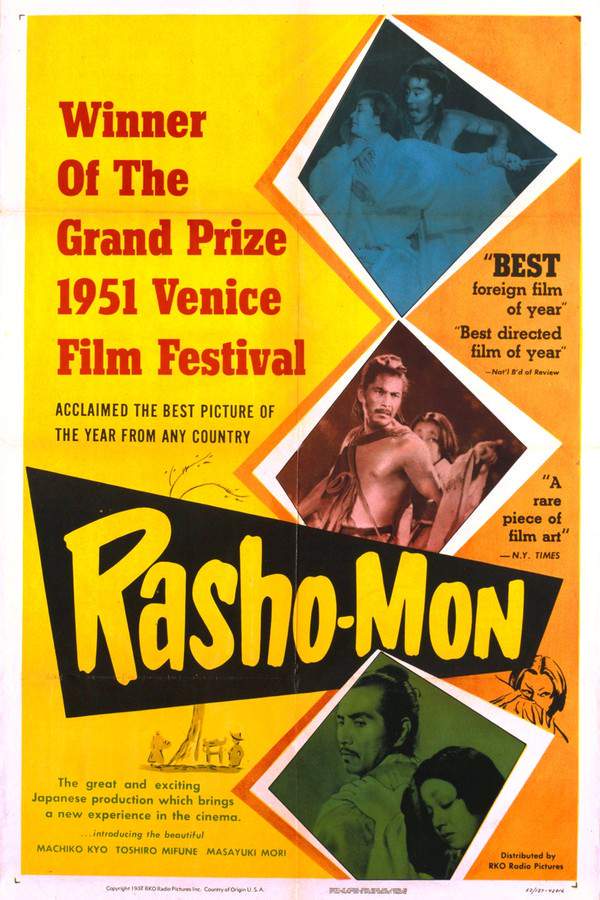
The film mirrors the structure of Rashomon by presenting mutually exclusive accounts of the same crime. This forces viewers to question whether absolute truth is achievable or whether reality is always filtered through personal perception and memory.

Foreshadowing: The opening scene with three travelers meeting establishes the frame for retelling and reinterpretation.

  • structure
  • rashomon
  • perspectives
  • truth
Q9

What perspective does the prospector add to the case?

The prospector, who was also a witness at the trial, offers a fourth completely different view of what happened at Wakefield's estate. Like the other accounts, his reliability is just as uncertain, further muddying the waters of what truly occurred.

Foreshadowing: The prospector is one of the three travelers at the railroad station, linking the frame story to the trial.

  • prospector
  • witness
  • testimony
  • fourth account
Q10

Does the film reveal what actually happened?

No. The film leaves the truth about what really happened at Wakefield's estate deliberately ambiguous. Each account carries its own weight, and no single version is confirmed as definitive, enhancing the film's philosophical exploration of subjective truth.

Foreshadowing: The ending reflects the film's overall structure, where no resolution to the mystery is provided.

  • ending
  • ambiguity
  • truth
  • resolution

Movie threads

More Movies Like The Outrage, by Mood & Story

Curated lists built around what makes The Outrage tick: the same mood, the same kind of story or the same emotional payoff. Each list explains why these movies belong together.

Movies with Subjective Truth Puzzles like The Outrage

Stories where contradictory perspectives challenge the very nature of reality. If you enjoyed the narrative puzzle of The Outrage, explore more films that use conflicting testimonies and unreliable narrators. These movies, from psychological thrillers to complex dramas, challenge viewers to question what really happened, creating a uniquely engaging and thought-provoking experience.

  • unreliable narrator
  • psychological
  • mysterious
  • philosophical
  • tense
  • ambiguous
  • Tone: tense, unsettling, philosophical
  • Pacing: slow, deliberate
Why these movies?

The story pattern: Films in this thread typically revolve around a central, often traumatic, event recounted from several points of view. The narrative structure intentionally fragments the story, presenting mutually exclusive versions that build tension and philosophical depth as the audience is forced to grapple with moral ambiguity and the impossibility of objective truth.

Why they belong together: These films are grouped by their shared narrative device of using contradictory perspectives to explore themes of truth, memory, and perception. They create a specific kind of intellectual and emotional engagement, demanding active participation from the viewer and often ending with profound ambiguity.
Slow-Burn Philosophical Thrillers like The Outrage

Tense dramas where ethical dilemmas simmer beneath a slow, deliberate surface. Fans of The Outrage's tense, conversation-heavy exploration of morality will find more gripping stories here. These films use a slow pace to deeply unsettle viewers with heavy themes, creating a powerful and thought-provoking cinematic experience centered on ethical ambiguity.

  • slow burn
  • tense
  • philosophical
  • somber
  • dramatic
  • unsettling
  • Tone: tense, somber, heavy
  • Pacing: slow, deliberate
Why these movies?

The story pattern: Stories in this thread unfold with a slow, deliberate pacing that allows complex ideas and moral quandaries to develop fully. The primary conflict is often internal or philosophical, manifested through intense conversations and a claustrophobic atmosphere. The narrative journey is one of escalating dread and deepening ethical confusion rather than a clear path to resolution.

Why they belong together: These films are united by a specific combination of slow pacing and high intellectual/emotional intensity. They prioritize mood, dialogue, and thematic depth over plot speed, appealing to viewers who enjoy being mentally challenged and emotionally unsettled by a film's central ideas.

If you liked this

Movies Like The Outrage

Similar movies to The Outrage: the same genre, themes or kind of story. Each one comes with its own plot summary, timeline and ending explained.

Browse all movie summaries

Every angle

The Outrage (1964) Explained: Plot, Timeline & Characters

Everything about The Outrage in one place: what happens in the plot summary, the timeline in chronological order, the characters and meaning and a spoiler-free summary. What's After the Movie adds the cast, box office and post-credit scenes.

Coming soon on iOS and Android

The Plot Explained Movie Summary App

Plot summaries, endings explained and timelines on your phone. Catch up on any movie in minutes, save your favorites and never miss a twist again.

Be the first to know when we launch. Your email stays private, always.

Learn more about the app