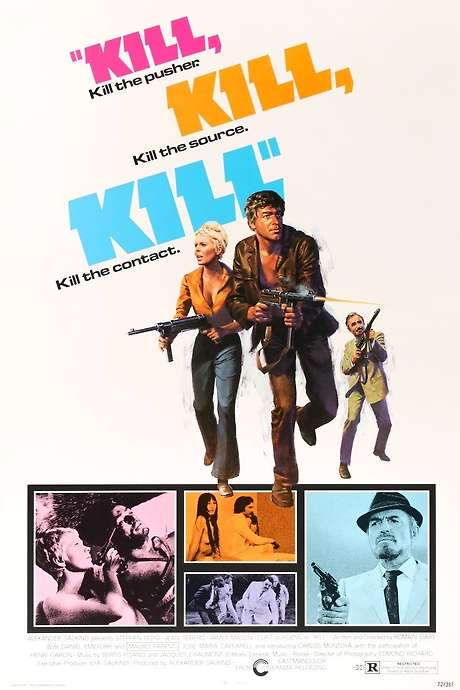
Two men, both professional assassins, enter a hotel lobby and confront the manager Araña. They swiftly disarm him, taking away his shotgun and revolver, and then discuss a long-standing pursuit that has kept them circling this rooftop hotel for years. In the mix of cool, tense conversation, the hotel becomes a stage for a web of loyalties, betrayals, and the hidden costs of living a life ruled by killing.
From a high window, The Old Sniper scans the city with his rifle. He phones his daughter, longing to see her but choosing distance because his profession has already shaped so much of their lives. A streetwalker is brought to his room and sent to visit the target across the way, a man named “Sanchez.” When she reaches the roof, gunfire erupts between the two sharpshooters, and the Old Sniper is badly wounded. A chilling phone call follows, revealing the grim twist: he was hired to be the target, not the killer. The moment marks a cruel shift in who holds power and who bears the blame.
Sanchez, the man who holds the diamonds, believes his work is nearly done. He receives instructions to stash the diamonds in an abandoned car and wait for payment. But two armed cops, Miguel and Lance, arrive to seal his fate. Sanchez tries to broker a deal—offering money to one officer to eliminate the other—but the plan backfires. Lance shoots Sanchez after learning that Sanchez spoke Spanish to Miguel, a language Lance cannot understand, and Miguel, furious at the deception and the mess it creates, is forced to dispose of the body. The fallout is swift: Miguel clashes with Lance, and the two end up in a deadly shootout that leaves Miguel dead as well.
Lance then seeks refuge with the enigmatic Woman in Red, The Woman In Red, and they discuss fresh passports and new identities as a way to vanish. Their fragile alliance is interrupted when a gang closes in, demanding surrender. A brutal fight erupts, and the Woman in Red escapes the chaos by hijacking a milk truck, driving straight to the hotel. She checks in, asking for a room with a street view, and Araña—who has worn many hats in this place—confirms that he is the clerk, bartender, security guard, and owner. The Woman in Red quickly assesses that Araña bears the scars of violence, and she allows herself to be drawn into his dangerous orbit. They share a charged, intimate moment, but the moment is interrupted when a hotel bell rings—a signal of coming trouble.
The Very Bad Woman, The Very Bad Woman, and a man named Oso arrive in a tense, crowded corridor. The Very Bad Woman pushes to retrieve her cash and jewelry, while Araña guides her to the Woman in Red’s room. A fierce confrontation follows, and the Woman in Red disables him in a moment of lethal precision, stabbing the Very Bad Woman to death. Downstairs, Araña shares a drink with Oso, whose hands tremble as Araña reveals pills used to poison the drink. Oso succumbs to the poison, collapsing on the table in a silent, conspiratorial moment.
Returning to the opening situation, the hotel desk becomes the center of a deadly confrontation. The two assassins reappear, and one menaces Araña with a shotgun. The truth about the “Organization” behind their world comes to light: Araña and Franco were pulled into a Private Military Contractor arrangement that required them to take control of a shipment. The shocking discovery is that the shipment is a cache of underage girls. The men keep the money and free most of the girls, but one is kept close by Franco as his daughter. The freed girls are later killed by Sanchez, while the Old Sniper watches in complicity, adding to the guilt that haunts Araña. Franco’s daughter is captured by Miguel and Lance, who torture and kill her; Franco himself is killed by the Very Bad Woman. This chain of violence explains why Araña has been holed up in the hotel for a year, plotting revenge against those who destroyed his partner and the girl they cared for.
A climactic shootout erupts, leaving both assassins dead, and Araña in possession of the payoff. He gives the Woman in Red the money and diamonds, a final act of complex mercy and closure amid the ruin. In the aftermath, Araña finds the dying Old Sniper and confronts his own complicity. The Old Sniper concedes some guilt for not intervening when the girls were harmed, and he passes a phone to Araña with a final request: to look after his daughter. Araña, grappling with that weight, ends the life of the Old Sniper and steps into the night, ringing the daughter’s number and taking responsibility for what remains of the broken world around him.