Plot Explained Spoilers guaranteed!
Plot Explained

Browse by genre

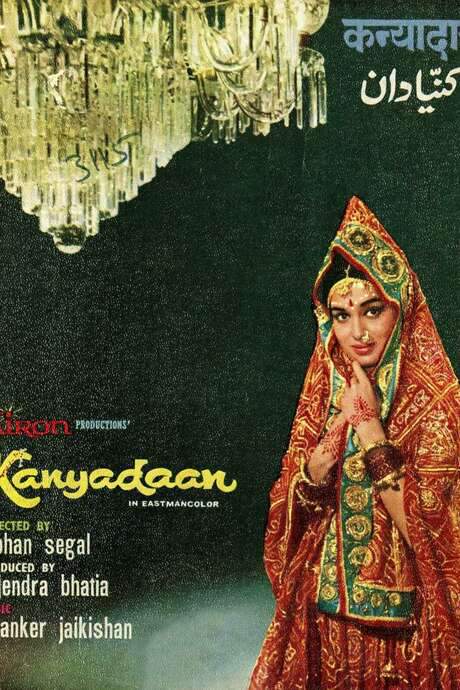
Kanyadaan (1968) movie poster

Plot Summary

Kanyadaan (1968) Plot Summary Explained

Release, runtime and language
1968 · 149 mins · Hindi
Directed by
Mohan Segal
Starring
Shashi Kapoor, Om Prakash, Achala Sachdev, Tun Tun, Asha Parekh, Sayeeda Khan

Amar and Rekha fall in love, but their happiness is endangered when Rekha discovers that she was already married as a child.

On this page (5)
  1. 1 What happens: full plot
  2. 2 Plot questions answered
  3. 3 Movie threads
  4. 4 Movies like Kanyadaan
  5. 5 Every angle

Full plot summary · contains spoilers

What Happens in Kanyadaan: Full Plot Summary

The whole story of Kanyadaan (1968) explained, from the opening scene to the final frame: every key event, every twist and what it all adds up to. Read it as a quick recap before the sequel, to check a scene you missed, or to finally understand what really happened.

The film opens with a spirited hockey match between the girls' team Bulbuls and the boys' team Heroes, ending in a win for the girls by 2 goals to 1. Lata, Sayeeda Khan, from the Bulbul squad, finds herself drawn to Amar, a poet on the boys' side. The two Amars—Amar and his close friend Kumar—share a name that often causes confusion among their circle, setting up a thread of mistaken identity that runs through the story. Amar Shashi Kapoor is introduced as a perceptive, lyrical young man who forms a strong bond with his teammates, and the tension between duty, love, and friendship begins to unfold.

When Kumar learns about the budding romance between Amar and Lata, he takes charge to bring them together. He promises Lata's father that he will look after her, especially since she has no in-laws to rely on, and his sense of responsibility pushes him to navigate the social expectations that surround marriage, family, and protection. The intent is noble, but the path is complicated by shared histories and competing loyalties within the group.

On a routine business trip, Kumar’s car breaks down in a rural town, and he encounters Rekha, a village girl who welcomes him into her home. Rekha, Asha Parekh, is kind and alluring, and the two quickly feel a mutual attraction. Rekha invites him to stay, and he accepts, drawn to the simplicity and warmth of her world. As they grow closer, the distance between city life and village life becomes a backdrop for their evolving feelings, even as Kumar remains mindful of the tangled circumstances around him.

Back in Rekha’s world, Rekha’s mother, Rekha's Mom, Achala Sachdev, reveals a long-hidden truth: Rekha was married in childhood to a boy named Amar, a revelation Rekha herself had not known. She hands Kumar a photograph of the wedding and asks him to help locate the other Amar, deepening the mystery and heightening the sense of obligation that surrounds Rekha’s future. This startling discovery forces Kumar to confront a past that could redefine everyone’s lives, and Rekha must decide how to face a future shaped by traditions she never fully understood.

Kumar returns later with a childhood photograph of himself, along with a driving license that lists his full name as Amar Kumar. Rekha is overwhelmed with happiness and agrees to become his wife, feeling that destiny has bolstered their bond. Yet the revelation that the original Amar is already married to Lata complicates the picture: Kumar pleads with Rekha to accept the truth and still marry him, but Rekha’s emotions swing between love and the sense of betrayal that accompanies such a revelation. In a moment of despair, Rekha leaves the house and nearly collides with a car driven by the other Amar, a near-catastrophic reminder of the fragile balance between choice and fate.

Amar and Lata, realizing that Rekha has nowhere else to go and that she is caught in a web of circumstance, offer her shelter. Rekha, recognizing the reality of the situation, chooses not to reveal the truth to her benefactors. Kumar, meanwhile, sinks into sadness and turns to drink, while tensions rise at Amar’s home due to Rekha’s continued presence and involvement in household matters.

As tensions escalate, Rekha’s mother arrives from the village to lend her daughter perspective and guidance. She helps Rekha understand that the childhood marriage, conducted without consent, does not constitute a legitimate union in the eyes of tradition, and she explains that true kanyadan—when parents give away their adult daughter with her informed consent—should occur in a meaningful, consensual setting. With her mother’s insistence on consent and dignity, Rekha comes to a difficult but crucial decision: she accepts Kumar as her husband, recognizing that love and truth must align with respect for each other and for the families involved.

Throughout this journey, the story weaves themes of love, duty, tradition, and personal agency, presenting a nuanced portrait of relationships under the pressure of social norms. The cast’s performances—anchored by Rekha’s warmth, Lata’s resolve, and Amar’s sense of responsibility—drive a romance that is as much about honesty and consent as it is about affection. The film ultimately affirms that genuine connection can endure even when the path to union is tangled with miscommunication, past secrets, and the recalibration of what matters most.

Last updated: October 09, 2025 at 12:40

Was this helpful?

Plot questions answered

Kanyadaan Plot Explained: Your Questions Answered

The questions people ask most about Kanyadaan (1968): what happens in the confusing scenes, why the characters do what they do, the twists, hidden details and what the ending means. Each answer contains spoilers.

Q1

Why does Rekha's mother reveal her childhood marriage?

Rekha's mother reveals the childhood marriage when Kumar asks for her hand in marriage. She shows him a wedding photograph and pleads with him to help locate the other Amar. This revelation comes from a place of honesty, she cannot allow Kumar to marry Rekha without knowing about the prior commitment, even though it was conducted without Rekha's informed consent when she was a child.

Foreshadowing: Earlier in the film, Kumar's sense of responsibility toward Lata sets up the theme of honoring commitments.

  • child marriage
  • rekha's mother
  • wedding photo
  • tradition
Q2

Why does Kumar leave Rekha after learning about her childhood marriage?

After learning that Rekha was married in childhood to someone named Amar, Kumar leaves silently to give her space and time to make her own decision. He respects the traditional significance of the revelation and does not want to force her into a choice. His departure reflects his moral character, he wants Rekha to choose freely rather than feel obligated.

Foreshadowing: Kumar's earlier promise to Lata's father to take care of her establishes his sense of duty.

  • kumar
  • rekha
  • leaving
  • respect
  • choice
Q3

What is the significance of Kumar's full name being Amar Kumar?

When Kumar returns with his childhood photograph and driving license, it reveals his full name is Amar Kumar, the same person Rekha was married to as a child. This discovery leads Rekha to believe destiny has brought them together. However, the complication arises because another Amar (the one married to Lata) also exists, creating the central mistaken identity thread that drives the film's conflict.

Foreshadowing: The film earlier established that two Amars, Amar and his friend Kumar, share a name, causing frequent confusion.

  • amar kumar
  • mistaken identity
  • childhood photo
  • driving license
Q4

Why does Rekha try to end her life?

Rekha attempts suicide after learning that the original Amar she was married to is already happily married to Lata. Kumar tells her he cannot disrupt their marriage despite his love for her. Overwhelmed by the realization that her childhood marriage is real but cannot be fulfilled, and feeling trapped by tradition, Rekha flees in despair and nearly steps in front of a car driven by the other Amar.

Foreshadowing: The mounting pressure from the revealed truths and the moral dilemma builds throughout the film.

  • suicide
  • despair
  • near accident
  • emotional breakdown
Q5

Why doesn't Rekha reveal that Kumar is the real Amar?

Rekha discovers that Kumar (whose full name is Amar Kumar) is the same person she was married to as a child, and that he is happily married to Lata. Out of respect for their marriage and restrain, she chooses not to disclose this truth to Amar and Lata. She accepts her situation silently rather than disrupting the happiness of the couple who took her in, demonstrating her moral character despite her own suffering.

Foreshadowing: The tension between truth and compassion runs throughout the narrative.

  • reka silence
  • truth concealed
  • respect
  • marriage
Q6

Why does Lata react with fury to the news of Rekha's childhood marriage?

Lata learns about the implications of Rekha's childhood marriage and reacts with anger and concern. She fears that this hidden past could threaten the stability of her own marriage to Amar. The revelation brings up deeper anxieties about secret commitments, trust within the marriage, and the social complications of unresolved past relationships.

Foreshadowing: Earlier tension about Rekha's presence in the household builds to this confrontation.

  • lata
  • anger
  • child marriage
  • marriage threat
Q7

What is kanyadan and why does it matter in the film?

Kanyadan is the Hindu ritual where a father gives away his daughter in marriage. In the film, Rekha's mother argues that a childhood marriage without the daughter's consent does not constitute a legitimate kanyadan. She explains that true kanyadan requires the informed consent of the adult daughter. This perspective reframes Rekha's situation, she is not bound by a childhood arrangement and can legitimately marry Kumar as an adult with her full consent.

Foreshadowing: The theme of consent and personal agency underlies the entire narrative.

  • kanyadan
  • consent
  • tradition
  • ritual
  • childhood marriage
Q8

How does Rekha's mother help resolve the situation?

Rekha's mother travels from the village to provide guidance. She clarifies that the childhood marriage has no legal or traditional validity without the daughter's consent. By emphasizing that a proper kanyadan requires adult consent and parental approval in a meaningful setting, she gives Rekha the moral framework to accept Kumar as her husband. Her intervention transforms the situation from one of confused obligation to one of informed choice.

Foreshadowing: Her earlier revelation of the childhood marriage set this resolution in motion.

  • rekh's mother
  • guidance
  • consent
  • resolution
Q9

Why does the film have two characters named Amar?

The film features two characters named Amar: Amar (Shashi Kapoor), the poet who marries Lata, and Kumar, whose full name is Amar Kumar. This shared name creates ongoing confusion throughout the story and serves as the engine of the plot's central misunderstanding. The mistaken identity allows the childhood marriage revelation to create maximum dramatic tension.

Foreshadowing: The opening hockey scene establishes both Amars and the confusion their names cause.

  • two amars
  • mistaken identity
  • confusion
  • kumar
Q10

What is the significance of the near-accident scene?

After learning the painful truth about Amar (Kumar), Rekha runs from the house in despair and nearly collides with a car driven by the other Amar. This near-catastrophic moment serves as a wake-up call for all characters, emphasizing how close Rekha came to tragedy. It also brings the two couples into direct contact, leading Amar and Lata to offer her shelter, a pivotal moment that sets up the film's final resolution.

Foreshadowing: The opening hockey match established the competitive, fate-driven atmosphere.

  • near accident
  • dramatic moment
  • turning point

Movie threads

More Movies Like Kanyadaan, by Mood & Story

Curated lists built around what makes Kanyadaan tick: the same mood, the same kind of story or the same emotional payoff. Each list explains why these movies belong together.

Love Against Tradition movies like Kanyadaan

Romantic hopefulness challenged by deeply ingrained societal rules and secrets. Discover movies like Kanyadaan where love is tested by tradition. These films feature couples fighting against societal norms, family secrets like pre-arranged marriages, and deep-seated customs. If you liked the hopeful yet dramatic struggle in Kanyadaan, you'll find similar stories of romance, duty, and social pressure here.

  • romantic
  • dramatic
  • anxious
  • hopeful
  • reflective
  • warm
  • Tone: hopeful, dramatic
  • Pacing: steady, character-driven
Why these movies?

The story pattern: Stories typically begin with a blissful romantic connection that is suddenly complicated by a revelation tied to tradition—such as a forgotten betrothal or a family obligation. This creates a central ethical dilemma, forcing characters to navigate between personal desire and social duty. The narrative builds tension through emotional confrontations and moral choices, ultimately moving toward a resolution that affirms personal agency and truth.

Why they belong together: These films are grouped together because they share a specific emotional core: the anxiety and hope of love battling convention. They balance a warm, romantic foundation with dramatic tension from social pressure, creating a distinct viewing experience focused on ethical dilemmas and the ultimate triumph of consent over coercion.

Dramas with secrets and hope like Kanyadaan

Steady character journeys where past revelations test relationships but hope endures. If you liked the secret from the past in Kanyadaan, explore these hopeful dramas. These movies feature characters discovering life-altering truths that challenge their relationships. Like Kanyadaan, they balance dramatic tension with a warm, reflective mood and ultimately resolve in a satisfying, hopeful conclusion.

  • dramatic
  • anxious
  • hopeful
  • reflective
  • warm
  • earnest
  • Tone: hopeful, reflective
  • Pacing: steady, contemplative
Why these movies?

The story pattern: The narrative pattern involves a central character or couple whose present happiness is built on an unknown or forgotten past event. The discovery of this secret—like a mistaken identity or a forgotten vow—acts as the primary catalyst for conflict. The story then follows a journey of acceptance and problem-solving, where characters work through the emotional fallout rather than succumbing to tragedy, leading to a dignified and positive resolution.

Why they belong together: These movies are united by a shared vibe of earnest drama tempered by optimism. They blend moderate emotional weight with a steady, manageable pace, avoiding overwhelming darkness. The key similarity is the structural use of a past secret as the central obstacle, which is overcome through empathy and truth, resulting in a uplifting, warm feeling.

If you liked this

Movies Like Kanyadaan

Similar movies to Kanyadaan: the same genre, themes or kind of story. Each one comes with its own plot summary, timeline and ending explained.

Browse all movie summaries

Every angle

Kanyadaan (1968) Explained: Plot, Timeline & Characters

Everything about Kanyadaan in one place: what happens in the plot summary, the timeline in chronological order, the characters and meaning and a spoiler-free summary. What's After the Movie adds the cast, box office and post-credit scenes.

Coming soon on iOS and Android

The Plot Explained Movie Summary App

Plot summaries, endings explained and timelines on your phone. Catch up on any movie in minutes, save your favorites and never miss a twist again.

Be the first to know when we launch. Your email stays private, always.

Learn more about the app