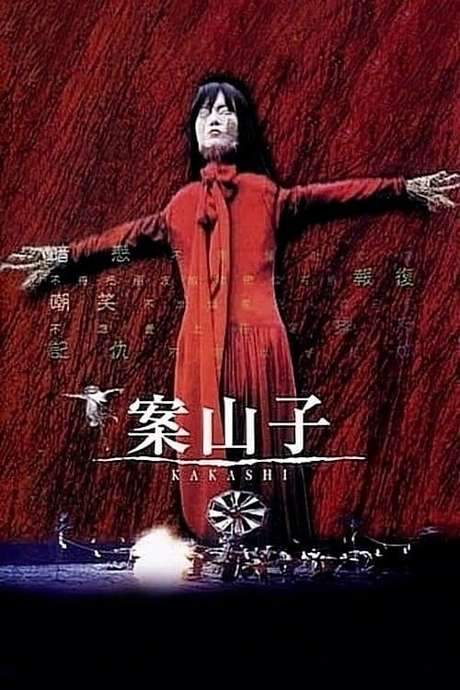
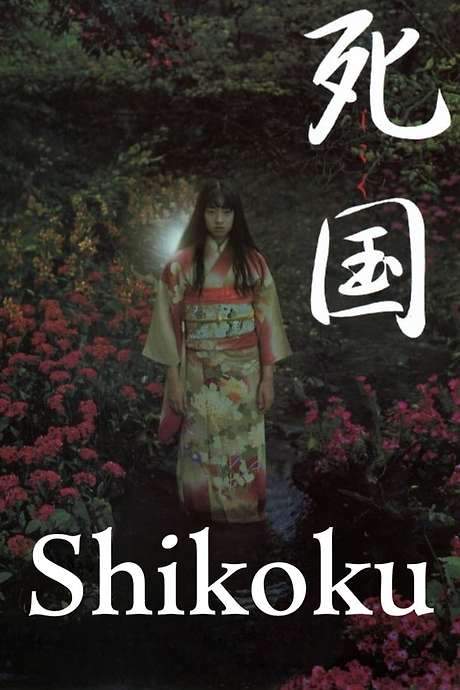
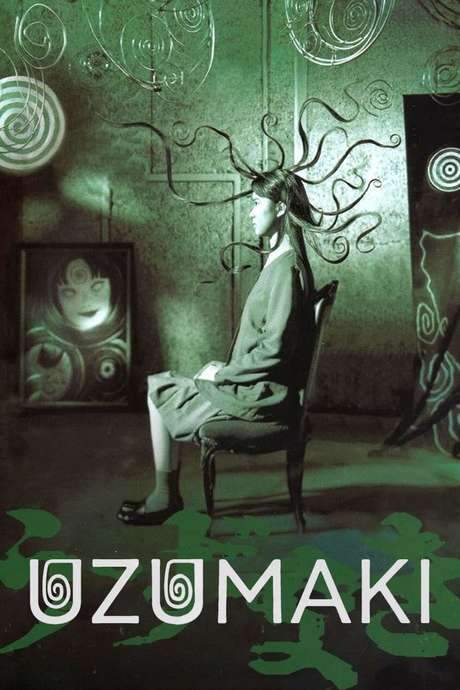
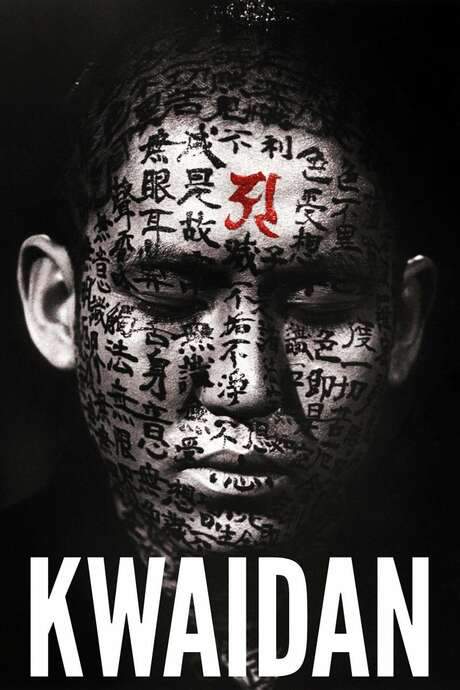
The film opens by revisiting a chilling tradition tied to the belief of Kakashi: people burn animal and human hairs to keep evil spirits from crossing into our world. Over time, this ritual evolves into burning straw effigies, which are said to attract the spirits of the dead so they can reach out and interact with the living. Yet the practice is steeped in danger, and the story warns that the costs may be far greater than anyone expects.
In medias res, Kaoru Yoshikawa [Maho Nonami] is seen in a desperate moment, screaming before a blaze and asking why this tradition must prevail. Kaoru is a young woman who has always shared a close bond with her brother, Tsuyoshi, while their parents have long since passed away. When a week passes without word from Tsuyoshi, she travels to his apartment and discovers an envelope sitting near the telephone. Inside lies bits of straw and a letter from Izumi Miyamori [Ko Shibasaki], a former friend who invites Tsuyoshi to meet her. The address points to Kozukata Village, a secluded place nestled in the hills. On her way, Kaoru spots a missing-person poster for a Chinese woman named Sally Chen [Grace Yip Pui-Man], which leads her toward a tunnel that seems to beckon her into the village.
Entering Kozukata, Kaoru finds the locals wary and distant, offering only curt responses about the impending Kakashi Matsuri, or Scarecrow Festival. Her path brings her to a red-draped windmill where she encounters Sally again, who appears to be playing with a small girl, Ayumi Noji [Mizuho Igarashi]. Ayumi’s father, Shûsaku Noji [Yoshiki Arizono], arrives in a rush to take the girl away, sternly warning Kaoru not to talk to strangers. The moment Kaoru steps into Izumi’s world, she heads to the Miyamori residence and is greeted by Izumi’s parents. Izumi’s father, Kozo Miyamori [Kenzo Kawarasaki], welcomes Kaoru, but his wife Yukie Miyamori [Lily] remains cold and distant, as if suspicion itself hovers in the air. Kozo offers Kaoru a place to stay and mentions that Izumi is in the hospital, though the tension in the house suggests more than a simple illness.
That first night, Kaoru dreams of Izumi who seems to scorn Kaoru’s appearance, and she also dreams of an Izumi-shaped scarecrow haunting the night. In town, Kaoru heads to the police station to fix her car and encounters Sally, whose presence once again unsettles her, especially when she learns that Sally’s father sits behind a desk there. The following night, Kaoru’s dream reveals Tsuyoshi fashioning an Izumi-shaped scarecrow, a vision that foreshadows the village’s unsettling habit. The next day, she returns to the station and receives a shocking discovery: Sally’s father is, in fact, a living scarecrow. Now the villagers, animated by a shared fear and tradition, attack Kaoru, while Sally urges her to flee as she confronts the threat.
In the Miyamori home, Kaoru finds Izumi’s diary, which unravels a painful truth: Izumi had fallen in love with Tsuyoshi, but Kaoru’s protective, overbearing behavior kept Izumi from reaching him, pushing the young woman toward resentment that will mark Kaoru for life. Izumi’s ghost then appears, revealing that Kaoru’s jealousy is a trigger for the haunting. Izumi warns that Kaoru’s presence in the village has already disturbed her, and the ghost makes clear that she will be alive that night. Kaoru races to confront Kozo, who finally admits a grim truth: Izumi died years ago, and his appearance in the village is a ritual meant to celebrate the festival and give them a chance to reunite with her in death. This sinister celebration is not limited to Izumi alone; Sally and others participate, drawn from far and wide to join the living and the dead in a ritual that is now spiraling out of control. Kozo recognizes a darker mechanism at work: the scarecrows come alive not by mere ritual purpose but because Izumi’s malevolent spirit infuses them with life and drives them toward monstrous transformation.
Kozo leads Kaoru to a clinic where her brother Tsuyoshi is found in a trance, a condition that has gripped him since his arrival. Kaoru is determined to break the trance and works to coax Tsuyoshi back by snapping him back to reality. With Tsuyoshi regained for a moment, the trio—Kaoru, Tsuyoshi, and Sally—flee toward the tunnel, trying to outrun the encroaching scarecrows as the festival looms closer. Meanwhile, Ayumi, who is revealed to be a scarecrow herself, turns on her father and Kozo, brutally severing their lives in a shocking display of the festival’s dangerous hidden power.
As the Kakashi Matsuri ignition begins, Izumi’s scarecrow is the first to awaken fully, and it kills Izumi’s own mother by snapping her neck in a moment that foreshadows the catastrophe behind the festival’s facade. The trio pushes forward, stumbling toward the windmill where Izumi awaits, a chilling convergence of the past and present. Tsuyoshi’s lighter becomes a final instrument of peril as he ignites a blaze that consumes both Izumi and himself, with Izumi laughing in triumph as Kaoru watches in horror. The flames cast a cruel glow on the ruined festival as Kaoru and Sally race toward the tunnel, hoping to escape the nightmare that has turned the village into a corridor of living horrors. Just as they near safety, Tsuyoshi’s spirit appears, calling to Kaoru with a plea that she cannot easily refuse.
Facing an impossible choice, Kaoru realizes there is no safe path back to the world she once knew, and Tsuyoshi is the only person who still seems to care for her. Guided by that memory, she resolves to follow him, even as Sally urges against it and begs her to return to safety. In the end, the village has become a battleground where love, jealousy, and grief fuse with a supernatural force that cannot be contained. The conclusion leaves Kaoru at a crossroads between the living and the dead, compelled to pursue the one person who truly matters to her—even if it means stepping deeper into a nightmarish landscape where every scarecrow holds a story and every flame threatens to erase the past.
Note: Characters and actors referenced above align with the provided cast information, with first-time mentions accompanied by linked actor names for quick access to their pages on the site.