Plot Explained Spoilers guaranteed!
Plot Explained

Browse by genre

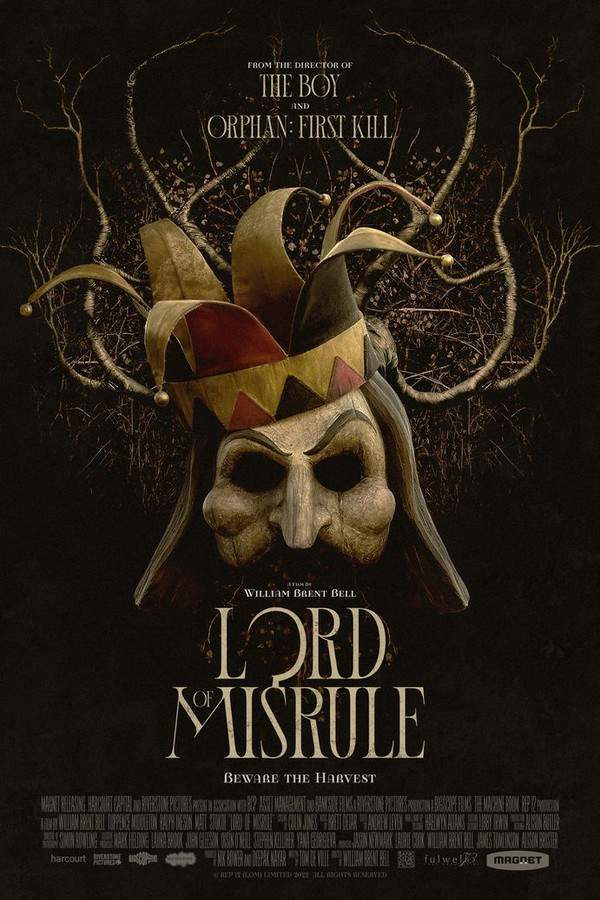
Lord of Misrule (2023) movie poster

Plot Summary

Lord of Misrule (2023) Plot Summary & Ending Explained

Release, runtime and language
2023 · 1 h 44 m · English
Echo score 53
JustWatch #11,761 14
Directed by
William Brent Bell
Starring
Ralph Ineson, Tuppence Middleton, Matt Stokoe, Robert Goodman, Joe Citro, Rosalind March

When a priest’s daughter disappears during a harvest festival, her world is upended. Driven to find her, the priestess Rebecca Holland begins to investigate, uncovering long-buried secrets within the close-knit community that threaten to destroy everything she knows. She must confront the town’s dark history before it’s too late.

On this page (7)
  1. 1 Where to watch
  2. 2 What happens: full plot
  3. 3 Plot questions answered
  4. 4 How it ends
  5. 5 Movie threads
  6. 6 Movies like Lord of Misrule
  7. 7 Every angle

Where to watch

Where to Watch Lord of Misrule (2023)

Where can you watch Lord of Misrule? Stream, rent or buy it in the US, including on Hulu, Hoopla and Kanopy: current JustWatch availability with up-to-date prices.

Streaming availability powered by JustWatch

Full plot summary · contains spoilers

What Happens in Lord of Misrule: Full Plot Summary

The whole story of Lord of Misrule (2023) explained, from the opening scene to the final frame: every key event, every twist and what it all adds up to. Read it as a quick recap before the sequel, to check a scene you missed, or to finally understand what really happened.

Rebecca Holland, [Tuppence Middleton], is a newly appointed vicar in a quiet village, and she begins her tenure with a baptism that quietly underlines the town’s uneasy undercurrents. At home, Grace, Rebecca’s daughter, behaves in a disturbing way: she tears at her own hair and binds it as if wrapping a secret gift, and she clutches the family rabbit with a pair of scissors held close to its neck. From a distance, three masked onlookers observe Grace’s actions, and it feels as if she is speaking to them without saying a word. When Rebecca returns, she finds Henry, her husband, cleaning Grace’s wounds from the rabbit incident, and a fault line appears between them. Rebecca accuses Henry of failing to care for Grace, while Henry insists he must concentrate on work to bring new things to the family. Grace has just settled into a recent move, but Rebecca’s worries grow, and Grace overhears their conversation and slips away.

Grace is chosen as the Harvest angel and makes her way toward the village festival. Rebecca senses trouble, though she cannot yet grasp the full scope of Grace’s secret rituals. As Grace moves through the crowd, a circle of girls surrounds her, preparing her for something unspoken. The villagers gather for a performance tied to the old customs, and the scene shifts to Jocelyn Abney, [Ralph Ineson], who is preparing for the Feast of the Fools—the village’s ritualized revelry. Donning the makeup and the role of lord of misrule, he channels a dark energy, urging the crowd to chant the name of Gallowgog, the harvest blight, while presenting himself as fearless before the audience. His performance culminates in a procession toward the edge of the forest, where the field meets the trees, and the crowd is set alight by a ritual energy that feels both ceremonial and dangerous.

As night falls, the bonfires blaze in three separate rings and the villagers dance in a crowded circle around the flames. Rebecca searches for Grace but loses sight of her in the throng. A friend mentions Grace’s absence in a way that sounds almost perfunctory, and Rebecca ventures into the forest to pursue her daughter, following a tall man who seems to vanish into the trees. She eventually returns, realizing that Grace has slipped beyond her reach.

The next day, police questioning begins, but the officers are slow to press the issue, repeating questions in a way that suggests they suspect more than they are willing to pursue. Rebecca asks the officers to leave her house, and she ends up sleeping in Grace’s bed after praying. That night, Grace speaks to her mother in a whisper, as if seeking a rescue. Rebecca begins to suspect that Grace is still alive and imprisoned, and she feels the girl’s presence as if Grace is begging for help.

In the chapter titled The Gift of Blood, the villagers flood the forest in search of Grace, but they return with little more than a slip of wind and the lingering sense that something has departed. A police clip reveals Grace speaking to a man with a triangle tattoo on his hand—the same man who wore the Gallowgog costume during the festival. That discovery sends Rebecca and Henry to the outskirts of the village, where they confront Derry Nash and his grandfather. Inside a campervan, they uncover ominous, handmade devices embedded in the wall and, at the center, a small chair with a Harvest Angel-like figure sitting on a throne, surrounded by animal skins that are still bleeding. It becomes clear that there is a cult involved in the town’s rituals, and Grace’s fate hangs in the balance as Rebecca realizes the scale of the danger.

That night, Rebecca sees Grace in a dream again, pleading for rescue. By the third day, the chapter titled The Gift of Fire unfolds as Rebecca seeks help from the church and the community. She asks the congregation to pray for Grace, but Jocelyn interrupts, claiming that God cannot restore Grace because God does not have her. He repeats an unsettling line Rebecca found at Nash’s property: “He stands in the field and waits.” Rebecca senses that Jocelyn’s zeal may be linked to the same dark force that has taken Grace, and she suspects that Gallowgog has penetrated the town through the people who now control it.

Ida Tremlow, [Jane Wood], appears distressed by an ominous atmosphere, and Mira explains the folklore around Gallowgog and how Christianity supplanted the old ways. The story recalls a 1621 history in which a lord of misrule named Tobias Bron claimed contact with the spirit of the land, promising wonders in exchange for offerings—blood offerings that led to the burning of Bron and his followers when the Church intervened. Rebecca begins to see how Jocelyn has become the modern Tobias Bron, moving to place Grace at the center of a ritual that the town is more than willing to participate in.

Rebecca learns that Jocelyn is teaching children at the school and that their parents are drawn into the same cycle. She begs Henry to help, but he remains skeptical, certain that Grace is simply missing rather than in grave danger. Rebecca attends the vigil for Grace, where the villagers sit in hushed silence while singing the recurring refrain “All Is As Was,” the fourth chapter’s refrain, and where she realizes Grace’s absence is more than simple misplacement. Henry strikes Jocelyn, trying to halt the cult’s momentum, but the town rallies around Jocelyn, and Rebecca is pulled into the crowd’s murmur.

Derry Nash arrives at the scene in a desperate bid to reach Grace and exposes the attempt to lure Grace into the Black Barn—a structure built for ritual offerings. He is killed by the crowd when he tries to intervene, and Rebecca is captured and dragged away to the school. When she comes to, she finds herself beside Jocelyn, who believes the village’s faith in the ritual is absolute. Rebecca’s resolve hardens as she realizes she must save Grace, but the town’s fevered devotion makes that task nearly impossible.

Henry is coerced into sitting in the same position as Tobias Bron’s captives, surrounded by witnesses to a horrifying event that has yet to unfold. Rebecca pleads with the village to reject the ritual, but they remain silent, obedient, and unyielding. Jocelyn reveals his plan: kill a vicar as retribution for Bron’s death, a ritualized revenge that would seal his authority. He forces Henry into the deadly chair, threatening to enact a ritual that will end Grace’s life.

In a brutal culmination, Henry dies at Jocelyn’s hands, and Rebecca, now full of purpose, sings along with the other villagers to the familiar refrain. She is taken to the Black Barn, where she finds Grace in the same room that had horrified her earlier. Before escaping with Grace, she confronts Gallowgog in the open, removing her own fear by offering her hair as a symbolic gift to the dark spirit. When she emerges with Grace, the crowd’s faith falters as they watch her stand unmasked before the devil they have worshiped.

Rebecca explains to the villagers that she has allowed Gallowgog to see her face, a stark contrast to Jocelyn’s masked approach, which has fed their fear. The ritual’s power appears to be shifting. The crowd’s fear dissolves into doubt, and the question of what Gallowgog truly wants remains open. Jocelyn’s power over the village begins to crumble as the crowd’s trust shifts toward Rebecca.

In the aftermath, the villagers burn Jocelyn, ending his reign of terror, and Rebecca returns to her role as the village vicar—with Grace safe, at least for the moment. Yet the ending leaves a disturbing image: a part of the devil seems to have taken up residence within Rebecca herself, a consequence of offering her hair as a surrender to the dark presence that had haunted Grace. Grace thrives in Rebecca’s renewed guardianship, and the town’s mood shifts as the old ways are replaced by a uneasy sense of what has been gained and what has been lost. The story closes with a cautious, lingering sense that the line between salvation and possession has blurred, and that the village will carry the weight of this revelation for years to come.
Last updated: October 27, 2025 at 16:47

Was this helpful?

Plot questions answered

Lord of Misrule Plot Explained: Your Questions Answered

The questions people ask most about Lord of Misrule (2023): what happens in the confusing scenes, why the characters do what they do, the twists, hidden details and what the ending means. Each answer contains spoilers.

Q1

Why was Grace chosen as the Harvest Angel?

Grace was selected as the Harvest Angel because the cult had already been grooming her through secret rituals. The three masked watchers who observe her at home were part of the cult, and Grace had been quietly participating in their practices. Being chosen as the Harvest Angel positioned her as the central offering in the ritual to Gallowgog. The selection wasn't random, it was part of a longer plan to use her in the festival's climax.

Foreshadowing: Earlier, Grace tears her own hair and binds it like a gift while clutching the rabbit with scissors, actions that suggest she's already been initiated into the cult's practices.

  • grace
  • harvest angel
  • cult
  • ritual
  • festival
Q2

What is Gallowgog and why does the village worship it?

Gallowgog is an ancient spirit of the land that the village has worshipped since pre-Christian times. According to the folklore explained by Mira, Christianity attempted to suppress these old ways but never completely succeeded. The spirit is tied to the harvest and demands blood offerings. Jocelyn Abney, the modern lord of misrule, has revived this worship, positioning himself as a conduit between the village and Gallowgog.

Foreshadowing: Jocelyn's performance during the festival directly invokes Gallowgog, and the chant 'He stands in the field and waits' foreshadows the spirit's waiting presence throughout the ritual.

  • gallowgog
  • spirit
  • cult
  • worship
  • folklore
  • harvest
Q3

Why does Jocelyn kill Henry?

Jocelyn kills Henry as part of ritualized revenge rooted in the village's history. In 1621, the Church burned Tobias Bron and his followers for making contact with Gallowgog. Jocelyn views killing a vicar as retribution for that historical act, making Henry the sacrifice to complete the cycle of vengeance. This also removes the only person who could interfere with the cult's plan to sacrifice Grace.

Foreshadowing: The story of Tobias Bron and his followers being burned by the Church establishes the revenge motive that Jocelyn later enacts against Henry.

  • henry
  • death
  • jocelyn
  • ritual
  • revenge
  • tobias bron
  • cult
Q4

Is Rebecca possessed by the devil at the end?

The ending suggests Rebecca has been fundamentally altered by her confrontation with Gallowgog. She offers her hair as a symbolic gift to the dark spirit, and the narrative explicitly states 'a part of the devil seems to have taken up residence within Rebecca.' She remains the vicar but now exists in an uneasy balance between her faith and the darkness she has accepted to save her daughter.

Foreshadowing: The transformation began when she removed her fear and offered her face to Gallowgog, breaking the tradition of the masked devil that had terrified the villagers.

  • rebecca
  • ending
  • possessed
  • devil
  • gallowgog
  • hair
  • sacrifice
Q5

What is the Lord of Misrule tradition in the movie?

The Lord of Misrule is a traditional festival role where one person temporarily assumes authority to oversee ritualistic revelry. In this village, Jocelyn Abney takes on this role during the Feast of Fools, performing as the leader of the harvest ceremony. He leads the villagers in chanting Gallowgog's name and guides them toward the forest where the ritual escalates into violence and sacrifice.

Foreshadowing: The historical account of Tobias Bron, a previous lord of misrule who made contact with Gallowgog and demanded blood offerings, provides context for Jocelyn's revival of this dangerous tradition.

  • lord of misrule
  • tradition
  • festival
  • jocelyn
  • feast of fools
  • ritual
Q6

What does Rebecca's hair offering mean?

Rebecca offers her hair to Gallowgog as a personal sacrifice to save Grace. This mirrors the earlier scene where Grace tears her own hair, the cult believes hair carries spiritual significance and power. By offering her hair, Rebecca essentially surrenders something of herself to the dark spirit, which is why the ending suggests a part of the devil now resides within her.

Foreshadowing: Grace's earlier hair-tearing ritual foreshadows this sacrifice, and the cult's fixation on hair as a gift appears throughout the narrative as a recurring symbol.

  • rebecca
  • hair
  • offering
  • sacrifice
  • gallowgog
  • grace
Q7

What happens to Derry Nash in the movie?

Derry Nash is the young boy who leads Rebecca and Henry to the cult's location at his grandfather's property. When he attempts to intervene at the vigil to stop the cult from sacrificing Grace, he is killed by the crowd. His death demonstrates how completely the village has fallen under Jocelyn's control and shows that anyone who tries to help is eliminated.

Foreshadowing: The discovery of the cult's campervan and the blood-stained throne establishes the danger that Derry will later face when he tries to save Grace.

  • derry nash
  • death
  • cult
  • intervention
  • sacrifice
Q8

Who was Tobias Bron and what is his connection to the story?

Tobias Bron was a historical lord of misrule from 1621 who claimed to make contact with Gallowgog, the spirit of the land. He promised wonders in exchange for blood offerings, but the Church intervened and burned Bron and his followers. This historical event establishes the cycle of violence and revenge that Jocelyn seeks to complete in the present day, viewing Henry's murder as retaliation for Bron's death.

Foreshadowing: The discovery of this history at Nash's property directly connects to Jocelyn's actions and reveals his motivation for targeting the church.

  • tobias bron
  • history
  • 1621
  • gallowgog
  • cult
  • lord of misrule
Q9

What does Grace's hair-tearing ritual mean?

Grace's hair-tearing represents her initiation into the cult's practices, showing she's been secretly involved before her disappearance. The cult uses hair as a spiritual offering to Gallowgog, which connects to the later ritual where Rebecca offers her own hair. This act demonstrates the cult's influence over children in the village and foreshadows the importance of hair in the final confrontation.

Foreshadowing: Three masked figures watch Grace perform this ritual, confirming she's being groomed by the cult long before her disappearance.

  • grace
  • hair
  • ritual
  • cult
  • offering
  • grooming
Q10

What is the Black Barn and what happens there?

The Black Barn is the ritual site where the cult performs its offerings to Gallowgog. Inside, Rebecca discovers a small chair with a Harvest Angel figure seated on a blood-stained throne, surrounded by bleeding animal skins. This is where the cult planned to sacrifice Grace, and it's where Henry is ultimately killed. The structure is tied to the historical offerings made by Tobias Bron in 1621.

Foreshadowing: The discovery of the blood-stained throne and animal skins at Nash's property foreshadows the ritualistic violence that occurs in the Black Barn.

  • black barn
  • ritual
  • sacrifice
  • cult
  • offerings
  • blood

Ending explained

What Happens at the End of Lord of Misrule?

How Lord of Misrule (2023) ends, in short: the final scene, the last twist and what it means for the characters. The full ending explained, with every spoiler, lives on its own page.

Read the full ending explained

In the ending of Lord of Misrule, Rebecca manages to confront and negotiate with the spirit Gallowgog at the black barn where her daughter Grace is held. She offers him a strand of her hair, symbolizing her submission and willingness to serve as a new misrule, taking on the role of the spirit's vessel. This act of bravery allows her to reclaim her daughter and leave the village, but at a high cost. Rebecca's stand against the villagers and her negotiation with Gallowgog result in Jocelyn's brutal death, as she orders him to be burned alive for his role in perpetuating the villagers' pagan rituals. The film leaves ambiguity about Rebecca's true allegiance: was her faith strengthened by her victory, or has she succumbed to the dark rituals to save her child? The ending suggests that she may have embraced or at least accepted the old traditions, perhaps becoming the new guardian of the village's dark legacy, or she may have used her cunning to manipulate the spirits and save her daughter while maintaining her Christian facade. Ultimately, the story's conclusion invites viewers to ponder whether faith and sacrifice in the face of supernatural evil can truly change one's beliefs—or if they simply adapt to survive.

Lord of Misrule ending explained in full

Movie threads

More Movies Like Lord of Misrule, by Mood & Story

Curated lists built around what makes Lord of Misrule tick: the same mood, the same kind of story or the same emotional payoff. Each list explains why these movies belong together.

Folk horror movies about community secrets like Lord of Misrule

Isolated communities hide ancient, malevolent rituals beneath a peaceful surface. If you enjoyed the folk horror and small-town cult secrets in Lord of Misrule, you'll find more movies like it here. These films explore isolated communities with dark, ancient traditions, where outsiders or returning inhabitants uncover terrifying truths buried just beneath the surface.

  • folk horror
  • ominous
  • ritualistic
  • claustrophobic
  • dark secrets
  • small town
  • Tone: dark, ominous, oppressive
  • Pacing: steady, methodical
Why these movies?

The story pattern: These narratives typically follow an investigative or outsider character who disrupts the fragile equilibrium of a closed community. As they dig deeper, they unravel a conspiracy rooted in local folklore, leading to a confrontation with the town's deeply entrenched and often supernatural malevolence.

Why they belong together: These films are grouped by their shared setting of a insular community and their core conflict between contemporary rationality and primal, ritualistic belief. They create a specific kind of dread that comes from the betrayal of a place that should feel like home.
Movies about a parent's dark quest like in Lord of Misrule

A parent's unwavering devotion leads them into a terrifying abyss to save their child. For viewers who were gripped by the mother's desperate search in Lord of Misrule, this list features similar movies about parental devotion. These films follow parents facing unimaginable horrors, where saving their child comes at a profound and often traumatic cost.

  • suspenseful
  • anxious
  • parental devotion
  • child endangerment
  • desperate
  • psychological terror
  • Tone: suspenseful, dark, heavy
  • Pacing: steady, driven
Why these movies?

The story pattern: The plot is triggered by the abduction or threat to a child, transforming a protective parent into a relentless investigator or warrior. Their journey is linear and focused, but emotionally complex, forcing them to navigate a world of violence and despair they never knew existed, often culminating in a bittersweet or costly victory.

Why they belong together: This thread connects films through the powerful, universal theme of a parent's love tested by extreme circumstances. The shared experience is a heavy emotional journey characterized by high suspense, dread, and a focus on the psychological toll of the quest.

If you liked this

Movies Like Lord of Misrule

Similar movies to Lord of Misrule: the same genre, themes or kind of story. Each one comes with its own plot summary, timeline and ending explained.

Browse all movie summaries

Every angle

Lord of Misrule (2023) Explained: Plot, Ending, Timeline & Characters

Everything about Lord of Misrule in one place: what happens in the plot summary, the timeline in chronological order, the characters and meaning, the ending explained and a spoiler-free summary. What's After the Movie adds the cast, box office and post-credit scenes.

Coming soon on iOS and Android

The Plot Explained Movie Summary App

Plot summaries, endings explained and timelines on your phone. Catch up on any movie in minutes, save your favorites and never miss a twist again.

Be the first to know when we launch. Your email stays private, always.

Learn more about the app