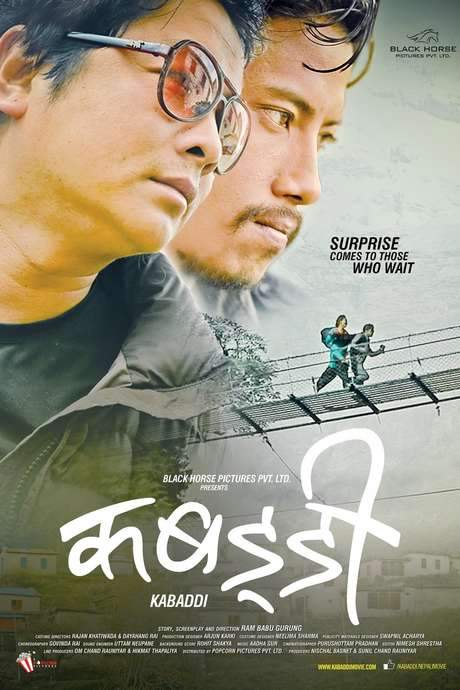
Year: 2014
Runtime: 123 mins
Language: Nepali
Director: Ram Babu Gurung
Kaji, a young man, desperately wants to marry Maiya, but she aspires to leave their village for a better education in the city. Their plans are complicated by the arrival of Bibek, a captivating young man from the city, who further complicates their lives and creates unexpected challenges for them all.
Warning: spoilers below!
Haven’t seen Kabaddi yet? This summary contains major spoilers. Bookmark the page, watch the movie, and come back for the full breakdown. If you're ready, scroll on and relive the story!
Read the complete plot breakdown of Kabaddi (2014), including all key story events, major twists, and the ending explained in detail. Discover what really happened, and what it all means.
From the remote Mustang village of Naurikot, Kazi is a young man who has not found his footing in school, yet he nurtures a sweeping dream: to marry Maiya, the daughter of his maternal uncle, by any means. Maiya, then a high school student, is sharp and independent, and she is irritated by his foolish actions. Each rejection from Maiya stings Kazi, but it never breaks his resolve. With the steadfast support of his two childhood friends, he resolves to win Maiya through a capture marriage, an illegal but culturally practiced tradition in parts of Mustang.
To keep Maiya safe and allow her to pursue her education, Maiya eventually elopes with a visitor in the village, Bibek, in hopes of finding her long-gone father and continuing her studies in Kathmandu. This decision pushes Kazi onto a dangerous path: he travels from his homeland to the bustling capital, where he becomes entangled in a web of urban conspiracy. [Bibek] turns out to be a broken man who harbors a desire for revenge against Ambir Thakuri, Maiya’s father. The revelation reframes Kazi’s mission—his quest to bring Maiya back home begins to intersect with a larger struggle that he could never have anticipated.
Despite Kazi’s efforts to protect and restore their relationship, the romance stalls. Maiya returns home with schooling as a priority and a life of her own, while [Kazi] waits outside the school with a bouquet, clinging to a fragile hope that she might one day reciprocate his feelings. In the end, the story leaves a bittersweet impression: love endures as a quiet, patient longing, but external pressures—from family duties to local traditions and city intrigues—prevent it from blossoming in the way he once envisioned.
Last updated: February 24, 2026 at 14:12
Explore frequently asked questions about Kabaddi (2014) with spoiler-rich answers covering the full plot summary, major story beats, character motivations, hidden details, and ending meaning. This movie summary FAQ helps explain confusing scenes, plot twists, and narrative decisions in clear, searchable detail.
Maiya elopes with Bibek because she sees him as her opportunity to escape the village and find her long-lost father in Kathmandu. Unlike Kaji, who she views as foolish and irritating, Bibek represents a chance at education and a better life. Her priority was never romance, it was pursuing her studies and discovering what happened to her father.
Earlier scenes show Maiya rejecting Kaji's advances repeatedly and expressing frustration with village life.
A capture marriage is an illegal but culturally practiced tradition in parts of Mustang where a man takes a woman away from her family and marries her on the spot. Kaji plans this because he believes it's the only way to win Maiya, who constantly rejects him. His friends B.K and Chhantyal help him plan it, seeing it as an unconventional path to get what he wants.
The plan is introduced early when Kaji's friends rally around him during the planning phase.
Bibek is a visitor from the city who arrives in Naurikot and later reveals himself as a broken man seeking revenge against Ambir Thakuri, Maiya's father. His true motive for coming to the village and eventually taking Maiya is tied to this quest for vengeance against the man who wronged him in some way.
Bibek's presence initially seems like a simple romantic connection, but the timeline notes his motives are tied to Maiya's father's whereabouts.
When Kaji travels to Kathmandu to bring Maiya back, he becomes entangled in an urban conspiracy connected to Bibek's revenge plot. This dangerous web threatens Maiya's safety and complicates their chances of returning home. The conspiracy involves the conflict between Bibek and Ambir Thakuri, putting Kaji in the middle of a situation far more dangerous than his original village plans.
The timeline marks this as a turning point where village customs meet metropolitan danger.
Maiya returns to the village primarily to continue her education and reclaim her life after the chaos of the elopement and the dangerous conspiracy in Kathmandu. Despite Kaji's efforts to protect her and bring her back safely, her focus shifts to practical priorities, school and her future, rather than romance. The return is less about feelings for Kaji and more about restoring normalcy.
The city conspiracy and danger serve as the catalyst that forces everyone back to the safety of the village.
No, Kaji and Maiya do not end up together. The ending shows Maiya returning to her studies while Kaji continues waiting school with a bouquet, hoping she might one outside the day reciprocate his feelings. Their relationship remains in a hopeful but unresolved state, love exists as quiet, patient longing, but external pressures and Maiya's lack of romantic interest prevent it from blossoming.
The entire narrative builds on Maiya's consistent rejection of Kaji's advances, setting up the unresolved ending.
Bibek's connection to Ambir Thakuri is that he seeks revenge against him. The exact nature of their conflict is tied to past events, but Bibek uses his connection to Maiya, which initially appears romantic, to get close to her father. This revelation reframes the entire elopement and explains why Bibek was willing to take Maiya away from the village.
Timeline notes indicate Bibek's motives were always tied to Maiya's father's whereabouts, not genuine affection.
Kaji's determination stems from a deep, unwavering dream to marry Maiya since childhood, combined with his belief that love can conquer obstacles. Even after failing third standard and being rejected repeatedly, he persists because the idea of being with Maiya has become central to his identity. His friends support this dream, encouraging him to pursue her through unconventional means.
The opening establishes Kaji as someone who 'has not found his footing in school' yet 'nurtures a sweeping dream' to marry Maiya.
The story transitions when Maiya elopes with Bibek to Kathmandu, forcing Kaji to leave his remote Mustang village of Naurikot for the bustling capital. This shift moves the narrative from simple village romance and capture marriage plots into a complex urban conspiracy involving revenge and danger. The contrast highlights how Kaji's personal quest becomes entangled with larger conflicts he never anticipated.
The elopement triggers Kaji's decision to pursue Maiya into the urban landscape, marking the tonal shift.
The bittersweet ending conveys that love alone is not enough when faced with real-world pressures like family duties, local traditions, and conflicting priorities. Kaji's patient waiting with a bouquet symbolizes hope, but Maiya's focus on education and her own life shows that not all stories resolve romantically. The ending validates Kaji's feelings while making clear they are insufficient to change Maiya's mind.
Throughout the film, Maiya's clear rejections and focus on education set up this realistic, unfulfilled conclusion.
Discover curated groups of movies connected by mood, themes, and story style. Browse collections built around emotion, atmosphere, and narrative focus to easily find films that match what you feel like watching right now.
Hopeful but unfulfilled romantic pursuits set against a backdrop of village life.Find more movies like Kabaddi that blend comedy and drama in stories of unrequited love and village life. If you enjoyed the bittersweet tone and rural setting of Kabaddi, these films feature similar heartfelt journeys and emotional dilemmas.
Stories in this thread typically follow a determined protagonist pursuing a romantic interest who has different aspirations, often involving a desire to escape their environment. The plots are driven by misunderstandings, cultural clashes, and a central tension between personal desire and external expectations, usually concluding with a mix of personal growth and romantic disappointment.
These movies are grouped together because they share a specific emotional blend: the gentle humor of a persistent suitor, the emotional weight of unfulfilled longing, and the bittersweet realism of life in a close-knit, traditional community. The 'city vs. country' dynamic is a recurring theme.

Characters chasing urban promises that complicate their simple lives.Discover films similar to Kabaddi that explore the theme of city life vs. village life. If you liked the conflict between Maiya's educational aspirations and Kaji's village-bound desires, these movies delve into the allure and disappointment of urban dreams.
The narrative pattern involves a character yearning for a better life in the city, which creates a central conflict with their current rural existence. The arrival of an outsider from the city often acts as a catalyst, introducing new ideas and tensions that challenge the status quo, leading to a reevaluation of what 'a better life' truly means.
These films are connected by their exploration of a universal theme: the romanticized ideal of city life clashing with the comforts and constraints of tradition. They share a moderate dramatic intensity and a steady pacing that allows for thoughtful exploration of character motivations and the emotional consequences of their choices.
Don't stop at just watching - explore Kabaddi in full detail. From the complete plot summary and scene-by-scene timeline to character breakdowns, thematic analysis, and a deep dive into the ending - every page helps you truly understand what Kabaddi is all about. Plus, discover what's next after the movie.
Track the full timeline of Kabaddi with every major event arranged chronologically. Perfect for decoding non-linear storytelling, flashbacks, or parallel narratives with a clear scene-by-scene breakdown.
Discover the characters, locations, and core themes that shape Kabaddi. Get insights into symbolic elements, setting significance, and deeper narrative meaning - ideal for thematic analysis and movie breakdowns.
Discover movies like Kabaddi that share similar genres, themes, and storytelling elements. Whether you’re drawn to the atmosphere, character arcs, or plot structure, these curated recommendations will help you explore more films you’ll love.
Kabaddi (2014) Scene-by-Scene Movie Timeline
Kabaddi (2014) Movie Characters, Themes & Settings
Kabaddi (2014) Spoiler-Free Summary & Key Flow
Movies Like Kabaddi – Similar Titles You’ll Enjoy
Shikari (2018) Full Summary & Key Details
Pataakha (2018) Ending Explained & Film Insights
Kabullywood (2017) Full Summary & Key Details
Kachha Limbu (2017) Detailed Story Recap
Jabariya Jodi (2019) Story Summary & Characters
Habaddi (2019) Film Overview & Timeline
Khushi (2001) Spoiler-Packed Plot Recap
Kathbirali (2020) Ending Explained & Film Insights
Kadakh (2020) Full Movie Breakdown
Kabaddi 4: The Final Match (2022) Spoiler-Packed Plot Recap
JugJugg Jeeyo (2022) Full Movie Breakdown
Kabhi Kabhie (1976) Complete Plot Breakdown
Kabhi Haan Kabhi Naa (1994) Spoiler-Packed Plot Recap
Kabuliwala (1961) Story Summary & Characters
Kabuliwala (1957) Story Summary & Characters