Plot Explained Spoilers guaranteed!
Plot Explained

Browse by genre

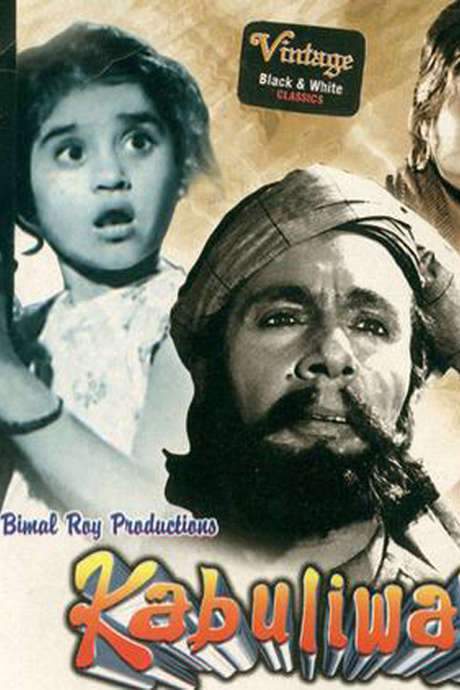
Kabuliwala (1957) movie poster

Plot Summary

Kabuliwala (1957) Plot Summary Explained

Release, runtime and language
1957 · 116 mins · Bengali, Bangla
Directed by
Tapan Sinha
Starring
Kali Bannerjee, Radhamohan Bhattacharya, Chhabi Biswas, Manju Dey, Oindrila Tagore

Rahmat, a middle‑aged Afghan fruit seller, arrives in Calcutta to peddle his wares and befriends Mini, a Bengali girl who reminds him of his own daughter. After learning his daughter is gravely ill, he plans to return, but a violent clash with a customer leads him to kill the man and be imprisoned. He is released ten years later. The film adapts Rabindranath Tagore’s classic story.

On this page (6)
  1. 1 What happens: full plot
  2. 2 Plot questions answered
  3. 3 The book behind the movie
  4. 4 Movie threads
  5. 5 Movies like Kabuliwala
  6. 6 Every angle

Full plot summary · contains spoilers

What Happens in Kabuliwala: Full Plot Summary

The whole story of Kabuliwala (1957) explained, from the opening scene to the final frame: every key event, every twist and what it all adds up to. Read it as a quick recap before the sequel, to check a scene you missed, or to finally understand what really happened.

Rahmat, a middle-aged fruit seller from Afghanistan, arrives in Calcutta to hawk his produce. He lodges with fellow countrymen in a crowded boarding house and forms a gentle, protective bond with a young Bengali girl, Mini, who reminds him of the daughter he left behind. The pair share moments of quiet kindness amid the bustle of the city, and Rahmat's simple ways endear him to those around him, even as he quietly struggles with poverty and distance from home.

News arrives by letter that his daughter is ill. The letter acts as a catalyst, turning his current vigilance into a resolve to return home. Yet money is scarce, so he begins to sell his goods on credit to boost his cash flow, hoping to gather enough to enable a swift trip back to his homeland. The gamble pays off in the wrong moment, as one customer verbally abuses him and the conflict escalates; when the abuse continues, he defends himself and stabs the man.

At the court, the tension centers not only on the act itself but on the truth of his actions. His lawyer tries to obscure the facts, but Rahmat speaks in a plain, honest way, telling the truth as he sees it. The judge, moved by his straightforwardness and humanity, opts for a stark but unexpected resolution: eight years of rigorous imprisonment rather than the death sentence.

Years later, on the day of release, he travels to meet Mini and discovers that she has matured into a 15-year-old girl who is about to be married. The moment is heavy and complex: Mini does not recognize the man who was once a friend; Rahmat realizes that his daughter may have forgotten him as well. Mini's father advises him to return to his homeland, urging him to find his own path back rather than intruding on a life that has moved forward. Mini's mother offers financial help—money set aside from the wedding budget for Rahmat's travel—and she also sends a small gift for Rahmat's daughter, signaling a quiet thread of reconciliation that binds two families across distance and time.

Last updated: February 24, 2026 at 13:41

Was this helpful?

Plot questions answered

Kabuliwala Plot Explained: Your Questions Answered

The questions people ask most about Kabuliwala (1957): what happens in the confusing scenes, why the characters do what they do, the twists, hidden details and what the ending means. Each answer contains spoilers.

Q1

Why did Rahmat kill the abusive customer?

Rahmat killed the customer after being repeatedly humiliated while trying to collect credit payments. When a wealthy customer verbally abused him and continued despite warnings, Rahmat lost control and defended himself with a knife. The violence was a crime of passion triggered by accumulated shame and desperation to return home to his ill daughter.

Foreshadowing: Earlier scenes show Rahmat's growing anxiety about his daughter's illness and his desperation to raise money quickly, building emotional tension that erupts in the confrontation.

  • rahmat
  • murder
  • customer abuse
  • crime of passion
  • self-defense
Q2

Why was Rahmat sentenced to 8 years instead of death?

The judge was moved by Rahmat's honest testimony. While his lawyer tried to obscure the facts and use legal tactics, Rahmat told the plain truth about what happened. The judge responded to this rare honesty and humanity, choosing eight years of rigorous imprisonment rather than the death sentence the prosecution sought.

Foreshadowing: The courtroom scene contrasts Rahmat's simple truthfulness with his lawyer's attempts at deception, showing that his straightforward nature ultimately works in his favor.

  • prison sentence
  • judge
  • court verdict
  • death penalty
  • leniency
Q3

Why didn't Mini recognize Rahmat after his release?

Mini was a young child when Rahmat was imprisoned, and he spent 10 years in jail. By the time he was released, she had grown into a 15-year-old about to be married. The passage of time, combined with her young age when they first met, made recognition impossible. The film parallels this with Rahmat's fear that his own daughter may have also forgotten him.

Foreshadowing: The friendship between Rahmat and Mini began when she was just a small girl, and the narrative repeatedly emphasizes his concern about whether his daughter would remember him.

  • mini
  • recognition
  • time passage
  • reunion
  • memory
Q4

What happened to Rahmat's daughter?

The story never reveals whether Rahmat's daughter survived her illness. He received a letter informing him she was gravely ill, which drove his desperate attempt to return home. The ambiguity is intentional, it underscores the tragic uncertainty of his situation and why his bond with Mini becomes so emotionally significant.

Foreshadowing: The letter about his daughter's illness serves as the catalyst for his decision to sell goods on credit and ultimately leads to the violent confrontation.

  • rahmat's daughter
  • illness
  • letter
  • fate
  • unresolved
Q5

Why did Mini's family help Rahmat after his release?

Mini's family recognized the genuine kindness Rahmat had shown their daughter during his time in Calcutta. Despite his imprisonment, they remembered the pure friendship he offered Mini when she was young. Mini's mother gave him money saved from the wedding budget, and Mini sent a gift for his daughter, a gesture of compassion that crosses the cultural and emotional distance between them.

Foreshadowing: Throughout Rahmat's time in Calcutta, his gentle interactions with Mini endeared him to the community, building goodwill that manifests in their support years later.

  • mini family
  • generosity
  • compassion
  • financial help
  • gift
Q6

Why did Rahmat sell his fruit on credit?

Rahmat needed to raise money quickly to return home after learning his daughter was ill. Selling on credit allowed him to move more merchandise and collect a larger sum faster, though it carried the risk of not being repaid. The desperate gamble was driven by his urgent desire to reach his daughter before it was too late.

Foreshadowing: The letter about his daughter's illness directly precedes this decision, showing how news of her grave condition pushed him toward risky financial choices.

  • credit
  • money
  • desperation
  • daughter illness
  • business
Q7

What does the ending signify?

The ending is bittersweet: Rahmat returns home with money and a gift from Mini, but the emotional reunion he hoped for is impossible. Mini has moved on with her life, and he may never know if his own daughter survived. Yet the kindness of Mini's family offers hope, a cycle of care that persists across distance and time.

Foreshadowing: The entire film builds toward this moment of reunion, constantly contrasting Rahmat's longing for his homeland with the genuine connections he forms in Calcutta.

  • ending
  • bittersweet
  • reunion
  • hope
  • resolution
Q8

Why did Rahmat tell the truth in court instead of letting his lawyer help him?

Rahmat's character is defined by his straightforward, honest nature. Rather than allowing his lawyer to manipulate the truth, he chose to recount the events plainly. This honesty resonated with the judge, who found it more trustworthy than legal maneuvering. The moment highlights Rahmat's integrity as his defining trait.

Foreshadowing: Throughout the film, Rahmat is portrayed as a simple, genuine man whose authenticity contrasts with the complexities of city life.

  • court
  • honesty
  • truth
  • lawyer
  • integrity
Q9

What is the significance of Mini sending a gift for Rahmat's daughter?

Mini's gift creates a circular exchange of care between two families who will never meet. It represents the lasting impact of Rahmat's friendship with Mini and completes an emotional cycle, his kindness to Mini is repaid through this gesture toward his own child. It symbolizes how love and compassion transcend geographical and cultural boundaries.

Foreshadowing: The entire narrative centers on Rahmat's love for his daughter and how Mini reminded him of her, making this gift a meaningful closure to that emotional thread.

  • gift
  • daughter
  • symbol
  • compassion
  • exchange
Q10

Why did Rahmat come to Calcutta?

Rahmat came to Calcutta as a fruit seller to earn money for his family back in Afghanistan. Like many seasonal traders, he planned to hawk his wares, save money, and eventually return home to his wife and daughter. The journey was motivated by economic necessity and the hope of providing a better life for his family.

Foreshadowing: His boarding with fellow Afghan countrymen and his constant longing for home establish his primary motivation from the very beginning.

  • afghanistan
  • fruit seller
  • calcutta
  • livelihood
  • migration

Movie threads

More Movies Like Kabuliwala, by Mood & Story

Curated lists built around what makes Kabuliwala tick: the same mood, the same kind of story or the same emotional payoff. Each list explains why these movies belong together.

Movies about father-daughter bonds like Kabuliwala

Stories of fathers separated from their children by distance or circumstance. Find more heartbreaking dramas about paternal love and separation. If you liked the emotional core of Kabuliwala, you'll appreciate these similar films exploring the bond between fathers and daughters.

  • heartfelt
  • melancholic
  • nostalgic
  • reflective
  • somber
  • poignant
  • Tone: bittersweet, heartfelt, melancholic
  • Pacing: steady, character-driven
Why these movies?

The story pattern: These narratives often follow a father figure who forms a surrogate bond that reminds him of his own distant child. The central conflict arises from a physical or emotional separation, driving a story focused on memory, innocence, and the bittersweet nature of love that persists against the odds.

Why they belong together: They are grouped by their profound focus on the father-daughter dynamic as a source of both warmth and sorrow, sharing a medium emotional weight and a steady, reflective pacing that allows the emotional resonance to build.


Movies about exile and longing like Kabuliwala

Character-driven tales of outsiders grappling with loneliness and cultural distance. Discover more poignant stories about cultural displacement and nostalgia. If you liked the themes of exile in Kabuliwala, explore these films about characters far from home, seeking connection.

  • nostalgic
  • melancholic
  • reflective
  • somber
  • poignant
  • lonely
  • Tone: bittersweet, melancholic, reflective
  • Pacing: steady, deliberate
Why these movies?

The story pattern: The plot follows an outsider in an unfamiliar place who forms a meaningful but temporary connection that highlights their isolation. A pivotal event, often a crime or accident, severs this connection, leading to a passage of time and a melancholic reckoning with what was lost.

Why they belong together: These films share a specific emotional palette of nostalgia and melancholy, driven by themes of cultural displacement and the passage of time. They balance the warmth of human connection with the sorrow of separation, resulting in a consistently bittersweet tone.

If you liked this

Movies Like Kabuliwala

Similar movies to Kabuliwala: the same genre, themes or kind of story. Each one comes with its own plot summary, timeline and ending explained.

Browse all movie summaries

Every angle

Kabuliwala (1957) Explained: Plot, Timeline & Characters

Everything about Kabuliwala in one place: what happens in the plot summary, the timeline in chronological order, the characters and meaning and a spoiler-free summary. What's After the Movie adds the cast, box office and post-credit scenes.

Coming soon on iOS and Android

The Plot Explained Movie Summary App

Plot summaries, endings explained and timelines on your phone. Catch up on any movie in minutes, save your favorites and never miss a twist again.

Be the first to know when we launch. Your email stays private, always.

Learn more about the app