









Plot Explained Spoilers guaranteed!
Plot Explained

Browse by genre

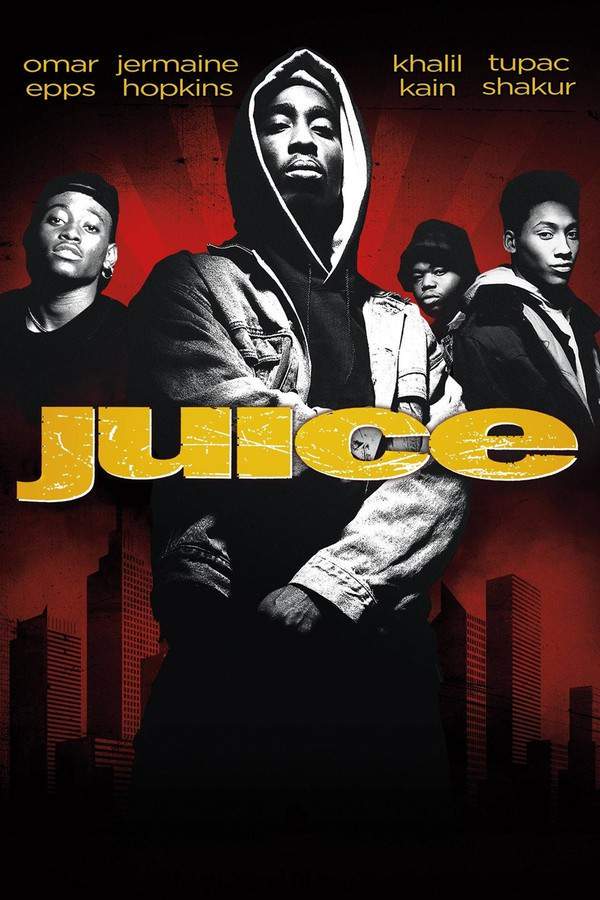
Juice (1992) movie poster

Timeline

Juice (1992) Timeline Explained – Every Event in Order

Release, runtime and language
1992 · 95 min · English
JustWatch #18,382 8
Directed by
Ernest R. Dickerson
Starring
Omar Epps, Tupac Shakur, Jermaine 'Huggy' Hopkins

In 1990s Harlem, four friends—Bishop, Q, Steel, and Raheem—struggle to survive amidst poverty and violence. Driven by ambition and a desire for respect, they become involved in petty crime. A decision to rob a convenience store escalates tensions within the group, particularly between Bishop's commanding presence and Q’s dreams of becoming a photographer. Their actions trigger a series of events that force them to confront the complexities of friendship, loyalty, and the price of achieving their goals.

On this page (6)
  1. 1 Where to watch
  2. 2 Events in order (15)
  3. 3 Timeline questions answered
  4. 4 Movie threads
  5. 5 Movies like Juice
  6. 6 Every angle

Where to watch

Where to Watch Juice (1992)

Where can you watch Juice? Stream, rent or buy it in the US, including on Paramount Plus Essential, Hoopla and YouTube Free: current JustWatch availability with up-to-date prices.

Streaming availability powered by JustWatch

15 events in order · contains spoilers

Juice Timeline: Events in Chronological Order

Every key event of Juice (1992) in order, scene by scene, with when and where it takes place. Use it to untangle flashbacks, time jumps and parallel storylines, to refresh your memory before the sequel or to find the exact scene you are thinking of.

  1. The Group's Hangouts

    Bishop, Q, Raheem, and Steel frequently gather at Steel's apartment, where they often avoid school. Their time is spent in various local spots such as an arcade and a record store, which fuels Q's dream of becoming a DJ.

    Where
    Harlem
  2. Harassment from Local Authorities

    Throughout their daily lives, the group faces constant harassment from the police, making their youth in Harlem even more challenging. Additionally, they find themselves threatened by a local Puerto Rican gang, led by Radames, which adds to their frustration.

    Where
    Harlem
  3. Pressure to Commit a Crime

    Feeling trapped by their circumstances and driven by the need for respect, Bishop urges the group to participate in more serious activities. Despite Q's reluctance, he is pressured by his friends to join a robbery at a local convenience store.

    When
    One Saturday night
    Where
    Neighborhood Convenience Store
  4. The Fatal Robbery

    During the robbery, a critical event occurs when Bishop, in a reckless act, shoots and kills Mr. Quiles, the store owner. This marks a turning point in their lives, leading to fear and guilt among the group members.

    Where
    Neighborhood Convenience Store
  5. Conflict Among Friends

    After the robbery, the group convenes in an abandoned building where tension escalates. Q, Raheem, and Steel confront Bishop, blaming him for the tragic outcome of the robbery, which leads to a violent altercation.

    Where
    Abandoned Building
  6. Raheem's Death

    In a panicked response to the confrontation, Bishop fatally shoots Raheem, worsening the situation. Now terrified, he threatens Q and Steel with death should they expose the truth about Raheem's murder.

    Where
    Abandoned Building
  7. Attending Raheem's Funeral

    As Q and Steel attend Raheem's funeral, they are disturbed to see Bishop pretending to grieve. He hugs Raheem's mother and claims to seek justice, which makes Q and Steel increasingly wary of him.

    Where
    Funeral
  8. Bishop's Manipulation

    Bishop's actions become more twisted as he murders Radames to frame Q for both the store owner's and Raheem's deaths. This turn of events puts immense pressure on Q, who begins to fear for his own life.

    Where
    Harlem
  9. The Confrontation with Steel

    In an alley, Bishop confronts Steel, accusing him of betrayal and subsequently shoots him. Despite being seriously wounded, Steel reveals to Q's girlfriend that Bishop is behind the chaos.

    Where
    Alley
  10. Q Discards His Gun

    Overwhelmed by the violence surrounding him, Q decides to discard his gun into the East River. He resolves to face Bishop without weaponry, determined to confront the madness head-on.

    Where
    East River
  11. The Chase

    A tense confrontation ensues between Q and Bishop as they chase each other through various locations. The situation escalates when Bishop fires at guests at a party, putting innocent lives at risk.

    Where
    Party
  12. The Climax on the Rooftop

    The final confrontation takes place on a rooftop where Bishop and Q engage in a fierce struggle. Their fight culminates with Bishop losing his balance and pleading for Q to save him as he hangs from the ledge.

    Where
    Rooftop
  13. Bishop's Fall

    In a moment of betrayal and anguish, Q releases his grip, leading to Bishop's chilling fall to his death. This act seals Q's sense of loss and highlights the tragic end of their friendship.

    Where
    Rooftop
  14. The Aftermath and Reflection

    As Q walks away from the rooftop, he is met with comments from partygoers in the crowd below, acknowledging his newfound strength. However, he feels deep disillusionment about the series of events that led them here.

    Where
    Rooftop
  15. Echoes of the Past

    The film closes with memories of the joyful times shared among the friends, contrasted starkly against the tragic outcome. Bishop’s voice echoes, reminding Q of the once happy times as he walks off into an uncertain future.

    Where
    Harlem

Last updated: October 28, 2024 at 17:30

Was this helpful?

Timeline questions answered

Juice Timeline Explained: Your Questions Answered

When does it happen, and why in that order? The questions people ask about the chronology of Juice (1992): time jumps, flashbacks, cause and effect between scenes and the correct order of events, each answered with spoilers.

Q1

Why does Bishop accidentally shoot Mr. Quiles during the robbery?

Bishop shoots Mr. Quiles in a moment of reckless behavior while robb ing the convenience store. The robbery was meant to be a simple grab for cash and respect, but Bishop's impulsive nature and desire to prove himself led him to escalate the situation violently. This moment marks the turning point where the group’s petty crimes turn deadly, fundamentally changing all their lives.

Foreshadowing: Earlier scenes show Bishop pushing the group toward more serious crimes, demonstrating his impatience with their small-time activities.

  • bishop
  • mr quiles
  • convenience store robbery
  • shooting
  • accident
Q2

Why does Bishop kill Raheem?

Bishop kills Raheem in a panic during a confrontation in the abandoned building. After the robbery goes wrong, the group blames Bishop for killing Mr. Quiles, and Raheem threatens to expose him. Bishop, terrified of going to prison and feeling betrayed, shoots Raheem in a moment of panic. This act seals his descent into violence and marks the irreversible breaking point of the friend group.

Foreshadowing: The tension in the abandoned building scene shows the group turning against Bishop, with Raheem being the most vocal about holding him accountable.

  • bishop
  • raheem
  • shooting
  • abandoned building
  • betrayal
Q3

Why does Bishop frame Q for the murders?

Bishop frames Q by killing Radames and planning to pin both Mr. Quiles and Raheem's deaths on him. This is part of Bishop's deteriorating mental state as he becomes consumed by paranoia and a desire for power. By eliminating his friends and framing Q, Bishop believes he can take complete control and avoid consequences for his actions.

Foreshadowing: After Raheem's funeral, Bishop's manipulation becomes clear when he pretends to grieve while plotting against his friends.

  • bishop
  • q
  • frame
  • murder
  • radames
  • setup
Q4

Why does Q throw his gun into the East River?

Q discards his gun into the East River because he is overwhelmed by the escalating violence and refuses to let it consume him. He decides to face Bishop without a weapon, choosing non-violence over retaliation. This act represents Q's moral stand and his refusal to become like Bishop, though it leaves him vulnerable.

Foreshadowing: Q was always the most reluctant member of the group regarding crime, particularly about his dream of becoming a DJ.

  • q
  • gun
  • east river
  • non-violence
  • confrontation
Q5

Why does Q let Bishop fall at the end?

Q lets Bishop fall from the rooftop because he is grappling with the betrayal and loss of his friends. After everything Bishop has done, killing Raheem, shooting Steel, framing him for murders, Q cannot bring himself to save the person who destroyed their friendship. In a moment of anguish, he succumbs to gravity, letting Bishop fall to his death.

Foreshadowing: Throughout the film, Q is shown struggling with the moral implications of their actions, making his final decision feel like the culmination of that internal conflict.

  • q
  • bishop
  • rooftop
  • fall
  • death
  • betrayal
Q6

What does "the juice" mean in the movie?

"The juice" refers to power, respect, and status within the street culture of Harlem. The term embodies the film's central theme, the dangerous pursuit of respect and dominance. In the end, when someone tells Q "you got the juice now," it highlights the hollow, tragic nature of this power, as Q has gained respect only through losing his friends.

  • juice
  • power
  • respect
  • Harlem
  • meaning
Q7

Why does Bishop's behavior escalate so drastically?

Bishop's behavior escalates due to his addiction to the chaos and violence that comes with gaining power. After killing Mr. Quiles, he experiences a psychological transformation where the thrill of violence becomes addictive. He begins to see everyone as either an obstacle or a tool, leading him to eliminate his closest friends to maintain control and avoid accountability.

Foreshadowing: Bishop is shown pushing the group toward crime from the beginning, demonstrating his hunger for respect and status.

  • bishop
  • violence
  • psychosis
  • power
  • escalation
Q8

Why does Bishop kill Radames?

Bishop kills Radames, the leader of the Puerto Rican gang, as part of his plan to frame Q for all the murders. By killing Radames, Bishop adds another murder to the list he intends to pin on Q. This act demonstrates Bishop's complete moral collapse, as he now kills not just in self-defense or panic, but deliberately to manipulate and destroy his friends.

Foreshadowing: Earlier scenes show tensions between Bishop's group and Radames' gang, giving Bishop a motive beyond just framing Q.

  • bishop
  • radames
  • killing
  • frame
  • q
  • murder
Q9

What happens to Steel at the end of the movie?

Steel is shot by Bishop in an alley after being accused of betrayal. He is seriously wounded but survives. In the hospital, Steel reveals to Q's girlfriend Yolanda that Bishop has set Q up, providing crucial information that helps Q understand the danger he faces.

Foreshadowing: Steel and Q had been trying to distance themselves from Bishop, which Bishop interprets as betrayal.

  • steel
  • shot
  • alley
  • hospital
  • survives
Q10

Why is Q reluctant to join the robbery?

Q is reluctant to join the robbery because he has dreams of becoming a DJ and competing in a contest. He understands that getting involved in serious crimes could destroy his chances of achieving his aspirations. However, the pressure from Bishop and the group ultimately compels him to participate, setting in motion the tragic events that follow.

Foreshadowing: Earlier scenes show Q spending time at the record store, pursuing his DJ aspirations as a way out of his circumstances.

  • q
  • dj
  • dream
  • robbery
  • hesitation
  • ambition
Q11

What causes the friends to turn against each other?

The friends turn against each other primarily due to Bishop's escalating violence and his willingness to kill to protect himself. The convenience store robbery and subsequent murders create a chain of betrayal where each member must choose between loyalty and self-preservation. Bishop's paranoid actions, killing Raheem, framing Q, shooting Steel, destroy the trust that once bound the group.

Foreshadowing: The abandoned building scene shows the first major fracture when the group confronts Bishop about killing Mr. Quiles.

  • friendship
  • betrayal
  • loyalty
  • bishop
  • q
  • steel
  • raheem
Q12

Why does Bishop fire at guests at the party?

Bishop fires at party guests during the chase because he is consumed by his desire to eliminate Q at any cost. His mental state has deteriorated to the point where he no longer distinguishes between targets, anyone in his way becomes collateral. This reckless act puts innocent lives at risk and demonstrates how far Bishop has fallen into violence and paranoia.

Foreshadowing: Bishop's pattern of escalating violence throughout the film makes this indiscriminate shooting consistent with his descent.

  • bishop
  • party
  • shooting
  • chase
  • q
  • innocent
Q13

What happens to Q after Bishop falls?

After Bishop falls to his death, Q walks away from the rooftop disillusioned. Partygoers below comment that he "got the juice now," acknowledging his hard-won status, but Q shakes his head in rejection of this hollow victory. The film ends with echoes of the past, reminding viewers of the joy the four friends once shared before violence destroyed everything.

Foreshadowing: The contrast between the joyful memories at the start and the tragic ending underscores the theme of lost innocence.

  • q
  • aftermath
  • disillusionment
  • juice
  • ending

Movie threads

More Movies Like Juice, by Mood & Story

Curated lists built around what makes Juice tick: the same mood, the same kind of story or the same emotional payoff. Each list explains why these movies belong together.

Crime stories of friendship and betrayal like Juice

When the pursuit of power and respect tears apart a tight-knit group. If you liked the intense dynamic in Juice, explore more movies where tight urban friendships are tested by crime and ambition. These films often feature young characters, moral conflict, and a bleak outlook on the price of power and respect.

  • gritty
  • tense
  • paranoid
  • grim
  • fatalistic
  • unsettling
  • Tone: dark, tense, grim
  • Pacing: fast, relentless
Why these movies?

The story pattern: Stories typically follow a close group of friends from a disadvantaged background. A single event, often a crime, introduces power and paranoia into the group dynamic, pitting loyalty against individual ambition. The plot escalates rapidly through a series of violent confrontations, leading to betrayal and the group's inevitable destruction.

Why they belong together: These films are grouped by their shared focus on the fragility of male friendship under extreme pressure. They combine a gritty, realistic urban setting with a fast-paced, high-intensity plot centered on moral choices and their heavy, often fatal, consequences.

Thrillers about a rapid descent into violence like Juice

A single bad decision triggers an unstoppable chain of violent events. Movies like Juice that master the tense, fast-paced narrative of a life spiraling out of control. If you enjoyed the relentless escalation and psychological pressure, you'll find similar stories of fatal choices and their devastating, unavoidable consequences here.

  • tense
  • paranoid
  • fatalistic
  • unsettling
  • anxious
  • grim
  • Tone: dark, tense, fatalistic
  • Pacing: fast, escalating
Why these movies?

The story pattern: The narrative pattern is a straightforward, cause-and-effect chain reaction. A initial transgression, usually a robbery or crime, sets off a series of increasingly severe events. The protagonist(s) quickly lose agency as violence begets violence, leading to a state of paranoia and a inevitable, tragic endpoint with little to no redemption.

Why they belong together: These films share a specific pacing and intensity. They are characterized by a fast, unforgiving narrative momentum, a dark and tense atmosphere, and a focus on the psychological deterioration of characters caught in a web of their own making, resulting in a heavy emotional weight and bleak ending.

If you liked this

Movies Like Juice

Similar movies to Juice: the same genre, themes or kind of story. Each one comes with its own plot summary, timeline and ending explained.

Browse all movie summaries

Every angle

Juice (1992) Explained: Plot, Timeline & Characters

Everything about Juice in one place: what happens in the plot summary, the timeline in chronological order, the characters and meaning and a spoiler-free summary. What's After the Movie adds the cast, box office and post-credit scenes.

Coming soon on iOS and Android

The Plot Explained Movie Summary App

Plot summaries, endings explained and timelines on your phone. Catch up on any movie in minutes, save your favorites and never miss a twist again.

Be the first to know when we launch. Your email stays private, always.

Learn more about the app