Plot Explained Spoilers guaranteed!
Plot Explained

Browse by genre

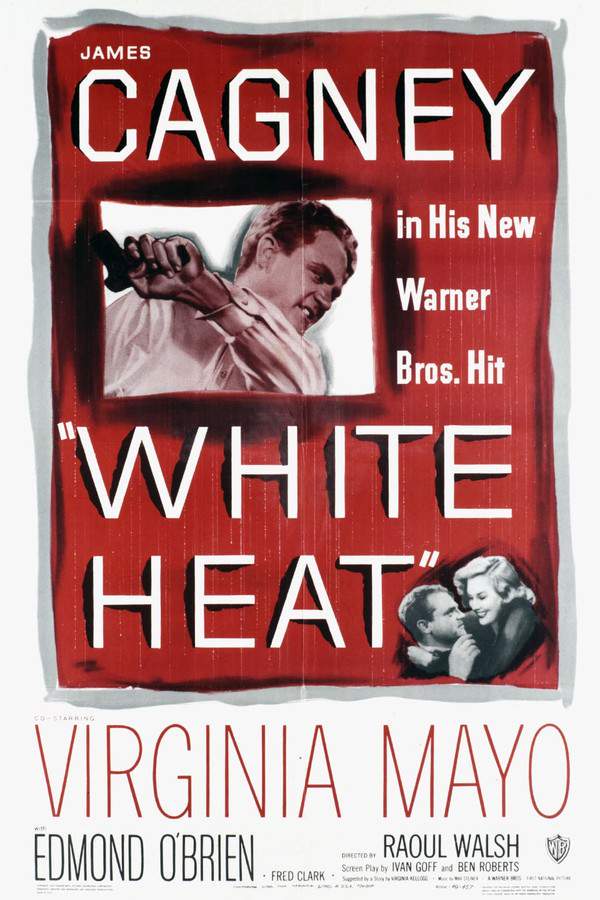
White Heat (1949) movie poster

Plot Summary

White Heat (1949) Plot Summary Explained

Release, runtime and language
1949 · 114 min · English
JustWatch #10,657 17
Directed by
Raoul Walsh
Starring
Edmond O'Brien, Virginia Mayo, Wally Cassell, Joel Allen, James Cagney, John Archer

A ruthless gang leader, Cody Jarrett, is driven by a complex relationship with his ailing mother while orchestrating daring heists. Plagued by debilitating headaches, Cody's world is thrown into turmoil when a train robbery goes wrong, leading to the death of an investigator. An undercover agent, Hank, is then sent to infiltrate Cody's operation. Following his mother’s death, Cody kidnaps Hank and forces him into one final payroll heist, unaware that a traitor lurks within his ranks, threatening to expose his entire criminal enterprise.

On this page (6)
  1. 1 Where to watch
  2. 2 What happens: full plot
  3. 3 Plot questions answered
  4. 4 Movie threads
  5. 5 Movies like White Heat
  6. 6 Every angle

Where to watch

Where to Watch White Heat (1949)

Where can you watch White Heat? Stream, rent or buy it in the US, including on Amazon Video, Apple TV Store and Fandango At Home: current JustWatch availability with up-to-date prices.

Streaming availability powered by JustWatch

Full plot summary · contains spoilers

What Happens in White Heat: Full Plot Summary

The whole story of White Heat (1949) explained, from the opening scene to the final frame: every key event, every twist and what it all adds up to. Read it as a quick recap before the sequel, to check a scene you missed, or to finally understand what really happened.

Cody Jarrett, portrayed by the iconic James Cagney, is a ruthless and mentally unstable leader of a notorious criminal gang, deeply entangled in various illegal activities. His relationship with his wife, Verna, played by Virginia Mayo, is marred by his overwhelming devotion to his cunning and manipulative mother, affectionately known as 'Ma' Jarrett, who is skillfully brought to life by Margaret Wycherly. This complicated web of familial bonds reveals Jarrett's emotional frailty, encapsulated in his bouts of excruciating headaches, during which he seeks solace in the comforting presence of his mother. As Ma consoles him with a drink and the chilling toast, > "Top of the world," it becomes all too clear that the psychological scars from his upbringing are about to lead him down a dark and treacherous path.

The narrative takes a gripping turn as Jarrett masterminds a daring train robbery, an operation that results in multiple fatalities, including not only several crew members but also one of his own accomplices, Zuckie, portrayed by Ford Rainey. The police, alerted by informants, quickly close in on Jarrett, leading to an explosive confrontation where he wounds U.S. Treasury investigator John Archer. After his escape to Illinois, Jarrett attempts to outwit the justice system by confessing to a lesser crime, conveniently timed with the train heist, giving him a seemingly ironclad alibi and a surprisingly lenient sentence of one to three years in prison.

However, investigator Evans is not easily deceived. He calls upon his best undercover agent, Edmond O'Brien, who assumes the alias "Vic Pardo." Pardo's mission is not just to gather information about Jarrett, but to dismantle the criminal operation that Jarrett runs with his elusive fence known as the “Trader.” As tensions rise within the prison walls, Jarrett's ambitious right-hand man, Steve Cochran as 'Big Ed' Somers, schemes to take over both the gang and the affections of Verna, prompting a deadly game of manipulation and betrayal.

In a gripping moment of survival, during a near-fatal encounter with a heavy piece of machinery cleverly orchestrated by another convict, it is Pardo who saves Jarrett's life. As the plot thickens, Ma's unexpected visit adds another layer of complexity, especially when her insistence to deal with Big Ed triggers a series of violent reactions from Jarrett. When heart-wrenching news reaches him that his mother has been murdered, Jarrett descends into chaos, igniting a bloody rampage that leaves guards and fellow inmates alike scrambling in fear.

Ultimately, Jarrett meticulously orchestrates his escape, an act that is not without its complications. Accompanied by Fallon and other convicts, including Parker, whom they reluctantly free from a cramped car trunk, they find their way to a remote hideout in the mountains of California. It is here that they enact a brutal series of events, including the cold-blooded murder of an unsuspecting family to steal their car. In a chilling exchange, Parker voices his discomfort with the confinement, only for Jarrett to menacingly respond, “Oh, stuffy, huh? I'll give ya a little air,” as he dismissively shoots bullets into the trunk.

As layers of deceit unravel, Verna's aspirations for freedom conflict with Jarrett's obsessive quest for revenge against Big Ed, resulting in a frantic and suspenseful showdown that leaves no room for leniency. The gang, now swollen with additional escapees, prepares for a pivotal heist at a chemical plant, using a gas truck as a cleverly disguised means to infiltrate the facility.

The dynamic within the gang becomes increasingly fraught as Fallon’s true identity as an undercover agent begins to clash with Jarrett’s trust in him. In a tense standoff, the plan spirals out of control, forcing Fallon to face the reality of his mission, even as Jarrett remains blissfully unaware of the impending doom. As the police converge around them, the stage is set for a climactic conclusion filled with chaos and gunfire.

In the final act, on top of a towering gas storage tank, Jarrett’s world comes crashing down as chaos reigns. As the police lay siege and his teammates fall to bullets, he clings to the remnants of his delusions of grandeur, proclaiming in a moment of relentless fury, > "Made it, Ma! Top of the world!" His defiance is short-lived as he meets an explosive fate, leaving Fallon to reflect on the tragic arc of Jarrett's life, remarking how he made it to the top, only for it to end in a fiery explosion that consumes everything he fought for.
Last updated: January 19, 2025 at 18:49

Was this helpful?

Plot questions answered

White Heat Plot Explained: Your Questions Answered

The questions people ask most about White Heat (1949): what happens in the confusing scenes, why the characters do what they do, the twists, hidden details and what the ending means. Each answer contains spoilers.

Q1

Why is Cody Jarrett so obsessed with his mother?

Cody Jarrett suffers from severe mental instability and debilitating headaches that leave him emotionally vulnerable. During these episodes, he seeks comfort by resting his head on his mother's lap while she consoles him with a drink. This dependency stems from childhood psychological scars, making Ma the only person he truly trusts. Her manipulation of him reinforces this unhealthy bond throughout the film.

Foreshadowing: Early scenes show Ma giving Cody the phrase 'Top of the world' as a toast, hinting at his delusional aspirations and her influence over his psyche.

  • cody jarrett
  • ma jarrett
  • mother relationship
  • mental instability
  • dependency
Q2

Why did Cody confess to a lesser crime after the train robbery?

After the train heist where a Treasury investigator was wounded, Cody needed an alibi to avoid prosecution for the more serious crimes. He cleverly confessed to a lesser crime that occurred around the same time as the robbery, which gave him a seemingly ironclad legal defense. This calculated move resulted in a lenient sentence of only one to three years in prison, allowing him to serve time for a minor offense while avoiding the more severe consequences of the train robbery and murder.

  • alibi
  • confession
  • prison sentence
  • train robbery
  • legal scheme
Q3

Why did the undercover agent save Cody's life in prison?

Undercover agent Hank Fallon (posing as Vic Pardo) saved Jarrett from a deadly attack ordered by Big Ed Somers because if Jarrett died in prison, Fallon would lose his opportunity to gather intelligence on the gang and uncover the identity of 'the Trader' who laundered their money. Maintaining Jarrett's trust was essential to completing his mission of bringing down the entire criminal operation.

Foreshadowing: Fallon's mission was established when investigator Evans sent him to infiltrate Jarrett's operation and find the Trader.

  • hank fallon
  • vic pardo
  • undercover agent
  • prison
  • big ed somers
Q4

Who killed Ma Jarrett and why does Cody blame Big Ed?

The film never explicitly confirms who murdered Ma Jarrett, but Cody believes Big Ed was responsible because Ma had told him she would 'deal with' Big Ed after discovering his plot to take over the gang and seduce Verna. When Ma is killed, Cody assumes Big Ed carried out the murder as revenge, which fuels his subsequent killing of Big Ed. However, the actual killer remains ambiguous.

Foreshadowing: During Ma's prison visit, she insists on handling Big Ed herself, which triggers Cody's anxiety about her safety.

  • ma jarrett murder
  • big ed
  • death
  • killer
  • blame
Q5

Why did Jarrett murder the family in California?

After escaping prison, Jarrett and his gang needed transportation to reach their hideout. They came upon a family in the California mountains and murdered them to steal their car. This act demonstrates Jarrett's complete ruthlessness and willingness to kill innocents without hesitation. When Parker complains about the cramped trunk, Jarrett shows his cold brutality by shooting into the trunk, killing him without emotion.

  • murder family
  • california
  • mountains
  • car theft
  • ruthlessness
Q6

Why did Jarrett trust Fallon after his mother's death?

After Ma's death, Jarrett was emotionally devastated and seeking a replacement for the maternal bond he had lost. Fallon had already proven his loyalty by saving Jarrett's life in prison and helping him through his headaches. This combination of demonstrated loyalty and emotional vulnerability made Jarrett treat Fallon almost like a surrogate son, sharing the gang's spoils and secrets with him, never suspecting he was an undercover agent.

Foreshadowing: Fallon helped ease Cody's headache during Ma's visit, building trust before her death.

  • hank fallon
  • trust
  • emotional vulnerability
  • replacement mother
  • loyalty
Q7

Why did Jarrett plan the chemical plant heist?

Jarrett needed money to fund his life on the run and maintain his criminal empire after escaping prison. The chemical plant payroll represented a substantial target that aligned with his ambitious nature. He devised an elaborate plan using a gas truck as a disguise to infiltrate the facility, demonstrating his continued willingness to take massive risks despite being a fugitive.

Foreshadowing: With Big Ed eliminated and the gang growing, Jarrett needed new criminal ventures to sustain his operation.

  • chemical plant
  • heist
  • payroll
  • gas truck
  • money
Q8

What does 'Top of the world' mean in White Heat?

'Top of the world' is the phrase Ma Jarrett uses to comfort Cody during his childhood headaches, representing the pinnacle of success and achievement in his delusional mind. Cody adopts this phrase as his personal motto, echoing it throughout the film as a symbol of his grandiose ambitions. In the final scene, as he dies on top of the exploding gas tank, he screaming 'Made it, Ma! Top of the world!' represents the tragic culmination of his lifelong pursuit of unreachable success.

Foreshadowing: The phrase appears repeatedly throughout the film, from Ma's early comfort to Cody's final moments.

  • top of the world
  • ma jarrett
  • final line
  • delusion
  • success
Q9

Why did Verna betray Cody with Big Ed?

Verna was resentful of Cody's obsessive devotion to his mother, which left her feeling neglected and secondary in his life. Big Ed promised her a different life where she would be the primary focus rather than competing with Ma for Cody's attention. This romantic betrayal combined with Big Ed's ambition to take over the gang created the internal threat that contributed to the unfolding violence.

Foreshadowing: The narrative establishes early on that Cody's relationship with Ma marred his marriage to Verna.

  • verna
  • big ed
  • affair
  • betrayal
  • marriage
Q10

Why did Jarrett kill Big Ed Somers?

Jarrett killed Big Ed after learning from Verna that she had conspired with Big Ed. Cody believed Big Ed was responsible for his mother's murder, and Verna's confession confirmed Big Ed's betrayal. Fueled by rage and the need for revenge, Jarrett tracked down and shot Big Ed, eliminating both a rival for gang leadership and the man he held responsible for Ma's death.

Foreshadowing: Big Ed's ambition to take over the gang and his involvement with Verna was established early in the prison storyline.

  • big ed somers
  • killing
  • revenge
  • ma death
  • betrayal
Q11

How did police find Jarrett at the chemical plant?

The police were able to locate Jarrett because Hank Fallon, the undercover agent, had been feeding information to investigators throughout the operation. During the heist, Fallon's true identity was exposed when he revealed the Trader's identity, causing chaos within the gang. The police used this intelligence to surround the chemical plant, leading to the final confrontation.

Foreshadowing: Fallon maintained contact with investigator Evans while embedded in the gang, providing ongoing updates.

  • police location
  • chemical plant
  • siege
  • undercover
  • arrest
Q12

Why did Jarrett die in an explosion?

Rather than surrender to the police, Jarrett chose to make a final stand, shooting at the gas storage tanks surrounding him. His bullets punctured the tanks, causing the explosive ignition that killed him. This fiery death fulfilled his delusional promise to reach 'the top of the world,' going out in a blaze of glory rather than facing capture and imprisonment.

Foreshadowing: Jarrett's famous line 'Made it, Ma! Top of the world!' foreshadows his explosive end at the peak of the confrontation.

  • explosion
  • death
  • gas tanks
  • fire
  • surrender

Movie threads

More Movies Like White Heat, by Mood & Story

Curated lists built around what makes White Heat tick: the same mood, the same kind of story or the same emotional payoff. Each list explains why these movies belong together.

Movies featuring a descent into criminal madness like White Heat

Stories charting the violent, paranoid spiral of a doomed anti-hero. For viewers who want more movies like White Heat, this list features similar crime stories centered on psychologically unstable anti-heroes. These films explore themes of paranoia, obsession, and the violent implosion of a criminal mind, often culminating in a bleak and fiery finale.

  • unhinged
  • paranoid
  • brutal
  • oppressive
  • desperate
  • anxious
  • Tone: dark, tense, bleak
  • Pacing: fast, relentless
Why these movies?

The story pattern: The narrative follows a charismatic but psychologically damaged criminal as their carefully built world crumbles under the weight of their own instability. Paranoia, betrayals, and a single-minded obsession propel them towards a final, explosive confrontation with their fate, often marked by a delusional moment of triumph before total collapse.

Why they belong together: Movies are grouped here based on their intense focus on a single, unhinged protagonist whose mental state is the engine of the plot. They share a dark tone, high emotional weight, and a bleak ending that feels both tragic and inevitable, creating a powerful, character-driven crime experience.

High-tension noir heist thrillers similar to White Heat

Gritty, fast-paced crime procedurals where the plan inevitably goes wrong. If you liked the daring robberies and relentless tension of White Heat, this collection features similar crime thrillers and film-noir movies. These films focus on complex heists, double-crosses, and the claustrophobic pressure of life on the wrong side of the law, all delivered with fast pacing and a dark, cynical tone.

  • tense
  • claustrophobic
  • suspenseful
  • double-cross
  • ruthless
  • anxious
  • Tone: dark, cynical, tense
  • Pacing: fast, procedural
Why these movies?

The story pattern: The plot typically revolves around a major heist—a train, a payroll, a bank—that serves as the central set piece. The narrative builds tension through detailed planning, the introduction of an undercover threat or internal betrayal, and the chaotic, often violent, execution where everything that can go wrong, does.

Why they belong together: These movies are united by their core focus on the heist genre mechanics viewed through a dark, noir lens. They share a fast pacing, high intensity, and a tone of fatalism, where the promise of a big score is almost always overshadowed by the inevitability of betrayal and failure.

If you liked this

Movies Like White Heat

Similar movies to White Heat: the same genre, themes or kind of story. Each one comes with its own plot summary, timeline and ending explained.

Browse all movie summaries

Every angle

White Heat (1949) Explained: Plot, Timeline & Characters

Everything about White Heat in one place: what happens in the plot summary, the timeline in chronological order, the characters and meaning and a spoiler-free summary. What's After the Movie adds the cast, box office and post-credit scenes.

Coming soon on iOS and Android

The Plot Explained Movie Summary App

Plot summaries, endings explained and timelines on your phone. Catch up on any movie in minutes, save your favorites and never miss a twist again.

Be the first to know when we launch. Your email stays private, always.

Learn more about the app