Plot Explained Spoilers guaranteed!
Plot Explained

Browse by genre

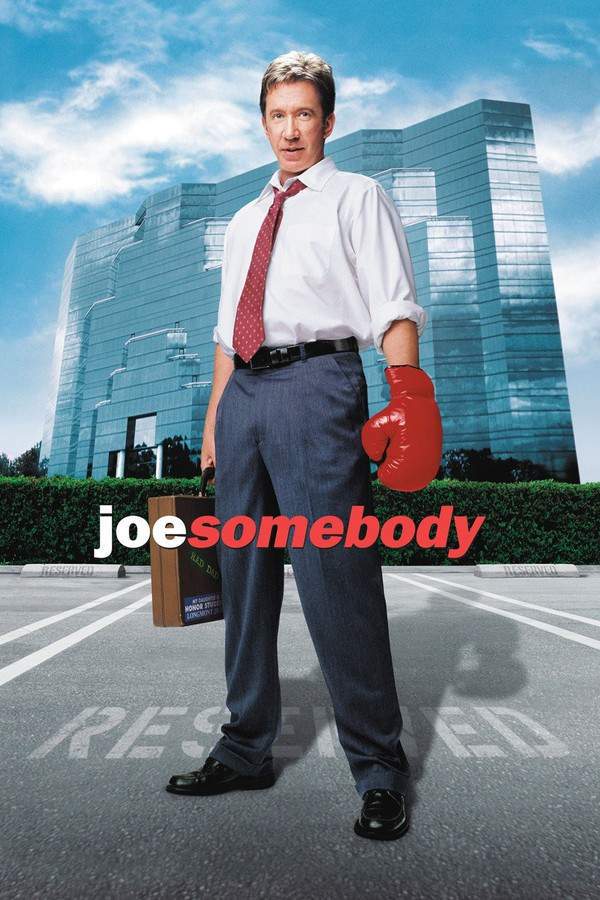
Joe Somebody (2001) movie poster

Plot Summary

Joe Somebody (2001) Plot Summary Explained

Release, runtime and language
2001 · 98 min · English
Directed by
John Pasquin
Starring
Tim Allen
Budget
$38M

After a humiliating incident at work, a mild-mannered man decides to transform his life. He embarks on a journey of physical and professional change, seeking to overcome his past and gain respect. As he rises through the corporate world, he learns valuable lessons about self-acceptance, earning genuine respect from others, and finding love through being true to himself.

On this page (6)
  1. 1 Where to watch
  2. 2 What happens: full plot
  3. 3 Plot questions answered
  4. 4 Movie threads
  5. 5 Movies like Joe Somebody
  6. 6 Every angle

Where to watch

Where to Watch Joe Somebody (2001)

Where can you watch Joe Somebody? Stream, rent or buy it in the US, including on Amazon Video, Apple TV Store and Fandango At Home: current JustWatch availability with up-to-date prices.

Streaming availability powered by JustWatch

Full plot summary · contains spoilers

What Happens in Joe Somebody: Full Plot Summary

The whole story of Joe Somebody (2001) explained, from the opening scene to the final frame: every key event, every twist and what it all adds up to. Read it as a quick recap before the sequel, to check a scene you missed, or to finally understand what really happened.

Joe Scheffer, portrayed by Tim Allen, is navigating the tough waters of single parenthood following his recent divorce. As a skilled audio/visual specialist at STARKe Pharmaceuticals, he juggles his responsibilities while dealing with the emotional fallout from his split with his ex-wife Callie, played by Kelly Lynch. Together, they share a 12-year-old daughter named Natalie, who finds her weekends spent with Callie and her new boyfriend Rick, portrayed by Ken Marino, particularly unpleasant due to Callie's strict vegan lifestyle.

At work, Joe feels invisible, especially with his boss Pat Chilcutt, played by Robert Joy, constantly overlooking him for a long-desired promotion. Despite his frustrations, Joe's warmth shines through when he helps Meg Harper, the office wellness coordinator, set up her stall. Meg remembers Joe's dedication, highlighting his good heart amidst the struggles.

In Natalie’s eyes, Joe is nothing short of a hero. Though he dreams of being a writer, he has found himself in a role as a video communications specialist. Natalie, recognizing her father's hidden talents, encourages him about his playwriting aspirations. However, a turning point occurs during "Bring Your Daughter to Work Day," when Joe sees his colleague Mark McKinney, played by Patrick Warburton, parking in a spot reserved for long-term employees, despite only being there for seven years. As tensions rise, a confrontation escalates when McKinney humiliates Joe in front of Natalie, leading to a painful few days of avoidance between father and daughter.

When Jeremy, a company executive, learns of the incident, he fears Joe might take legal action. Although Jeremy views Joe as a failure due to his personal setbacks, Meg sees the real Joe—dedicated, hardworking, and deserving of respect. After a few days off, Meg visits Joe to coax him back to work with the offer of a designated parking spot. Despite her efforts, Joe’s low spirits persist until Meg’s simple yet provocative question, "What do you want?" reignites his fighting spirit.

Determined to regain his dignity, Joe challenges McKinney, suddenly finding himself the office's underdog hero, earning admiration from his colleagues. Even Cade, portrayed by Wolfgang Bodison, invites Joe into the exclusive club 13, fueling Joe’s confidence as he revamps his wardrobe and gains attention from Abby Manheim, played by Cristi Conaway. However, both Meg and Natalie worry that Joe's quest for revenge will ultimately lead to trouble.

As Natalie, a brilliant student facing her own challenges at school, struggles due to her father's preoccupation with the impending fight, Joe turns to Chuck Scarett, played by Jim Belushi, for martial arts training. With newfound skills and a promotion at work boosting his morale, Joe’s life seems to be on an upswing until Meg uncovers Jeremy's ulterior motive behind the promotion; he only offered it to prevent Joe from suing.

Facing an ultimatum from Meg—that their relationship hinges on his decision about the fight—Joe finds himself at a crossroads on fight day. Arriving at the designated location, he ultimately recognizes that fighting McKinney would be childish and not worth the consequence. In a surprising twist, Joe declines the battle, and when McKinney offers a sincere apology, Joe accepts it, allowing him to reconcile with both Meg and Natalie and reaffirm his role as their steadfast and loving father.

Last updated: October 27, 2024 at 18:12

Was this helpful?

Plot questions answered

Joe Somebody Plot Explained: Your Questions Answered

The questions people ask most about Joe Somebody (2001): what happens in the confusing scenes, why the characters do what they do, the twists, hidden details and what the ending means. Each answer contains spoilers.

Q1

Why does Joe agree to fight Mark McKinney after being humiliated?

Joe agrees to fight McKinney because the humiliation he suffered in front of his daughter Natalie on Bring Your Daughter to Work Day shattered his dignity. After months of feeling invisible at work, being passed over for promotions, and seeing his daughter witness him being publicly degraded, Joe's spirit is broken. When Meg asks him 'What do you want?', Joe realizes he wants his dignity back and sees confronting McKinney as the only way to reclaim it.

Foreshadowing: Earlier, Joe witnesses McKinney parking in the long-term employee spot despite only being there seven years, which foreshadows the escalating tension between them.

  • Joe McKinney fight
  • dignity
  • humiliation
  • revenge
  • workplace confrontation
Q2

What was Jeremy's real reason for promoting Joe?

Jeremy offers Joe the promotion not because of his work ethic or talent, but purely as a strategic move to prevent Joe from suing the company for the humiliation he suffered. When Meg uncovers this ulterior motive, she confronts Joe with an ultimatum, revealing that the respect Joe thought he earned was actually a corporate manipulation to avoid a legal battle.

Foreshadowing: Jeremy's initial reaction to the confrontation was to worry about legal liability rather than Joe's wellbeing, hinting at his manipulative nature.

  • Jeremy
  • promotion
  • STARKe Pharmaceuticals
  • lawsuit
  • ulterior motive
Q3

Why does Joe choose not to fight McKinney at the end?

Joe ultimately decides not to fight because he realizes the physical confrontation would be childish and accomplish nothing meaningful. Standing at the fight location, he understands that engaging in violence would contradict the growth he's made and damage his relationships with Meg and Natalie. His choice represents maturity, choosing his family's wellbeing over petty revenge.

Foreshadowing: Meg's ultimatum and her question 'What do you want?' plant the seeds for Joe's realization that he wants genuine respect, not just revenge.

  • Joe McKinney fight decision
  • maturity
  • choice
  • reconciliation
Q4

What does Meg's ultimatum mean for Joe's decision about the fight?

Meg tells Joe that their relationship depends on whether he chooses to fight McKinney or not, forcing him to confront what he truly values. This ultimatum places Joe at a crossroads between his desire for revenge and his relationship with the person who believed in him when no one else did. The stakes of the fight become about more than just his pride, it becomes about his future with Meg.

Foreshadowing: Meg was the one who helped Joe regain his confidence by asking 'What do you want?', making her ultimatum carry extra emotional weight.

  • Meg Harper
  • ultimatum
  • relationship
  • Joe choice
  • fight day
Q5

What is Club 13 at STARKe Pharmaceuticals?

Club 13 is an exclusive group of senior employees at STARKe Pharmaceuticals that Joe is invited to join after his stock rises in the office. Cade, one of the higher-ups, extends the invitation, symbolizing Joe's newfound status and respect among his colleagues. Joining Club 13 represents the external validation Joe had been seeking throughout the movie.

Foreshadowing: Joe's growing confidence and wardrobe changes coincide with his rising status, showing his absorption into the corporate power structure.

  • Club 13
  • Cade
  • exclusive group
  • office status
  • corporate respect
Q6

Why is Natalie struggling in school during Joe's conflict with McKinney?

Natalie's grades begin to suffer because she becomes preoccupied with worry about her father. As Joe prepares for his confrontation with McKinney, he becomes emotionally distant and focused on the impending fight. Natalie, who sees her father as her hero, fears losing him to violence, and this anxiety manifests as declining academic performance.
Foreshadowing: Natalie encouraged Joe to pursue his playwriting dreams, showing her investment in his happiness and wellbeing.

  • Natalie
  • school
  • grades
  • worry
  • father daughter relationship
Q7

How does Joe's relationship with his daughter Natalie change throughout the movie?

Joe and Natalie's relationship suffers after the public humiliation because Natalie sees her father at his weakest moment. Joe withdraws and avoids Natalie for days, feeling ashamed. However, as Joe goes through his transformation and ultimately makes the mature choice not to fight, Natalie witnesses her father choosing dignity through self-respect rather than violence, which strengthens their bond and affirms him as the hero she believed him to be.

Foreshadowing: Natalie originally encouraged Joe about his playwriting aspirations, showing her faith in his hidden talents.

  • Joe Natalie relationship
  • father daughter
  • hero
  • respect
  • reconciliation
Q8

What does Joe learn about self-worth during his transformation?

Joe learns that true self-worth comes from within, not from external validation or revenge. Initially, he seeks respect through fighting McKinney and gaining promotion, but when he discovers the promotion was a manipulative tactic, he realizes that genuine respect must be earned through his own character. By the end, Joe understands that being a good father and person matters more than winning a fight.

Foreshadowing: Meg saw Joe's good heart from the beginning, long before any transformation began, hinting that his worth was always there.

  • self-worth
  • self-acceptance
  • dignity
  • personal growth
  • transformation
Q9

Why does Joe accept McKinney's apology after refusing to fight?

Joe accepts McKinney's apology because it represents genuine reconciliation rather than forced submission. McKinney's apology is sincere and comes after Joe has already chosen not to fight, which removes any perception of weakness or coercion. By accepting the apology, Joe demonstrates that he has truly moved beyond seeking revenge and is ready to heal old wounds and move forward.

Foreshadowing: Joe's decision not to fight was the turning point that allowed both men to interact on equal, respectful terms.

  • McKinney apology
  • reconciliation
  • forgiveness
  • respect
Q10

Why does Joe go back to work at STARKe Pharmaceuticals after being publicly humiliated?

Joe returns to work after Meg visits him and offers a designated parking spot as a symbol of her belief in his value. Although his spirits remain low initially, Meg's simple question 'What do you want?' sparks his determination to reclaim his dignity. The parking spot represents the first step in Joe's reintegration into workplace life, showing that supportive relationships can help overcome even deep workplace humiliation.

Foreshadowing: Joe helped Meg set up her wellness stall earlier, showing his kind nature despite his professional struggles.

  • Joe return to work
  • parking spot
  • humiliation
  • workplace
  • grief

Movie threads

More Movies Like Joe Somebody, by Mood & Story

Curated lists built around what makes Joe Somebody tick: the same mood, the same kind of story or the same emotional payoff. Each list explains why these movies belong together.

Movies about underdog redemption like Joe Somebody

Relatable stories where quiet characters stand up and transform their lives. If you liked Joe Somebody, you'll enjoy these other stories about quiet individuals seeking redemption. This collection features movies where relatable characters overcome workplace humiliation, personal setbacks, or bullying to transform their lives and earn genuine respect through self-discovery and courage.

  • redemptive
  • underdog
  • heartwarming
  • relatable
  • encouraging
  • self-discovery
  • Tone: hopeful, encouraging
  • Pacing: steady, linear progression
Why these movies?

The story pattern: The narrative follows a 'zero to hero' arc, but in a grounded, realistic context. It begins with a humiliating incident that shatters the protagonist's confidence, sparking a quest for change. The journey involves training, setbacks, and mentorship, culminating not in a simple victory but in a mature resolution that values self-acceptance and reconciliation over mere revenge.

Why they belong together: Movies in this thread share a core emotional journey: from humiliation to empowerment. They blend relatable struggles with a hopeful tone, focusing on internal growth. The pacing is steady, building towards a satisfying, character-driven resolution that emphasizes earning respect through personal integrity.

Corporate life dramedies similar to Joe Somebody

Blending workplace politics with heartfelt personal growth and humor. Find more movies like Joe Somebody that explore the drama and comedy of office life. This section features character-driven stories set in corporate environments, focusing on personal transformation, workplace dynamics, father-daughter relationships, and the quest for respect amidst the challenges of professional life.

  • relatable
  • reflective
  • heartwarming
  • workplace
  • conflicted
  • encouraging
  • Tone: hopeful, reflective
  • Pacing: steady, character-driven
Why these movies?

The story pattern: The narrative is centered on a protagonist navigating the complexities of corporate hierarchy, often facing a moral or personal challenge like bullying or a crisis of identity. The plot intertwines professional advancement with personal development, using the workplace setting to explore themes of authenticity, mentorship, and finding a healthy work-life balance, often culminating in a reevaluation of what true success means.

Why they belong together: These films are united by their specific setting and tone. They balance the relatable frustrations of corporate life with a character-focused, often heartwarming dramatic arc. The mix of medium emotional weight, steady pacing, and a blend of comedy and drama creates a distinct, accessible viewing experience about finding yourself in a modern professional world.

If you liked this

Movies Like Joe Somebody

Similar movies to Joe Somebody: the same genre, themes or kind of story. Each one comes with its own plot summary, timeline and ending explained.

Browse all movie summaries

Every angle

Joe Somebody (2001) Explained: Plot, Timeline & Characters

Everything about Joe Somebody in one place: what happens in the plot summary, the timeline in chronological order, the characters and meaning and a spoiler-free summary. What's After the Movie adds the cast, box office and post-credit scenes.

Coming soon on iOS and Android

The Plot Explained Movie Summary App

Plot summaries, endings explained and timelines on your phone. Catch up on any movie in minutes, save your favorites and never miss a twist again.

Be the first to know when we launch. Your email stays private, always.

Learn more about the app