Plot Explained Spoilers guaranteed!
Plot Explained

Browse by genre

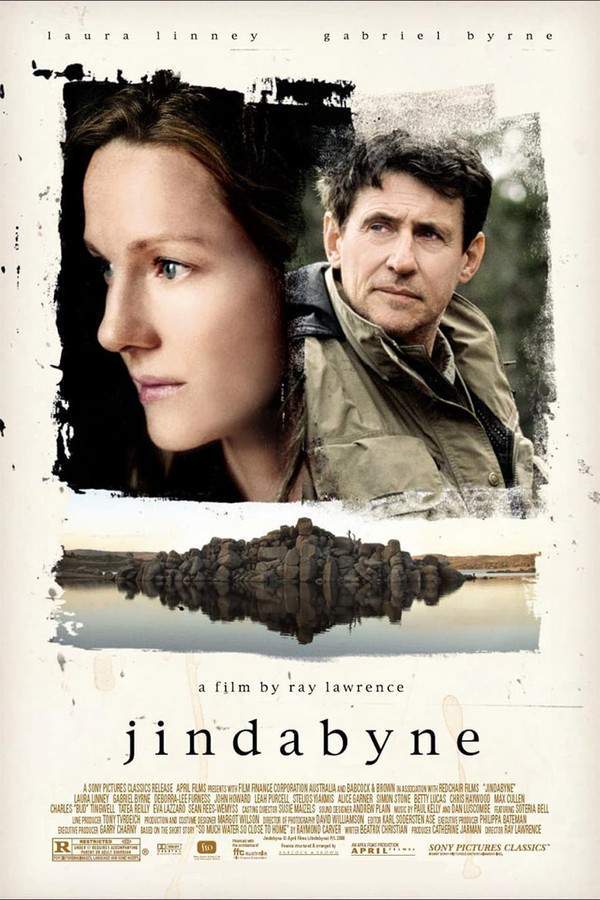
Jindabyne (2007) movie poster

Plot Summary

Jindabyne (2007) Plot Summary Explained

Release, runtime and language
2007 · 123 min · English
Directed by
Ray Lawrence
Starring
Laura Linney, Gabriel Byrne, John Howard, Stelios Yiakmis

During a fishing trip, a group of friends makes a disturbing find: the body of a murdered woman. They grapple with the decision of whether or not to report the crime, leading to a delay that tests their loyalties and exposes a complex web of moral considerations. As the situation escalates, one woman struggles to understand her husband’s choices and the troubling consequences that follow their silence.

On this page (6)
  1. 1 Where to watch
  2. 2 What happens: full plot
  3. 3 Plot questions answered
  4. 4 Movie threads
  5. 5 Movies like Jindabyne
  6. 6 Every angle

Where to watch

Where to Watch Jindabyne (2007)

Where can you watch Jindabyne? Stream, rent or buy it in the US, including on Amazon Video, Apple TV Store and Fandango At Home: current JustWatch availability with up-to-date prices.

Streaming availability powered by JustWatch

Full plot summary · contains spoilers

What Happens in Jindabyne: Full Plot Summary

The whole story of Jindabyne (2007) explained, from the opening scene to the final frame: every key event, every twist and what it all adds up to. Read it as a quick recap before the sequel, to check a scene you missed, or to finally understand what really happened.

On an annual fishing trip in the high country, four men — Stewart Gabriel Byrne, Carl John Howard, Rocco Stelios Yiakmis, and Billy — stumble upon a girl’s body in the river. The victim, later revealed to be Aboriginal, has been murdered by Gregory, a local electrician. The discovery shocks the men and sows confusion: only the youngest, Billy, grasps that this is a crime, but his understanding is dismissed by the others. The situation quickly becomes a moral puzzle about duty, loyalty, and their shared past in a town that has already weathered upheaval.

The group decides it’s too late to navigate the river that night, proposing to hike out at first light. Before they leave, Stewart ties the dead girl to the riverbank, a frantic attempt to contain the evidence. Yet the next day, Stewart goes fishing and, after landing a large fish, the men delay their departure, opting to spend the afternoon by the water rather than informing the police immediately. The quiet space of their fishing trip becomes a tense ground where unspoken rules and cultural guilt begin to fester.

Meanwhile, back in town, the wives gather—Jude, Claire Laura Linney, and Rocco’s girlfriend Carmel—and old tensions surface in the wake of the tragedy. Jude, Carl’s wife, reveals that their daughter died nearly two years earlier, leaving them to raise a granddaughter, Caylin-Calandria, who struggles with psychological issues. Claire’s revelation about her own mental health history—an earlier postpartum breakdown and a lengthy absence from her family—adds another layer to the fragile fabric of marriage among the group. The history between the women and the men deepens the conflict: Claire questions Stewart’s readiness for fatherhood, and Jude defends her husband even as the town’s collective judgment begins to turn.

When the four men finally return home late Sunday night and inform the police, the investigation spills into the private sphere. At the station, a police officer openly condemns their decision to “fish over a dead body” instead of reporting it, a line that underscores the gulf between their cultural code and the expectations of justice. The men feign a simple accident to explain their delay—Carl’s supposed ankle strain—while the community’s anger grows, complicated by racial tensions as some Aboriginal residents vandalize buildings with painted slurs.

The narrative expands to reveal the broader clash between a Western town rebuilt after relocation for a dam and the ancient beliefs of the Aboriginal community. Claire and Elissa (Billy’s partner) alone show genuine remorse and a desire to make amends, while Jude defends Carl’s actions, insisting the girl’s death made the choice to stay or leave seem immaterial. As Claire pushes for accountability, tensions flare and threaten to tear the town apart. Claire, who is grappling with her own past and a possible second pregnancy, seeks a path forward, contemplating abortion while still not sharing the full weight of her turmoil with Stewart.

As the story unfolds, the town’s fractures widen. Claire’s attempts to support Caylin-Calandria and to connect with the girl’s family are met with rebukes alongside gestures of charity—donations for the funeral are collected and offered, even as suspicion and resentment simmer beneath the surface. The relationship between Stewart and Claire grows increasingly strained; a heated confrontation leaves them in a rare moment of raw exposure, revealing the emotional cost of the crisis on their marriage. The strain extends to the men’s rivalries and loyalties, each man choosing how to defend his own actions and those of his mates.

The tragedy continues to cast a long shadow. As the annual memorial approaches, the murderer—still at large—appears at the periphery, a constant reminder of the unresolved violence that lingered on the river. The memorial service itself becomes a fragile attempt at reconciliation, with the father of the murdered girl throwing dirt on Stewart and walking away in disgust, a stark image of the town’s unwillingness to forgive. Yet, despite the anger and the accusations, Stewart reaches out to Claire, inviting her back and signaling a potential to rebuild what has been strained beyond repair.

Throughout the film, the unresolved threat of the killer remains a quiet undercurrent, a presence that never quite disappears. The story continually returns to questions of responsibility, memory, and belonging: who deserves sympathy, who must answer for their choices, and how a small community reconciles its past with a difficult, unsettled present. The result is a measured, morally probing drama that looks at how a single, brutal act can expose the deep fault lines in a town and in the people who call it home.

Last updated: October 09, 2025 at 15:42

Was this helpful?

Plot questions answered

Jindabyne Plot Explained: Your Questions Answered

The questions people ask most about Jindabyne (2007): what happens in the confusing scenes, why the characters do what they do, the twists, hidden details and what the ending means. Each answer contains spoilers.

Q1

Why did the men continue fishing after finding the murdered girl's body?

The men chose to stay and fish rather than report the body immediately because they believed it was too late to navigate the river safely that night. However, the next day, after Stewart caught a large fish, they decided to spend the afternoon by the water before leaving. Their delay revealed a troubling prioritisation of their fishing trip over their duty to report a crime, which became a central moral failure that haunted the entire community.

Foreshadowing: The men's casual attitude toward the discovery is established early when only Billy, the youngest, recognises the severity of finding a dead body.

  • fishing trip
  • delay reporting
  • body discovery
  • moral failure
Q2

Why did Stewart tie the dead girl to the riverbank?

Stewart tied the body to the riverbank in a frantic attempt to contain the evidence and prevent it from floating away downstream. He was uncertain how to proceed and acted impulsively in the shock of the discovery, not fully thinking through the legal or ethical implications of disturbing a crime scene.

  • Stewart
  • evidence
  • riverbank
  • crime scene
Q3

Why did Claire keep her pregnancy secret from Stewart?

Claire kept her pregnancy secret because she was unsure whether to continue the pregnancy. She visited a doctor to discuss the possibility of abortion and was still contemplating her decision when the fishing trip occurred. Her secret was further complicated by her previous mental health struggles and fear of how Stewart would react, especially given his later admission that he would never let her take his son.

Foreshadowing: Claire's morning sickness and contemplation of abortion occur before the fishing trip, casting a shadow over the events that follow.

  • Claire
  • pregnancy
  • abortion
  • secret
  • Stewart
Q4

What happened to Jude and Carl's daughter?

Jude revealed that her daughter died nearly two years before the events of the film, leaving Jude and Carl to raise their granddaughter Caylin-Caledria, who struggles with psychological issues. This tragic loss underlies much of Jude's defensive behaviour toward her husband throughout the crisis.

  • Jude
  • Carl
  • daughter death
  • Caylin-Caledria
Q5

Why was there so much racial tension in Jindabyne?

The town of Jindabyne was rebuilt in a different location after being relocated for dam construction, displacing the Aboriginal community. This historical trauma created deep resentment between the Western settlers and the Aboriginal residents. When the men delayed reporting the murdered Aboriginal girl, it was perceived as a continuation of the town's historical neglect of Aboriginal lives, sparking vandalism and further division.

Foreshadowing: The town's fractured history is established through the meta notes about the dam relocation and the cultural clash between communities.

  • Aboriginal
  • racial tension
  • dam
  • relocation
  • community
Q6

What was Claire's mental health history?

Claire previously experienced a postpartum breakdown after giving birth to her first son, which led to a lengthy absence from her family. This prior mental health crisis and her subsequent abandonment of her first child added layers of guilt and complexity to her character, especially as she grappled with the possibility of another pregnancy during the film's events.

  • Claire
  • postpartum
  • mental breakdown
  • first son
Q7

Why did the men lie about Carl's ankle being injured?

At the police station, the men invented a cover story claiming Carl had strained his ankle, which they used to explain their delay in reporting the body. This lie was an attempt to avoid facing the full legal and social consequences of their decision to prioritise fishing over reporting the murder.

  • cover story
  • Carl
  • ankle
  • police
  • lie
Q8

Why did the girl's father react that way at the memorial service?

At the memorial service, the girl's father threw dirt on Stewart and walked away in disgust, refusing to accept his apology. This powerful gesture Symbolised the Aboriginal community's deep anger and unwillingness to forgive the men for their callous decision to continue fishing rather than promptly reporting the murder. It represented the broader community's sense that the men's actions reflected a desprect for Aboriginal life.

  • memorial
  • father
  • dirt
  • apology
  • Aboriginal family
Q9

Who killed the Aboriginal girl and why was he never caught?

The murderer was Gregory, a local electrician in the town. Despite appearing at the periphery of the story and even attending the memorial service, Gregory was never arrested or brought to justice. The film intentionally leaves his capture unresolved, underscoring the theme of unhealed wounds and the failure of justice within the community.

Foreshadowing: The killer's presence at the memorial serves as a haunting reminder of the unresolved violence.

  • Gregory
  • killer
  • electrician
  • not caught
  • at large
Q10

What is Caylin-Calandria's role in the story?

Caylin-Calandria is Jude and Carl's granddaughter, whom they raised after their daughter died nearly two years before the film. The girl struggles with psychological issues, and her wellbeing becomes a point of contention during the crisis. Carl defends her fiercely, insisting she should not be blamed for the tragedy, while the stress of the situation places additional strain on the family.

Foreshadowing: Jude reveals Caylin-Calandria's existence and struggles during the wives' gathering.

  • Caylin-Calandria
  • granddaughter
  • psychological issues
  • Jude
  • Carl
Q11

Why were Claire and Elissa the only ones who showed remorse?

Claire and Elissa were the only characters who expressed genuine remorse and attempted to make amends with the girl's family. Claire reached out to the family and helped gather donations for the funeral, while Elissa also showed compassion. The other men and their wives defended their actions or remained silent, reflecting the town's divided moral stance and the broader cultural divide.

  • Claire
  • Elissa
  • remorse
  • donations
  • funeral
Q12

What caused the major fight between Stewart and Claire?

The fight between Stewart and Claire erupted when she pressed him to be honest about the fishing trip delay and take accountability for their actions. Stewart exploded in rage, accusing Claire of wanting to take his son away from him, exposing the deep fracture in their marriage caused by his secrets and her own hidden pregnancy. The confrontation revealed the emotional toll the crisis had taken on their relationship.

Foreshadowing: Stewart's earlier attempt at intimacy after returning home, while keeping the discovery secret, foreshadows the growing distance between them.

  • Stewart
  • Claire
  • fight
  • marriage
  • son

Movie threads

More Movies Like Jindabyne, by Mood & Story

Curated lists built around what makes Jindabyne tick: the same mood, the same kind of story or the same emotional payoff. Each list explains why these movies belong together.

Slow burn moral dilemma movies like Jindabyne

Stories where a single ethical failure unravels the fabric of ordinary lives. If you liked the tense, character-driven fallout in Jindabyne, this list features movies with similar ethical quandaries. Find other slow-paced dramas where a questionable choice leads to profound personal and social consequences, testing loyalties and exposing deep-seated tensions.

  • morally complex
  • tense
  • somber
  • unsettling
  • reflective
  • strained
  • Tone: tense, somber, morally complex
  • Pacing: slow, deliberate
Why these movies?

The story pattern: A seemingly straightforward situation presents a moral choice, often made under pressure or through inaction. The narrative then shifts from the event itself to its protracted aftermath, charting the psychological decay and relational fractures that occur as characters grapple with guilt, shame, and judgment.

Why they belong together: Movies in this thread share a focus on the psychological and social fallout of moral failures. They are united by a slow pacing that allows tension to simmer, a heavy emotional weight centered on guilt and consequence, and a complex exploration of character motivations under duress.

Movies about community tension like Jindabyne

Films where a traumatic event exposes the hidden cracks in a small town or tight-knit group. For viewers who appreciated how Jindabyne uses a crime to reveal a town's underlying racial and social tensions. These films are similar slow-burning dramas and thrillers where a shared crisis fractures a community, exploring themes of secrets, prejudice, and collective guilt.

  • community tension
  • unsettling
  • claustrophobic
  • somber
  • secret-filled
  • racism
  • Tone: tense, unsettling, reflective
  • Pacing: slow, deliberate
Why these movies?

The story pattern: An inciting incident disrupts the equilibrium of an isolated or closely-connected setting. The narrative follows multiple perspectives as long-buried secrets, personal conflicts, and societal issues like racism or class divide come to light, turning allies into adversaries and challenging the very idea of a unified community.

Why they belong together: These films are linked by their setting as a character and their exploration of group dynamics under stress. They create a claustrophobic, unsettling atmosphere through a tense tone and slow pacing, focusing on how external pressure reveals internal divisions and moral failings on a communal scale.

If you liked this

Movies Like Jindabyne

Similar movies to Jindabyne: the same genre, themes or kind of story. Each one comes with its own plot summary, timeline and ending explained.

Browse all movie summaries

Every angle

Jindabyne (2007) Explained: Plot, Timeline & Characters

Everything about Jindabyne in one place: what happens in the plot summary, the timeline in chronological order, the characters and meaning and a spoiler-free summary. What's After the Movie adds the cast, box office and post-credit scenes.

Coming soon on iOS and Android

The Plot Explained Movie Summary App

Plot summaries, endings explained and timelines on your phone. Catch up on any movie in minutes, save your favorites and never miss a twist again.

Be the first to know when we launch. Your email stays private, always.

Learn more about the app