Plot Explained Spoilers guaranteed!
Plot Explained

Browse by genre

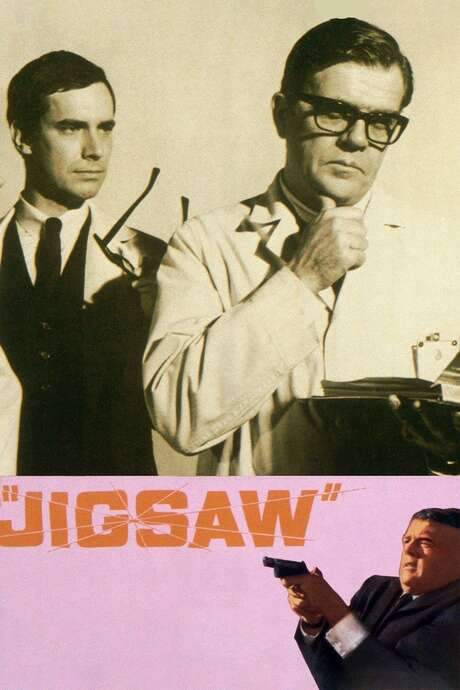
Jigsaw (1968) movie poster

Characters & Themes

Jigsaw (1968) Characters, Setting & Themes Explained

Release, runtime and language
1968 · 97 mins · English
Directed by
James Goldstone
Starring
Pat Hingle, Paul Stewart, Victor Jory, Bradford Dillman, Susanne Benton, Kent McCord

After inadvertently ingesting some sugar laced with LSD, a man wakes up with amnesia and in the middle of a murder plot.

On this page (7)
  1. 1 Characters explained (9)
  2. 2 Where & when it takes place
  3. 3 Themes & meaning (3)
  4. 4 Character & meaning questions
  5. 5 Movie threads
  6. 6 Movies like Jigsaw
  7. 7 Every angle

9 main characters · contains spoilers

Jigsaw Characters Explained: Who Is Who

The main characters of Jigsaw (1968), heroes and villains: what drives them, how they change over the course of the story and what each of them reveals about the film's bigger ideas.

  • Jonathan Fields (Bradford Dillman)

    Amnesiac scientist who regains consciousness after being drugged, seeking answers about the murder and his missing memory. He returns to work at the think tank and hires a private detective, hoping to reconstruct what happened. His memory gaps push the investigation forward while casting doubt on his own role in the events.

    • 🧠 Amnesia
    • 🧭 Investigation
    • 🧪 Science
  • Lew Haley (Pat Hingle)

    Ambitious colleague who appears to be eyeing Fields' position within the think tank. He is implicated as the mastermind behind the killings, orchestrating events from behind the scenes. Haley's cunning and power plays complicate the pursuit of truth.

    • 🕵️‍♂️ Motive
    • 🧭 Deception
    • 💼 Power
  • Dr. Edward Arkroyd (Victor Jory)

    Head of the think tank who had a romantic affair with the murder victim. His high-status leadership and secrets make him a central figure in the investigation, though whether he is a victim, culprit, or pawn remains part of the mystery.

    • 🧪 Leadership
    • 💔 Romance
    • 🕵️ Suspicion
  • Arthur Belding (Harry Guardino)

    Private detective hired by Fields to uncover the truth. He is resourceful and resilient, even when kidnapped by Dill and his accomplice. Belding plays a crucial role in guiding the investigation and exposing hidden motives.

    • 🕵️‍♂️ Private Detective
    • 🧯 Resilience
    • 🧭 Investigation
  • Helen Atterbury (Hope Lange)

    A woman who claims to be Fields' sweetheart, introducing an element of romantic confusion. Her role adds emotional complexity to the investigation and challenges Fields' perception of his own relationships.

    • 💘 Romance
    • 🌀 Mystery
    • 🗝️ Misdirection
  • Dill (Michael J. Pollard)

    A hippie figure aligned with the counterculture subplot who, with an accomplice, kidnaps Belding and attempts to drug him. His actions tie the drug culture thread to the murder investigation and its dangers.

    • 🎸 Counterculture
    • 🧪 Drugs
    • ⚠️ Danger
  • Sarah (Diana Hyland)

    Fields' girlfriend who offers support and helps the detective. Her role anchors personal relationships within the broader mystery and provides emotional stakes for the investigation.

    • 💑 Relationships
    • 🌟 Support
    • 🕵️‍♀️ Ally
  • Arlene (Susanne Benton)

    A member of the think tank with ties to the case. Her presence adds depth to the ensemble and hints at additional connections within the scientific community.

    • 🏢 Think Tank
    • 🧩 Supporting
  • Ida (Susan Saint James)

    A secondary character connected to Fields' circle. She contributes to the social fabric around the case, though her exact role is not central to the leading mystery.

    • 🧩 Supporting
    • 👥 Circle

Last updated: March 05, 2026 at 18:14

Was this helpful?

Setting

Where and When Does Jigsaw Take Place?

The setting of Jigsaw (1968): the year and time period, the places and locations, and how they shape the characters, the mood and the tension of the story.

Time period

1960s

The story unfolds in the counterculture era when LSD and drug experimentation were prominent. The plot references sugar cubes laced with LSD and a rising hippie presence, situating the film firmly in a tumultuous decade. This period's mix of scientific prestige and social rebellion shapes the mood and conflicts of the narrative.

Location

Think tank, private detective's office, Fields' apartment

The action rotates around a scientific think tank, providing a backdrop of intellectual ambition and hidden tensions. Key scenes move between the detective’s office and the think tank, with a murder scene in a bathroom anchoring the investigation. The setting blends professional intrigue with personal entanglements, reflecting the film's mystery-driven plot.

  • 🧪 Science
  • 🕵️ Detective
  • 🏢 Office

Last updated: March 05, 2026 at 18:14

Was this helpful?

3 major themes

Jigsaw Meaning: Themes & Message Explained

What is Jigsaw (1968) really about? The emotional, social and philosophical themes the film keeps returning to, its symbolism and the message beneath the surface.

  • Amnesia

    Jonathan Fields' amnesia drives the entire investigation, forcing him to reconstruct events from fragmentary memories. The memory gaps create suspense and cast doubt on who is trustworthy. The detective's progress hinges on piecing together clues that Fields cannot fully recall. The theme explores how memory shapes truth and perception in a murder mystery.

  • Betrayal

    Within the think tank, ambition and romantic entanglements fuel a web of deception. The revelation that a colleague may be behind multiple killings highlights how power and jealousy can corrupt a scientific environment. Relationships become collateral in a larger scheme of murder and cover-up. The theme examines loyalty tested by ambition and personal vendettas.

  • Counterculture

    The presence of a hippie character and LSD-related plot points anchor the film in a 1960s counterculture context. The era’s drug experimentation and anti-establishment mood influence characters' choices and risk-taking behaviors. This backdrop amplifies paranoia and rebellion, shaping the film's tension. The clash between conventional authority and new social norms drives part of the narrative arc.

Last updated: March 05, 2026 at 18:14

Was this helpful?

Character & theme questions

Jigsaw Characters & Meaning: Your Questions Answered

The questions people ask about Jigsaw (1968): who the characters really are, their relationships, what the symbols mean, where it takes place and what the movie is really about. Each answer contains spoilers.

Q1

Where is Jigsaw set?

The film takes place primarily in a scientific think tank, with key scenes unfolding in a private detective's office and the protagonist's apartment. This intellectual environment of research and professional ambition provides the backdrop for the murder investigation, blending professional intrigue with personal entanglements.

  • think tank
  • setting
  • location
  • detective office
  • apartment
Q2

What time period does Jigsaw take place in?

Jigsaw is set in the 1960s, during the counterculture era when LSD and drug experimentation were prominent in American society. This period's mix of scientific prestige and social rebellion shapes the mood and conflicts of the narrative.

  • 1960s
  • time period
  • era
  • counterculture
Q3

What is the amnesia theme about in Jigsaw?

Jonathan Fields' amnesia drives the entire investigation, forcing him to reconstruct events from fragmentary memory. The memory gaps create suspense and cast doubt on who is trustworthy, exploring how memory shapes truth and perception in a murder mystery.

  • amnesia
  • memory
  • truth
  • perception
  • mystery
Q4

What does the betrayal theme explore in Jigsaw?

Within the think tank, ambition and romantic entanglements fuel a web of deception. The revelation that a colleague may be behind multiple killings highlights how power and jealousy can corrupt a scientific environment, examining loyalty tested by ambition and personal vendettas.

  • betrayal
  • ambition
  • jealousy
  • loyalty
  • deception
Q5

How does the 1960s counterculture influence Jigsaw?

The presence of a hippie character and LSD-related plot points anchor the film in the 1960s counterculture context. The era's drug experimentation and anti-establishment mood influence characters' choices, with the clash between conventional authority and new social norms driving part of the narrative tension.

  • counterculture
  • hippie
  • lsd
  • 1960s
  • rebellion
Q6

Who is Jonathan Fields in Jigsaw?

Jonathan Fields is an amnesiac scientist who wakes up after being drugged with LSD, finding himself in the middle of a murder plot. He returns to work at the think tank and hires a private detective to reconstruct what happened, as his memory gaps drive the investigation forward.

  • jonathan fields
  • scientist
  • amnesia
  • protagonist
Q7

Who is Lew Haley in Jigsaw?

Lew Haley is an ambitious colleague at the think tank who appears to be eyeing Jonathan Fields' position. He is implicated as the mastermind behind the killings, orchestrating events from behind the scenes with cunning and power plays that complicate the pursuit of truth.

  • lew haley
  • antagonist
  • ambitious
  • colleague
  • think tank
Q8

Who is Arthur Belding in Jigsaw?

Arthur Belding is the private detective hired by Jonathan Fields to uncover the truth about the murder. He is resourceful and resilient, even when kidnapped by Dill and his accomplice, playing a crucial role in guiding the investigation and exposing hidden motives.

  • arthur belding
  • detective
  • investigator
  • private eye
Q9

Who is Dr. Edward Arkroyd in Jigsaw?

Dr. Edward Arkroyd is the head of the think tank who had a romantic affair with the murder victim. His high-status leadership and secrets make him a central figure in the investigation, though whether he is a victim, culprit, or pawn remains part of the mystery.

  • dr edward arkroyd
  • think tank head
  • leader
  • suspect
Q10

What role does the hippie character play in Jigsaw?

Dill is a hippie figure who, with an accomplice, kidnaps the detective and attempts to drug him. His actions tie the drug culture thread to the murder investigation, connecting the counterculture subplot to the main mystery's dangers.

  • dill
  • hippie
  • drug culture
  • kidnapping
  • counterculture
Q11

Why is the think tank significant in Jigsaw?

The scientific think tank provides a backdrop of intellectual ambition and hidden tensions. This professional environment, where ambitious scientists work and compete, becomes the stage for murder and deception, blending academic prestige with personal betrayals.

  • think tank
  • scientific
  • research
  • academic
  • environment
Q12

What genre does Jigsaw belong to?

Jigsaw is a thriller and mystery film from 1968, featuring an amnesiac protagonist caught in a murder plot. The film combines psychological suspense with investigative detective elements, set against a 1960s backdrop of scientific ambition and counterculture tension.

  • thriller
  • mystery
  • genre
  • 1968 film

Movie threads

More Movies Like Jigsaw, by Mood & Story

Curated lists built around what makes Jigsaw tick: the same mood, the same kind of story or the same emotional payoff. Each list explains why these movies belong together.

Amnesiac mystery thrillers like Jigsaw

Protagonists who must solve a mystery with their own memories as the biggest clue. If you enjoyed the disorienting investigation in Jigsaw, you'll like these movies where protagonists with amnesia must piece together a crime, often fearing they are the culprit. Discover similar tense and paranoid mystery thrillers that use memory loss as a key narrative device.

  • disorienting
  • paranoid
  • investigative
  • unsettling
  • mysterious
  • psychological
  • Tone: tense, paranoid, mysterious
  • Pacing: steady, investigative
Why these movies?

The story pattern: The narrative typically begins with a character waking up with no memory, immediately thrust into a dangerous situation they don't understand. The plot unfolds as they follow clues that are as much about uncovering the facts of a crime as they are about recovering their own identity, often leading to shocking personal revelations.

Why they belong together: These films are grouped by their shared premise of an amnesiac protagonist, which creates a specific type of tension and viewer alignment. The experience is defined by a steady, investigative pace, a constant sense of paranoia, and a mystery where the protagonist's own past is the final puzzle box.

Psychedelic paranoid thrillers similar to Jigsaw

Stories where altered perceptions blur the line between reality and deadly conspiracy. Find movies like Jigsaw that explore the terrifying consequences of involuntary drug use. These thrillers use psychedelic experiences to create disorienting, tense, and unsettling narratives where characters grapple with paranoia and a reality they can no longer trust.

  • disorienting
  • paranoid
  • psychedelic
  • unsettling
  • anxious
  • mind-bending
  • Tone: tense, disorienting, unsettling
  • Pacing: steady, mind-bending
Why these movies?

The story pattern: The story often begins with an involuntary or accidental drug ingestion that triggers a break from reality. The protagonist is then caught in a web of events where hallucinations and genuine threats are indistinguishable, forcing them to navigate a conspiracy or crime while questioning their own sanity.

Why they belong together: These movies are united by their core theme of drug-induced psychological unraveling. They share a specific, disorienting vibe built on tense atmospheres, a steady pacing that mirrors a confused mental state, and a moderate complexity that keeps the audience guessing alongside the protagonist.

If you liked this

Movies Like Jigsaw

Similar movies to Jigsaw: the same genre, themes or kind of story. Each one comes with its own plot summary, timeline and ending explained.

Browse all movie summaries

Every angle

Jigsaw (1968) Explained: Plot, Timeline & Characters

Everything about Jigsaw in one place: what happens in the plot summary, the timeline in chronological order, the characters and meaning and a spoiler-free summary. What's After the Movie adds the cast, box office and post-credit scenes.

Coming soon on iOS and Android

The Plot Explained Movie Summary App

Plot summaries, endings explained and timelines on your phone. Catch up on any movie in minutes, save your favorites and never miss a twist again.

Be the first to know when we launch. Your email stays private, always.

Learn more about the app