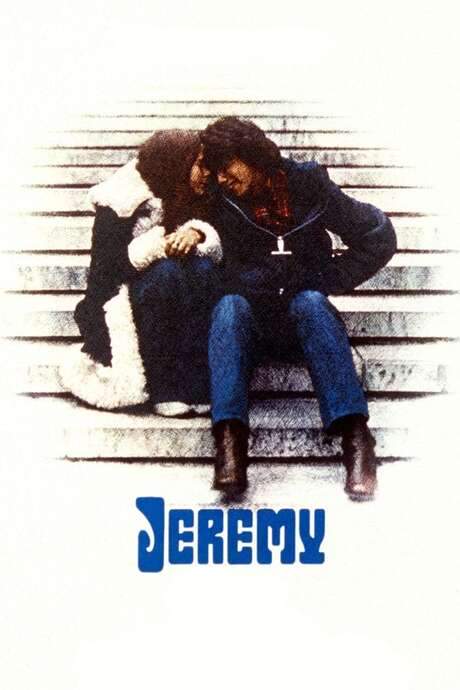
In a quiet, observant New York City drama, Jeremy Jones, Robby Benson, is a shy, bespectacled, Jewish fifteen-year-old who lives in a small apartment with parents who are busy with their own pursuits, leaving him largely to figure things out on his own. He attends a private high school that focuses on the performing arts, where he pours his energy into cello study and dreams of musical greatness. Beyond the classroom, he keeps himself busy with an after-school job as a dog walker, and his spare moments are filled with poetry, chess, and occasional looks at horse racing, where he consistently seems to pick winners even though he never places a bet. The world feels big and a little intimidating, yet he moves through it with a cautious sincerity that makes his small moments of joy feel earned.
When he encounters a new presence in an otherwise familiar space, the moment is electric. One day he slips into an empty classroom in the arts-focused high school and spots Susan Rollins, Glynnis O'Connor, practicing ballet. The brief exchange between them is shy and awkward, and Jeremy is so flustered that he forgets to ask for her name. He learns soon afterward that she is indeed the new girl, older than he is and in a higher grade. He begins to follow her from a distance, while his more confident friend Ralph tries a gentler approach to break the ice. Susan sends him a message through Ralph, inviting him to call, and, after a moment of hesitation sparked by the sight of her walking with an older boy, Jeremy resolves to take the step and call her. Their first real connection comes after a school recital where Jeremy plays cello as a featured soloist, and Susan, listening intently, offers warm congratulations that light a spark in him.
From that moment, the pair fall into a rhythm built on daily walks to school, conversations in parks, and visits to the city racetrack. They share small discoveries about one another—Jeremy’s seriousness about his cello, his quiet humor, Susan’s experience of moving to New York after her mother’s death—and the bond between them deepens with each passing day. Jeremy finds himself falling in love, a realization he confides to Ralph in the privacy of a late-night chess game and poetry reading. The romance becomes a central thread of their days, and the two of them begin to navigate the contours of a first, powerful love that feels both exhilarating and fragile.
Their affection culminates in a moment of vulnerability: on a rainy afternoon, as they sit together in Jeremy’s room and play chess, they openly confess their love for one another and share a first intimate moment. The scene crystallizes their closeness and the sense that they have found something rare and transformative in each other. For a little while, the world feels navigable and bright, colored by the music of Jeremy’s cello and the quiet support they offer one another.
But happiness meets a sudden interruption. Susan learns that her father has been offered a better job back in Detroit, and the family must move soon, perhaps within the next few days. She attempts to explain her feelings to him, hoping he’ll understand the depth of what she’s experienced with Jeremy, but her father Treats the relationship as something temporary, not lasting enough to justify disruption in her life. The next day, Susan breaks the news to Jeremy with a trembling honesty that mirrors the unsure footing they now find themselves on. Jeremy seeks counsel from his own family and from Ralph, but neither is receptive to the idea of a sudden, distant future with someone he has just discovered he loves. The tension between what they feel and what their families are willing to accept creates a distance that neither can easily bridge.
As the days count down, the sense of inevitability thickens. The two lovers attempt to hold onto their connection, but the practical pull of reality—distance, parental skepticism, and the looming departure—presses down on them with quiet seriousness. The farewell arrives in a stark, public moment at the airport, where Susan and Jeremy say their goodbyes with a shared, aching sadness. She departs for Detroit, leaving Jeremy standing alone, the hum of the city around him, and the ache of first love lingering in the air.
What remains when the plane disappears is a portrait of a brief, bright chapter in a teenage life: a young artist discovering a calling beyond his cello, a new friendship that deepens into something profound, and a relationship that blossoms under the pressure of timing and circumstance. It is told in careful, measured detail—rich in small scenes and everyday textures—so that the emotional truth of two young people who dare to fall in love, only to be parted by circumstance, remains clear and honest. The film captures the tension between idealized yearning and the practical limits of adolescence, leaving the audience with a lingering sense of what might have been, while honoring the sincerity of what was.