Plot Explained Spoilers guaranteed!
Plot Explained

Browse by genre

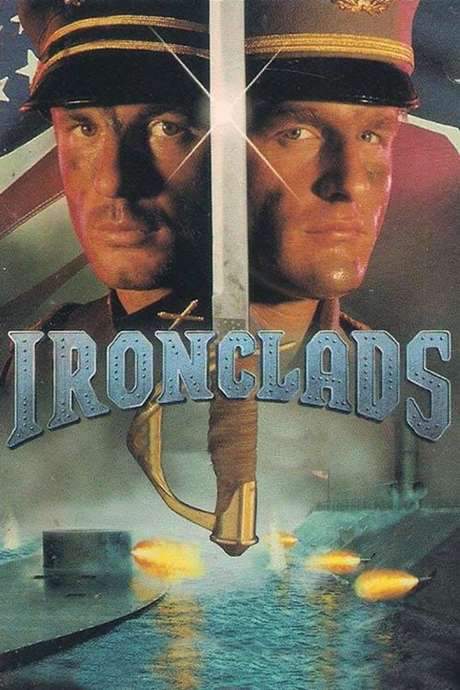
Ironclads (1991) movie poster

Plot Summary

Ironclads (1991) Plot Summary Explained

Release, runtime and language
1991 · 94 mins · English
Directed by
Delbert Mann
Starring
Virginia Madsen, Kevin O'Rourke, Reed Diamond, Fritz Weaver, E.G. Marshall, Alex Hyde-White

The 1991 TNT television film, produced by Ted Turner’s network, dramatizes the Union and Confederate efforts to build ironclad warships, focusing on the conversion of the wrecked USS Merrimack into the CSS Virginia and the historic duel with the USS Monitor during the Battle of Hampton Roads on March 8–9, 1862.

On this page (5)
  1. 1 What happens: full plot
  2. 2 Plot questions answered
  3. 3 Movie threads
  4. 4 Movies like Ironclads
  5. 5 Every angle

Full plot summary · contains spoilers

What Happens in Ironclads: Full Plot Summary

The whole story of Ironclads (1991) explained, from the opening scene to the final frame: every key event, every twist and what it all adds up to. Read it as a quick recap before the sequel, to check a scene you missed, or to finally understand what really happened.

Quartermaster's Mate Leslie Harmon, [Reed Diamond], is awaiting a court martial when he is brought before Commodore Joseph Smith [E.G. Marshall] and his son Lieutenant Joseph B. Smith Jr. [Kevin O'Rourke]. Harmon has deliberately interfered with the militarily necessary demolition of the dry dock at Hampton Roads Naval Base in an effort to prevent collateral damage and civilian casualties as Confederate forces overran the base. This tense setup launches a tale of loyalties, espionage, and naval courage set against a pivotal moment in the Civil War.

Harmon is introduced to Miss Betty Stuart, [Virginia Madsen], a Virginia Southern belle educated in Baltimore who hopes to help Harmon spy on the Confederate States Navy at Gosport on the raised and refitted USS Merrimack, now the ironclad CSS Virginia. Once in the South, Harmon encounters many key naval officers and learns that the armor test on 3 inches (76 mm) of iron plate is staged to mislead any Union spies—like him. In reality, Virginia boasts 4 inches (100 mm) of armor and cannot be pierced by any Union guns. Harmon and Betty realize that this information must reach Washington to improve firepower to sink Virginia. This revelation sets the stage for a dangerous game of deception and counterintelligence that could alter the balance of naval power.

Betty experiences a turning point when she discovers that her childhood friend and lover, Lieutenant Catesby ap Roger Jones, [Alex Hyde-White], has been reassigned as the second-in-command of Virginia and is now in danger because of the very intelligence she intended to transmit north. She attempts to halt Harmon from carrying the intelligence back, but he proceeds anyway. At the commissioning ceremony for Virginia, she confesses to her now-fiancé that she had helped Harmon infiltrate the shipyard and spy for the Union, warning him of the possible increase in firepower. He is stunned and distraught by her betrayal, yet sails to war without turning her in, choosing to preserve their fragile bond as a final act of love for his traitorous fiancée. Virginia sails off to break the Union blockade at Hampton Roads. Betty is promptly arrested by Lt. Guilford [Philip Casnoff], an admiral’s aide and spy hunter, on suspicion of espionage.

Virginia first approaches USS Congress as her skipper, Lt. Smith, rallies his men on board to do their duty. Captain Franklin Buchanan [Leon B. Stevens] of Virginia rallies his men similarly. Congress fires a full broadside into Virginia to no effect. In the ensuing action, Virginia bypasses Congress, promptly sinks USS Cumberland, and returns to sink Congress. Lt. Smith is killed; taking over command, executive officer Lt. Pendergrast orders the ship’s surrender. Though Virginia’s crew are jubilant, rifle fire from Union troops ashore enrages Captain Buchanan. He goes topside to return fire and is wounded, thereupon ordering Jones to assume command and set Congress ablaze.

That same night, Lt. Guilford interrogates Betty, who denies being a spy based on an intercepted letter to her from Lt. Smith. She is informed then of Smith’s death aboard Congress. When told that her fate would be the gallows if she does not cooperate, she hopes for the courtesy shown an executed spy the day before (whose hanging she witnessed). Lt. Guilford rebuffs her, displaying his contempt for her treason when compared to the bravery of the hanged soldier who fought for his side.

During the night, USS Monitor sails between the burning Congress and Virginia to protect USS Minnesota, which has run aground and is defenseless until high tide returns the next day. Only the low tide has prevented Virginia from finishing off Minnesota. Captain Worden delivers orders to Monitor, while Harmon volunteers his service as a pilot. Worden makes Harmon, familiar with Hampton Roads and Virginia, a midshipman on the spot.

The morning of the second day of battle, Jones sights Monitor and describes her as > "the test we face." Worden does his best to engage Virginia as far from Minnesota as he can, aided by Monitor’s shallower draft, greater maneuverability, and the damage sustained by Virginia the previous day. As the two ships exchange fire, Virginia runs aground, but is able to pull free. Jones attempts to ram the Monitor but fails to do significant damage; Worden orders a return ram, but is blinded when a shell from Virginia strikes Monitor’s pilot house. Monitor withdraws, having delayed Virginia from sinking Minnesota. In view of the damage to Virginia, the exhaustion of his crew, and the falling tide, Jones also decides to retire back to port.

Both sides claim victory, although the Monitor saved the rest of the blockade from destruction. Her designer, John Ericsson [Fritz Weaver], has an argument with Secretary of the Navy Gideon Welles over the use of insufficient powder in Monitor’s guns to sink Virginia: Welles’s officers respond that it was a calculated decision to prevent the guns from exploding and protect the lives of the crew.

Back at Gosport, Lt. Guilford is pleased to release Betty, informing her that she saved Virginia based on a report by Lt. Jones. Demonstrating Southern chivalry, he is relieved not to have to hang her. In truth, Lt. Jones used Betty’s confession the day before to send false intelligence to the Union, which resulted in the lesser powder charges used by Monitor. Lt. Jones tells Betty that he could not bear to see her hang, but that he can never be with her again due to her treason. She is sent north, forever marked as a traitor to her family, friends, and fellow Virginians.

A voice-over narration notes that Virginia was scuttled two months later after Union troops took Norfolk, and that Monitor sank off Cape Hatteras at the end of the year.
Last updated: October 09, 2025 at 14:53

Was this helpful?

Plot questions answered

Ironclads Plot Explained: Your Questions Answered

The questions people ask most about Ironclads (1991): what happens in the confusing scenes, why the characters do what they do, the twists, hidden details and what the ending means. Each answer contains spoilers.

Q1

Why did Quartermaster's Mate Leslie Harmon deliberately interfere with the dry dock demolition at Hampton Roads?

Harmon intentionally obstructed the militarily necessary demolition to prevent collateral damage and civilian casualties. He knew Confederate forces were about to overrun the Hampton Roads Naval Base, and he chose to prioritize saving lives over strict military procedure, even though he faced a court martial for his actions.

  • leslie harmon
  • dry dock
  • hampton roads
  • civilian casualties
  • court martial
Q2

What was the significance of the armor test deception at Gosport?

The 3-inch armor test shown to Union spies was deliberately staged to mislead Intelligence. In reality, the CSS Virginia boasted 4 inches of armor that could not be pierced by any Union guns. This false information was critical because Harmon and Betty needed to get the truth to Washington so the Union could develop adequate firepower to sink the ironclad.

  • css virginia
  • armor test
  • ironclad
  • merrimack
  • gosport shipyard
  • deception
Q3

Why did Betty Stuart try to stop Leslie Harmon from delivering intelligence to the Union?

Betty discovered that her childhood friend and former lover, Lt. Catesby ap Roger Jones, had been reassigned as second-in-command of Virginia. Realizing the intelligence she helped gather would be used against him and the ship she grew to respect, she experienced a crisis of loyalty and attempted to prevent Harmon from carrying the information north.

  • betty stuart
  • catesby jones
  • virginia
  • loyalty
  • intelligence
Q4

Why did Betty confess to Lt. Jones about helping the Union spy?

During Virginia's commissioning ceremony, Betty told her fiancé Jones that she had helped Harmon infiltrate the shipyard and spy for the Union, warning him about the increased firepower. She felt compelled to be honest with him before he sailed into battle, believing he deserved to know the truth about the threat he faced.

  • betty stuart
  • catesby jones
  • confession
  • commissioning
  • virginia
Q5

Why didn't Lieutenant Jones turn Betty in for treason after her confession?

Despite being stunned and distraught by Betty's betrayal, Jones chose not to turn her in. He sailed to war without reporting her, choosing to preserve their fragile bond as a final act of love for his fiancée. His decision was motivated by personal affection rather than political loyalty.

  • catesby jones
  • betty stuart
  • treason
  • love
  • virginia
Q6

How did Betty's confession actually help the Confederate forces during the battle?

Lt. Jones used Betty's confession to send false intelligence to the Union. This deception resulted in the Monitor using insufficient powder charges in its guns, deliberately reduced to prevent the guns from exploding and protect the crew. The weaker charges prevented the Monitor from sinking Virginia when it had the chance.

  • betty stuart
  • catesby jones
  • false intelligence
  • powder charges
  • monitor
  • css virginia
Q7

Why did the USS Monitor use insufficient powder charges against Virginia?

John Ericsson, Monitor's designer, argued with Secretary of the Navy Gideon Welles over the powder charges. Welles's officers made a calculated decision to use weaker charges to prevent the guns from exploding and protect the lives of the crew. This tactical choice, influenced by false intelligence from Jones, prevented Monitor from delivering a fatal blow to Virginia.

  • monitor
  • john ericsson
  • gideon welles
  • powder charges
  • ironclad battle
Q8

What happened to Betty Stuart after the Battle of Hampton Roads?

After the battle, Lt. Guilford released Betty, claiming she saved Virginia based on Lt. Jones's report. In truth, Jones sent false intelligence using her confession, and he could not bear to see her hang. However, he told her they could never be together due to her treason. She was sent north, forever marked as a traitor to her family and fellow Virginians.

  • betty stuart
  • traitor
  • executed
  • catesby jones
  • sent north
Q9

Who won the Battle of Hampton Roads between the Virginia and the Monitor?

Both sides claimed victory. Virginia sank the USS Congress and USS Cumberland on the first day before retiring. On the second day, the Monitor engaged Virginia, withdrew after its commander was blinded, but successfully delayed Virginia from destroying the grounded USS Minnesota. The Monitor saved the rest of the Union blockade from destruction, though both ships were eventually destroyed.

  • hampton roads
  • monitor
  • css virginia
  • battle
  • victor
  • minnesota
  • cumberland
  • congress
Q10

Why did the CSS Virginia retreat from the Battle of Hampton Roads?

After engaging the Monitor, Virginia ran aground but managed to pull free. Jones attempted to ram the Monitor but failed to deal significant damage. In view of the damage sustained by Virginia, the exhaustion of his crew, and the falling tide, Jones decided to retire back to port rather than press the attack on the vulnerable Minnesota.

  • css virginia
  • retreat
  • run aground
  • tide
  • catesby jones
Q11

Why was Leslie Harmon made a pilot on the USS Monitor?

When the Monitor arrived to protect the grounded USS Minnesota, Harmon volunteered his service as a pilot. Commander Worden accepted because Harmon was familiar with the waters of Hampton Roads and knew the CSS Virginia's capabilities firsthand from his infiltration mission. Worden immediately made him a midshipman.

  • leslie harmon
  • monitor
  • pilot
  • hampton roads
  • worden
  • midshipman
Q12

What happened to the CSS Virginia and the USS Monitor after the battle?

A voice-over narration reveals that the CSS Virginia was scuttled two months after Union troops took Norfolk. The USS Monitor sank off Cape Hatteras at the end of 1862. Both iconic ironclads were lost, marking the brief but revolutionary era of ironclad warfare.

  • css virginia
  • monitor
  • scuttled
  • sank
  • cape hatteras
  • norfolk

Movie threads

More Movies Like Ironclads, by Mood & Story

Curated lists built around what makes Ironclads tick: the same mood, the same kind of story or the same emotional payoff. Each list explains why these movies belong together.

Tense historical dramas like Ironclads

Stories where pivotal moments in history create unbearable suspense. If you liked the high-stakes suspense of Ironclads, explore more movies like it that focus on pivotal moments in history. These similar war stories and historical dramas feature steady pacing, strategic tension, and a gripping, urgent feel.

  • tense
  • historical
  • urgent
  • gripping
  • somber
  • strategic
  • Tone: tense, somber, urgent
  • Pacing: steady, methodical build
Why these movies?

The story pattern: These narratives often center on a race against time or a technological and strategic arms race, where the outcome of a larger conflict hangs in the balance. The story builds methodically, focusing on the logistics, espionage, and personal sacrifices behind major historical turning points, leading to climactic confrontations.

Why they belong together: Movies in this thread share a tense tone, steady pacing, and high intensity, driven by the weight of historical significance. They are united by a focus on strategic dilemmas, the personal cost of large-scale events, and a gripping, somber mood that feels both urgent and historically grounded.

War movies with bittersweet endings like Ironclads

War stories where victory is tempered by profound personal loss. Discover more movies like Ironclads that explore the heavy emotional cost of war. These similar historical films and war dramas feature bittersweet endings where strategic success is overshadowed by tragic personal sacrifice and loss.

  • bittersweet
  • tragic
  • somber
  • poignant
  • sacrifice
  • gripping
  • Tone: somber, tragic, poignant
  • Pacing: steady, character-driven
Why these movies?

The story pattern: The narrative follows characters through the brutal realities of conflict, building towards a climactic event that resolves the central battle. However, the resolution emphasizes the tragic cost—lost loves, fallen comrades, or the destruction of what was fought for—creating an ending that feels more historically poignant than victorious.

Why they belong together: These films are grouped by their shared heavy emotional weight and a bittersweet ending feel. They balance the strategic or historical outcome with a deep focus on personal tragedy and sacrifice, resulting in a somber, gripping, and ultimately poignant viewing experience.

If you liked this

Movies Like Ironclads

Similar movies to Ironclads: the same genre, themes or kind of story. Each one comes with its own plot summary, timeline and ending explained.

Browse all movie summaries

Every angle

Ironclads (1991) Explained: Plot, Timeline & Characters

Everything about Ironclads in one place: what happens in the plot summary, the timeline in chronological order, the characters and meaning and a spoiler-free summary. What's After the Movie adds the cast, box office and post-credit scenes.

Coming soon on iOS and Android

The Plot Explained Movie Summary App

Plot summaries, endings explained and timelines on your phone. Catch up on any movie in minutes, save your favorites and never miss a twist again.

Be the first to know when we launch. Your email stays private, always.

Learn more about the app