Year: 1936
Runtime: 72 mins
Language: English
Director: Lew Ayres
Best friends and U.S. Navy officers Kenneth Reynolds and Raymond Jordan have their bond torn by the Civil War. Kenneth, engaged to Raymond’s sister, stays with the Union while Raymond fights for Virginia. Kenneth’s uncle John Ericsson creates the ironclad Monitor; the two meet aboard it and the Confederate ironclad Merrimac in the historic sea battle that defined the era.
Warning: spoilers below!
Haven’t seen Hearts in Bondage yet? This summary contains major spoilers. Bookmark the page, watch the movie, and come back for the full breakdown. If you're ready, scroll on and relive the story!
Read the complete plot breakdown of Hearts in Bondage (1936), including all key story events, major twists, and the ending explained in detail. Discover what really happened—and what it all means.
Lieutenant James Dunn Reynolds and his good friend, fellow naval officer David Manners Jordan, head into a moment of light-hearted camaraderie as they ice-skate with their girls, all while anticipating the strain of looming war. The mood shifts quickly when Reynolds’ fiancée, Constance [Mae Clarke] Jordan, known as Connie and Raymond’s sister, accepts a marriage proposal from Reynolds, sealing a personal future amid the growing conflicts across the nation. A sense of duty collides with affection as personal vows intertwine with a nation preparing to split apart.
In a tense government war council, loyalty tests loom over the new Confederate question: two Virginia officials are pressed to declare where their loyalties lie. Captain [Henry B. Walthall] Buchanan resigns from the Navy to join the Confederacy, while Commodore [George Irving] Jordan remains in service, a symbol of the Union’s hold on tradition. A parallel moment unfolds for [David Manners] Jordan’s Raymond, who wrestles with the decision to leave his fiancé Julie Buchanan, portrayed by [Charlotte Henry], and join the Confederates in Virginia. The personal and political lines blur as Raymond’s choice starkly opposes Connie’s desire for a shared future with Reynolds.
Kenneth Reynolds stays loyal to the Union, and is put in charge of the ironclad USS Merrimack. When Confederate forces strike Gosport Navy Yard, Reynolds faces a brutal command decision: burn the ship to deny its capture, or sink her to preserve her hull and engines. He chooses to sink Merrimack, defying orders and sealing his fate with a dishonorable discharge. The betrayal he feels from peers and the social stigma of treason haunt him, leaving him unable to find work anywhere else, until a chance to aid his uncle—the famed inventor John Ericsson, played by Fritz Leiber—draws him back into the game of iron and steam.
The Union learns that the Confederates have salvaged Merrimack and refitted her as CSS Virginia, a threat that compels a new design. Reynolds urges his uncle to present a government-ready ironclad plan—the Monitor—with a unique revolving gun turret. While Bushnell’s plan is known, the presence of [Farragut] plugs a gap of diplomacy and clears the path for a unified push toward a decisive naval showdown. Despite a painful past, Reynolds is accepted back into service to face the newly formidable foe, and Raymond ascends to third in command aboard Virginia, shaping a bitter, personal rivalry that will cast a long shadow over Connie’s heart.
Connie learns that Reynolds will fight against her own brother, and the wound of this revelation runs deep. Yet their bond persists, and each yearns for a future free from the war’s cruelty. The stage is set for a defining clash, though the human cost weighs heavily on both sides.
The Battle of Hampton Roads erupts with Virginia unleashing its ferocity, sinking the USS Cumberland and USS Congress in the harbor. The next day, Virginia closes in on the USS Minnesota as Monitor engages in a tense duel. [David Manners] Jordan’s presence looms as the action intensifies, and Reynolds is handed command over the ship’s second gun after Worden is wounded. As fire rakes the water, Raymond proposes a audacious boarding move on Monitor; Reynolds faces a devastating moral blow as he spots Raymond at the head of the boarding party. Mustering his courage, Reynolds orders his crew to fire both guns, repulsing the boarding party and denying Virginia the opportunity to board. The clash leaves profound personal tolls: Raymond dies in the ensuing chaos, and Connie is left to confront the loss of her brother and the man she loves.
After the smoke clears and Reynolds enters civilian life with an honorable discharge, he seeks to rekindle his relationship with Connie. The couple’s walk along the Potomac River brings them into contact with President Abraham Lincoln, whose quiet counsel points toward a future built on peace rather than further bloodshed. The encounter gives Connie the strength to look to a hopeful horizon, and she resolves to renew her life with Reynolds, honoring both their love and the sacrifices made in war.
In the end, the human heart and the shared hope for peace carry more weight than the drumbeat of cannons. The story folds back onto the shore of a recovering Union, where memory of loss coexists with the promise of rebuilding—a reminder that, even amid iron and fire, the possibility of reconciliation remains.
Last Updated: October 07, 2025 at 09:15
Discover curated groups of movies connected by mood, themes, and story style. Browse collections built around emotion, atmosphere, and narrative focus to easily find films that match what you feel like watching right now.
Personal bonds are tested when friends or family find themselves on opposite sides of a conflict.If you liked the conflict between Kenneth and Raymond in Hearts in Bondage, explore more movies where war pits friends and family against each other. These stories focus on the personal cost of ideological divides, blending historical drama with intense emotional bonds and the struggle for honor amidst tragedy.
These narratives typically follow characters with strong pre-existing bonds who are forced onto opposing sides of a war or major conflict. The plot unfolds as their paths diverge, leading to inevitable confrontations that are as emotionally devastating as they are historically significant, often culminating in a moment of tragic recognition or bittersweet reconciliation.
Movies are grouped here for their shared focus on the 'brother against brother' trope, where the primary tension is internal and relational rather than just external battle scenes. They share a bittersweet tone, medium-to-high emotional weight, and a theme that honor and love can persist even in the face of dire conflict.
Steady-paced period pieces where personal fates intertwine with pivotal historical events.For viewers who appreciated the steady, dramatic buildup of Hearts in Bondage, this collection highlights similar historical films. These movies use a deliberate pace to weave personal stories into major historical events, creating a thoughtful and often poignant viewing experience about honor, sacrifice, and reconciliation.
The narrative pattern involves a straightforward, linear progression where characters' personal journeys are set against an authentic historical backdrop. The climax is often a well-known historical event that serves as a crucible for the characters, resolving their personal arcs in a way that comments on the era's larger themes without resorting to complex plot twists.
These films are grouped by their shared solemn mood, steady pacing, and straightforward narrative approach to history. They prioritize emotional authenticity and thematic weight over fast-paced action or complex storytelling, resulting in a dramatic and reflective experience that feels grounded and sincere.
Don't stop at just watching — explore Hearts in Bondage in full detail. From the complete plot summary and scene-by-scene timeline to character breakdowns, thematic analysis, and a deep dive into the ending — every page helps you truly understand what Hearts in Bondage is all about. Plus, discover what's next after the movie.
Track the full timeline of Hearts in Bondage with every major event arranged chronologically. Perfect for decoding non-linear storytelling, flashbacks, or parallel narratives with a clear scene-by-scene breakdown.
Discover the characters, locations, and core themes that shape Hearts in Bondage. Get insights into symbolic elements, setting significance, and deeper narrative meaning — ideal for thematic analysis and movie breakdowns.
Get a quick, spoiler-free overview of Hearts in Bondage that covers the main plot points and key details without revealing any major twists or spoilers. Perfect for those who want to know what to expect before diving in.
Visit What's After the Movie to explore more about Hearts in Bondage: box office results, cast and crew info, production details, post-credit scenes, and external links — all in one place for movie fans and researchers.
Discover movies like Hearts in Bondage that share similar genres, themes, and storytelling elements. Whether you’re drawn to the atmosphere, character arcs, or plot structure, these curated recommendations will help you explore more films you’ll love.
Hearts in Bondage (1936) Scene-by-Scene Movie Timeline
Hearts in Bondage (1936) Movie Characters, Themes & Settings
Hearts in Bondage (1936) Spoiler-Free Summary & Key Flow
Movies Like Hearts in Bondage – Similar Titles You’ll Enjoy
Field of Lost Shoes (2014) Story Summary & Characters
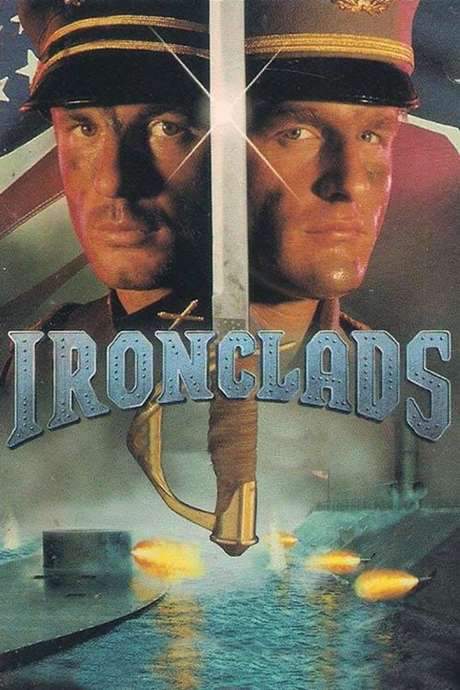
Ironclads (1991) Plot Summary & Ending Explained
Swords and Hearts (1911) Detailed Story Recap
The Confederate Ironclad (1912) Detailed Story Recap
Captive Hearts (1987) Full Movie Breakdown
Swords and Hearts (1911) Film Overview & Timeline
Captain Caution (1940) Movie Recap & Themes
Hearts Divided (1936) Spoiler-Packed Plot Recap
Of Human Hearts (1938) Complete Plot Breakdown
Old Ironsides (1926) Movie Recap & Themes
Atlantic Ferry (1941) Movie Recap & Themes
Battle of the Coral Sea (1959) Film Overview & Timeline
Souls at Sea (1937) Story Summary & Characters
Battle Stations (1956) Movie Recap & Themes
Thunder Afloat (1939) Full Movie Breakdown