Plot Explained Spoilers guaranteed!
Plot Explained

Browse by genre

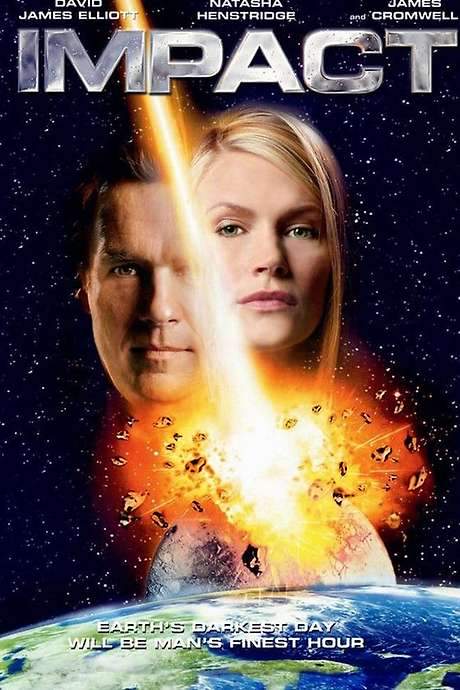
Impact (1000) movie poster

Timeline

Impact (1000) Timeline Explained – Every Event in Order

Release, runtime and language
1000 · 182 mins · English
Loading streaming availability…
Directed by
Mike Rohl
Starring
James Cromwell, Agam Darshi, Ty Olsson, Michael Kopsa, Ron Lea, Natasha Henstridge

A meteor shower triggers a chain of events that puts the Moon on a collision course with Earth. The two‑part miniseries debuted on Super Channel in Canada on February 14‑15, 2009, later aired on ABC in the United States on June 21 and 28, 2009, and was broadcast on Greece’s Alpha TV in September 2011.

On this page (6)
  1. 1 Where to watch
  2. 2 Events in order (12)
  3. 3 Timeline questions answered
  4. 4 Movie threads
  5. 5 Movies like Impact
  6. 6 Every angle
Loading streaming availability…

12 events in order · contains spoilers

Impact Timeline: Events in Chronological Order

Every key event of Impact (1000) in order, scene by scene, with when and where it takes place. Use it to untangle flashbacks, time jumps and parallel storylines, to refresh your memory before the sequel or to find the exact scene you are thinking of.

  1. Meteor shower triggers a startling lunar disturbance

    A meteor shower drives fragments toward Earth and an asteroid fragment strikes the Moon. The debris penetrates the lunar surface and causes only minor damage to Earth, but it visibly alters the Moon. Observers soon sense the Moon's orbit is shifting and its influence on Earth begins to be felt.

    When
    During the meteor shower
    Where
    Moon vicinity / Space
  2. Moon settles into a closer orbit as Earth experiences anomalies

    The Moon stabilizes in a slightly closer orbit around Earth, and strange electromagnetic effects begin to appear on the planet. People report static discharges, anomalous tides, and odd levitations in various locations. The changes point to a direct link between Earth's surface phenomena and the Moon's new dynamics.

    When
    Soon after impact
    Where
    Earth
  3. Brown-dwarf fragment embedded in the Moon is revealed

    Researchers determine the hit was a magnetized fragment of a brown dwarf, far more massive than it appears. The fragment remains lodged inside the Moon, reshaping its core and amplifying its magnetic field. The discovery reframes the crisis as a magneto-gravitational threat rather than a simple asteroid impact.

    When
    Shortly after impact
    Where
    Earth
  4. Electromagnetic surges escalate; 39-day countdown to collision

    As the Moon's magnetism interacts with Earth's field, surges cause devices to malfunction and objects to levitate worldwide. Governments scramble to respond to the unpredictable phenomena and evacuate threatened regions. The world realizes the Moon will collide with Earth in 39 days.

    When
    Countdown begins
    Where
    Earth
  5. Missile attempt to destroy the Moon fails; crisis deepens

    A global attempt to destroy the Moon with nuclear missiles fails to alter its course or disrupt the embedded fragment. The failure demonstrates that a direct lunar intervention won't suffice, forcing a longer-term rescue plan. The world braces for a one-way mission that could save civilization.

    When
    During the 39-day countdown
    Where
    Earth
  6. International crew forms to reach the Moon and magnetize its core

    A multinational crew—Alex Kittner, Maddie Rhodes, Roland Emerson, Courtney Batterton, and Sergei Pitinkov—teams up to reach the Moon and install a magnetizing device. Their goal is to dislodge the brown dwarf fragment by altering the Moon's magnetic properties. They acknowledge the mission may be a one-way trip.

    When
    Mission planning and launch preparation
    Where
    Earth / Space
  7. Martina Altmann endures a levitating train ride in Germany and marries Roland

    Martina Altmann's levitating train derails amid the disturbances while traveling across Germany. She and American Bob Pierce survive and join a military convoy seeking safety. Martina and Roland wed soon after, tying their fates to the approaching mission.

    When
    During Earth's upheaval
    Where
    Germany
  8. Alex's kids face danger as their cross-country attempt goes awry

    Alex Kittner's children are left with their grandfather Lloyd as the world collapses around them. Their car levitates and crashes during their attempt to reunite with their father. Derek, initially hoarding resources, eventually agrees to help transport the children toward Washington, DC.

    When
    During evacuation period
    Where
    North America
  9. Farewell from space: Alex says goodbye to his children

    Alex, already in space, tells his kids goodbye via a video feed and asks Maddie to keep them safe. He and Maddie acknowledge the personal stakes of the mission and promise to reunite later. The moment underscores the sacrificial cost of attempting to avert planetary disaster.

    When
    Space / Pre-launch
    Where
    Space
  10. Moon mission reaches fissure site; Courtney falls, Roland gets trapped

    On the Moon, the electromagnetic device is assembled and a hovercraft heads to locate a fissure in the lunar surface. Debris strikes the craft, knocks Courtney into the fissure, and leaves Roland immobilized inside. He exhorts Sergei to launch the module so they can be saved.

    When
    During EVA to locate fissure
    Where
    Moon
  11. Detonation splits the Moon; Roland dies, fragment heads to the Sun

    The device detonates, and the blast incinerates Roland as the Moon splits into two halves. The embedded brown dwarf fragment shoots toward the Sun and the debris settle into two stable lunar halves in new orbits. Sergei and Alex escape and make radio contact as they return toward Earth.

    When
    Lunar detonation
    Where
    Moon / Space
  12. Earth reunites and searches the sky for a safer future

    Back on Earth, Alex is united with his children and Maddie, and the trio decides to return to Canada for safety. They step outside to glimpse the two moon halves in their altered, distant orbits. The final image frames a hopeful, precarious balance between survival and a changed world.

    When
    After Moon's destruction
    Where
    Earth

Last updated: December 04, 2025 at 15:32

Was this helpful?

Timeline questions answered

Impact Timeline Explained: Your Questions Answered

When does it happen, and why in that order? The questions people ask about the chronology of Impact (1000): time jumps, flashbacks, cause and effect between scenes and the correct order of events, each answered with spoilers.

Q1

Why did objects start levitating after the asteroid hit the Moon?

When the brown dwarf fragment embedded itself inside the Moon, it dramatically increased the Moon's magnetic field. As the Moon's orbit became more elliptical and brought it closer to Earth, the intensified magnetic interactions began affecting objects on Earth. The electromagnetic surges caused random levitation of people, vehicles, and other items worldwide.

Foreshadowing: The strange tidal behavior and cell phone disturbances that appeared immediately after the impact were early warning signs of the magnetic changes.

  • levitation
  • moon magnetism
  • brown dwarf
  • electromagnetic surges
  • moon orbit
Q2

What made the brown dwarf fragment so dangerous?

The asteroid fragment was actually a piece of a brown dwarf, the remnant of a dead star. Despite being only 19 kilometers across, it was more massive than Earth and highly magnetized. Once embedded inside the Moon, it reshaped the lunar core and amplified the Moon's magnetic field to dangerous levels, creating the electromagnetic threats to Earth.

Foreshadowing: Scientists noted early on that the Moon's properties had been permanently altered, hinting at something far more significant than a typical impact.

  • brown dwarf
  • asteroid
  • moon core
  • magnetic threat
  • lunar changes
Q3

Why didn't the nuclear missiles destroy or move the Moon?

The nuclear missile attempt failed because the brown dwarf fragment was far too massive and deeply embedded within the Moon's core. The explosion didn't alter the Moon's trajectory or dislodge the fragment, its immense gravitational and magnetic influence remained unchanged. This failure forced the international team to pursue the more dangerous mission of magnetizing the Moon's core from within.

Foreshadowing: The initial asteroid impact had already fundamentally changed the Moon's composition, making it resistant to external intervention.

  • nuclear missiles
  • moon collision
  • failed mission
  • government response
Q4

Why was the Moon mission considered a one-way trip?

The mission required installing an electromagnetic device directly on the Moon's surface to magnetize its core. The team acknowledged that the operation was extremely dangerous and might not allow them to return. Roland, Courtney, and the others accepted they might sacrifice their lives to save Earth, making it a one-way or highly uncertain journey.

Foreshadowing: Alex's emotional goodbye to his children via video feed before launch emphasized the personal stakes and possibility of no return.

  • one-way mission
  • space crew
  • sacrifice
  • astronaut
  • cosmonaut
Q5

What happened to Courtney and Roland on the Moon?

During the mission to locate a fissure in the lunar surface, debris struck their hovercraft. Courtney was knocked into the fissure and fell to her death, while Roland became trapped inside the craft. With no way to save himself, Roland ordered Sergei to launch the module so Alex could be saved, then detonated the device, sacrificing himself in the process.

Foreshadowing: The hazardous lunar terrain and precarious nature of the mission had been established during pre-mission briefings.

  • Roland Emerson
  • Courtney Batterton
  • moon fissure
  • death
  • sacrifice
Q6

How did splitting the Moon save Earth from collision?

The magnetizing device altered the Moon's magnetic properties, forcing the embedded brown dwarf fragment to disgorge, shooting it toward the Sun. With the fragment removed, the Moon lost its dangerous magnetic influence. The explosion split the Moon into two halves, which then settled into new, stable orbits around Earth, eliminating the collision threat.

Foreshadowing: The entire mission plan centered on dislodging the brown dwarf fragment by changing the Moon's magnetic characteristics.

  • moon split
  • brown dwarf
  • stable orbit
  • collision prevention
  • moon fragments
Q7

Where did the brown dwarf fragment go after the explosion?

When the magnetizing device was activated, the massive electromagnetic force expelled the brown dwarf fragment from the Moon's interior. The fragment was shot out toward the Sun, removing the source of the dangerous magnetic effects that had been causing levitation and electromagnetic surges on Earth.

Foreshadowing: Scientists had predicted that dislodging the fragment would eliminate the magnetic threat.

  • brown dwarf fragment
  • sun
  • expelled
  • electromagnetic device
Q8

Why did the Moon split into two separate halves?

The electromagnetic device was designed to dramatically alter the Moon's magnetic field to force out the brown dwarf fragment. The explosion required to achieve this force was so powerful that it physically split the Moon into two distinct halves. However, these halves eventually found new stable orbits around Earth, preventing any further collision danger.

Foreshadowing: The mission's intense electromagnetic design suggested extreme physical consequences for the Moon.

  • moon split
  • explosion
  • new orbits
  • lunar halves
Q9

What happened to Alex's children and their grandfather during the crisis?

Alex's children were left with their grandfather Lloyd while their father prepared for the space mission. During their attempt to drive cross-country to reunite with Alex, their car levitated and crashed. Lloyd suffered a fatal heart attack from the trauma, leaving the children orphaned until Derek, a resource hoarder they met at a convenience store, agreed to help them reach Washington, DC.

Foreshadowing: The emotional stakes were established early when Alex said goodbye to his children from space.

  • Alex children
  • Lloyd
  • grandfather
  • car crash
  • Derek
Q10

Why was the 39-day countdown to collision important?

After discovering the brown dwarf fragment had permanently altered the Moon's orbit, scientists calculated that the Moon would collide with Earth in exactly 39 days. This tight deadline created global urgency, forcing governments to attempt desperate measures like nuclear missiles and ultimately rush the dangerous one-way space mission to magnetize the Moon's core.

Foreshadowing: The timeline was introduced early as scientists realized the Moon's new trajectory would lead to collision.

  • 39 days
  • countdown
  • collision timeline
  • deadline
  • urgency
Q11

Why did the Moon's orbit change after being hit?

When the massive brown dwarf fragment embedded itself inside the Moon, it significantly increased the Moon's mass and altered its gravitational dynamics. This caused the Moon's orbit to become more elliptical and bring it closer to Earth with each pass, eventually positioning it on a collision course with the planet.

Foreshadowing: Astronomers noted the Moon drifting slightly closer to Earth immediately after the impact.

  • moon orbit
  • gravity
  • elliptical orbit
  • collision course
  • lunar trajectory
Q12

Why did Martina's train derail in Germany?

Martina Altmann was traveling across Germany on a train when the global electromagnetic disturbances caused by the Moon's altered magnetic field made the train levitate uncontrollably. The levitation led to the train derailing. She survived and met American Bob Pierce during the chaos, eventually marrying Roland as the world faced apocalypse.

Foreshadowing: The levitating train was one of the most dramatic examples of the electromagnetic anomalies affecting Earth.

  • Martina Altmann
  • train derail
  • Germany
  • levitation
  • bob pierce
Q13

Why did scientists need to magnetize the Moon's core?

The brown dwarf fragment was stuck inside the Moon's core and could not be removed by external means, the nuclear missile attempt proved this. By building a device to magnetize the Moon's core, scientists could fundamentally change the electromagnetic properties of the Moon itself, forcing the highly magnetized fragment to be expelled. This was the only way to restore the Moon to a stable, non-threatening orbit.

Foreshadowing: The team realized early that the fragment was too deep and massive for external intervention.

  • magnetize core
  • device
  • fragment expulsion
  • solution
  • scientific plan

Movie threads

More Movies Like Impact, by Mood & Story

Curated lists built around what makes Impact tick: the same mood, the same kind of story or the same emotional payoff. Each list explains why these movies belong together.

Global disaster countdown movies like Impact

High-stakes thrillers where humanity unites to avert planetary annihilation. If you enjoyed the tense, high-stakes race to save Earth in Impact, you'll find similar thrillers here. These movies focus on large-scale threats and the desperate scientific and human efforts to stop them, often with a bittersweet cost for victory.

  • urgent
  • suspenseful
  • disaster-driven
  • anxious
  • hopeful
  • melancholic
  • Tone: tense, urgent, high-stakes
  • Pacing: fast, relentless
Why these movies?

The story pattern: The narrative follows a clear, escalating chain of catastrophic events, presenting a single, overwhelming problem that requires a massive, coordinated solution. Character journeys are often defined by sacrifice, expertise under pressure, and the personal cost of participating in a global effort.

Why they belong together: Movies are grouped here by their shared foundation of a ticking clock for a planetary-scale disaster, a focus on scientific problem-solving against impossible odds, and a tone that balances relentless tension with heavy emotional stakes.

Bittersweet survival stories similar to Impact

Stories where saving the day comes with profound personal and global loss. For viewers who appreciated the emotional depth and costly victory in Impact, this section highlights movies where survival is a hard-won battle. These stories share a tone of heavy emotional weight, focusing on the sacrifices made and the bittersweet nature of overcoming disaster.

  • bittersweet
  • melancholic
  • sacrifice
  • grief and loss
  • hopeful
  • survival
  • Tone: bittersweet, heavy, melancholic
  • Pacing: fast, character-driven
Why these movies?

The story pattern: The narrative arc leads to a resolution that stops the immediate threat, but the journey is paved with significant losses—beloved characters, ways of life, or entire worlds. The ending acknowledges the victory while honoring the price paid, leaving characters and the audience with a mix of relief and sorrow.

Why they belong together: These films are connected by their shared emotional core: the experience of achieving survival at a great cost. They balance disaster-driven action with deep human drama, resulting in an ending that feels both hopeful and mournful.

If you liked this

Movies Like Impact

Similar movies to Impact: the same genre, themes or kind of story. Each one comes with its own plot summary, timeline and ending explained.

Browse all movie summaries

Every angle

Impact (1000) Explained: Plot, Timeline & Characters

Everything about Impact in one place: what happens in the plot summary, the timeline in chronological order, the characters and meaning and a spoiler-free summary. What's After the Movie adds the cast, box office and post-credit scenes.

Coming soon on iOS and Android

The Plot Explained Movie Summary App

Plot summaries, endings explained and timelines on your phone. Catch up on any movie in minutes, save your favorites and never miss a twist again.

Be the first to know when we launch. Your email stays private, always.

Learn more about the app