









Plot Explained Spoilers guaranteed!
Plot Explained

Browse by genre

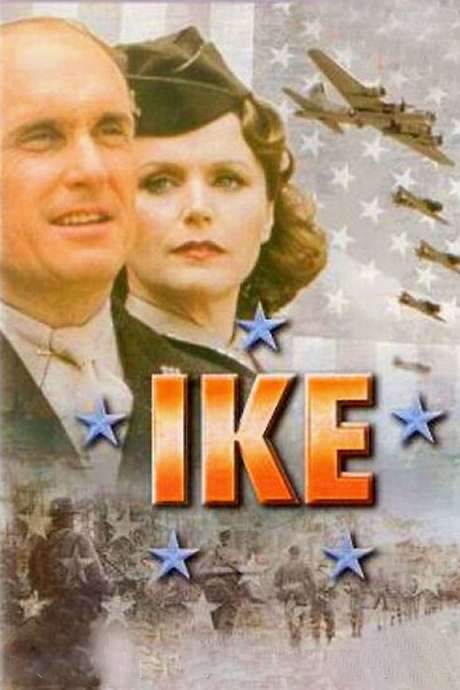
Ike: Countdown to D-Day (2004) movie poster

Characters & Themes

Ike: Countdown to D-Day (2004) Characters, Setting & Themes Explained

Release, runtime and language
2004 · 89 mins · English
JustWatch #16,662 11
Directed by
Robert Harmon
Starring
Timothy Bottoms, James Remar, Kevin J. Wilson, Tom Selleck, Gerald McRaney, Christopher James Baker

It follows the senior‑level preparations for the D‑Day invasion on June 6, 1944, beginning with Dwight D. Eisenhower’s appointment as Supreme Allied Commander in Europe, detailing the strategic planning, coordination among Allied commanders, logistical efforts, and the ultimate establishment of the Normandy beachhead.

On this page (8)
  1. 1 Where to watch
  2. 2 Characters explained (16)
  3. 3 Where & when it takes place
  4. 4 Themes & meaning (4)
  5. 5 Character & meaning questions
  6. 6 Movie threads
  7. 7 Movies like Ike: Countdown to D-Day
  8. 8 Every angle

Where to watch

Where to Watch Ike: Countdown to D-Day (2004)

Where can you watch Ike: Countdown to D-Day? Stream, rent or buy it in the US, including on Fawesome, Tubi TV and YouTube Free: current JustWatch availability with up-to-date prices.

Streaming availability powered by JustWatch

16 main characters · contains spoilers

Ike: Countdown to D-Day Characters Explained: Who Is Who

The main characters of Ike: Countdown to D-Day (2004), heroes and villains: what drives them, how they change over the course of the story and what each of them reveals about the film's bigger ideas.

  • Walter Bedell 'Beetle' Smith (Timothy Bottoms)

    Ike's sharp-wisted chief of staff and confidant. He weighs the personal and political costs of ambitious plans, quietly steering communications and coordinating the flow of intelligence. Smith recognizes the fragility of alliances and grounds Ike’s decisions in practical realities.

    • 🎖️ Military Advisor
    • 🗺️ Planner
    • 🧠 Strategist
  • Dwight D. Eisenhower (Tom Selleck)

    Supreme Commander of SHAEF, central to the invasion planning and the drive for unified command. He asserts control, weighs risks, and accepts responsibility for the outcome. Ike’s leadership blends resolve with a willingness to shoulder the consequences if the operation fails.

    • 🧭 Leader
    • 🛡️ Command
    • ⚖️ Responsibility
  • Winston Churchill (Ian Mune)

    Prime Minister who pressures, negotiates, and ultimately supports a bold invasion plan. He challenges plans when necessary and admires Ike’s resolve to bear responsibility. Churchill’s presence underscores the political stakes at every critical turn.

    • 🗺️ Statesman
    • 🤝 Ally
    • 🗣️ Orator
  • Omar Bradley (James Remar)

    Commander of the 1st US Army, involved in the deception and deployment decisions. He contributes a grounded, pragmatic perspective on casualty estimates and the balance between risk and reward. Bradley’s input helps shape the operational timing on the ground.

    • 🏗️ Commander
    • 🔎 Tactician
    • 🧭 Realist
  • Bernard Montgomery (Bruce Phillips)

    Ground forces commander whose planning and perspective influence the execution of the invasion. He weighs the timing of landings and the readiness of ground assault elements, ensuring coordination with air and naval actions.

    • 🪖 Field Commander
    • 🧭 Planner
    • 🤝 Team Player
  • George S. Patton (Gerald McRaney)

    Brash, highly skilled armored commander who faces reprimand for public remarks about allied unity. He is valued for his expertise in armored warfare and will be crucial once forces are ashore, though his demeanor tests diplomatic protocol.

    • 💬 Politically Violent
    • 🛡️ Armored Leader
    • 🗡️ Hot-Tempered
  • James Stagg (Christopher James Baker)

    Group Captain who forecasts the weather and its impact on the operation. His readings become a pivotal factor in the final invasion date, illustrating the power of meteorology in strategic planning.

    • 🧭 Forecaster
    • 🌦️ Weather Expert
    • 🧪 Scientist
  • Charles de Gaulle (George Shevtsov)

    Free French leader who engages with Eisenhower about post-invasion governance and communication with the French people. His perspective introduces post-liberation political considerations into the planning process.

    • 🗺️ Diplomacy
    • 🕊️ Nationalism
    • 🧭 Policy
  • Air Marshal Leigh-Mallory (John Bach)

    Air leadership figure who critiques plan estimates for airborne casualties. He ultimately offers an apology when outcomes defy his dire projections, highlighting the tension between air power estimates and battlefield reality.

    • ✈️ Air Power
    • 🧩 Skeptic
    • 🤝 Reconciler
  • King George VI (Mick Rose)

    British monarch briefed on Operation Overlord, sharing the fears of potential losses. His presence underscores the human and national stakes of the invasion.

    • 👑 Monarch
    • 🧭 Moral Center
    • 🕊️ Symbol
  • Queen Elizabeth (Carole Seay)

    The Queen who is kept informed about the invasion planning and its human costs, embodying the support and concern of the British people during wartime.

    • 👑 Royalty
    • 🕊️ Support
    • 🧭 Public Face
  • Major General Henry Miller (Paul Gittins)

    Senior officer relieved for disclosing sensitive information, illustrating the risks of leaks within the alliance and the consequences for command integrity.

    • 🧭 Command Integrity
    • ⚖️ Discipline
    • 🛡️ Authority
  • U.S. Colonel at Savoy (Bruce Hopkins)

    U.S. officer associated with events at the Savoy, reflecting the close-quarters collaboration between Allied forces and Allied staff in London.

    • 🗺️ Liaison
    • 🧭 Coordination
    • 🏛️ Formal Setting
  • Captain Chapman (Gregor McLennan)

    Captain involved in the operational briefing and coordination threads that connect air, sea, and ground elements of the invasion plan.

    • 🪖 Officer
    • 🧭 Planner
    • 🗺️ Field Coordination
  • Projector Sergeant (David Mackie)

    Supporting figure in the operations room who contributes to the conveyance of live information and plan visualization during briefings.

    • 🎯 Support
    • 🧰 Technical Roles
    • 🗃️ Documentation
  • Woman at Savoy (Catherine Boniface)

    Minor but symbolic presence in the Savoy setting, representing the civilian dimension and social backdrop to high-stakes planning.

    • 🛎️ Civilians
    • 🏛️ Social Setting
    • 🗺️ Context

Last updated: October 04, 2025 at 12:22

Was this helpful?

Setting

Where and When Does Ike: Countdown to D-Day Take Place?

The setting of Ike: Countdown to D-Day (2004): the year and time period, the places and locations, and how they shape the characters, the mood and the tension of the story.

Time period

1943–1944

The film centers on the December 1943 planning phase leading up to Operation Overlord. It follows the tense countdown to the June invasion, including a 24-hour weather delay that shifts the assault from 5 June to 6 June. The period captures the broader World War II context as Allied leaders coordinate across nations.

Location

English coast, London (Savoy), Normandy (France)

The planning unfolds along the English coast where a training convoy is attacked and the invasion is plotted. London serves as a hub for high-level briefings and talks with the monarchy, with the Savoy Hotel featuring as a backdrop for key scenes. The narrative also travels to the shores of France as Allied deception, weather, and timing drive the eventual landing in Normandy.

  • 🌍 World War II
  • 🧭 Strategy
  • 🤝 Allied Cooperation
  • 🌧️ Weather and Timing

Last updated: October 04, 2025 at 12:22

Was this helpful?

4 major themes

Ike: Countdown to D-Day Meaning: Themes & Message Explained

What is Ike: Countdown to D-Day (2004) really about? The emotional, social and philosophical themes the film keeps returning to, its symbolism and the message beneath the surface.

  • Leadership under Pressure

    Powerful leaders navigate immense responsibility and competing pressures. Eisenhower negotiates for total command while balancing alliances and the weight of potential failure. Churchill offers support and critique, shaping the path forward, while Patton’s temperament and the other generals test the cohesion of the command.

  • Strategic Deception

    The Ghost Army deception misleads the Germans about landing targets, buying time and shaping enemy movements. Plans for Pas-de-Calais loom as false signals against Normandy, underscoring how misdirection can be as crucial as firepower. The coordination across air, land, and sea forces hinges on convincing the enemy of a particular outcome.

  • Weather and Timing

    Weather becomes a decisive actor, delaying the invasion and threatening the entire operation. A heavy rainstorm prompts a 24-hour postponement, testing the leaders’ resolve and contingency planning. The film shows how meteorology, forecasts, and timing can determine a campaign’s fate as much as battlefield prowess.

  • Allied Unity

    The narrative pits Allied leaders from different nations against practical and political frictions while they pursue a common objective. Interactions with de Gaulle reveal tensions about post-liberation governance, while the British monarchy and American commanders symbolize the broader coalition. The decisions hinge on trust, diplomacy, and shared sacrifice.

Last updated: October 04, 2025 at 12:22

Was this helpful?

Character & theme questions

Ike: Countdown to D-Day Characters & Meaning: Your Questions Answered

The questions people ask about Ike: Countdown to D-Day (2004): who the characters really are, their relationships, what the symbols mean, where it takes place and what the movie is really about. Each answer contains spoilers.

Q1

Where does the movie take place?

The film is set primarily along the English coast where Allied forces trained and planned the invasion, with London’s Savoy Hotel serving as a key backdrop for high-level briefings and strategic meetings. The story culminates on the shores of Normandy, France, where the actual D-Day landing occurs.

  • english coast
  • london
  • savoy hotel
  • normandy
  • france
  • setting
Q2

When is the movie set?

The film spans from December 1943 through June 6, 1944, focusing on the planning phase of Operation Overlord and the final countdown to the D-Day invasion. A key detail is the 24-hour weather delay that pushed the assault from June 5 to June 6, 1944.

  • 1943
  • 1944
  • world war ii
  • operation overlord
  • d-day
  • june 1944
  • time period
Q3

What kind of leader is Eisenhower portrayed as?

Eisenhower is portrayed as a decisive Supreme Commander who balances resolute leadership with the willingness to accept full responsibility for the operation's success or failure. He navigates competing pressures from Allied commanders, negotiates for unified command, and shoulders the immense weight of potential casualties and strategic defeat.

  • eisenhower
  • supreme commander
  • leadership
  • responsibility
  • shaef
Q4

What was the Ghost Army in the film?

The Ghost Army was a strategic deception operation that misled German forces about the actual landing targets, using false signals and phantom forces to suggest a Pas-de-Calais invasion rather than Normandy. This deception was crucial to Allied strategy, buying time and forcing the enemy to misposition their defenses.

Foreshadowing: Earlier briefings mention the need for convincing the Germans of a false landing site.

  • ghost army
  • deception
  • strategic deception
  • pas-de-calais
  • operation overlord
  • allied strategy
Q5

How does weather affect the invasion in the movie?

Weather plays a decisive role as a heavy rainstorm prompts a 24-hour postponement of the invasion, testing the leaders' resolve and contingency planning. Group Captain James Stagg's meteorological forecasts become pivotal in determining the final invasion date, illustrating how meteorology can determine a campaign's fate as much as battlefield tactics.

  • weather
  • james stagg
  • meteorology
  • d-day delay
  • june 5
  • june 6
  • forecasting
Q6

What tensions exist between the Allies in the film?

The film depicts friction between Allied leaders from different nations pursuing a common objective, with particular tension around Charles de Gaulle's concerns about post-liberation governance in France. Interactions with the British monarchy and American commanders symbolize the broader coalition, where decisions hinge on trust, diplomacy, and navigating political sensitivities alongside military strategy.

  • allied unity
  • de gaulle
  • churchill
  • coalition
  • tension
  • free french
  • post-liberation
Q7

What is George Patton's role in the movie?

Patton is portrayed as a brash but highly skilled armored commander valued for his expertise in armored warfare, with a crucial role once forces are ashore in Normandy. However, his public remarks about allied unity lead to reprimand, and his temperament tests diplomatic protocol among the Allied leadership.

  • george patton
  • armored commander
  • alliance
  • discipline
  • first army
Q8

What is the significance of the Savoy Hotel in the film?

The Savoy Hotel in London serves as a critical backdrop for key military briefings, high-level talks with the British monarchy, and the close-quarters collaboration between Allied commanders and staff. It represents the nerve center where strategic decisions were made and where the weight of the invasion's success or failure was fully felt.

  • savoy hotel
  • london
  • briefings
  • headquarters
  • allied command
Q9

What are the main themes of the movie?

The film explores four primary themes: Leadership under Pressure, as Eisenhower and other commanders navigate immense responsibility; Strategic Deception, exemplified by the Ghost Army operation; Weather and Timing, which becomes a decisive actor threatening the entire operation; and Allied Unity, showing how leaders from different nations manage practical and political frictions while pursuing a common objective.

  • leadership
  • strategic deception
  • weather
  • allied unity
  • themes
  • responsibility
Q10

How does the film depict the burden of command on Eisenhower?

The film emphasizes Eisenhower's personal burden as he accepts complete responsibility for the invasion's outcome, knowing that failure would mean catastrophic Allied losses. His leadership blends resolve with a quiet willingness to shoulder the consequences, even as he negotiates with Allied commanders and balances competing interests. The ending underscores this heavy personal cost of leadership.

  • eisenhower
  • responsibility
  • burden
  • command
  • leadership cost
  • accountability
Q11

Is this a dramatized recreation or documentary?

This is a dramatized historical TV movie that portrays the real events of the D-Day planning period, featuring actors portraying real historical figures like Eisenhower, Churchill, Patton, and de Gaulle. While it dramatizes conversations and certain details for narrative effect, it remains grounded in the actual historical timeline and key events of Operation Overlord's planning.

  • tv movie
  • historical drama
  • documentary
  • dramatization
  • historical accuracy

Movie threads

More Movies Like Ike: Countdown to D-Day, by Mood & Story

Curated lists built around what makes Ike: Countdown to D-Day tick: the same mood, the same kind of story or the same emotional payoff. Each list explains why these movies belong together.

Movies about High-Stakes Leadership like Ike: Countdown to D-Day

Stories that explore the immense burden of leadership during pivotal historical moments. If you enjoyed the tense, methodical breakdown of command in Ike: Countdown to D-Day, explore similar movies about leaders under extreme pressure. These films focus on the strategic planning and personal weight of pivotal decisions in historical, military, or political settings.

  • tense
  • pressured
  • resolute
  • serious
  • weighty
  • methodical
  • Tone: tense, serious, weighty
  • Pacing: steady, methodical
Why these movies?

The story pattern: Narratives in this thread typically follow a singular, high-stakes goal, unfolding through a steady, deliberate pace that emphasizes planning and consequence over fast-paced action. The core conflict is internal and external, pitting the leader's judgment against overwhelming odds and the potential for catastrophic failure.

Why they belong together: Movies are grouped here for their shared focus on the psychological burden of leadership, a tense and serious tone driven by high-stakes decision-making, and a methodical pacing that builds intense pressure rather than relying on chaotic action.

Tense Countdown Movies like Ike: Countdown to D-Day

Thrillers and dramas where meticulous planning unfolds under a ticking clock. Fans of the building suspense in Ike: Countdown to D-Day will enjoy these other movies centered on a methodical race against time. Discover similar stories where a steady pace and strategic focus create high-stakes tension leading to a pivotal event.

  • tense
  • anxious
  • suspenseful
  • methodical
  • pressured
  • race against time
  • Tone: tense, anxious, pressured
  • Pacing: steady build, methodical
Why these movies?

The story pattern: The narrative pattern involves a clear, impending event that serves as an unchangeable deadline. The plot structure is defined by overcoming a series of obstacles and challenges in a logical sequence, with the pacing steadily increasing the sense of urgency and consequence as the deadline approaches.

Why they belong together: These films share a core structure of a ticking clock, a steady pacing that methodically builds tension, and a focus on process and problem-solving under extreme pressure, creating a cohesive experience of anxious anticipation.

If you liked this

Movies Like Ike: Countdown to D-Day

Similar movies to Ike: Countdown to D-Day: the same genre, themes or kind of story. Each one comes with its own plot summary, timeline and ending explained.

Browse all movie summaries

Every angle

Ike: Countdown to D-Day (2004) Explained: Plot, Timeline & Characters

Everything about Ike: Countdown to D-Day in one place: what happens in the plot summary, the timeline in chronological order, the characters and meaning and a spoiler-free summary. What's After the Movie adds the cast, box office and post-credit scenes.

Coming soon on iOS and Android

The Plot Explained Movie Summary App

Plot summaries, endings explained and timelines on your phone. Catch up on any movie in minutes, save your favorites and never miss a twist again.

Be the first to know when we launch. Your email stays private, always.

Learn more about the app