






Plot Explained Spoilers guaranteed!
Plot Explained

Browse by genre

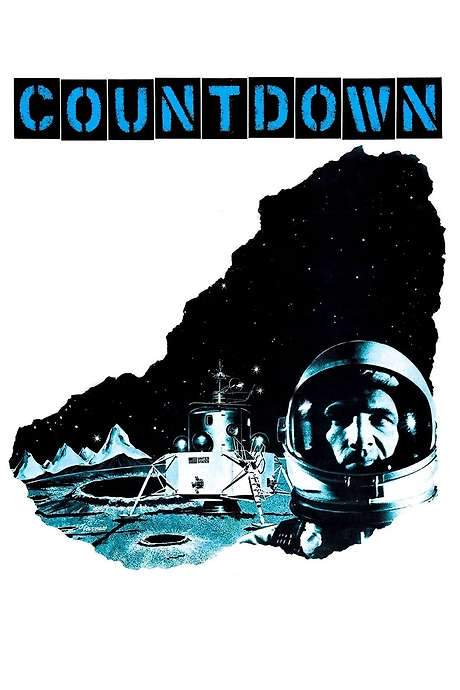
Countdown (1967) movie poster

Plot Summary

Countdown (1967) Plot Summary Explained

Release, runtime and language
1967 · 101 mins · English
Directed by
Robert Altman
Starring
James Caan, Robert Duvall, Stephen Coit, Joanna Moore, Harry Ellerbe, Barbara Baxley

The film follows a solitary astronaut as he journeys toward the moon, tracking every tense moment of his historic mission. In a frantic race to beat the Soviet Union, NASA hurriedly trains a would‑be spaceman for a year‑long stay in a lunar shelter, leaving him isolated on the lunar surface.

On this page (6)
  1. 1 Where to watch
  2. 2 What happens: full plot
  3. 3 Plot questions answered
  4. 4 Movie threads
  5. 5 Movies like Countdown
  6. 6 Every angle

Where to watch

Where to Watch Countdown (1967)

Where can you watch Countdown? Stream, rent or buy it in the US, including on YouTube Free, Amazon Video and Apple TV Store: current JustWatch availability with up-to-date prices.

Streaming availability powered by JustWatch

Full plot summary · contains spoilers

What Happens in Countdown: Full Plot Summary

The whole story of Countdown (1967) explained, from the opening scene to the final frame: every key event, every twist and what it all adds up to. Read it as a quick recap before the sequel, to check a scene you missed, or to finally understand what really happened.

In the late 1960s, after NASA learns that the Russians intend to launch a Moon mission in just four weeks, the agency activates the secret Pilgrim Project—a bold plan to send one astronaut on a one‑way trip to the Moon in a specially modified Gemini craft, with a shelter pod already launched and waiting to be retrieved later by another crew. Lee, James Caan, is tapped to be the first man to attempt this dangerous mission, a choice that stirs tension and pride among the team. The mission commander, Chiz, Robert Duvall, pushes Lee through a grueling training regime in the final days, partly to prepare him and partly to test whether he will quit in the face of the daunting odds. Lee remains steadfast, driven by the enduring dream of becoming an astronaut, even as Chiz questions whether the young pilot can truly handle the pressure.

A press leak about Pilgrim leaks into the public eye, and the Russians respond by launching a week earlier than scheduled. They reveal a plan to send a civilian, which shocks NASA and the White House, who insist that an American civilian must be the first to set foot on the Moon. Despite the political heat, the operation moves forward. The shelter pod lands as planned, and Lee is launched on schedule. En route, a power drain threatens the mission, and radio contact becomes unreliable, complicating every maneuver. The Russians struggle with their own communications as well. As Lee makes his lunar orbit, he loses sight of the shelter beacon and nearly aborts, but he chooses to lie about seeing it and continues. Mission Control approves a retro burn, and he lands, though contact remains severed.

Emerging from the Gemini lander, Lee finds himself with only an hour of oxygen remaining. He discovers the Soviet lander crashed on its side, with three cosmonauts dead around it. In a quiet, solemn gesture, he removes the Soviet flag from one of the fallen and places it beside his own American flag on a rock, acknowledging the intertwined fates of the two nations. With precious air dwindling and nowhere else to go, he studies the toy mouse his son gave him, its tail spinning toward the right, and heads in that direction. A red glow on his arm catches his attention—the locator beacon atop the shelter—reminding him that survival hinges on reaching the shelter. In the final, stark moment, Lee is last seen walking toward the shelter, the possibility of rescue or return hanging in the balance.

Last updated: October 09, 2025 at 11:28

Was this helpful?

Plot questions answered

Countdown Plot Explained: Your Questions Answered

The questions people ask most about Countdown (1967): what happens in the confusing scenes, why the characters do what they do, the twists, hidden details and what the ending means. Each answer contains spoilers.

Q1

Why was Lee chosen to be the Pilgrim astronaut instead of a more experienced astronaut?

Lee was chosen primarily because he was available when the urgent four-week timeline demanded action. NASA needed someone immediately, and the experienced astronauts were already assigned to other missions. Chiz, the mission commander, was outraged by the choice and pushed Lee through grueling training partly hoping he would quit, but Lee's determination and lifelong dream of becoming an astronaut kept him committed despite the one-way nature of the mission.

Foreshadowing: Earlier, the film establishes that Lee has dreamed of becoming an astronaut since childhood, explaining his willingness to accept such a dangerous assignment.

  • lee
  • pilgrim astronaut
  • selected
  • chosen
  • space mission
Q2

Why did Lee lie to Mission Control about seeing the shelter beacon?

Lee lied because he was running out of time, abort was imminent and he had seconds to decide. If he admitted he couldn't see the beacon, Mission Control would have ordered an abort and the entire mission would have failed. He chose to lie and proceed with the retro burn, gambling that he could find the shelter after landing rather than abandoning the mission entirely.

Foreshadowing: The power drain and communication issues earlier in the flight had already forced Lee to make unilateral decisions, establishing his willingness to act independently.

  • beacon
  • lied
  • mission control
  • landing
  • shelter
Q3

What caused the Soviet lander to crash on the Moon?

The summary does not provide explicit details about what caused the Soviet lander to crash. The film presents the crash as a fait accompli that Lee discovers upon landing, with three cosmonauts dead around the wreckage. The focus remains on Lee's reaction to the tragedy rather than the cause of the accident itself.

  • soviet
  • crash
  • lander
  • cosmonauts
  • moon
Q4

Why did Lee take the Soviet flag and place it beside the American flag?

Lee's gesture was a moment of solemn recognition that the space race, despite being a fierce competition between two nations, had resulted in shared human tragedy. By placing the Soviet flag beside his own, he acknowledged the cosmonauts as fellow explorers who had also given their lives for the same dream, creating a quiet memorial on the lunar surface.

Foreshadowing: The tense political rivalry between the US and USSR is established early in the film, making this moment of reconciliation more poignant.

  • soviet flag
  • american flag
  • tribute
  • cosmonauts
  • gesture
Q5

Why was the Pilgrim mission designed as a one-way trip?

The mission was one-way because there was insufficient time to develop a return vehicle. NASA had only four weeks after learning the Soviets planned to launch. The modified Gemini craft could reach the Moon but lacked the fuel and equipment for a return journey. The plan relied on Lee surviving in the shelter pod until an Apollo mission could retrieve him later.

Foreshadowing: The urgent four-week timeline and the secret nature of the project are established in the opening events, explaining the makeshift nature of the entire operation.

  • one-way
  • return
  • fuel
  • modified gemini
  • shelter pod
Q6

Why did NASA keep the Pilgrim Project secret from the public?

NASA kept Pilgrim secret because it was a desperate, high-risk contingency plan that bypassed normal safety protocols and used civilian rather than military astronauts. The press leak that exposed the project caused political turmoil and forced NASA to scramble in managing public reaction, as the agency had not intended to reveal such a risky operation.

Foreshadowing: The political pressure from the White House to beat the Soviets is established early, showing why secrecy was prioritized over transparency.

  • secret
  • pilgram project
  • press leak
  • nasa
  • hidden
Q7

Why did the Soviet Union launch their Moon mission a week early?

The Soviets launched early after learning about the American Pilgrim Project through the press leak. Their earlier launch date was a strategic move to beat the US to the Moon, demonstrating how the secret American mission had inadvertently triggered an escalation in the space race.

Foreshadowing: The press leak revealing Pilgrim to the public directly precedes this Soviet response, showing the cascade of consequences.

  • soviets
  • early launch
  • week early
  • space race
  • competition
Q8

What caused the power drain during Lee's flight to the Moon?

The summary mentions a power drain threatened the mission but does not specify its cause. The power drain created communication difficulties with Mission Control and added another layer of danger to an already risky operation, forcing Lee to rely more heavily on his training and judgment.

  • power drain
  • communication
  • flight
  • malfunction
  • energy
Q9

Why did Chiz push Lee so hard during training?

Chiz had mixed motivations for the grueling training. Partly he genuinely needed to prepare Lee for the technical demands of the mission in the compressed timeframe. However, Chiz was also outraged that a less experienced astronaut was chosen over those more qualified, and he pushed hard partly hoping Lee would quit under the pressure. Lee's stubborn resolve impressed even his skeptical commander.

Foreshadowing: Chiz's initial outrage at Lee's selection establishes his contentious attitude toward the astronaut throughout training.

  • chiz
  • training
  • grueling
  • pushed
  • astronaut
Q10

What was the significance of the toy mouse Lee carried?

The toy mouse was a gift from Lee's son. Its spinning tail pointed toward the right, which Lee used as a final directional guide when deciding which way to walk toward the shelter. The toy represented his personal connection to Earth and family, providing both emotional comfort and a practical clue in the disorienting lunar environment.

  • toy mouse
  • son
  • direction
  • gift
  • tail
Q11

Why did the White House insist an American civilian must be first on the Moon?

After the Soviets announced they would send a civilian, the White House viewed this as a political necessity to demonstrate American superiority. The space race had become a symbol of national prestige, and allowing a Soviet civilian to claim the first Moon landing while an American military astronaut followed would have been politically unacceptable. This pressure intensified NASA's already desperate timeline.

  • civilian
  • white house
  • first moon landing
  • national prestige
  • political
Q12

Did Lee reach the shelter on the Moon?

The film ends with Lee walking toward the shelter beacon, but his ultimate fate remains uncertain. He is last seen moving toward the shelter in the red glow of the beacon with oxygen running critically low. The ambiguous ending leaves viewers wondering whether he reached safety or succumbed to the harsh lunar conditions.

Foreshadowing: The red beacon atop the shelter is introduced as Lee's only hope for survival after discovering the shelter's location.

  • shelter
  • beacon
  • survival
  • ending
  • ambiguous

Movie threads

More Movies Like Countdown, by Mood & Story

Curated lists built around what makes Countdown tick: the same mood, the same kind of story or the same emotional payoff. Each list explains why these movies belong together.

Claustrophobic space survival movies like Countdown

Stories of solitary figures battling isolation and peril in unforgiving environments. If you liked the tense, lonely struggle for survival in Countdown, explore these movies about solitary astronauts and isolated figures facing extreme peril. These films share a similar feel of high-stakes isolation, psychological pressure, and claustrophobic anxiety in unforgiving environments.

  • claustrophobic
  • tense
  • lonely
  • anxious
  • desperate
  • solemn
  • Tone: tense, grim, somber
  • Pacing: steady, relentless
Why these movies?

The story pattern: Narratives in this thread typically follow a single protagonist who becomes isolated in a high-stakes environment, such as a spacecraft or remote outpost. The plot focuses on their sequential battles against technical malfunctions, dwindling resources, and their own deteriorating mental state, creating a steady build of dread.

Why they belong together: These movies are grouped together because they all create a powerful sense of claustrophobia and anxiety through a focus on a solitary protagonist. They share a high-intensity, heavy emotional weight, a tense tone, and a steady pacing that meticulously builds pressure around a fight for survival against overwhelming odds.

High-stakes Cold War thrillers similar to Countdown

Nail-biting stories of political rivalry where individuals bear the weight of global conflict. Fans of the urgent Cold War politics and tense rivalry in Countdown will appreciate these movies. Discover similar stories of high-stakes missions, political pressure, and the grim reality for individuals caught in a global power struggle, often with ambiguous or bittersweet resolutions.

  • tense
  • somber
  • anxious
  • grim
  • solemn
  • urgent
  • Tone: tense, somber, grim
  • Pacing: steady, urgent
Why these movies?

The story pattern: The narrative pattern involves a race against a rival power, where protagonists are pushed to their limits to achieve a strategic goal. The journey is linear and straightforward, driven by external political pressure, and often culminates in a personal sacrifice that underscores the human cost of the larger conflict.

Why they belong together: These films are united by their central theme of political rivalry fueling a high-pressure narrative. They share a tense, somber tone, a steady pacing that mirrors the countdown to a crucial event, and a heavy emotional weight stemming from the sacrifice and psychological toll on the characters.

If you liked this

Movies Like Countdown

Similar movies to Countdown: the same genre, themes or kind of story. Each one comes with its own plot summary, timeline and ending explained.

Browse all movie summaries

Every angle

Countdown (1967) Explained: Plot, Timeline & Characters

Everything about Countdown in one place: what happens in the plot summary, the timeline in chronological order, the characters and meaning and a spoiler-free summary. What's After the Movie adds the cast, box office and post-credit scenes.

Coming soon on iOS and Android

The Plot Explained Movie Summary App

Plot summaries, endings explained and timelines on your phone. Catch up on any movie in minutes, save your favorites and never miss a twist again.

Be the first to know when we launch. Your email stays private, always.

Learn more about the app